
Fundamentum Launches $200M Fund as Nandan Nilekani Steps Back from GP Role
The Strategic Evolution of Fundamentum Since its inception, Fundamentum has occupied a unique niche within the Indian venture capital…


On July 1, the financial landscape shifted beneath the feet of traditional retail investors as Robinhood officially debuted its proprietary blockchain infrastructure. By moving away from the rigid, centralized order books that have defined its platform for over a decade, the company has effectively bridged the gap between legacy brokerage services and the borderless nature of decentralized finance. This transition is far more than a mere software update; it represents a fundamental architectural pivot. By enabling on-chain asset movement, Robinhood has granted millions of users the ability to interact with digital tokens in a way that is verifiable, transparent, and—crucially—independent of the company’s internal ledger systems.

The strategic migration toward blockchain-based infrastructure fundamentally changes how liquidity flows through the platform. In a centralized environment, trades are often isolated within a “walled garden,” where execution is subject to the limitations of the company’s own liquidity pools and internal matching engines. However, by facilitating on-chain transactions, Robinhood is now participating in a global ecosystem where assets can move fluidly across protocols. This shift has turned the platform into a massive gateway for decentralized activity, allowing for near-instant settlement and the permissionless trading of experimental assets. Because the underlying infrastructure is now natively blockchain-integrated, the barriers to entry for decentralized applications have been significantly lowered, effectively inviting the broader crypto ecosystem to interact directly with Robinhood’s massive user base.
The integration of on-chain infrastructure marks the beginning of a new era where the distinction between a brokerage account and a crypto wallet becomes increasingly blurred, empowering users with true asset self-sovereignty.
This technical evolution has naturally transformed the platform into a fertile breeding ground for high-volatility, experimental tokens, such as the now-infamous CASHCAT. Because the new blockchain environment allows for rapid liquidity formation, speculative assets can gain traction with unprecedented speed compared to traditional equities. Investors are no longer waiting for centralized listings or bureaucratic approvals; instead, they are engaging directly with smart contracts and liquidity pools the moment they are deployed. As a result, savvy traders are finding that the platform’s new infrastructure provides the perfect environment to capitalize on micro-cap trends, turning modest initial positions into life-changing gains before the broader market even realizes a new trend has emerged.

The explosive trajectory of the CASHCAT token is perhaps the most vivid illustration to date of how community-driven sentiment can manufacture liquidity in the volatile landscape of new blockchain ecosystems. What began as a modest $800 speculative play quickly evolved into a multi-generational windfall, fueled by the unique intersection of memetic culture and the launch of Robinhood’s new blockchain infrastructure. This particular trade was not merely a matter of luck; it was a manifestation of early-adopter velocity, where the first movers in an uncrowded market capitalized on the initial waves of network activity before institutional volume could dilute the opportunity.
At the heart of this rally lies the clever branding of the token itself, which serves as a nostalgic nod to Robinhood’s former mascot. By anchoring the project to a piece of corporate folklore that resonates deeply with the platform’s core user base, the developers tapped into a pre-existing sense of community identity. This cultural shorthand acted as a catalyst for viral adoption, as users weren’t just trading a ticker symbol; they were participating in an “inside joke” that felt inherently connected to the evolution of the Robinhood brand. This emotional attachment transformed the token from a simple financial asset into a social signaling device, driving organic growth that traditional marketing strategies often fail to replicate.

The mechanical journey from a four-figure entry to a seven-figure exit required a precise understanding of the specific liquidity pools inherent to this new chain. As the token gained traction, the trader utilized a strategy of compounding gains during the asset’s parabolic phase, effectively riding the wave of speculative momentum while others were still verifying the network’s stability. Because the blockchain was in its nascent stages, price discovery was highly inefficient, allowing for massive volatility that favored those willing to hold through aggressive price swings. This wasn’t merely about holding a position; it was about navigating a low-liquidity environment where every new influx of capital disproportionately shifted the market capitalization upward.
The CASHCAT phenomenon demonstrates that in the world of decentralized finance, narrative equity is often just as valuable as technical utility, especially when paired with the right launch timing.
Ultimately, the success of this trade serves as a stark case study in the power of early-stage ecosystem participation. While the risks involved in such a venture are astronomical, the potential for exponential returns remains the primary draw for a generation of traders raised on the democratization of finance. By leveraging the buzz surrounding Robinhood’s infrastructure, this trader managed to turn a micro-investment into a life-changing sum, effectively highlighting how modern blockchain markets reward those who can identify and capitalize on the intersection of technical novelty and viral cultural relevance.
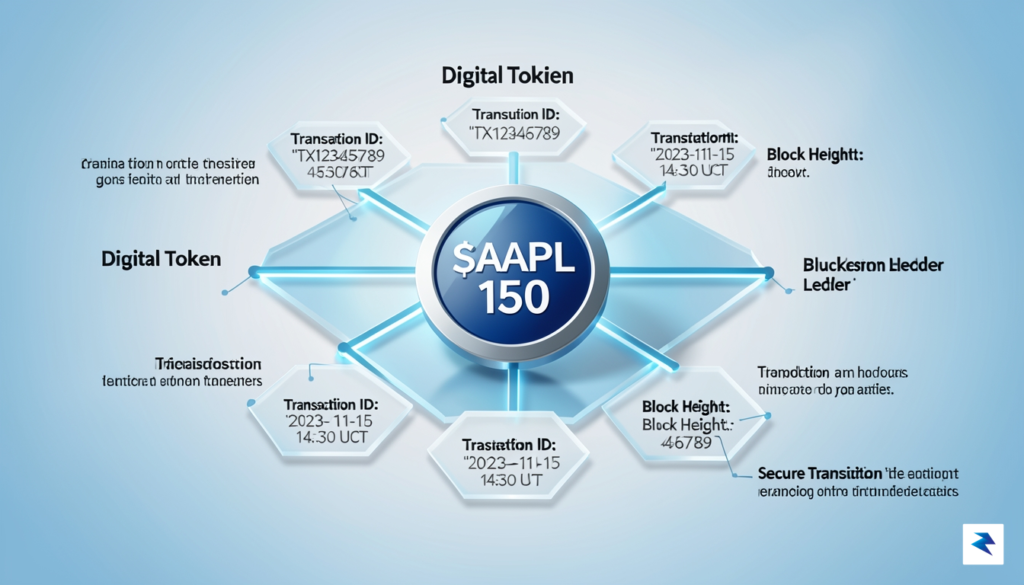
At its core, the transition to blockchain-based asset management represents a departure from the legacy architecture that has defined financial markets for decades. Traditional stock trading relies on a complex web of intermediaries—clearinghouses, custodians, and central securities depositories—that collectively manage the movement of ownership. This system typically operates on a T+1 settlement cycle, meaning that even after a trade is executed, the actual transfer of legal ownership and the finality of the transaction can take an entire business day to resolve. By contrast, moving stocks onto a blockchain creates a decentralized ledger where the ownership record is immutable and verifiable in real-time, effectively collapsing the time between trade execution and settlement into a near-instantaneous event.

The underlying technology powering this shift utilizes smart contracts—self-executing agreements written directly into the blockchain code—to automate the verification of trades. When a user buys or sells an asset on this new infrastructure, the blockchain automatically validates the availability of funds and the authenticity of the securities, removing the need for manual reconciliation between multiple institutions. This not only mitigates the risk of human error and administrative delays but also ensures that the liquidity of the asset is available immediately after a sale. For the average investor, this means that the “cash-in-hand” period is no longer a waiting game, allowing for much more agile portfolio management.
By leveraging blockchain technology, platforms can offer 24/7 market access and instantaneous clearing, fundamentally changing how capital moves through the modern economy.
Furthermore, this infrastructure serves as a robust foundation for the rapid creation and exchange of diverse digital assets, often referred to as tokenization. Because the blockchain standardizes how assets are recorded, it becomes significantly easier to launch and trade new financial products that were previously difficult to track or fractionalize. Security remains a primary focus, with advanced cryptographic protocols ensuring that every transaction is cryptographically signed and protected from unauthorized tampering. As the barriers to entry continue to drop, the integration of these high-speed, transparent systems is likely to redefine the expectations of retail investors who are increasingly demanding the same efficiency in their stock portfolios that they have grown accustomed to in the digital currency space.

The allure of turning a modest sum into a life-changing fortune is the primary engine behind the memecoin craze, yet this psychological phenomenon often masks a brutal market reality. Investors frequently find themselves swept up in the “fear of missing out” (FOMO), driven by viral social media narratives and the tantalizing possibility of finding the next overnight success. However, these psychological triggers are precisely what institutional market makers and opportunistic traders exploit. When a community-driven token gains momentum, the rapid influx of capital creates a feedback loop of euphoria, which inevitably sets the stage for a sharp, often devastating, correction once the initial hype dissipates.
Beyond the emotional rollercoaster, the structural risks associated with these assets cannot be overstated. Unlike established cryptocurrencies that derive value from utility, governance, or technological infrastructure, memecoins often lack any intrinsic value or long-term roadmap. Many of these projects are susceptible to liquidity crunches, where the inability to exit a large position without causing a massive price drop traps investors in a sinking ship. Furthermore, the prevalence of “rug pulls”—where developers withdraw the liquidity pool and vanish with investor funds—remains a persistent threat in decentralized ecosystems. Without rigorous due diligence, traders are essentially gambling on the integrity of anonymous entities rather than investing in a sustainable financial product.

Success stories like the CASHCAT surge are the extreme outliers of the market, serving as statistical anomalies rather than repeatable investment strategies.
For those interested in exploring this high-stakes corner of the blockchain, prudent portfolio management is non-negotiable. It is vital to recognize that the capital allocated to memecoins should be viewed as money that one is fully prepared to lose entirely. Rather than betting heavily on a single “moonshot” token, seasoned traders often advocate for a barbell strategy: keeping the vast majority of their holdings in stable, blue-chip assets while limiting speculative bets to a microscopic fraction of their total net worth. Diversification, combined with strict risk limits and a clear exit strategy, is the only way to navigate this volatile landscape without suffering catastrophic financial damage. Ultimately, while the prospect of massive gains is undeniably magnetic, the overwhelming majority of retail participants will lose their principal; therefore, approaching these markets with extreme skepticism is the most effective form of self-defense.

The meteoric rise of assets like CASHCAT on Robinhood’s new blockchain infrastructure represents a pivotal shift in how retail investors perceive the boundary between traditional finance and decentralized ecosystems. For years, the retail trading community has been confined to the operating hours and settlement delays of legacy stock exchanges, often feeling like second-class citizens compared to institutional high-frequency traders. This new model, which prioritizes on-chain speed and seamless accessibility, effectively dismantles those barriers. It signals a future where the average person no longer needs to wait for T+2 settlement cycles to see the results of their capital allocation, effectively democratizing the kind of rapid-fire market participation that was previously reserved for the elite.

As this demand for “blockchain-first” financial products intensifies, traditional brokerages are finding themselves at a critical crossroads. They can either continue to defend their legacy infrastructure or risk obsolescence by failing to integrate the agility of decentralized ledgers. We are likely to see a massive wave of incumbents rushing to build, acquire, or partner with blockchain-native platforms to keep their user base from migrating entirely to these high-speed alternatives. The competitive landscape is evolving into a race for latency, transparency, and 24/7 liquidity; firms that cannot provide a frictionless bridge between traditional assets and blockchain-based tokens will struggle to retain the next generation of digitally native investors.
The success of early-stage blockchain projects on mainstream platforms is not just a passing speculative fad; it is a clear indicator that retail traders are demanding a more direct, programmable, and efficient way to interact with global capital markets.
Ultimately, this convergence of traditional brokerage convenience and decentralized technology is set to redefine the risk-reward profile for the average investor. While the potential for life-changing gains—like turning a modest $800 into a seven-figure sum—will undoubtedly continue to draw headlines and new participants, the broader implication is the normalization of self-custody and on-chain asset management. As these tools become more user-friendly, the average retail investor will gain unprecedented control over their portfolio, moving away from passive reliance on centralized intermediaries. The future of trading is increasingly looking like a hybrid environment where the ease of a mobile app meets the lightning speed of a decentralized network, forever changing the landscape for those seeking to build wealth in the digital age.
You must be logged in to post a comment.