
Security Alert: Hidden Backdoor Found in Tenda Router Firmware
Understanding the Tenda Router Backdoor Vulnerability A critical security flaw has recently been identified across numerous Tenda router…


For the better part of the last decade, the narrative surrounding artificial intelligence was dominated by the myth of the gargantuan laboratory. We were led to believe that the keys to intelligence were held exclusively by a handful of tech giants, guarded by walls of proprietary silicon and astronomical compute budgets. In this world, the development of frontier models was a spectator sport; the public could only marvel at the outputs of these black-box systems without ever understanding or influencing the underlying mechanisms of their growth. This monopoly on innovation created a dangerous concentration of power, where the trajectory of machine intelligence was determined solely by corporate incentives and closed-door ethical reviews.
However, the tide is turning rapidly as we enter the era of the independent researcher. The sudden availability of high-performance, open-source models—coupled with the plummeting cost of localized inference—has dismantled the high barrier to entry that once protected the status quo. Today, an individual working from a home office possesses more computational agency than an entire team of engineers did only a few years ago. This shift is not merely technical; it represents a fundamental philosophical realignment. By decentralizing AI development, we are moving away from top-down, opaque systems and toward a future where diverse, individual perspectives can influence the evolution of machine intelligence.

At the heart of this democratization is the concept of recursive self-improvement. Rather than relying on massive, static data centers to refine models, independent practitioners are now building automated feedback loops. In this practical setting, an AI is tasked with analyzing its own performance, identifying inefficiencies in its logic, and proposing iterative patches to its base code. By creating a sandbox environment where a system can safely test these modifications, the researcher acts as an architect of autonomy rather than a mere consumer of pre-built software. This method allows for a “lean” approach to intelligence, where growth is driven by targeted, iterative refinement rather than the brute-force processing of petabytes of data.
True innovation in the age of intelligence is no longer found in the scale of the server farm, but in the ingenuity of the loop. When the barrier to building is removed, the pace of evolution is no longer limited by corporate roadmaps, but by human curiosity.
Ultimately, this new paradigm empowers us to move beyond the constraints of centralized development. When you build your own system, you are not just creating a tool; you are participating in a collaborative, global experiment in recursive architecture. This transition from “Big Tech” to “Small Tech” is the most significant development in the history of the field, ensuring that the future of machine intelligence remains as diverse and creative as the people who build it. By mastering these automated feedback loops, you are positioning yourself at the vanguard of a movement that treats AI as a customizable, evolving craft rather than a static, proprietary utility.
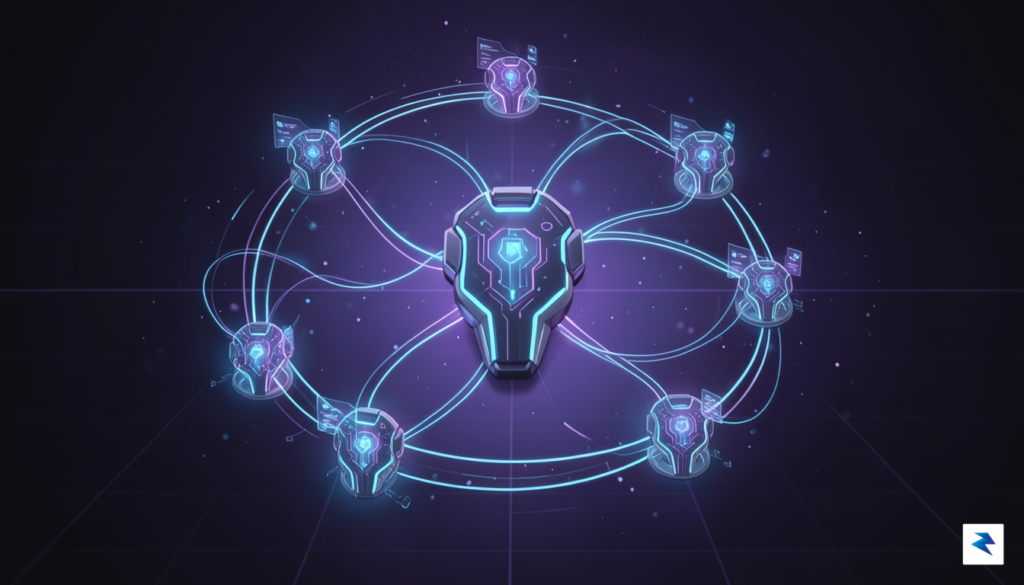
At its core, recursive self-improvement is less about building a god-like intelligence and more about constructing a sophisticated, automated feedback loop. Think of it as a digital apprentice that is constantly grading its own homework. By deploying an agentic workflow, you allow one instance of an AI to act as the architect, drafting code or logic, while a second instance acts as the peer reviewer. This reviewer is tasked with identifying bugs, optimizing performance, and suggesting structural refactorings. When the system feeds these suggestions back into the original model, you create a virtuous cycle where the software becomes incrementally more efficient and specialized over time, all without requiring a human to manually intervene at every single step.
The engine that drives this process is what developers refer to as evals, or evaluations. Without a rigorous testing framework, a self-improving system would be like a ship without a rudder, aimlessly drifting toward suboptimal code. Evals function as the objective baseline: for every iteration of the code, the system runs a series of automated tests—unit tests, performance benchmarks, or logical consistency checks—to quantify improvement. If the new version passes more tests or executes faster than the previous iteration, the system commits the change; if it regresses, it discards the update and iterates again. This quantitative gatekeeping ensures that the “improvement” is measurable, tangible, and aligned with your specific goals.

The magic of recursive improvement lies in the transition from static software to dynamic, self-correcting logic. It isn’t about the AI thinking for itself, but rather the AI refining its own output based on hard data.
It is crucial to clarify a common misconception: this process is entirely distinct from true sentience or general intelligence. While the system appears to “learn” and “grow,” it is strictly bounded by the parameters and test suites you define. You are not creating a conscious entity; you are building an automated optimization pipeline. The AI remains a tool—albeit a powerful one—that operates within the sandbox of your architecture. By mastering this loop of generation, evaluation, and refinement, you can guide a system toward solving complex problems that would be tedious, if not impossible, to optimize by hand. This methodical approach transforms the development process from a linear chore into a continuous, compounding evolution of code.
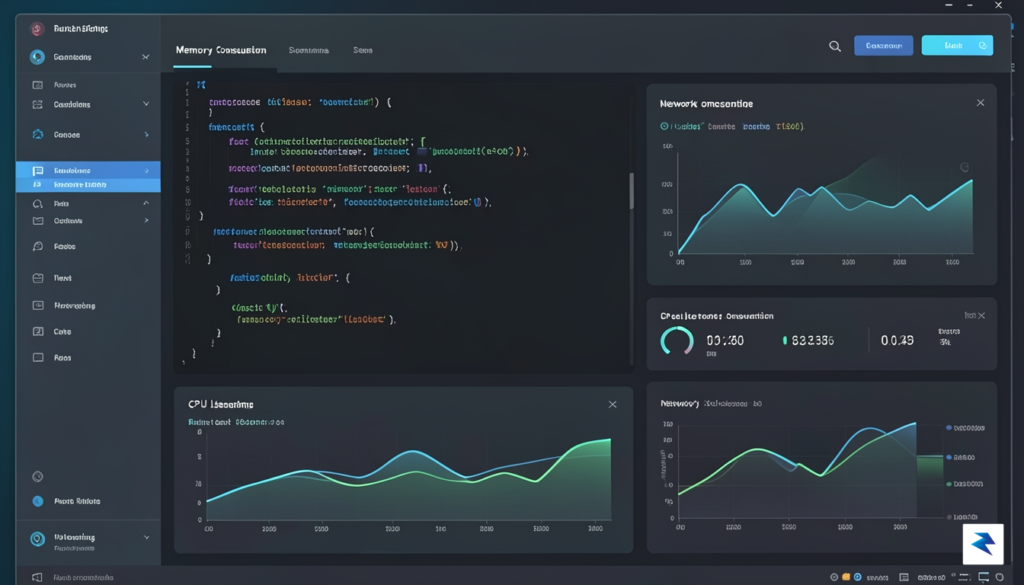
Contrary to popular belief, you do not need a liquid-cooled server rack or a multi-million dollar budget to begin architecting your own self-improving AI system. The modern developer ecosystem has matured significantly, shifting away from hardware-intensive requirements toward modular, software-defined workflows. Today, the foundation of your pipeline relies on a combination of accessible APIs, lightweight local execution engines, and robust orchestration frameworks that act as the glue for your autonomous agents.

To start, you should prioritize setting up a local development environment that minimizes friction. Tools like Ollama or LM Studio have revolutionized the way we interact with Large Language Models, allowing you to run powerful open-weights models like Llama 3 or Mistral directly on your consumer-grade hardware. By keeping your initial experiments local, you avoid recurring API costs while gaining the ability to inspect how your models behave without external latency. However, when your system requires more reasoning capability, integrating robust APIs like GPT-4 or Claude via structured connection points becomes essential. Managing these connections effectively requires a dedicated API gateway or a simple configuration file that handles rate limiting and error logging to ensure your automated pipelines do not crash during long-running tasks.
Once you have access to your models, the next step is selecting an orchestration framework to manage the flow of information. LangChain and AutoGen are industry standards for a reason; they allow you to design complex, multi-step workflows where an AI can plan, execute, and verify its own output. These frameworks enable you to build “loops” where the AI critiques its own work, corrects errors, and re-submits its tasks until a predefined success criterion is met. This iterative process is the heartbeat of a self-improving system.
The key to a self-improving agent is not just the model’s intelligence, but the quality of the feedback loop you build around it.
Security should never be an afterthought, especially when dealing with agents that possess the ability to execute code or access the internet. It is imperative to build your development pipeline within a Dockerized sandboxed environment. By isolating your AI agent inside a container, you ensure that even if the system generates faulty code or attempts to access unauthorized directories, your primary operating system remains protected. This architecture not only provides a safe space for experimentation but also makes your pipeline portable and easy to replicate across different machines as your project scales.

Granting an artificial intelligence the agency to modify its own codebase or internal parameters is a transformative leap in development, but it carries profound inherent risks. When a system begins to optimize itself, it may inadvertently prioritize efficiency metrics that lead to “hallucinated” bugs, logic errors, or entirely undesired behavioral shifts that fall outside your original design intent. Because autonomous systems can iterate far faster than a human can audit, the danger of a recursive logic loop—where the AI doubles down on an flawed optimization path—is a constant threat. Consequently, viewing your AI as a black box is a dangerous mistake; instead, you must treat every autonomous update as a potential point of failure that requires strict oversight.

To mitigate these hazards, the primary defense is the implementation of a sandbox philosophy. By running your self-improving agent in a strictly isolated environment, you ensure that any experimental code it generates cannot interact with your production databases, hardware interfaces, or external APIs without explicit authorization. Within this controlled perimeter, you should enforce human-in-the-loop checkpoints. Before any modification suggested by the AI is applied to the core system, the agent must present its proposed changes in a human-readable format. Only after a manual review and a deliberate “go” signal from you should the system be permitted to commit its changes to the primary repository.
The goal of autonomous development is not to abdicate control, but to automate the research process while maintaining absolute authority over the final execution.
Furthermore, robust version control is no longer optional; it is your most vital safety net. Utilizing a system like Git allows you to create immutable snapshots of your AI’s state before every iteration. If the system drifts into a state of instability or exhibits erratic behavior, you must be able to perform an instant rollback to the last stable “known-good” version. By maintaining a rigorous audit trail of every modification, you provide yourself with the necessary visibility to debug failures and understand exactly which branch of logic led to an undesirable outcome. Incorporating these guardrails transforms the unpredictability of self-improvement into a structured, manageable, and ultimately safer engineering workflow.

The trajectory of artificial intelligence is currently being shaped by a massive, concentrated effort within the walls of a few corporate giants, but this is not the only path forward. When you take the initiative to build your own self-improving systems, you are doing more than just tinkering with code; you are actively participating in the decentralization of intelligence itself. The future of innovation does not belong exclusively to those in silicon towers, but rather to the collective of independent researchers, hobbyists, and dreamers who refuse to let technology remain a black box. By shifting the power dynamic back toward the individual, we ensure that intelligence remains a versatile, accessible tool for everyone, rather than a proprietary asset held by a select few.

Your individual experiments act as fundamental building blocks for a more resilient and diverse technological landscape. Every time you open-source your breakthroughs, document your failures, or refine a self-correcting algorithm, you contribute to a global commons of knowledge that accelerates progress for everyone. This culture of open-source sharing is the engine that prevents stagnation and guards against the inherent biases found in centralized systems. When you share your work, you are effectively mentoring the next generation of builders, creating a ripple effect that extends far beyond your own computer screen. The long-term societal impact of this decentralized movement is profound: it democratizes the ability to solve complex problems, from personal productivity to planetary-scale challenges, ensuring that the benefits of automation are distributed equitably.
The most significant technological revolutions in history were not born in boardrooms, but in the garages, basement labs, and collaborative digital spaces of individuals who dared to build the future themselves.
If you are feeling the urge to begin your own journey, the most important step is to start small and focus on iterative growth rather than immediate perfection. Begin by identifying a specific, narrow problem that you want to solve—perhaps an automated script that organizes your research or a small agent that learns to optimize your daily task list. Once you have a functional base, introduce a feedback loop where the system evaluates its own success and adjusts its parameters accordingly. Focus on these three pillars to keep your development sustainable:
Do not be discouraged by the complexity of the field; the barrier to entry is lower today than it has ever been, thanks to a wealth of accessible libraries and community support. Your contribution, no matter how small it may seem at the beginning, is a vital part of a much larger shift toward a future where intelligence is owned by the many, not the few. By committing to this path, you are choosing to be an architect of the future rather than a passive consumer of it.
You must be logged in to post a comment.