
Oura Ring 5 Review: Is This Still the King of Smart Rings?
Evolution of the Oura Ring: From Fitness Tracker to Health Essential When the original Oura Ring debuted, it functioned primarily as a…


The modern internet was never intended to be a playground; it was engineered as a decentralized network for information exchange and, eventually, a massive engine for profit-driven engagement. Because the architecture of the web was built on the foundation of surveillance capitalism, children have been forced to navigate a digital ecosystem designed to capture their attention at any cost. We currently treat the internet as a single, monolithic entity where a toddler and a corporate executive share the same digital topography. This is a fundamental structural failure. Rather than continuing to force children into a space built for data extraction, we must envision a digital public square—a gated, purpose-built infrastructure designed specifically to foster developmental growth, privacy, and creative exploration rather than behavioral modification.
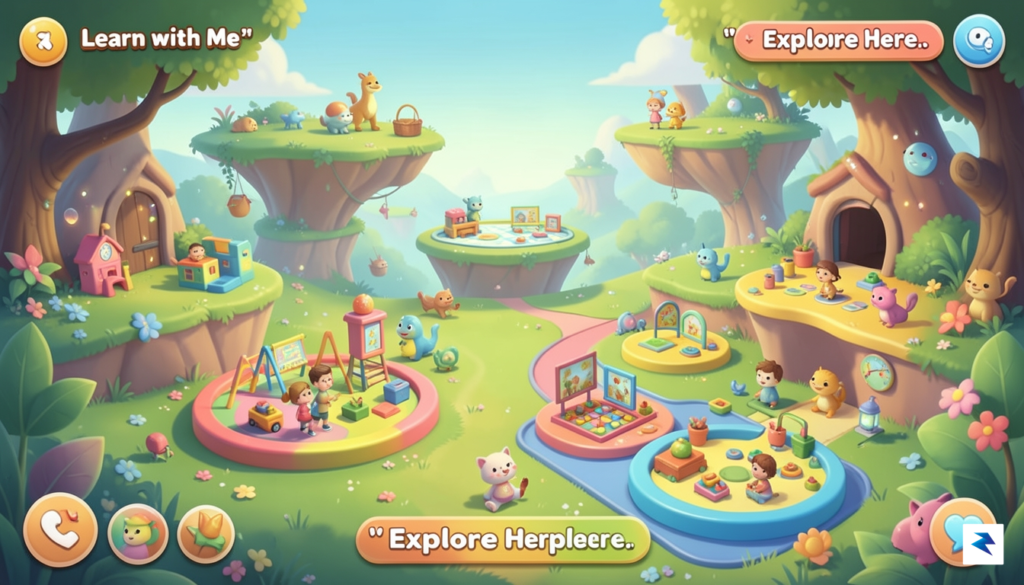
Our current approach to child safety on the web is almost entirely reactive. We rely on a patchwork of age gates, parental control apps, and increasingly restrictive legislation aimed at banning minors from specific platforms. Yet, these measures are akin to placing a few traffic cones on a highway and hoping for the best; they fail to address the reality that the highway itself is inherently dangerous for a child. When we view the internet through a proactive lens, we stop asking how we can keep kids off the “bad” parts of the web and start asking how we can build a “good” part of the web that is specifically theirs. A public-interest model would shift the burden away from parents and regulators, moving it toward an architecture that inherently protects users by design, rather than by policy.
The goal of a digital public square is not to restrict the internet, but to provide a foundational alternative where the primary incentive is the well-being of the user, not the monetization of their behavior.
To realize this, we must move toward non-commercial digital environments that operate more like public parks or libraries than social media conglomerates. In this proposed space, the algorithms that prioritize outrage or addictive loops would be replaced by curated, human-centric design principles. This means creating spaces where data collection is strictly prohibited, where peer-to-peer interaction is moderated for developmental appropriateness, and where the digital tools available are focused on literacy, play, and civic participation. By decoupling the experience of being online from the mandate of advertising revenue, we can create a sustainable digital commons that treats children as citizens to be nurtured rather than as commodities to be mined.
Ultimately, the transition to a dedicated children’s internet is a matter of digital infrastructure. Just as we built physical spaces like playgrounds and schools to protect children from the hazards of industrial city life, we must now build digital equivalents. If we continue to rely on the current profit-incentivized web, we are essentially letting children roam an unregulated, high-speed industrial zone without supervision. By investing in a public-interest digital model, we can provide a safe, imaginative, and educational space that respects the cognitive development of minors, ensuring that their relationship with technology begins with empowerment rather than exploitation.

The push for legislative mandates requiring government-issued identification to access popular social platforms is often marketed as a silver bullet for child safety, yet it fundamentally undermines the digital autonomy of the entire populace. By tying identity to access, these policies force platforms to create vast, centralized databases of sensitive personal information, effectively turning every internet user into a target for identity theft and surveillance. The privacy trade-off here is staggering: to prove one is an adult, a user must surrender biometric data, driver’s licenses, or credit card information to third-party verification services. This architecture creates a honeypot of personal data that, sooner or later, is almost certain to be compromised, leaving adults vulnerable while failing to provide a foolproof barrier for the very minors it intends to protect.
Beyond the architectural risks, these verification systems are locked in an endless, futile game of cat and mouse that favors the tech-savvy minor. A determined teenager can bypass traditional age-gating with ease by utilizing virtual private networks (VPNs) to mask their location, leveraging shared family accounts, or employing sophisticated spoofing software that satisfies automated checkers. When legislation relies on brittle technical barriers, it inadvertently incentivizes younger users to explore more dangerous, unmoderated corners of the web where these gates do not exist. Consequently, the barrier becomes a mere inconvenience for the motivated user rather than a meaningful safeguard, rendering the entire endeavor technologically impotent against a digital-native generation.

Furthermore, these mandates exert a profound “chilling effect” on free speech and civic engagement. When the threshold for participating in the digital public square requires state-sanctioned identification, many adults—particularly those in marginalized communities or those who value anonymous discourse—may choose to withdraw from online platforms entirely. This dynamic shifts the internet from a space of open, pseudonymized expression into a rigid environment governed by surveillance, where every post or interaction is tethered to a permanent, trackable legal identity. The loss of anonymity is not merely a privacy concern; it is a fundamental threat to the democratic potential of the web, as it discourages the very discourse that requires protection from retribution.
Verification is not a safety strategy; it is a stop-gap that prioritizes the illusion of control over the reality of user safety.
Ultimately, treating the internet as a single, monolithic entity that can be “gated” is a legacy mindset that ignores the complexities of our current digital reality. By attempting to bolt verification systems onto a platform architecture that was never designed for them, policymakers are merely papering over the systemic flaws of modern social media. Instead of forcing adult-centric platforms to act as makeshift, ineffective guardians of children, we should be advocating for a fundamentally different approach: the creation of a dedicated, curated digital space designed from the ground up for younger users. Relying on verification mandates is a reactive measure that fails to address the underlying harms of the existing web, whereas building a children’s public internet offers a proactive, structural solution that protects minors without compromising the rights of the broader public.

If we were to architect a digital ecosystem specifically for children, we would need to abandon the current surveillance-capitalism model in favor of a “privacy-by-design” framework. Instead of treating young users as data points to be harvested for ad-targeting profiles, a dedicated public internet would operate on the principle of data minimization—collecting zero personally identifiable information by default. Architecture here would be rooted in local-first processing, where interactions, preferences, and developmental milestones remain on the user’s device rather than being funneled into centralized corporate servers. This ensures that a child’s early digital footprint is not a permanent, searchable ledger of their mistakes, interests, and vulnerabilities, but rather a transient, private sandbox for exploration.
To combat the cognitive strain of modern browsing, the user experience must fundamentally reject the “dopamine loop” that currently dominates the web. This means replacing infinite scrolls and autoplay features with purposeful, finite navigation structures that encourage intentionality. By implementing UI patterns that require active participation—such as manual refreshes or “read more” gates—we can effectively break the cycle of passive doomscrolling. These design choices don’t just protect attention spans; they frame the internet as a tool to be picked up and put down, rather than an addictive destination that relies on predatory design to keep users tethered.
True digital literacy for the next generation begins with an interface that respects the user’s autonomy, moving away from engagement metrics and toward enrichment goals.
The transition from algorithmic content delivery to curated discovery represents the most significant shift in how children encounter information. Rather than allowing black-box recommendation engines to prioritize high-arousal content—which often skews toward sensationalism—a public internet for kids would lean into community-governed, human-vetted content hierarchies. Imagine a federated, decentralized network where educators, librarians, and subject matter experts curate “knowledge pathways.” This structure allows for a plurality of perspectives while maintaining high safety standards, ensuring that curiosity is rewarded with depth rather than a rapid descent into increasingly radicalized or irrelevant material.
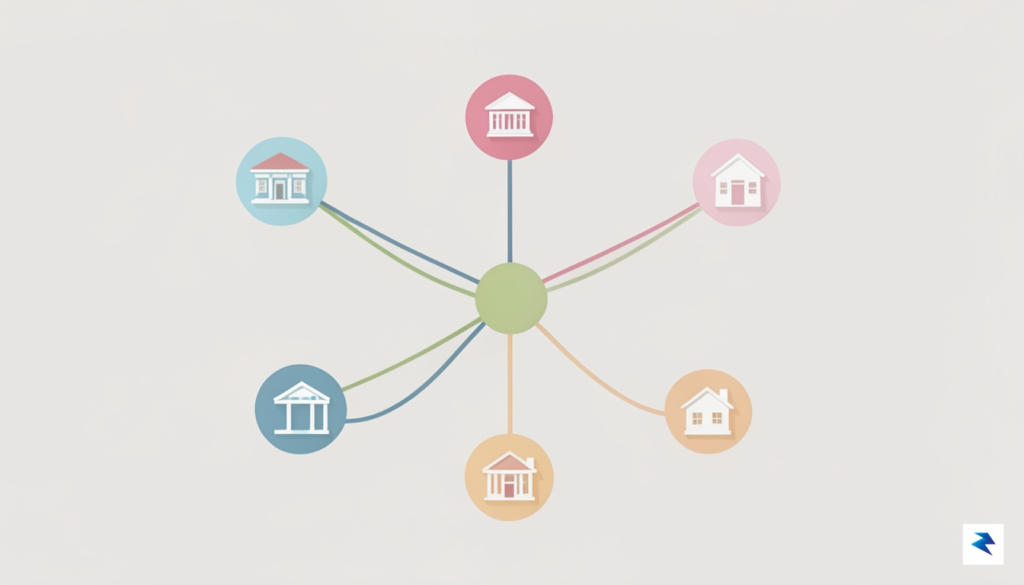
Ultimately, a federated architecture offers the best path toward resilience and safety. By decentralizing the network, we remove the single points of failure that allow corporate giants to dictate the reality of a child’s online experience. In this model, individual “nodes”—whether they are run by municipal libraries or educational non-profits—act as the gatekeepers of their own digital neighborhoods. This creates a web that is inherently interoperable, allowing kids to move safely between validated spaces while ensuring that no single entity holds the keys to their digital identity or the power to manipulate their development for profit.
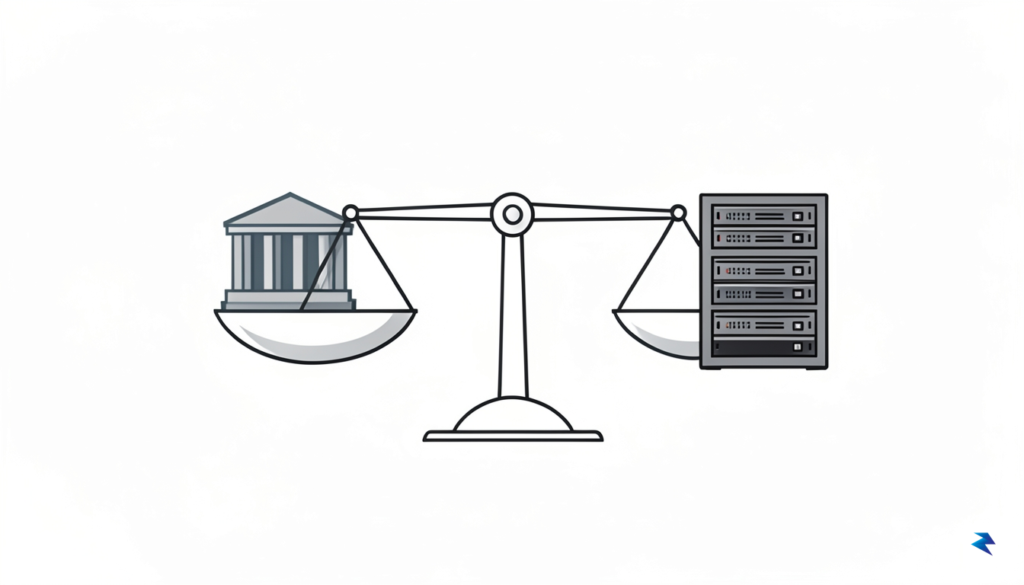
The question of how to construct a dedicated digital space for children, one that is truly safe and enriching, inevitably leads to a fundamental debate about its underlying governance: should it be a product of the private sector, regulated by a patchwork of laws, or a public utility, sustained by taxpayers and held to a higher standard of communal benefit? The existing digital landscape, largely shaped by corporate interests, demonstrates the pitfalls of relying on regulation alone to curb practices like predatory advertising, data harvesting, and the propagation of inappropriate content. A children’s public internet, in contrast, could draw inspiration from the enduring model of the public library, a cornerstone of community infrastructure that provides universal, free access to curated knowledge and cultural resources, independent of commercial pressures or ability to pay.
However, simply advocating for a government-run internet introduces its own set of complex challenges and potential traps. Entrusting such a critical platform solely to governmental bodies carries inherent risks, particularly concerning censorship, ideological bias, and the potential for surveillance. A state-controlled digital environment, no matter how well-intentioned, could become a tool for shaping thought, limiting access to diverse perspectives, or inadvertently creating a surveillance infrastructure under the guise of protection. The very notion of a “public” internet must therefore be carefully balanced with robust safeguards to ensure intellectual freedom and prevent any single entity from becoming the sole arbiter of what children can access or learn.

The most viable path forward likely lies in a hybrid model, combining the stability of public funding with the agility and impartiality of independent, non-partisan oversight. This structure could involve a public-private partnership or a publicly funded, independently governed non-profit foundation, akin to how many public broadcasting services operate. Such an entity would be chartered with a clear mission to serve children’s best interests, free from political interference and commercial imperatives. Its governance board would comprise experts in child development, education, technology, and digital ethics, ensuring that content curation and platform development are guided by pedagogical principles rather than profit motives or political agendas.
To truly liberate a children’s internet from the pressures of commercialism, its funding mechanisms must be deliberately designed to avoid reliance on advertising and data monetization. Potential avenues for sustainable funding include dedicated public levies, philanthropic grants, educational endowments, and even small, voluntary contributions from users or their guardians, similar to NPR’s model. This diversified approach would ensure financial stability while insulating the platform from the market forces that currently drive the design and content of most digital spaces. By decoupling access from commercial exploitation, we can foster a digital environment where curiosity, learning, and genuine connection take precedence over engagement metrics and advertiser demands.

The impulse to protect children online often manifests as a call for pervasive surveillance, yet we must recognize that constant monitoring is a hollow substitute for genuine safety. When we treat the internet as a hostile landscape that requires a digital leash, we inadvertently teach children that their online existence is inherently tied to being tracked, profiled, and commodified. This “surveillance for safety” trap creates a paradox: to keep them secure from external threats, we subject them to the internal threat of data harvesting and behavioral manipulation. True protection should not come at the cost of a child’s right to develop without being turned into a permanent data point for advertisers and algorithms.

Developmental growth requires a degree of autonomy, even in the digital realm. Children learn to navigate the world by testing boundaries, making small mistakes, and engaging in low-stakes experimentation. By relegating them to highly restrictive, parent-monitored silos or banning them from the digital public square altogether, we deprive them of the chance to develop critical digital literacy and healthy social habits. A dedicated public internet for youth would act as a sandbox—a space specifically designed to foster curiosity and creativity without the predatory mechanics of modern social media. In this environment, privacy is a default setting, not an opt-in feature, allowing young users to explore their interests without the looming shadow of algorithmic tracking.
“The goal of a child-centric internet is not to build a walled garden of ignorance, but a scaffold for discovery where privacy is protected as a fundamental right rather than a luxury.”
Moving forward, the policy conversation must shift from the reactionary instinct of banning and blocking to the proactive effort of building. We need to invest in infrastructure that prioritizes the user’s well-being over engagement metrics. This means developing protocols that ensure anonymity, minimize data collection, and provide age-appropriate, curated content that encourages active learning. By fostering a dedicated digital space, we provide a societal benefit that extends far beyond the immediate protection of the individual. We cultivate a generation that understands the value of privacy and expects it as a standard feature of their digital lives.
Ultimately, the long-term societal benefit of a public children’s internet lies in creating a healthier relationship with technology. If we can provide a space that is intentionally designed to support, rather than exploit, the transition into adulthood, we are doing more than just keeping kids safe—we are equipping them to participate in the future digital economy as empowered, autonomous citizens. By reconciling safety with privacy, we ensure that the next generation does not view themselves as products of the web, but as its architects.
You must be logged in to post a comment.