Kobo Adds StoryGraph Sync: A New Era for Book Trackers
The Shift Toward Independent Reading Analytics For over a decade, Goodreads has maintained an unchallenged monopoly over the digital literary…


Before his name became synonymous with one of the most bizarre legal battles in modern entertainment, Carl Rinsch was widely regarded as one of Hollywood’s most promising aesthetic architects. Emerging from the high-octane world of commercial directing, he cultivated a reputation for sleek, hyper-stylized imagery that seemed tailor-made for the big screen. His ability to blend fluid camera movements with complex digital effects captured the attention of major studio executives who were desperate to find the next generation of blockbuster auteurs. During this period, the industry was undergoing a seismic shift; the traditional gatekeepers were eager to bet on “visionaries” who could translate commercial polish into expansive, franchise-ready cinematic universes.
This industry-wide obsession with finding the next visionary director created an environment ripe for high-stakes gambles. As streaming platforms began their aggressive expansion, there was a desperate, almost frantic vacuum for high-concept content that could distinguish one service from its competitors. Executives were not just looking for directors; they were hunting for singular voices capable of building immersive, sprawling worlds that could anchor a subscription model. In this climate, Rinsch’s pitch for an ambitious science-fiction series felt like the perfect centerpiece. The sheer magnitude of the investment reflected the era’s misplaced confidence in the idea that a single creative force, given enough capital and autonomy, could single-handedly manufacture a cultural phenomenon.
However, the transition from directing polished thirty-second commercials to helming a multi-million dollar series proved to be an insurmountable hurdle for Rinsch. The immense pressure to deliver a hit in an increasingly crowded streaming market often forced creators into a corner where original ideas were sacrificed for the sake of scale and spectacle. While Rinsch’s early career suggested a mastery of visual language, the reality of managing a massive, complex production required a level of pragmatism that his previous work had never demanded. The tragedy of his trajectory lies in how the industry’s hunger for innovation inadvertently created a pressure cooker, where the promise of a “visionary” was prioritized over the fundamental necessity of accountability and structural stability.
The industry’s reliance on the myth of the singular genius often ignores the logistical gravity required to turn a pitch into a finished product, creating a dangerous disconnect between creative ambition and operational reality.
Ultimately, the rise of Rinsch serves as a sobering case study of the streaming wars at their peak. It was a time when the sheer velocity of content production often outpaced the due diligence required to sustain it. By elevating individual directors to near-mythic status, studios inadvertently shielded their projects from the standard oversight that keeps creative endeavors grounded. This environment allowed for a detachment from reality that transformed a once-celebrated talent into a cautionary figure, highlighting the fragile line between visionary storytelling and the reckless mismanagement of resources.

At the height of the streaming wars, the industry was gripped by a frantic, gold-rush mentality that saw platforms desperate to secure prestige science fiction content at any cost. Carl Rinsch, a director with a flair for high-concept visuals, arrived at Netflix during this period of unbridled ambition with a pitch that promised to be the next great franchise. The allure for the platform was clear: they were seeking to cultivate original intellectual property that could rival the scale of major cinematic universes. By granting Rinsch a multi-million dollar agreement, Netflix was betting not just on a story, but on the perceived potential of a visionary filmmaker who appeared ready to redefine the boundaries of streaming production.
The structure of the deal was largely defined by a promise of total creative freedom, a hallmark of the streamer’s early strategy to lure top-tier talent away from traditional Hollywood studios. In this environment, the standard checks and balances that had historically governed film production were often sidelined in favor of rapid development and exclusivity. Because the streaming giant was eager to capture lightning in a bottle, they provided Rinsch with an unusual degree of autonomy over the project’s budget and direction. This lack of traditional oversight meant that the internal mechanisms intended to track progress and manage financial disbursement were essentially bypassed, creating an environment where accountability became secondary to the speed of content creation.

As the project moved forward, the pressure to produce something unique—something that could stand out in an increasingly crowded market—only intensified. This atmosphere of high-stakes competition meant that streamers were often willing to overlook red flags that might have derailed a project in a more conventional setting. For directors, the offer of a massive, upfront production budget combined with minimal interference was an intoxicating proposition, but it also masked the inherent instability of such an arrangement. The Rinsch case eventually became a stark illustration of what happens when the desire for groundbreaking content outpaces the necessity for rigorous due diligence.
The partnership serves as a sobering reminder that even the most sophisticated algorithms and billion-dollar budgets cannot substitute for the fundamental need for transparent communication and structural oversight in the creative process.
Ultimately, the collapse of this particular venture transformed what was envisioned as a landmark deal into a cautionary tale about the perils of unchecked streaming ambition. It highlighted a structural vulnerability within the industry where the desperate need to secure “prestige” content created a vacuum that could be exploited by those willing to manipulate the system. By trading traditional gatekeeping for total creative liberty, the platform inadvertently opened the door to financial exploitation, proving that in the race to dominate the digital landscape, the most expensive projects are often the most precarious.

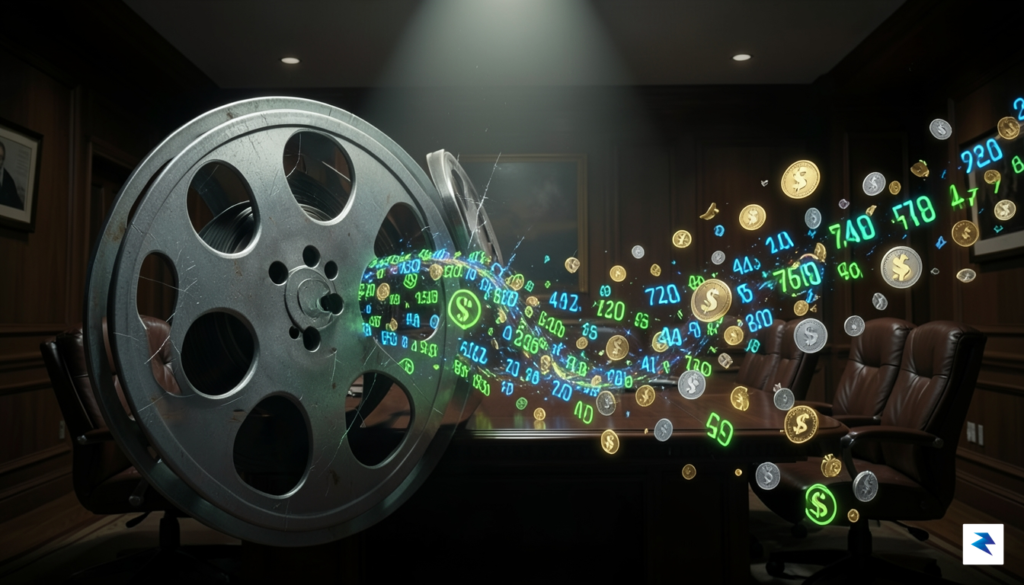
When the ambitious science fiction project *Conquest* sputtered to a halt, the narrative initially framed the delay as a symptom of the typical “creative differences” that often plague high-budget Hollywood productions. However, the internal reality was far more sinister; rather than being funneled into production design, visual effects, or location scouting, a massive portion of the $11 million provided by Netflix was systematically siphoned away. Carl Rinsch, entrusted with the vision and the budget, instead treated the production funds as a personal venture capital pool. By diverting these assets into his own bank accounts, he effectively hollowed out the project from the inside, leaving the streaming giant to bankroll a ghost production that existed only on paper.
The methods employed to obfuscate these transactions were as bold as they were reckless. Rinsch utilized a complex web of financial transfers to mask the movement of millions, attempting to cloak personal expenditures under the guise of production-related costs. As the misappropriation deepened, he began aggressively pouring these stolen funds into high-risk speculative investments and volatile cryptocurrency markets, gambling on the hope that a sudden windfall would allow him to replenish the accounts before anyone noticed the discrepancy. This strategy of financial shell games ultimately collapsed under its own weight, as the lack of visible progress on the series made it impossible to hide the fact that the capital had vanished into thin air.
“The diversion of production funds into high-risk speculative investments marks one of the most brazen cases of modern Hollywood white-collar crime, turning a creative endeavor into a vehicle for personal financial gambling.”
The discovery of this scheme came only after Netflix’s auditors began to scrutinize the lack of deliverables and the inexplicable absence of production activity. As the oversight team delved into the ledger, they uncovered a trail of breadcrumbs leading directly to Rinsch’s personal accounts and his speculative trading portfolios. This forensic accounting revealed that the project was never actually in a state of development or post-production in any meaningful sense; it had been cannibalized to fuel a private financial obsession. The ensuing collapse was absolute, resulting in the termination of the series and the exposure of a betrayal that transformed a promising partnership into a landmark legal case for corporate accountability in the entertainment industry.

The imposition of a 30-month prison sentence on Carl Rinsch marks a definitive conclusion to a legal saga that exposed the fragility of trust within the high-stakes world of content production. By misappropriating millions in funds intended for the development of his ambitious science-fiction project, Rinsch moved beyond creative failure into the realm of criminal liability. The court’s decision to mandate significant time behind bars serves as a powerful deterrent, signaling that even in the creative industry—where budgets are often fluid and projects frequently pivot—there remains a rigid legal boundary between artistic autonomy and the misappropriation of investor capital. For Rinsch, the fallout is absolute; a once-promising career in Hollywood has been dismantled, replaced by a permanent record of professional betrayal that effectively bars him from future high-level collaborations.

Beyond the personal ramifications for the director, this case has sent shockwaves through the corridors of major streaming services, prompting a fundamental re-evaluation of how platforms manage their creative partnerships. Netflix, having been the primary victim of this elaborate scheme, has reportedly tightened its internal oversight protocols, moving toward a more granular approach to budget disbursement. The era of “blind trust” in auteur-driven projects is rapidly waning, replaced by a model that prioritizes incremental funding tied strictly to tangible, audited milestones. These new contractual safeguards are designed to prevent the kind of unchecked financial hemorrhaging that allowed Rinsch to funnel production funds into volatile personal investments.
The sentencing serves as a stark reminder that the “move fast and break things” ethos of Silicon Valley-style streaming platforms cannot extend to the fundamental principles of fiduciary duty and financial accountability.
The industry-wide aftermath is already visible in the way production deals are being structured across the board. Legal teams at competing studios are now drafting more stringent clawback clauses and transparency requirements, ensuring that creators are held accountable for every dollar allocated to their projects. This shift represents a broader maturation of the streaming market, which is transitioning from a phase of aggressive, unfettered expansion to one of fiscal discipline and risk mitigation. By prioritizing rigorous due diligence and continuous financial auditing, platforms are attempting to protect themselves from similar malfeasance, ultimately changing the relationship between the financier and the filmmaker from a partnership of shared vision to one of strictly monitored contractual obligations.

The sentencing of Carl Rinsch marks a pivotal turning point for streaming giants that, for over a decade, operated with a “growth at all costs” mentality. In the hyper-competitive race to secure prestige content, studios often turned a blind eye to fiscal red flags, prioritizing the visionary director over the reality of the balance sheet. This era of unchecked investment, where massive budgets were dispersed with little oversight, has effectively come to a close. As the streaming market matures and investors demand profitability over mere subscriber acquisition, studios are pivoting toward a model defined by rigorous oversight and systematic financial accountability.

To safeguard their interests, production houses are increasingly integrating forensic accounting into the lifecycle of creative projects. It is no longer sufficient to rely solely on the reputation of a filmmaker; instead, studios are implementing granular tracking systems that monitor expenditures against tangible production milestones. This shift ensures that capital is only released when specific, measurable progress is demonstrated, effectively closing the loopholes that allowed projects to languish in “development hell” while funds were diverted elsewhere. By embedding these fiscal safeguards, the industry is forcing a transition where transparency is not merely a bureaucratic requirement, but a foundational element of the creative process.
The Rinsch case serves as a definitive reminder that even the most lucrative partnerships are bound by the realities of contract law and fiduciary duty.
Balancing creative freedom with fiscal responsibility remains the industry’s most significant ongoing challenge. While skeptics fear that increased oversight might stifle artistic innovation or lead to risk-averse programming, proponents argue that structure can actually foster better storytelling. When directors are held to clear, objective standards, they are encouraged to communicate more effectively with their studios, creating a collaborative environment rather than an adversarial one. The future of the streaming era will likely be defined by a more mature partnership between the creative and corporate worlds—one where ambitious visions are supported, but only within a framework of ironclad transparency and strict, contractual accountability. As this new standard takes hold, the industry is moving toward a more sustainable future where the integrity of the content is matched by the integrity of the process behind it.
You must be logged in to post a comment.