
Meta’s New Smart Glasses: Affordable Tech for Everyday Life
The Evolution of Meta’s Wearable Strategy Meta’s journey into wearable technology has seen a notable evolution, transitioning from initial,…


Historically, the news ombudsman served as a vital, independent bridge between a news organization and its diverse audience. This dedicated arbiter was tasked with a unique and critical role: listening to public complaints, meticulously investigating journalistic ethics, and offering an impartial, often public, critique of the newsroom’s output. Their primary function was not merely to correct errors, but to ensure robust accountability, uphold the highest standards of journalistic integrity, and thereby foster an invaluable, transparent trust between the media institution and the public it served. Acting as both an internal conscience and an external advocate, the ombudsman provided a crucial layer of transparency and responsiveness that is profoundly missed in today’s media landscape.
However, in a significant and concerning trend, many major news networks have gradually phased out or simply never established the ombudsman position. This abandonment leaves a critical void, particularly in our current media landscape, which is increasingly saturated with rampant misinformation, deep partisan divides, and pervasive skepticism towards established news sources. While internal review processes, “standards and practices” departments, or even dedicated audience editors might exist, they often lack the true independence and perceived authority that a dedicated ombudsman embodied. This shift can lead to a more opaque system where internal biases may go unchallenged and public grievances are processed without the transparent, impartial review they deserve, ultimately eroding confidence precisely when it’s most needed.

The necessity of such impartial mediation becomes starkly apparent during moments of significant crisis or widespread controversy, precisely when a news organization’s editorial decisions, reporting accuracy, or ethical practices face intense public scrutiny. When the audience collectively questions the integrity, fairness, or factual basis of a prominent report, an ombudsman would typically step in to provide an objective assessment, offer nuanced explanations of complex journalistic choices, and crucially, publicly acknowledge any missteps or areas for improvement. Without this singular, independent voice, unanswered questions can fester, unsubstantiated accusations can gain undue traction, and the network’s hard-won credibility can suffer lasting, often irreparable, damage. In an environment where trust in media is already precariously fragile, the ability to openly, fairly, and independently address public concerns is not just beneficial; it is absolutely essential for maintaining the foundational integrity and public service mission of modern journalism.

For more than half a century, 60 Minutes has occupied a singular position in the American media landscape, often regarded as the gold standard of investigative journalism. Because of its storied history and reputation for rigorous inquiry, the program is held to an exceptionally high threshold of public trust. When questions arise regarding the accuracy of its reporting or the potential for narrative bias, the impact on the audience is profound. Recent controversies involving the program have not merely sparked debates over editorial choices; they have triggered a broader, more existential crisis of confidence among viewers who have long viewed the broadcast as a final arbiter of truth in an era of increasingly fragmented information.
The current turmoil centers on specific concerns regarding the transparency of the editing process and the integrity of the show’s fact-checking apparatus. Audiences are no longer satisfied with the traditional “trust us” approach that once defined the network’s relationship with its viewership. Instead, critics and casual observers alike are demanding concrete explanations regarding how sensitive segments are curated and whether political or institutional pressures might be influencing the final product. This scrutiny is amplified by the perceived silence from within the network, as the absence of a formal, independent ombudsman or a clear public response leaves a vacuum that is quickly being filled by skepticism and conjecture.

When an institution as iconic as 60 Minutes faces such intense criticism, the stakes extend far beyond the program itself. The public expects a level of accountability that matches the influence of the platform, and the current reticence from CBS News leadership is being interpreted by many as an attempt to evade necessary internal review. This silence is particularly jarring because it contradicts the very ethos of investigative journalism—the idea that powerful entities should be held to account, especially when they stumble. Without a transparent process to address these editorial questions, the network risks eroding the bedrock of credibility that has allowed the program to endure for generations.
The credibility of a news organization is its most valuable currency, and once that trust is eroded by perceived inconsistencies or a lack of accountability, it is rarely regained without a significant, public commitment to reform.
Ultimately, the crisis facing the network is a fundamental challenge of transparency. Viewers are asking whether the standards of the past are still being upheld in a modern, hyper-polarized environment where every edit is subject to public dissection. As the noise surrounding these editorial decisions grows, the network’s continued quietude stands in stark contrast to the investigative rigor the public has come to expect. Unless there is a concerted effort to address these concerns directly, the institution risks transforming its legacy from one of journalistic excellence into a cautionary tale about the perils of losing touch with a skeptical audience.
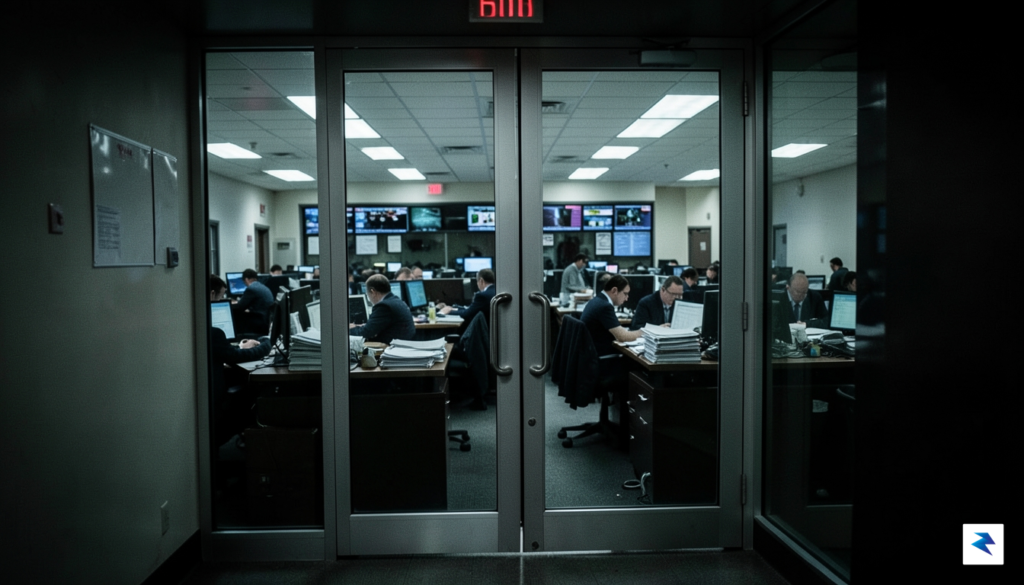
When a venerable news institution retreats into a shell of silence during a period of intense public scrutiny, it inadvertently creates a dangerous vacuum. In the digital age, information abhors a void; when an organization refuses to address legitimate questions or provide context regarding internal controversies, it does not stop the conversation—it merely forfeits control over the narrative. Speculation, misinformation, and cynical interpretations rush in to fill the space left by official commentary, often painting a far more damaging picture than the truth itself. This “vacuum effect” transforms a specific editorial dispute into a broader crisis of character, suggesting that the network is either indifferent to its audience’s concerns or fundamentally incapable of self-reflection.
The psychological impact on the viewer is profound and often irreversible. For a news organization, trust is the primary currency, yet that trust is predicated on the assumption that the outlet is accountable to the public it serves. When a network chooses to ignore or suppress discussion regarding its own editorial processes, it signals a shift from a public-interest model toward one of corporate self-preservation. Viewers begin to perceive the institution not as a pillar of objective reporting, but as a guarded fortress protecting its own interests. This erosion of transparency inevitably leads to a decline in brand loyalty, as audiences feel their concerns are being dismissed with a calculated, institutional coldness.
True accountability in journalism is not measured by the absence of errors, but by the courage to address them openly when the spotlight turns inward.

In contrast, successful crisis management is rooted in the philosophy that transparency is the most effective form of damage control. Organizations that choose to own their challenges—by acknowledging public critique, launching independent inquiries, or clarifying their editorial standards—demonstrate a commitment to the audience that transcends short-term optics. By prioritizing honesty over the desire to “wait out” the news cycle, these entities prove that their dedication to the truth applies as much to their own house as it does to the subjects they cover. When media giants remain silent, they inadvertently validate the criticism leveled against them; by choosing to speak, they reassert their role as stewards of public trust.
Ultimately, the choice to remain quiet during a period of turmoil is a strategic error that fundamentally alters the relationship between the journalist and the citizen. When an institution acts as if it is above the necessity of explanation, it severs the implicit social contract that keeps news media relevant. In an era of rampant skepticism, silence is rarely interpreted as dignity; instead, it is viewed as a lack of accountability that leaves the audience questioning whether the organization still deserves the influence it wields.

The absence of an active, empowered ombudsman at a major network like CBS is rarely a byproduct of simple administrative neglect; rather, it is the logical outcome of a modern media landscape that prizes corporate efficiency and legal risk mitigation above all else. In the current era of hyper-consolidated ownership, news divisions are increasingly viewed as distinct business units that must align with the broader interests of a parent conglomerate. This alignment inevitably creates a tension where internal dissent or external accountability is perceived as a liability rather than a vital component of journalistic integrity. When legal departments prioritize shielding the company from potential defamation claims or PR blowback, the mechanisms for genuine public feedback are often quietly dismantled or rendered toothless, ensuring that the institution remains protected from the very scrutiny it claims to champion.

Furthermore, the blurring lines between high-stakes investigative journalism and entertainment-driven content have significantly complicated the traditional role of oversight. Programs like 60 Minutes occupy a unique cultural space, functioning as both a flagship for serious inquiry and a commercial powerhouse for the network. When these two identities collide—as they have during recent controversies—the current leadership structure often struggles to reconcile the demands of journalistic independence with the mandates of corporate stability. This structural configuration leaves little room for an independent arbiter who might challenge editorial decisions, as the power to police the newsroom is now concentrated in the hands of executives who are ultimately beholden to shareholders and bottom-line performance rather than the public interest.
True accountability in media cannot flourish when the mechanisms of oversight are structurally subservient to the goals of corporate reputation management.
Ultimately, the question of whether CBS leadership is equipped to handle modern scrutiny hinges on whether they view criticism as a path to improvement or an obstacle to be managed. Without an independent ombudsman, the burden of accountability falls entirely on internal processes that are prone to groupthink and reactive crisis management. By prioritizing a seamless, uniform public-facing narrative over the messy, uncomfortable reality of genuine self-correction, these corporations risk alienating the very audience that demands transparency. As the pressure on legacy media mounts, the silence from the top suggests that the current framework is designed to preserve the status quo rather than restore the public trust that is so vital to the survival of high-quality journalism.

In an era defined by fractured narratives and deep-seated skepticism, trust has become the most valuable, yet scarce, currency for news organizations. When legacy institutions like CBS News face internal turmoil, the default corporate instinct is often to retreat behind a veil of silence or carefully vetted press releases. However, this defensive posture only serves to deepen the divide between journalists and the communities they serve. To truly restore faith in the Fourth Estate, media giants must move beyond public relations maneuvers and embrace a rigorous, transparent model of accountability that prioritizes the viewer over the protection of a brand’s image.
The first step in this necessary transformation is the reinstatement of independent ombudsman roles—not as symbolic figureheads, but as empowered internal auditors. These individuals must possess the authority to conduct independent investigations into editorial lapses, with their findings published directly to the public without executive interference. By granting an ombudsman the power to issue binding recommendations and hold senior leadership accountable, organizations can signal that their internal standards are not merely suggestions, but core pillars of their professional identity. This structure provides a much-needed pressure valve during moments of crisis, ensuring that grievances are addressed with objective scrutiny rather than administrative obfuscation.

Beyond structural changes, media organizations must adopt a more radical approach to transparency regarding their editorial processes. This includes the implementation of clear, accessible correction policies that go well beyond the typical “fine print” updates at the bottom of a webpage. When a mistake occurs, the correction should be as prominent as the original error, accompanied by a detailed explanation of how the lapse happened and the steps taken to prevent its recurrence. Furthermore, editorial standards—the internal handbooks that dictate sourcing, fact-checking, and impartiality—should be made public. By demystifying how news is gathered and verified, outlets invite the audience into the process, transforming viewers from passive consumers into informed participants.
True accountability is not a reactive measure to be deployed during a scandal; it is a proactive daily commitment to the audience that demands radical honesty, even when that honesty is uncomfortable for the corporate entity.
Ultimately, the burden of proof rests on the media giants to demonstrate that they value the public’s trust more than their short-term corporate stability. Silence during periods of turmoil is rarely a neutral act; it is almost always perceived as an admission of dysfunction or a lack of concern for the truth. If networks are to remain relevant in a fragmented media landscape, they must abandon the protective crouch and replace it with a culture of openness. Rebuilding trust requires a deliberate, sustained effort to prove that the mission of journalism still outweighs the pressures of the boardroom. By committing to these structural and cultural reforms, news organizations can begin to bridge the gap and prove that they are still worthy of the public’s attention.
You must be logged in to post a comment.