
How to Spot the 1997 NC1 Asteroid This Weekend: A Complete Guide
Understanding the 1997 NC1 Asteroid Flyby When the asteroid 1997 NC1 drifts through our corner of the solar system this weekend, it serves as…


The global artificial intelligence landscape is witnessing a seismic shift as Chinese technology giants launch an aggressive, price-driven offensive that challenges the long-standing dominance of Western incumbents like OpenAI and Anthropic. For years, the industry consensus dictated that proprietary, high-cost models were the only pathway to achieving state-of-the-art performance for complex enterprise tasks. However, firms such as Alibaba, DeepSeek, and Baidu have effectively dismantled this narrative by slashing API costs to a fraction of the market standard. This strategic move is not merely a localized marketing tactic; it is a fundamental disruption of the AI economic model that forces organizations to reconsider their reliance on expensive, “default” providers.
By commoditizing the cost of tokens, these Chinese companies are lowering the barrier to entry for a wide spectrum of businesses, from agile startups to massive, data-heavy enterprises. For a developer or a chief technology officer, the decision to integrate an LLM is increasingly becoming a matter of unit economics rather than just model capability. When the cost difference reaches a factor of ten or more, the financial incentive to pivot becomes difficult for even the most risk-averse corporations to ignore. This price war is rapidly transforming AI from a high-premium luxury service into a utility-grade commodity, effectively democratizing access to high-parameter intelligence for markets that were previously priced out of the ecosystem.

The implications of this strategy extend far beyond simple ledger savings for IT departments. Large-scale enterprise deployments, which often require billions of tokens for data analysis, customer support automation, or internal knowledge management, are particularly sensitive to these pricing structures. With Chinese models undercutting Western rivals, companies are now finding that they can scale their AI-driven workflows significantly further within their existing annual budgets. This shift encourages a more experimental culture, where organizations no longer need to fear the “token burn” that accompanies iterative development or large-scale batch processing.
The democratization of AI through aggressive pricing is forcing a necessary market correction, where the value of a model is being measured by its efficiency and ROI rather than just its brand name or marketing reach.
Furthermore, this competitive pressure is compelling Western AI labs to rethink their own pricing strategies to maintain market share. As these Chinese alternatives demonstrate that high-performance, cost-effective models are not only possible but sustainable, the “OpenAI-first” enterprise default is showing signs of cracks. Whether this leads to a broader industry race to the bottom or a more sustainable equilibrium remains to be seen, but the clear winner in this environment is the enterprise user. By providing high-quality, scalable options, firms like DeepSeek and Alibaba have proven that the future of enterprise AI will be defined as much by cost efficiency as it is by raw, generative power.

While the aggressive pricing strategies of Chinese AI developers offer a compelling narrative for CFOs looking to trim operational budgets, the path to widespread enterprise adoption remains obstructed by significant hurdles in data governance and security. For global organizations, the allure of low-cost, high-performance models often clashes with the rigid requirements of international compliance frameworks. When data traverses borders, it becomes subject to a complex web of overlapping and sometimes contradictory regulations, such as the European Union’s General Data Protection Regulation (GDPR) and China’s stringent Data Security Law (DSL). These legislative mandates demand that companies maintain granular control over how information is processed, stored, and accessed, making the “black box” nature of many external AI APIs a major liability for risk-averse security officers.

The primary concern for Chief Information Security Officers (CISOs) is the risk of accidental data leakage or the unintentional training of public models on proprietary corporate intelligence. When an enterprise utilizes a cloud-based model hosted abroad, there is often limited visibility into the underlying infrastructure, raising questions about data residency and the potential for surveillance or state-mandated access. To mitigate these risks, many enterprises are shifting their focus toward on-premise or private cloud deployment strategies. By containerizing models within a secure, air-gapped environment, companies can reap the benefits of advanced AI capabilities while ensuring that their sensitive data—such as customer records, trade secrets, and internal R&D—never leaves their perimeter. This shift represents a transition from viewing AI as a service to treating it as critical infrastructure that requires the same rigorous auditing and hardening as any legacy database.
True enterprise-grade AI adoption is not just about the cost-per-token; it is about the cost of potential non-compliance and the long-term integrity of intellectual property.
Furthermore, the reliance on proprietary model architectures from outside the domestic jurisdiction necessitates a robust strategy for vendor risk management. Organizations must conduct thorough due diligence, not only on the performance benchmarks of the AI itself but also on the security protocols maintained by the model providers. This involves evaluating the transparency of the training datasets, the robustness of the safety filters, and the mechanisms available for audit trails. Without clear guarantees regarding how data is isolated and protected during the fine-tuning process, many firms are opting to wait for open-source alternatives or hybrid solutions that allow them to maintain local control. Ultimately, the decision to integrate these models is a balancing act: if the cost savings are outweighed by the potential for a catastrophic data breach or a regulatory fine, the financial gains become entirely moot.

In the modern era of rapid technological advancement, artificial intelligence does not exist in a vacuum. For Chief Technology Officers and enterprise decision-makers, navigating the intricate geopolitical landscape has become as essential as managing the technical stack itself. As Chinese-developed models emerge as compelling, cost-effective alternatives to Western counterparts like OpenAI or Anthropic, organizations must account for the reality that software procurement is now inextricably linked to international trade policy. The friction between the United States and China over technology dominance has created a volatile environment where the tools an enterprise chooses today may be subject to sudden regulatory shifts or restricted access tomorrow.
Historically, much of the public discourse surrounding US-China trade tensions focused on hardware, specifically the export controls placed on high-end semiconductors and advanced GPU processing power. These restrictions have undoubtedly hampered the ability of Chinese firms to train massive, frontier-level foundation models, forcing a pivot toward architectural efficiency and algorithmic optimization. However, the next frontier of this “AI cold war” is increasingly shifting toward the software layer. Policymakers in Washington are beginning to scrutinize the data security implications of utilizing foreign-developed AI, raising concerns about potential backdoors, data exfiltration, or the long-term reliance on software ecosystems that operate under the jurisdiction of a foreign adversary.

The strategic selection of an AI vendor is no longer just a calculation of latency and price; it is a risk management exercise that requires anticipating the future of international trade compliance.
For multinational corporations, this creates a significant dilemma regarding procurement strategies. If a firm integrates a highly efficient, lower-cost Chinese model into its core enterprise workflow, it must consider the possibility of future sanctions that could render that software unusable or legally non-compliant. Should trade restrictions expand to include software licensing or service-level agreements, companies could face the costly and disruptive prospect of a forced model migration. Furthermore, enterprises operating in regulated industries—such as finance, defense, or healthcare—must grapple with the fact that using software from specific jurisdictions might trigger audits or violate internal data sovereignty mandates. Consequently, the decision to adopt these high-efficiency models requires a deep, ongoing dialogue between legal teams and engineering departments to ensure that the pursuit of cost-efficiency does not inadvertently introduce a catastrophic geopolitical liability into the company’s operational infrastructure.
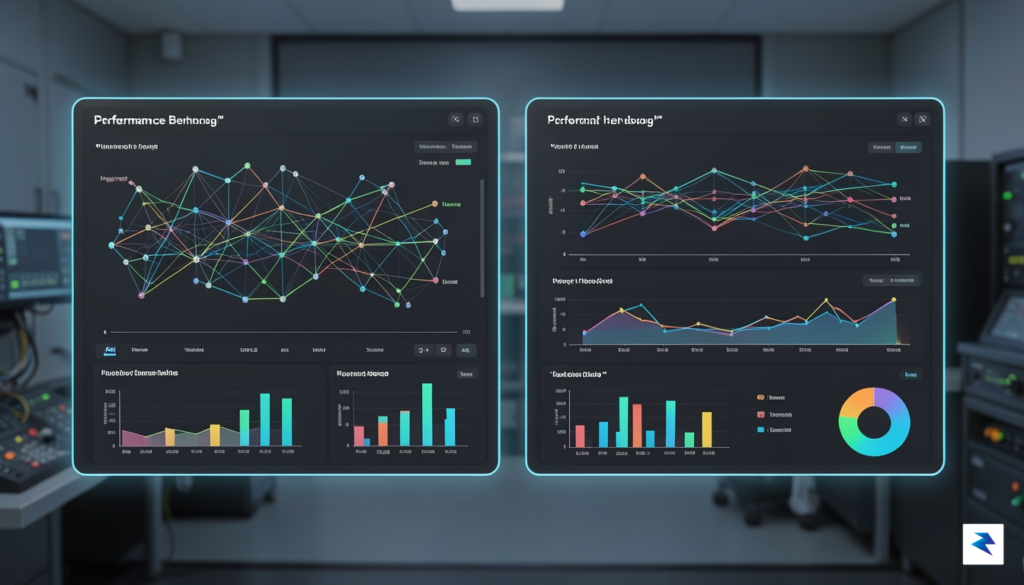
While the aggressive pricing strategies of Chinese AI developers have captured headlines, price is merely a single vector in the complex equation of enterprise technology adoption. To determine whether models from companies like Alibaba, Baidu, or DeepSeek can truly challenge Western titans like OpenAI and Anthropic, organizations must move beyond the ledger and rigorously evaluate technical performance. Industry-standard benchmarks, such as MMLU (Massive Multitask Language Understanding) and various coding proficiency tests, reveal that Chinese models are rapidly closing the gap. In several logical reasoning and mathematics-focused evaluations, leading Chinese LLMs now rival GPT-4o, demonstrating that the technical architecture behind these systems is no longer a “follower” but a sophisticated contender in the high-stakes world of foundation model development.

However, raw benchmark scores do not tell the entire story, particularly when it comes to the nuances of enterprise-grade deployment. Token efficiency and multimodal capabilities—the ability for a model to process, analyze, and generate text, images, and audio seamlessly—remain critical differentiators. While Western models have established a high bar for multimodal fluidity, Chinese alternatives are increasingly optimized for specific, high-density industrial applications. For instance, some of these models exhibit superior performance in handling long-context windows, allowing enterprises to ingest massive technical manuals or regulatory archives without losing coherence. These architectural choices reflect a strategic focus on efficiency that often prioritizes throughput and reliability over the broad-spectrum creativity often associated with general-purpose chatbots.
The true value of an AI model for a global enterprise lies in its ability to balance generalized logic with localized context, ensuring that compliance, language, and cultural nuances are never sacrificed for the sake of speed.
Perhaps the most significant advantage of Chinese models lies in their specialized training datasets, which provide a depth of linguistic and cultural nuance that generalized Western models sometimes lack. When an enterprise operates in Asian markets, the capacity for an AI to understand regional idioms, complex legal terminologies, and specific socio-cultural dynamics provides an inherent edge. While models like Claude 3.5 are exceptional at cross-cultural communication, they are built on a predominantly Western-centric digital corpus. In contrast, models trained on localized datasets are better equipped to navigate the specific regulatory environment and business ecosystem of China, reducing the “hallucinations” that often occur when Western models attempt to translate abstract cultural concepts into actionable business intelligence.
Ultimately, the decision to integrate these models should be treated as a strategic technical choice rather than a simple cost-saving measure. Organizations must audit their specific needs—whether that is code generation, real-time translation, or data-heavy analysis—and test these against the specific strengths of the available models. By mapping technical capabilities against unique operational requirements, enterprises can leverage the competitive benefits of Chinese AI innovation without compromising on the quality or the integrity of their digital infrastructure.

Moving away from a “one-size-fits-all” approach is no longer just a trend; it is a fundamental requirement for modern enterprises navigating the volatile AI landscape. Rather than tethering your entire infrastructure to a single provider, organizations should adopt a tiered, multi-model architecture that optimizes for both fiscal responsibility and operational security. This begins with a rigorous audit of your internal workflows: categorize each task based on its sensitivity, the volume of data processed, and the tolerance for potential downtime. By segregating your AI usage, you can leverage high-performance, cost-effective models—such as the increasingly sophisticated alternatives emerging from Chinese labs—for high-volume, non-critical tasks like internal documentation summarization, content drafting, or linguistic translation for non-sensitive markets.
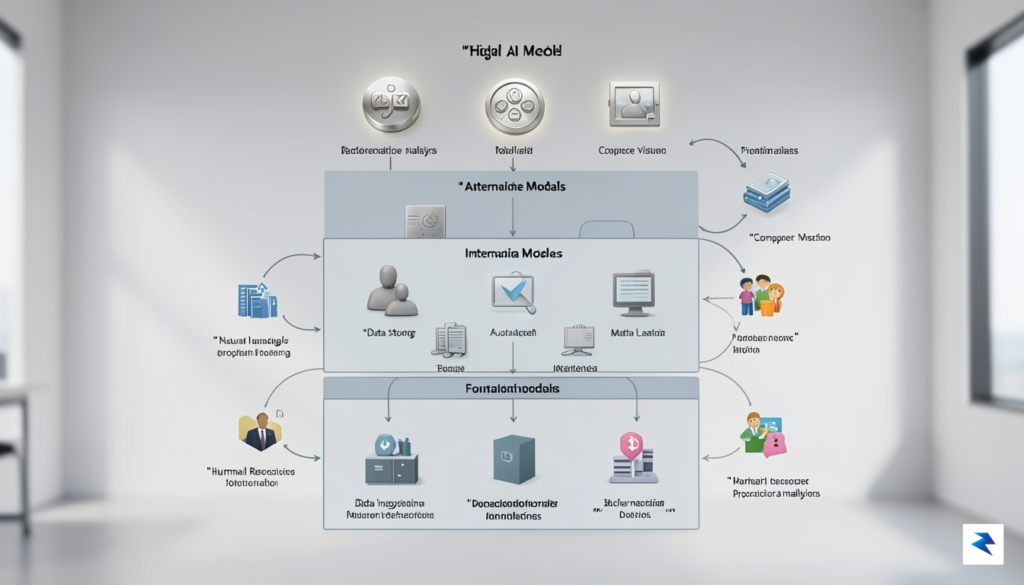
For mission-critical operations, however, the calculus shifts toward reliability and regulatory compliance. Sensitive core operations, such as proprietary data analysis, customer privacy management, or systems that directly impact financial transactions, should remain anchored to vetted, domestic infrastructure or enterprise-grade models that provide robust guarantees regarding data sovereignty and auditability. This “hybrid routing” strategy ensures that you aren’t overpaying for premium services on trivial tasks, while simultaneously shielding your most valuable intellectual property from the jurisdictional and security risks that often accompany the use of international, less transparent AI platforms.
The most successful enterprises will be those that view AI models as modular components rather than monolithic dependencies. By treating your AI stack as a flexible ecosystem, you can swap providers based on shifting price-to-performance ratios without disrupting your core business logic.
Ultimately, business leaders must navigate the classic “build vs. buy vs. partner” dilemma through a new lens. Building custom models from scratch is often prohibitively expensive and unnecessary for most firms, yet relying entirely on a single external vendor creates a dangerous “lock-in” effect that stifles negotiation leverage. Instead, partnering with a diverse set of model providers—integrating both domestic leaders and specialized international alternatives—allows you to maintain competitive pricing while mitigating the risks associated with vendor concentration. By establishing clear governance protocols for when to deploy low-cost alternatives versus enterprise-grade solutions, your organization can achieve a sustainable balance between aggressive innovation and defensive risk management.
You must be logged in to post a comment.