
Windows 10 Support Extended to 2027: What Home Users Need to Know
Understanding the Extended Support Lifecycle For millions of individuals still relying on Windows 10, the recent announcement from Microsoft…
For years, 3D printing was celebrated as the democratization of manufacturing—a way for hobbyists, engineers, and tinkerers to bring digital designs into the physical world from the comfort of their own homes. However, as these devices have transitioned from niche professional tools to common household appliances, the legislative climate has shifted dramatically. Lawmakers are increasingly viewing personal fabrication not as a catalyst for innovation, but as a security vulnerability that must be managed through oversight and monitoring. This shift is nowhere more apparent than in California, where a new legislative proposal threatens to turn the open-ended nature of personal manufacturing into a regulated, tracked activity.
The core of this legislative push centers on the state’s aggressive approach to controlling “ghost guns”—firearms manufactured at home without serial numbers. While the intent of such laws is often framed around public safety, the language used in recent California proposals effectively treats the 3D printer itself as a suspect device. By attempting to mandate registration requirements, digital tracking, or even the embedding of “authorized” software, the state is moving toward a surveillance model that could potentially force manufacturers to monitor what every user is creating. This isn’t merely about restricting specific weapon components; it is an escalation that threatens the foundational freedom to create objects using open-source hardware and software.
The transition from regulating specific end-products to regulating the tools used to create them marks a dangerous precedent for personal liberty in the digital age.
This development represents a critical turning point because it conflates general-purpose manufacturing tools with criminal intent. When lawmakers prioritize surveillance over the utility of a device, they inadvertently cast a wide net that ensnares students, artists, and small business owners who use 3D printers for legitimate tasks like prototyping, art, or home repair. If the government establishes a framework where every printer must be registered or every design file must be scrutinized, we risk establishing a “permission-based” manufacturing environment. In such a system, the inherent versatility of additive manufacturing is sacrificed, and the ability to innovate without centralized oversight is fundamentally curtailed.
Ultimately, this issue transcends the hobbyist community and touches upon deeper civil liberties regarding privacy and the right to manufacture. If California succeeds in codifying these surveillance measures, it will likely serve as a blueprint for other states looking to exert control over emerging personal technologies. Protecting the freedom to 3D print is not just about keeping a specific hobby alive; it is about defending the right to use private tools for private production without the looming threat of state-mandated digital tracking. The fight against this legislation is, at its heart, a fight to ensure that the tools of the future remain in the hands of the public, rather than under the watchful eye of the state.
At its core, the proposed legislation seeks to dismantle the anonymity that has defined the desktop manufacturing revolution. The bill introduces a rigid framework of mandates that would require manufacturers to implement mandatory serial number reporting for every machine sold within the state. This means that instead of simply purchasing a tool for personal or professional use, consumers would essentially be required to register their hardware in a centralized database, effectively creating a state-monitored log of who owns what equipment. Beyond mere ownership records, the legislation hints at “know-your-customer” (KYC) protocols similar to those seen in banking, where sellers would be legally obligated to verify the identity of every buyer, turning local hobby shops and online retailers into de facto compliance officers.
The technical implications for hardware are equally concerning, particularly regarding data-logging requirements. If enacted, these rules could force manufacturers to build “phone-home” capabilities into their firmware, requiring printers to report usage data, file metadata, or even identifying information about the objects being fabricated. This creates a significant hurdle for the open-source community, which relies on the ability to modify, inspect, and share hardware designs freely. By mandating specific security features or “tamper-proof” hardware architectures, the state would effectively outlaw the very transparency and modularity that allow 3D printing to thrive as a decentralized, democratic technology.

The burden of compliance created by these mandates falls disproportionately on independent inventors and small-scale manufacturers. While corporate giants might have the legal departments and financial resources to navigate complex regulatory filings and software integration, smaller firms may find the costs of retrofitting their machines or managing state-mandated databases to be insurmountable. This creates a dangerous “chilling effect” on innovation; when the cost of entry is artificially inflated by bureaucracy, the next generation of tinkerers and entrepreneurs may be pushed out of the market entirely. Instead of fostering a safer environment, these regulations risk cementing the dominance of large, legacy corporations that can afford the price of compliance, while simultaneously stifling the grassroots creativity that has historically driven the industry forward.
The true cost of these regulations is not just measured in dollars, but in the erosion of the freedom to create. When the state monitors the tools of production, the boundary between private innovation and public surveillance vanishes.
Ultimately, the legislation represents a fundamental shift in how we view digital fabrication. By framing 3D printers as potential threats rather than empowering tools, the state ignores the reality that these machines are used for everything from medical prototypes to educational aids. If these mandates are allowed to proceed, we risk transforming a vibrant, open ecosystem into a locked-down, monitored environment where every print is potentially scrutinized by government oversight. Protecting the right to build and innovate requires recognizing that these regulations are not merely technical adjustments, but a significant step toward controlling the means of production at the individual level.

The push to implement surveillance on 3D printing hardware is built upon a fundamental misunderstanding of the technology’s inherent nature. Proponents of these measures often assume that by tagging printers with digital identifiers or tracking file transfers, they can create a reliable audit trail for every physical object produced. However, this perspective ignores the “analog hole”—the inescapable gap between a digital instruction and a physical output. Once a machine has melted plastic into a shape, that object exists in the physical world completely untethered from the digital history of the printer. Unlike a digital file that can be watermarked or encrypted, a finished 3D-printed part possesses no inherent metadata that links it back to a specific user, a serial number, or a regulatory database.
Furthermore, the history of digital rights management (DRM) and software security demonstrates that restrictive mandates are rarely effective against motivated actors. Just as the music and film industries learned that file-sharing protocols could never be fully contained by central authorities, the 3D printing community relies on open-source ecosystems that prioritize decentralization. Because the hardware itself is increasingly modular, and the firmware running these machines is often community-developed, any attempt to hardcode surveillance into a printer’s motherboard will simply be stripped away by the open-source movement. If California mandates restrictive tracking, users will inevitably flock to custom firmware or “jailbroken” hardware that bypasses these limitations entirely, effectively rendering the legislative effort a tax on law-abiding hobbyists while leaving bad actors untouched.

Security through surveillance in 3D printing is a logical fallacy; it creates a paper trail for the innocent while providing a roadmap for those who wish to operate in the shadows.
Ultimately, the logic of surveillance fails because it treats 3D printing as a centralized service rather than a distributed manufacturing revolution. When any individual can assemble a functional printer from basic components—or utilize a decentralized network of private machines—a centralized registry becomes functionally obsolete. By forcing legitimate manufacturers to implement tracking, policymakers are not stopping crime; they are merely incentivizing the creation of a black market for non-compliant hardware. History has shown time and again that when technology is pushed underground, the resulting lack of transparency makes it significantly harder for law enforcement to monitor genuine threats, turning a well-intentioned policy into a catalyst for the very lack of oversight they seek to prevent.

The sanctity of the home has long been considered the final frontier of personal liberty, a private sphere where individuals are free to experiment, invent, and create without the watchful eye of state bureaucracy. By introducing mandatory surveillance for 3D printing equipment, California is effectively dismantling this protection, transforming a tool of personal empowerment into a node of state oversight. This shift represents a dangerous departure from the expectation of digital autonomy, as it implies that the act of manufacturing an object is no longer an inherently private pursuit. If the government can monitor the physical output of your home workshop today, it establishes a legal precedent that effectively erodes the boundary between public regulation and the intimate space of our living rooms.
This surveillance creep is not merely about tracking plastic trinkets; it is fundamentally about the control of information. When authorities begin monitoring 3D printers, they inevitably turn their attention toward the digital blueprints—the CAD files—that drive these machines. By scrutinizing the software and designs that circulate in open-source communities, the state gains the power to label specific forms of digital knowledge as illicit. This creates a chilling effect on innovation, where makers may fear the legal repercussions of experimenting with unconventional hardware designs or modifying existing products. When the right to manufacture is contingent upon government approval or algorithmic monitoring, the culture of open-source engineering begins to wither under the weight of self-censorship.
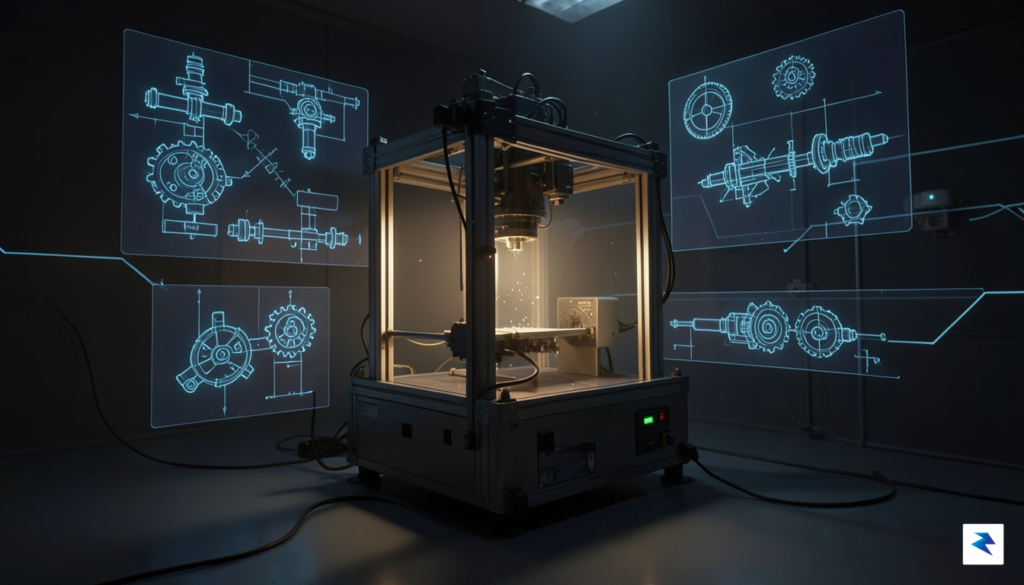
The ability to transform a digital file into a physical object is the hallmark of the modern industrial revolution; once we allow that process to be surveilled, we surrender the fundamental freedom to iterate and invent in private.
We must ask ourselves what comes next if we accept this encroachment as the new normal. If the state determines that it has a compelling interest in monitoring 3D printing, what logical barrier prevents them from regulating other forms of personal manufacturing, such as CNC milling, laser cutting, or even custom electronics assembly? The precedent being set is one of total visibility into the tools of production. This trend threatens to turn the “prosumer” economy into a managed system where only “authorized” creations are permitted. By fighting to keep our 3D printers free from state-mandated surveillance, we are not just protecting a hobby; we are defending the right to maintain a private, independent life in an increasingly digital world. If we allow the infrastructure of our personal workshops to become an extension of the state’s monitoring apparatus, we lose the very essence of what it means to be an autonomous creator in the 21st century.

The movement to defend personal manufacturing from intrusive oversight is far from over, but it requires a coordinated and sustained effort from the maker community to succeed. Legislative bodies often operate under the assumption that these surveillance measures have little public opposition, making it vital for us to disrupt that narrative. By organizing, speaking out, and engaging directly with the democratic process, you can signal to policymakers that the freedom to iterate, invent, and create is not something to be surrendered lightly.
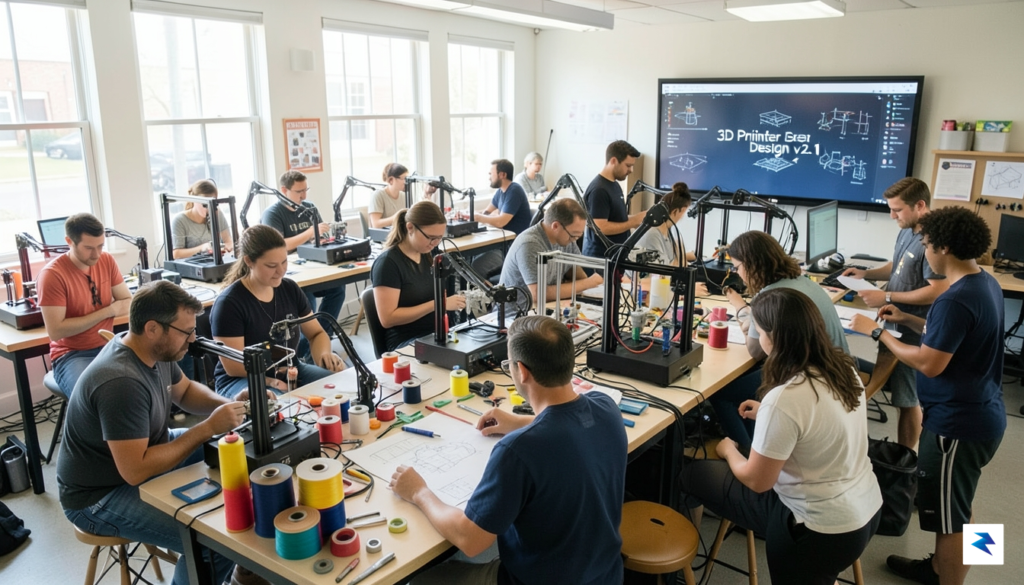
Taking action does not need to be an overwhelming task, but it must be consistent to be effective. Start by identifying your local representatives in the California legislature; even if they are not currently sponsoring this bill, they hold the power to influence their colleagues. Write concise, personalized emails explaining how this surveillance scheme would stifle your ability to innovate and why it sets a dangerous precedent for personal privacy. When representatives receive a high volume of thoughtful correspondence, it forces their staff to acknowledge the issue as a genuine concern for their constituents rather than a niche technicality.
“The strength of the maker movement lies in its decentralized nature; by standing together, we ensure that the tools of the future remain open, accessible, and free from unnecessary government surveillance.”
Ultimately, the goal is to shift the legislative focus toward legitimate safety concerns without resorting to the broad, sweeping surveillance of private citizens. When we present ourselves as a united front, we challenge the notion that makers are a threat to be monitored. By persistently documenting the negative consequences of these policies and bringing those findings to the attention of those in power, we turn the tide against encroachment and secure a future where the freedom to create remains protected by law.
You must be logged in to post a comment.