
Federal Investigation Reveals Missing DOGE Records: What You Need to Know
The DOGE Investigation: Understanding the Record-Keeping Controversy The Department of Government Efficiency (DOGE) stands as a pivotal agency…


For over a decade, the practice of extracting information from the web remained largely stagnant, defined by a brittle, manual process that felt more like digital archeology than software engineering. Developers relied on tools like BeautifulSoup or custom regex patterns to hunt for specific strings within tangled nests of raw HTML. This approach worked well enough when the web was static and predictable, but it essentially treated the internet as a giant, unstructured text file rather than a dynamic ecosystem of knowledge. Every time a website updated its layout or moved a button, those fragile selectors would break, forcing developers to spend their weekends debugging broken pipelines instead of building new features.
As the web became more sophisticated, this reliance on raw HTML became a massive bottleneck for modern applications. The rise of JavaScript-heavy frameworks meant that much of the content a user sees is never actually rendered in the initial source code, rendering traditional scraping methods useless. Furthermore, modern AI-driven products require more than just a collection of messy tags; they demand clean, semantic context that a machine can actually interpret. We have moved past the era where simply pulling a headline is enough; today, applications need to understand the intent, relationships, and metadata buried deep within a page’s structure.

The transition from scraping to data extraction represents a shift from “collecting strings” to “understanding context.” Modern software requires clean, machine-readable inputs to fuel the next generation of AI agents.
The pain points of this legacy approach are now impossible to ignore. Maintaining a library of CSS selectors for hundreds of different websites is a full-time job that offers no competitive advantage. When the data pipeline is brittle, the entire product becomes unreliable, leading to degraded user experiences and high operational overhead. Developers are effectively trapped in a cycle of maintenance, constantly chasing the shifting sands of front-end design changes. To break free, we must move toward an extraction model that prioritizes semantic meaning over document structure, treating the web as a source of structured knowledge rather than a graveyard of div tags.
This evolution is not just a change in tools; it is a fundamental shift in how we approach data integration. By moving toward automated, context-aware extraction, developers can finally treat web data as a reliable API. This allows teams to shift their focus from the “how” of data collection to the “why” of product innovation. By offloading the complexity of parsing, sanitizing, and structuring web data to intelligent systems, companies can build applications that are as resilient as they are powerful, finally putting the era of brittle, manual scraping behind us.
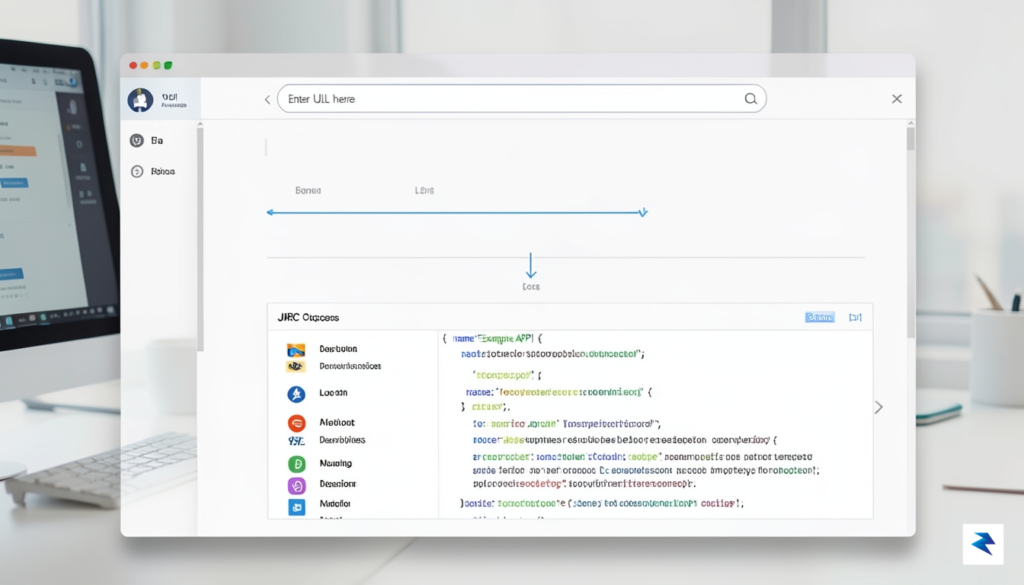
For years, developers looking to integrate web data into their applications have been trapped in the tedious cycle of DOM traversal, selector maintenance, and brittle parsing scripts. The public web is inherently chaotic, characterized by inconsistent HTML structures, dynamic content loading, and frequent layout shifts that break custom scrapers overnight. Context.dev fundamentally shifts this paradigm by acting as an intelligent intermediary, bridging the gap between raw, unstructured markup and clean, machine-readable formats. Instead of wrestling with complex CSS selectors or fragile regex patterns, developers can now rely on a robust API layer that handles the heavy lifting of normalization, allowing them to focus entirely on building core product logic.
The platform’s power lies in its ability to transform virtually any URL into a standardized output, beginning with the conversion of cluttered web pages into clean, semantic Markdown. This process strips away the noise—the intrusive navigation bars, decorative assets, and redundant script tags—leaving behind only the high-signal content essential for downstream processing. By distilling pages into this lightweight format, Context.dev ensures that downstream AI models and automated workflows receive only the relevant information, significantly reducing token overhead and improving the quality of extracted insights.
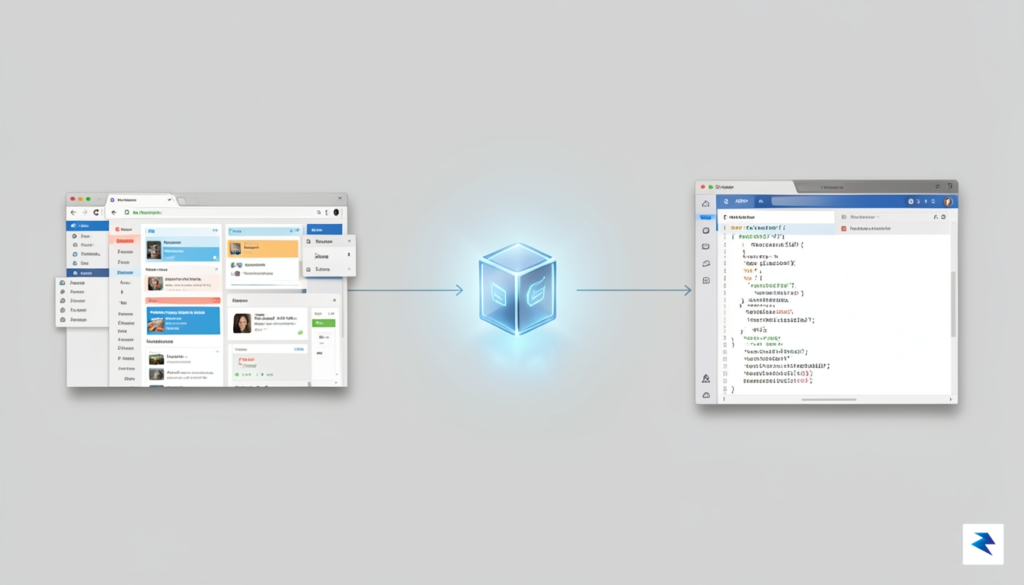
Beyond simple content cleaning, the platform offers specialized capabilities for harvesting high-value entities. Whether you need to extract comprehensive company profiles or granular data points like tiered pricing structures, support documentation links, or team member credentials, the API provides a seamless interface for targeted data retrieval. By leveraging JSON Schema, developers can define exactly what they need from a page, effectively instructing the system to ignore everything else. This precision-first approach means that you are no longer retrieving a “web page” in its entirety, but rather a structured data object that is ready for immediate integration into your database or machine learning pipeline.
The true value of modern data extraction isn’t just in gathering information; it is in ensuring that the data arrives in a state of immediate readiness for application logic.
This systematic approach eliminates the need for persistent maintenance. When a website updates its design or rearranges its navigation, the underlying schema remains the developer’s source of truth, shielding the application from the underlying front-end volatility. By abstracting away the complexities of the browser environment, Context.dev empowers teams to scale their data-driven features rapidly, turning the entire internet into a reliable, consistent source of structured intelligence rather than a fragmented collection of unpredictable files.
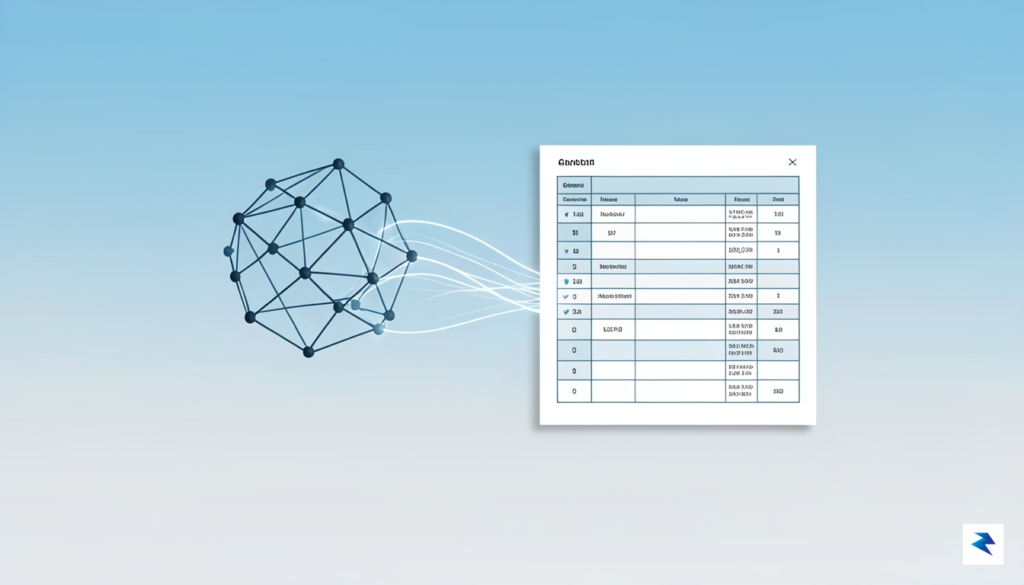
The internet, as we know it, was built for humans. Browsers are incredibly adept at interpreting complex HTML, CSS, and JavaScript to render visually rich, interactive experiences. However, the rapidly evolving landscape of Artificial Intelligence and Large Language Models (LLMs) operates on an entirely different paradigm. LLMs don’t “browse” in the traditional sense; they consume raw text and structured data, and the way this data is presented dramatically impacts their performance, accuracy, and efficiency.
Consider the typical webpage: layers of navigation menus, advertisements, footers, social media widgets, and intricate styling information, all wrapped within verbose HTML tags. While essential for human readability and interaction, this “noise” becomes a significant hindrance for LLMs. Every character, every tag, every script snippet consumes valuable tokens within an LLM’s finite context window. This often means that the actual, meaningful content of a page – the article text, product description, or key data points – gets diluted by irrelevant surrounding elements, leading to token waste, increased processing costs, and a higher propensity for the LLM to misinterpret or “hallucinate” information.
Raw HTML, with its intricate nesting and focus on visual presentation, presents several challenges for AI. Firstly, the sheer volume of non-content HTML tags (<div>, <span>, <script>, etc.) inflates the input size without adding semantic value. This token bloat means LLMs can process less actual information within their context window, limiting the depth of their understanding or requiring more expensive, larger context models. Secondly, the implicit structure of HTML, which relies on CSS for layout and visual cues, is notoriously difficult for LLMs to decipher into a coherent logical structure. They struggle to differentiate between main content, sidebars, headers, and footers, often treating all text with equal importance, which can dilute the focus on the most relevant information.
This inherent ambiguity and noise directly impact crucial AI applications like Retrieval-Augmented Generation (RAG). When feeding raw HTML into a vector database for RAG, the irrelevant elements are indexed alongside the core content. This can lead to less precise retrievals, where the system pulls in noisy, unhelpful chunks of information that don’t directly answer the user’s query, ultimately degrading the quality of the LLM’s generated response. For AI agents tasked with extracting specific data points or understanding relationships between entities, raw HTML is an even greater barrier, forcing them to spend computational resources on parsing and filtering rather than focusing on the core task.
This is precisely where Context.dev steps in, bridging the gap between the human-centric web and AI’s data consumption needs. Instead of delivering raw, messy HTML, Context.dev transforms web content into two highly optimized formats: clean Markdown and structured JSON. Markdown, a lightweight markup language, strips away all the visual-centric cruft of HTML while preserving essential semantic formatting like headings, lists, bold, and italics. This results in a concise, human-readable, and machine-friendly representation of the web page’s core text content, making it significantly easier for LLMs to process and understand.
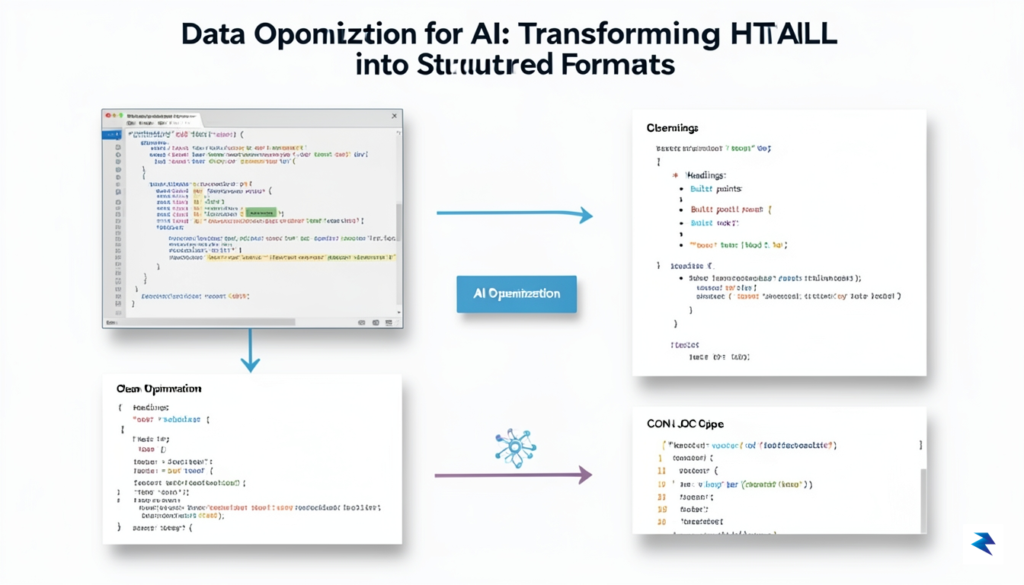
Furthermore, Context.dev provides structured data in JSON format. This isn’t just a textual representation; it’s an explicit, machine-readable extraction of key entities, attributes, and relationships present on the page. Imagine extracting product names, prices, specifications, author names, publication dates, or review scores as discrete data points. This level of structured information empowers LLMs and AI agents to go beyond mere text understanding. They can perform precise data lookups, compare information, answer specific factual questions with high accuracy, and integrate directly into databases or other automated workflows, greatly enhancing the utility and reliability of AI-driven applications.
By providing web content in these optimized formats, Context.dev dramatically improves RAG outcomes. The clean Markdown allows for more effective chunking and embedding, ensuring that vector databases store and retrieve highly relevant, semantic content. With reduced noise, LLMs are less prone to hallucination and can generate more accurate, contextually appropriate responses. Ultimately, Context.dev facilitates more efficient token usage, clearer understanding, and more robust applications for AI agents and chatbot training pipelines, unlocking the true potential of web data for the LLM era.
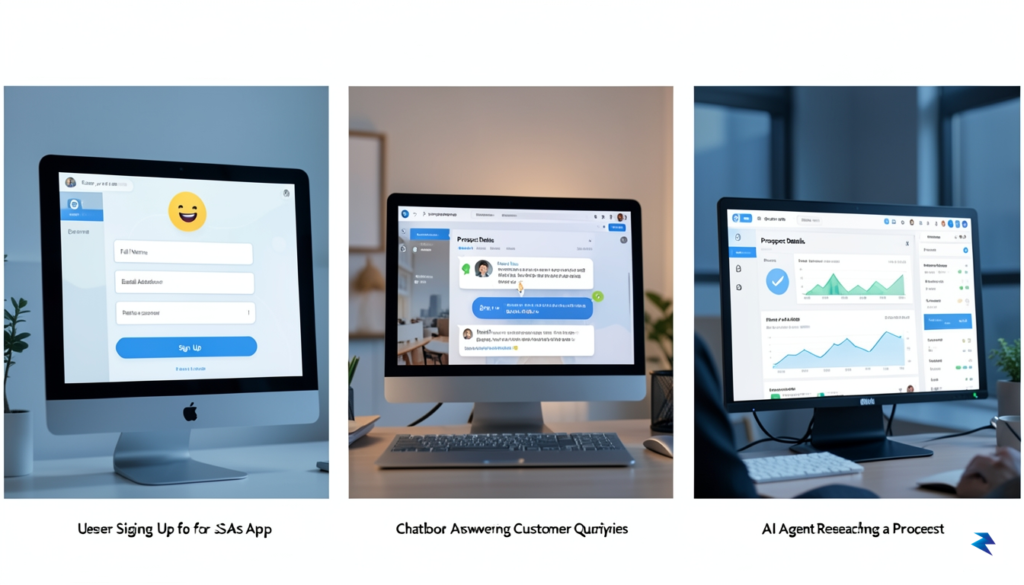
The true power of structured data extraction lies in its ability to transform messy, unorganized web pages into actionable fuel for sophisticated software. Instead of relying on manual data entry or fragile, custom-built scrapers that break whenever a website updates its design, developers are now leveraging intelligent APIs to integrate real-time web intelligence directly into their products. This shift enables a new class of features that feel less like traditional tools and more like autonomous, background-running assistants.
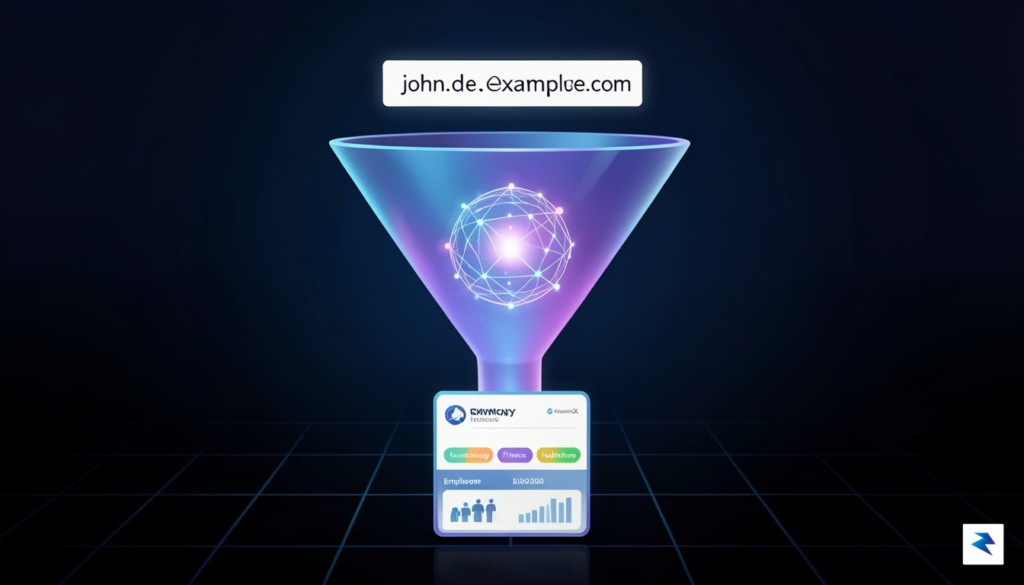
One of the most immediate applications is the optimization of SaaS sign-up flows. By capturing a user’s corporate email address, an application can instantly query the associated company domain to pull mission-critical details—such as industry, company size, and core product offerings—without forcing the user to fill out a lengthy, friction-heavy form. This automated enrichment allows platforms to personalize the onboarding experience from the very first screen, dynamically adjusting value propositions and feature suggestions based on the specific context of the user’s business. Consequently, companies see higher conversion rates because the user interaction is shortened, streamlined, and intuitively tailored to their professional identity.
Beyond the sign-up phase, these extraction capabilities are revolutionizing how customer support agents function. Modern bots are moving away from rigid, keyword-based decision trees toward more dynamic knowledge retrieval systems. By pointing an extraction API at a company’s public documentation, help centers, or service status pages, developers can build living knowledge bases that automatically update as the underlying content changes. This ensures that AI agents always have access to the most current product specifications, troubleshooting steps, and policy updates, significantly reducing the frequency of hallucinations and improving the accuracy of automated responses.
The integration of structured web data allows AI agents to function as dynamic extensions of a company’s institutional knowledge, rather than static repositories of outdated information.
Finally, the most ambitious frontier for this technology is the enablement of agentic workflows, where AI systems autonomously perform multi-step research tasks. Rather than requiring a human to manually visit dozens of websites to compile market trends or competitor data, an AI agent can now trigger targeted extractions to gather, normalize, and summarize information from across the web. Whether it is tracking pricing fluctuations across various storefronts, monitoring regulatory updates, or aggregating news mentions, these agents act as high-speed research assistants. By delegating the retrieval and structuring of raw web content to a reliable API, developers can focus on building the logic that interprets these insights, turning the internet into a structured, queryable database for their autonomous systems.

The history of automated data extraction is fraught with stories of aggressive bots, crashed servers, and the inevitable “cat-and-mouse” game between site owners and crawlers. However, the future of the web ecosystem depends on shifting away from this adversarial model toward one defined by mutual respect and efficiency. When we developed our platform, we recognized that the primary challenge wasn’t just parsing HTML, but doing so without becoming a digital nuisance. Responsible data extraction starts with the fundamental principle that a website’s resources are not infinite; therefore, every request must be intentional and optimized to minimize the load on the host’s infrastructure.
Our approach to this challenge centers on a strategy of proactive caching and intelligent request management. Rather than hitting the same endpoint repeatedly for every individual user query, our system employs a sophisticated caching layer that serves previously gathered data whenever it remains relevant. By reducing the absolute volume of redundant requests, we significantly lower the burden on origin servers, ensuring that the target website remains performant for its actual human visitors. This architectural choice transforms the data retrieval process from a potential disruption into a streamlined, high-efficiency operation.

Beyond technical optimization, we believe that transparency and autonomy are the pillars of an ethical web. We have built in clear, accessible mechanisms for site owners to control how their content is accessed and utilized within our ecosystem. If a domain prefers to opt out of our indexing or wants to set specific crawling parameters, they can do so easily, and our system respects those boundaries immediately. We view these opt-out mechanisms not as a hurdle, but as a critical safeguard that empowers content creators to maintain authority over their digital presence.
True utility in the AI era shouldn’t come at the cost of the web’s stability; it requires a commitment to sustainable data consumption that respects the site owners who build the internet’s value.
Ultimately, our goal is to prioritize legitimate business use cases—such as market research, product analysis, and AI training—over the reckless, mass-harvesting strategies that gave scraping a bad name in the early 2000s. We monitor our traffic patterns closely to ensure that our API usage remains within reasonable bounds, actively preventing the “hammering” effect that characterizes irresponsible bots. By fostering a model where utility is balanced by restraint, we aim to demonstrate that high-quality, AI-ready data can be obtained through cooperation rather than conflict. This equilibrium is not just a policy preference; it is a necessity for anyone looking to build tools that are designed to last in an increasingly interconnected digital landscape.
You must be logged in to post a comment.