
The Crypto Clarity Act: Why the White House is Pushing for a Historic Deal
The Push for Crypto Clarity: An Overview For years, the digital asset ecosystem in the United States has existed in a precarious state of…

When you drive a new vehicle off the lot, you likely assume that the technology inside was meticulously engineered and tested by the manufacturer. However, many consumers are unaware that their shiny new purchase often comes equipped with an aftermarket “add-on” that wasn’t part of the original factory design. Dealerships frequently install third-party GPS trackers, alarm systems, or telematics modules before the car is even sold, often marketing them as premium security features or “connected car” conveniences. While these devices are designed to help with inventory management or stolen vehicle recovery, they operate as a silent, digital parasite on your car’s internal electrical and data network.
The fundamental problem lies in the significant disconnect between the rigorous, multi-layered security protocols implemented by auto manufacturers and the often-lax standards of these aftermarket hardware providers. Factory-integrated systems undergo years of cybersecurity auditing, but dealership-installed modules are typically retrofitted onto the vehicle’s Controller Area Network (CAN bus) with little regard for long-term digital hygiene. Because these devices are essentially spliced into the car’s nervous system, they can bypass essential security gateways that are intended to keep malicious actors away from critical functions like the engine control unit, steering, and braking systems. By installing these devices to simplify their own logistics, dealerships are unintentionally creating a “backdoor” that manufacturers never intended to exist.
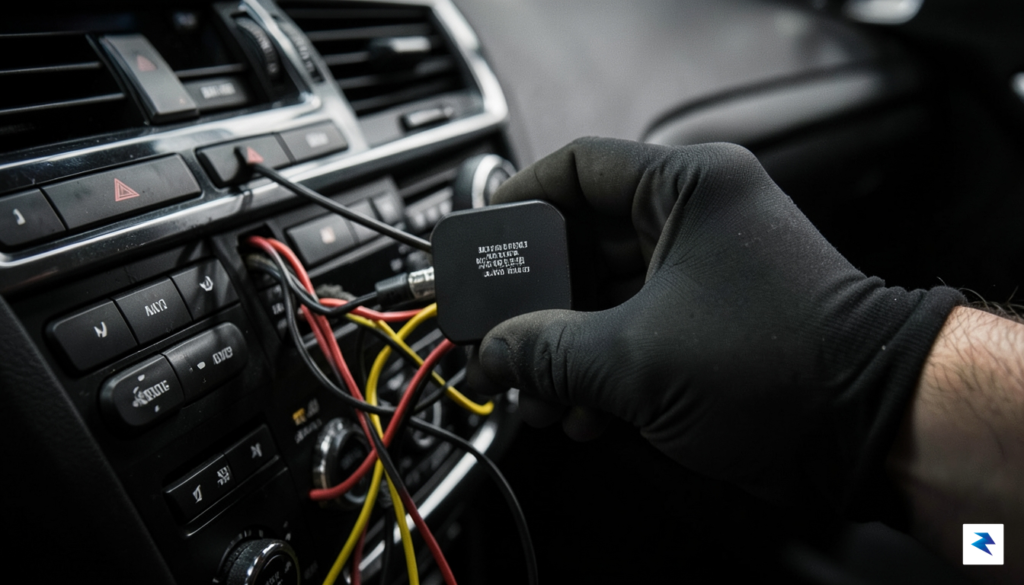
These aftermarket devices effectively act as a permanent, internet-connected bridge into your car’s most sensitive computer systems, often protected by nothing more than weak, default credentials.
This is not merely a localized inconvenience; it is a systemic industry issue that spans thousands of dealerships across the United States. Many of these telematics units are manufactured by lesser-known third-party vendors who prioritize ease of installation over robust encryption or secure update paths. Consequently, if a vulnerability is discovered in one of these devices, there is no centralized process—like a manufacturer-led recall—to ensure that the patch reaches the end-user. As a result, millions of vehicles are potentially driving around with an unpatched, internet-accessible vulnerability sitting right behind the dashboard, essentially waiting for a sophisticated attacker to scan for and exploit it. The convenience of “stolen vehicle recovery” is, in many cases, outweighed by the reality that the device itself has become the primary point of failure for your vehicle’s overall security.
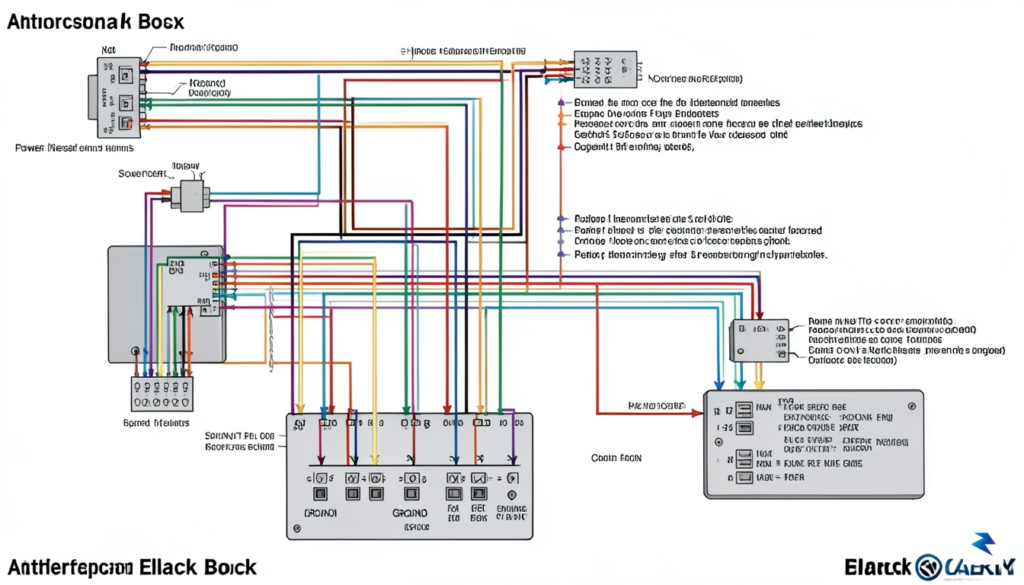
At their core, the telematics modules installed by dealerships are far more sophisticated than the simple, standalone security alarms of the past. While a legacy alarm system might have been limited to a proximity sensor or a loud siren triggered by a jarring impact, these modern aftermarket devices are essentially miniature computers integrated directly into the vehicle’s central nervous system. By tapping into the Controller Area Network, or CAN bus—the high-speed digital highway that allows every electronic component in your car to talk to one another—these devices gain the ability to listen to and inject commands into the vehicle’s proprietary language.
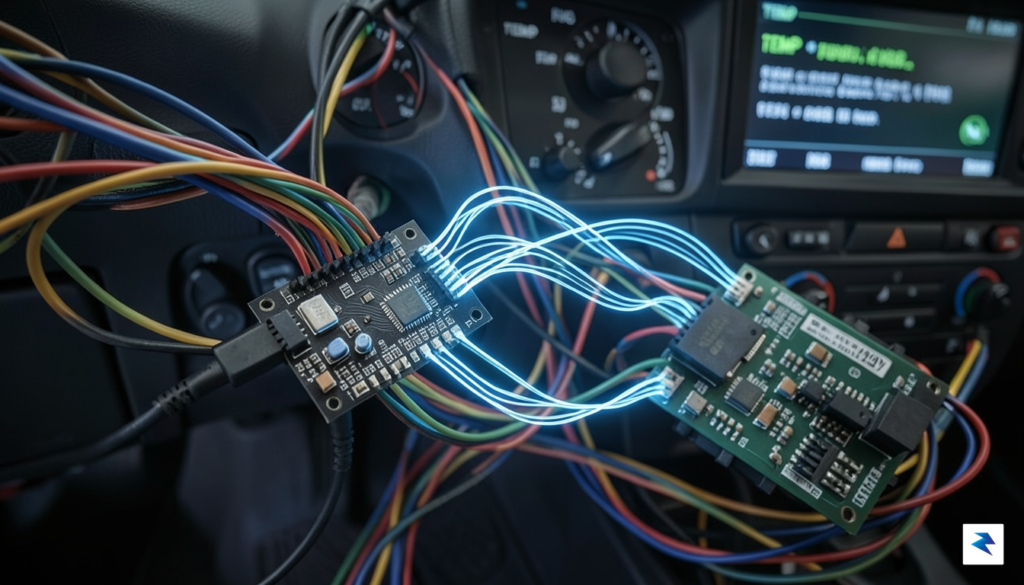
This deep level of integration is what grants the device its expansive feature set, ranging from real-time GPS location tracking to remote door unlocking and engine immobilization. Because the module is physically wired into the CAN bus, it can intercept legitimate signals meant for the engine control unit (ECU) or the body control module. For example, when a dealership’s app sends a command to “lock the doors,” the telematics device translates that request into the specific hexadecimal code that the car’s internal network recognizes as an instruction to engage the actuators. However, this same pathway—designed for convenience and fleet management—creates an unintended backdoor that bypasses the manufacturer’s primary security protocols.
The very architecture that allows for seamless remote control is the same mechanism that permits unauthorized actors to send malicious instructions to critical vehicle systems, potentially overriding safety features or disabling the engine while the car is in motion.
The primary issue lies in the design philosophy behind these aftermarket additions. Unlike the core software developed by automotive engineers, which undergoes years of rigorous stress testing and cybersecurity auditing, many dealership-installed modules are built with a focus on rapid deployment and low-cost manufacturing. These devices often lack the robust encryption or authentication layers required to prevent a “man-in-the-middle” attack on the CAN bus. Because the vehicle’s internal network usually operates on a “trust-by-default” basis—assuming that any device connected to the bus is a legitimate part of the vehicle—it rarely verifies the source of the incoming digital commands. Consequently, if a hacker exploits a vulnerability in the telematics module’s cellular interface, they can essentially masquerade as a trusted component, wielding near-total control over the vehicle’s vital functions.

The security landscape for modern vehicles has shifted dramatically as third-party aftermarket devices, often installed by dealerships to manage inventory or track vehicle financing, have become common fixtures in cars across the United States. Security researchers recently uncovered a critical flaw in the architecture of these telematics units, revealing that they communicate via dangerously insecure protocols. Because these devices lack robust authentication mechanisms, the cloud-based APIs responsible for managing them essentially treat incoming requests as trusted commands. In effect, a malicious actor does not need to physically access the vehicle to gain control; they simply need to impersonate an authorized dealer or a fleet manager through the device’s poorly secured digital interface.
By exploiting these weaknesses, researchers found that unauthorized parties could easily intercept and manipulate data traffic between the vehicle and the backend servers. Because the API endpoints fail to verify the identity of the user sending the request, a hacker can craft malicious packets that the device interprets as legitimate administrative commands. This level of access grants an attacker the ability to track the real-time GPS location of the vehicle, effectively turning a security tool into a sophisticated surveillance device. The ease with which these commands can be injected highlights a systemic failure in how these third-party manufacturers have prioritized rapid deployment over fundamental cybersecurity hygiene.

Perhaps the most alarming finding is the capability for these devices to trigger a remote “immobilization” or “paralysis” of the vehicle. Many of these trackers are wired directly into the vehicle’s ignition or fuel pump relay to allow dealerships to disable cars for non-payment or recovery purposes. When a hacker exploits the insecure API, they can send a command to trigger this relay, effectively cutting power to the engine. If this happens while the vehicle is traveling at highway speeds, the loss of power steering, electronic braking assistance, and engine torque creates an immediate, life-threatening scenario for the driver and everyone else on the road.
The ability to remotely immobilize a vehicle is a “kill switch” that, when compromised, transforms a convenience feature into a dangerous weapon capable of causing catastrophic accidents.
The potential for mass exploitation is particularly concerning because many of these devices share identical, hardcoded credentials or lack encryption entirely. Once a researcher or a malicious actor identifies the communication structure for one device, they can often replicate the attack across thousands of other vehicles using the same hardware. This creates a scenario where a single vulnerability in a cloud dashboard could lead to the simultaneous disabling of countless cars nationwide. As these devices remain installed and unpatched in millions of vehicles, the window of opportunity for bad actors to weaponize this remote-access flaw continues to widen, making immediate firmware updates a matter of public safety rather than just digital maintenance.

Determining whether your vehicle harbors a third-party tracking or security device requires a systematic approach, as these units are often installed by dealerships to manage inventory or incentivize high-margin financing add-ons. While not every car is equipped with these systems, vehicles purchased through high-volume dealerships that emphasize “convenience packages” or “anti-theft protection” are statistically at a much higher risk. Your first step in this investigative process should be a thorough review of your original purchase paperwork. Carefully examine the Monroney label—the window sticker—and your final bill of sale for ambiguous line items labeled as “GPS tracking,” “LoJack,” “security suite,” or “convenience fee.” These labels often mask the cost of hardware that remains active long after you have driven off the lot.

If your documentation is unclear, a physical inspection of your vehicle’s interior is the next logical step. Most of these aftermarket devices are spliced directly into the On-Board Diagnostics (OBD-II) port, located under the driver’s side dashboard. You should look for any hardware that appears incongruous with the rest of the vehicle’s wiring, such as dangling black boxes, modules wrapped in electrical tape, or Y-splitters that deviate from the factory-standard connector. If you see wires that look like they were added in an aftermarket fashion—often characterized by bulky plastic housings or loose, disorganized cables—you have likely found the culprit. It is also wise to check for unexpected mobile applications on your phone that the dealership may have asked you to install, as these apps often serve as the user-interface for the very tracking device you are trying to identify.
If you suspect the presence of an unauthorized tracking device but are uncomfortable performing a physical inspection yourself, contact your dealership’s service department directly. Ask them specifically if any GPS or telematics hardware was installed prior to your purchase and request that they remove it if it is not part of the manufacturer’s original equipment.
When in doubt, consult a trusted independent mechanic. These professionals are well-versed in identifying “dealer-add” hardware and can often spot suspicious modifications that an average owner might overlook. By taking the time to verify the integrity of your vehicle’s electronics, you are not just protecting your privacy; you are also ensuring that your car’s critical systems remain secure from the potential vulnerabilities inherent in poorly integrated third-party technology.

If you suspect that your vehicle has been fitted with an insecure tracking or alarm device, the first step is to ascertain the nature and origin of the hardware. Many vehicle owners are surprised to learn that these modules are often installed by dealerships prior to the sale for inventory management or as an upsell, rather than being factory-integrated components. You should begin by reviewing your purchase documentation and service agreements, which may explicitly list additional security hardware. If you identify a third-party device that you did not authorize or do not wish to maintain, contact your dealership immediately to demand its removal. A reputable dealer should be willing to deactivate or physically excise the hardware to restore your vehicle to its factory-standard security configuration, ensuring that the integrity of your car’s Controller Area Network (CAN bus) is not compromised by unauthorized third-party inputs.
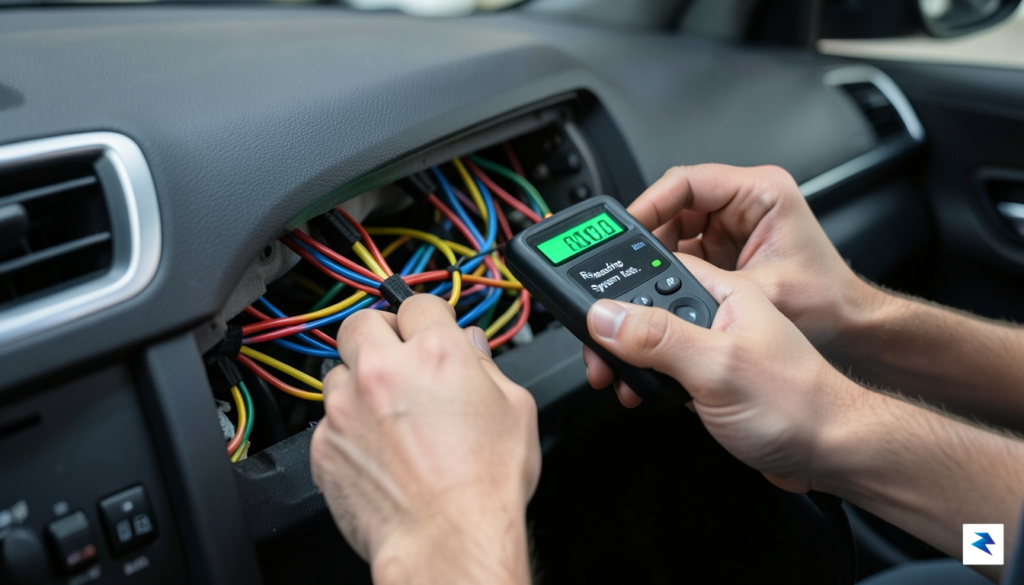
For those who find the dealership route unhelpful or who have purchased a pre-owned vehicle with questionable modifications, consulting a certified auto-electrician is the safest path forward. These professionals possess the diagnostic tools necessary to trace hidden wiring and identify unauthorized modules that may be tapping into your vehicle’s critical electronic systems. Attempting to remove these devices yourself is strongly discouraged, as modern automotive wiring is incredibly complex; a single misstep could trigger an airbag deployment, disable your engine, or void your manufacturer’s warranty. A skilled technician can perform a comprehensive sweep, safely isolating the device from the vehicle’s electrical system, and ensuring that any gaps in the wiring harness are properly soldered and insulated to prevent future short circuits or connectivity issues.
The core of modern automotive security lies in the “least privilege” principle: no third-party hardware should have the capability to override or paralyze the primary functions of your vehicle.
Beyond immediate remediation, it is vital to keep your vehicle’s software ecosystem as clean and updated as possible. If the device in question is a legitimate piece of hardware that requires connectivity, ensure that its firmware is fully updated to the latest version provided by the manufacturer. Often, these devices are plagued by vulnerabilities because they run on outdated, unpatched software that lacks basic encryption. If a firmware update is not available, or if the manufacturer has abandoned support for the module, the only secure course of action is total removal. Moving forward, the automotive industry must prioritize standardized security protocols for all third-party hardware. As vehicles become increasingly digitized, accountability regarding who can access your vehicle’s data and control systems is not just a luxury—it is a fundamental requirement for road safety and personal privacy.
You must be logged in to post a comment.