
Is Your Car Vulnerable? The Hidden Danger of Dealership-Installed Alarms
The Hidden Risk in Your Dealership Alarm When you drive a new vehicle off the lot, you likely assume that the technology inside was…


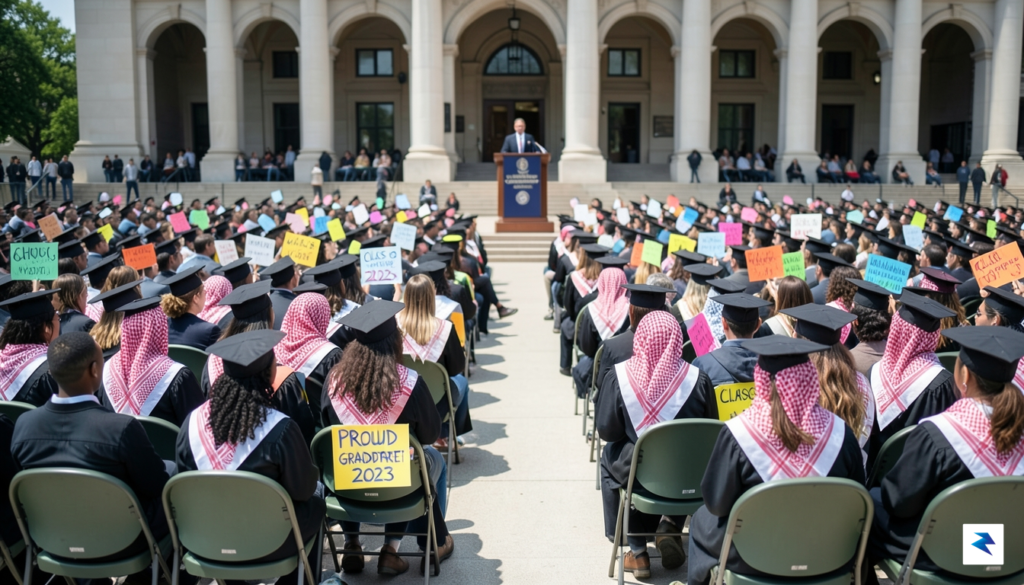
For decades, the university commencement ceremony has served as a sacrosanct ritual of passage, a day dedicated to the celebration of academic rigor and the promise of a bright, meritocratic future. However, at Stanford University, the recent graduation exercises evolved into a theater of moral reckoning. When over a hundred students stood up and walked out during Sundar Pichai’s keynote address, they effectively transformed a traditional rite of passage into a high-stakes political demonstration. This act was not merely a reaction to a specific speaker; it was a deliberate signaling of a profound cultural shift, marking a transition in how the next generation of tech workers perceives their professional responsibilities and the inherent complicity of the institutions that train them.

Student political engagement has a storied history in American academia, tracing back to the anti-war movements of the 1960s and the divestment campaigns of the 1980s. By choosing the commencement stage, these students tapped into a long lineage of using high-visibility ceremonies to force institutional accountability. Commencement is inherently a captive audience setting, one that demands the attention of the media, the university administration, and the corporate giants waiting to hire the graduating class. When students reject the comfort of their degrees to prioritize a protest, they are explicitly stating that their commitment to ethical standards outweighs the celebratory nature of the day. This tactic effectively strips away the veneer of corporate respectability that usually accompanies such addresses, forcing an immediate, uncomfortable spotlight on the grievances at hand.
The core of this particular unrest lies at the increasingly blurred intersection of elite academic institutions and the military-industrial complex. As tech giants like Google lean further into government contracts and defense-related infrastructure, students are asking uncomfortable questions about the ethics of their future employers. The walkout serves as a visceral reminder that the next generation of engineers, developers, and researchers is no longer willing to compartmentalize their technical output from its real-world consequences.
“True innovation must be measured not just by the speed of our algorithms, but by the integrity of the systems they support and the human lives they impact.”
This protest signals a departure from the traditional Silicon Valley ethos of “move fast and break things.” Instead, these students are demanding a more cautious, conscientious approach to technological development. By turning their backs on one of the most powerful leaders in the tech industry, they are signaling that they view corporate complicity not as a byproduct of success, but as a critical failure of leadership. This movement represents a growing demand for transparency in the relationships between universities, government defense initiatives, and the private sector, setting a new precedent for campus activism in the 21st century.

The core of the student protest against Sundar Pichai at Stanford was not merely a reaction to corporate policy, but a profound ideological rejection of Google’s increasing entanglement with state power. Central to this dissent is Project Nimbus, a $1.2 billion cloud computing contract between Google, Amazon, and the Israeli government. For student activists, this partnership represents a dangerous crossing of the Rubicon, where the company’s powerful AI infrastructure and machine-learning capabilities are directly integrated into military operations. They argue that by providing the foundational cloud architecture for governmental and defense agencies, Google effectively becomes an active participant in surveillance and military logistics—applications they contend are fundamentally at odds with the company’s historical motto of “don’t be evil.”
Beyond the specific complexities of Project Nimbus, the students’ grievances are rooted in a broader pattern of Google’s government engagement, including past controversies surrounding the company’s work with U.S. Immigration and Customs Enforcement (ICE). This history of collaboration has created a deep-seated distrust among the next generation of tech workers, who view the company’s silence on the human rights implications of its tools as a moral failure. To these students, the technology they are being trained to build—sophisticated cloud platforms and generative AI—is value-neutral only in the laboratory; once deployed in the hands of state authorities, it carries immense weight. They fear that without stringent ethical guardrails and a willingness to walk away from lucrative but controversial contracts, the industry is normalizing the use of private innovation for state-sanctioned oppression.
The protest is a signal that for today’s computer science graduates, the ethical cost of a contract is no longer an abstract concern; it is a primary factor in their professional and political identity.
This movement marks a significant shift in the definition of “ethical tech.” For previous generations, ethical development was often confined to data privacy, bias mitigation in algorithms, or the environmental impact of data centers. However, this cohort of engineers is expanding the scope to include the geopolitical consequences of their labor. They are demanding a seat at the table, insisting that the engineers who write the code and build the infrastructure should have veto power over how that technology is ultimately utilized. As they prepare to enter a workforce dominated by massive cloud providers, these students are establishing a new standard: that professional excellence is incomplete without a rigorous commitment to the real-world application of their creations. By walking out on Google’s leadership, they are signaling that the era of “neutral” engineering is over, replaced by a mandate for total accountability.

Behind the meticulously coordinated walkout that reverberated across Stanford’s commencement ceremony, a profound blend of conviction and strategic planning was at play, spearheaded by students like Amanda Campos and Eva Jones. For these lead organizers, the decision to orchestrate such a public display of dissent was not born of fleeting frustration, but rather from a deep-seated moral framework and a desire to hold powerful institutions accountable. They understood that challenging the venerated traditions of a university, especially during a moment of celebration, required unwavering resolve and a clear articulation of their ethical imperatives, extending far beyond the immediate moment.
Campos, Jones, and their peers were driven by a belief that their roles as future leaders in technology and other fields came with an inherent responsibility to question the ethical implications of corporate power. They saw the commencement speech by a tech titan not just as a ceremonial address, but as a symbolic endorsement of practices they found problematic. Their motivation stemmed from a desire to ensure that the values instilled at Stanford genuinely reflected a commitment to societal well-being, rather than simply facilitating the unchecked growth of corporations. This conviction fueled their tireless efforts, transforming abstract concerns about ethics into tangible, collective action.
Organizing a protest of this magnitude during one of the university’s most significant events presented a formidable array of logistical challenges. It demanded meticulous planning, from coordinating hundreds of students across various departments to ensuring that their message was clear, impactful, and non-violent. Secret meetings, encrypted communication channels, and a complex network of student liaisons were essential to maintain discretion while building momentum. The timing had to be precise, the messaging consistent, and the commitment of participants unshakeable, all while navigating the intense pressures and scrutiny that come with challenging a major academic institution on such a prominent stage.
The path to a unified front was not without its internal debates. Students grappled with the implications of disrupting a day meant for celebration, and many weighed the potential personal and professional repercussions of taking such a visible stand. There were robust discussions about whether a quieter, more internal form of advocacy might be more effective, or if remaining silent would inadvertently signal acceptance. Ultimately, the argument for visible, collective action prevailed, fueled by the conviction that silence would be interpreted as tacit approval of the status quo. The organizers skillfully navigated these discussions, fostering a sense of shared purpose that transcended individual anxieties and solidified their collective resolve.
Beyond the immediate, powerful statement made on commencement day, Campos and Jones envisioned a broader, sustained movement for accountability within the tech industry and academia. Their long-term goals extended to fostering a culture where ethical considerations are paramount, where future tech leaders are equipped not just with technical skills but with a robust moral compass. They aimed to push for greater transparency from corporations, more ethical investment practices from universities, and a more critical discourse around technology’s impact on society. For these student activists, the walkout was not an end in itself, but a powerful first step in a much longer journey towards a more just and equitable future.
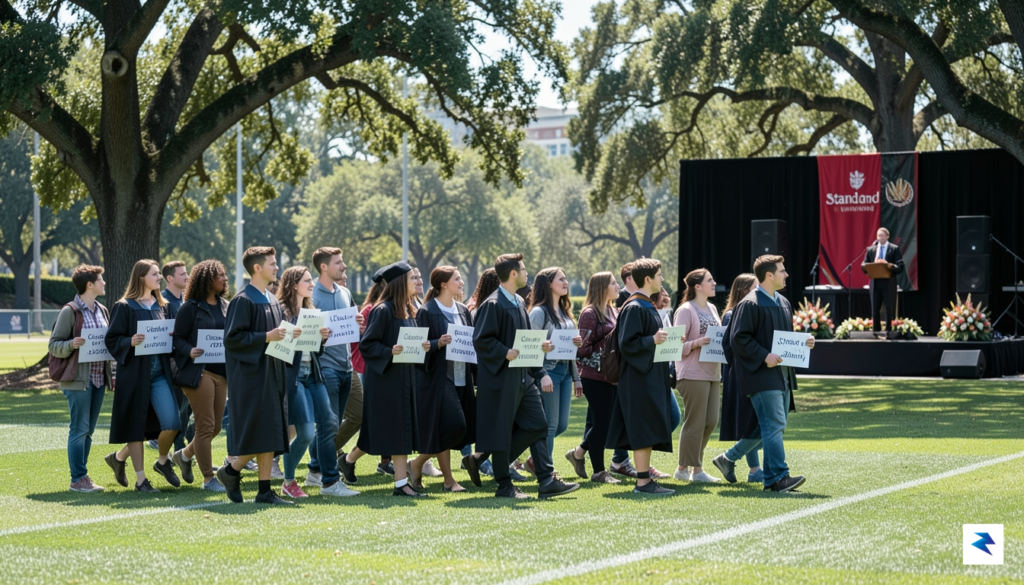

For decades, the relationship between elite universities and Silicon Valley was viewed as a symbiotic ideal: companies provided the capital necessary for groundbreaking research, while academia offered the intellectual pipeline to sustain the tech industry’s rapid growth. However, this financial interdependence has created a precarious landscape where the traditional pursuit of objective, independent scholarship is increasingly shadowed by corporate interests. As universities lean more heavily on private grants and industry-backed research initiatives, the once-clear boundary between the ivory tower and the boardroom has begun to dissolve. This shift forces institutions into a defensive posture, where they must balance their stated commitment to academic freedom against the practical reality of pleasing their most generous benefactors.
The tension simmering at institutions like Stanford is a direct byproduct of this fiscal reality. When the entities funding university labs and scholarship programs are the same corporations facing intense public scrutiny—whether over privacy violations, labor practices, or geopolitical complicity—the university’s supposed neutrality becomes a liability. Students, who are no longer content to serve as a passive labor pool for the tech sector, are increasingly interpreting these financial entanglements as a tacit endorsement of corporate behavior. By walking out on high-profile speakers or protesting industry partnerships, they are signaling that they view the university not merely as an educational provider, but as an institutional actor that must be held accountable for its alliances.

The modern university faces an existential crisis of identity: it must decide whether it remains a sanctuary for critical inquiry that challenges power, or if it has transitioned into a high-end incubator for the very corporations that define the current socioeconomic order.
This conflict places university administrators in a difficult, often contradictory position. On one hand, they are tasked with protecting student dissent and fostering an environment of open debate, which is essential to the university’s mission. On the other hand, they are under immense pressure to manage these lucrative corporate relationships, which are often essential for maintaining the prestige and facilities that attract top-tier students in the first place. When dissent threatens to alienate industry partners, the university’s institutional instinct is often to prioritize stability and decorum. Yet, this approach only serves to widen the divide between the administration and a student body that is increasingly disillusioned by the ethical compromises of their own institutions. As these students transition into the tech workforce, they are carrying this demand for transparency and accountability with them, suggesting that the era of unquestioned corporate-academic cooperation is coming to a definitive end.

The symbolic walkout at Stanford is far more than a fleeting moment of collegiate idealism; it represents a fundamental shift in the psychological contract between elite academic institutions and the titan corporations that seek to recruit their brightest minds. For years, the path from a top-tier computer science department to a Silicon Valley headquarters was viewed as a natural, unquestioned progression. However, the current generation of graduates is signaling that the era of passive recruitment is drawing to a close. These students are entering the labor market not merely as eager employees seeking a paycheck, but as stakeholders who view their technical labor as an extension of their personal ethics. By choosing to turn their backs on the CEO of a company they might otherwise be destined to join, they are issuing a stark warning: the next generation of tech talent will not be easily bought with high salaries and stock options if those rewards are perceived to be tethered to complicity in global conflicts or ethically dubious projects.
This evolution in tech activism marks a transition from the quiet, internal dissent of the past—often relegated to private Slack channels or anonymous employee petitions—to a bold, public-facing demand for accountability. Previously, tech companies could contain employee dissatisfaction through internal town halls or carefully curated diversity and inclusion initiatives. Yet, as the Stanford incident demonstrates, the workforce of tomorrow is increasingly comfortable leveraging the prestige of their education to challenge corporate leadership on a global stage. This suggests that future corporate recruitment strategies will need to evolve beyond superficial perks. Companies that fail to offer transparency regarding their military contracts, data usage, and overarching societal influence may find themselves facing an increasingly hostile talent pipeline, where the most sought-after engineers prioritize the moral alignment of their employer over traditional corporate status.

The future of the tech industry will be defined not by the code it produces, but by the ethical framework within which that code is written.
Ultimately, the necessity for constructive dialogue between academic institutions, major tech firms, and the incoming workforce has never been more urgent. If corporations continue to dismiss student-led dissent as mere youthful fervor, they risk alienating the very innovators they need to secure their competitive advantage. A sustainable future for the industry requires a move toward genuine transparency, where firms allow their workforce to have a meaningful seat at the table regarding the ethical implications of their products. Without this shift, the chasm between the values of the next generation and the priorities of Big Tech will only continue to widen. The walkout at Stanford is not an outlier; it is a prelude to a new era where the tech industry must justify its existence not just to its shareholders, but to the people whose skills make its power possible.
You must be logged in to post a comment.