
X Launches Native Video Editor to Combat Stolen Content
The Evolution of X as a Video-First Platform For years, the digital landscape recognized this platform primarily as a hub for real-time…
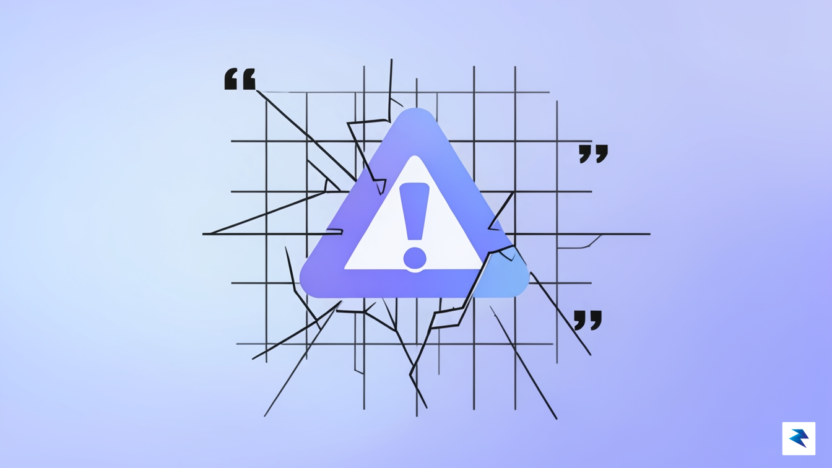

Imagine logging into your favorite communication platform, a place where you connect with friends, collaborate on projects, or manage gaming communities, only to find your account suddenly inaccessible. This alarming scenario became a harsh reality for thousands of Discord users recently, as the platform confirmed a widespread technical error that led to the wrongful suspension of over 8,000 accounts. The issue, which reportedly began as early as May and escalated significantly before being officially acknowledged, highlights the often unpredictable and sometimes devastating impact of automated safety systems when they go awry.
The user experience for those affected was nothing short of bewildering. Accounts were suspended without warning, often accompanied by vague notices citing violations of terms of service. For many, this meant waking up to find years of carefully curated connections, private messages, and server access abruptly cut off. The initial confusion quickly morphed into frustration and a sense of injustice, as users struggled to understand what “severe violations” they could have possibly committed, especially when their online activity had been entirely benign and within the platform’s guidelines. The lack of immediate, clear communication from Discord only exacerbated the distress, leaving a vacuum of information filled by speculation and anxiety among the banned community.
At the heart of this mass-banning fiasco was a perplexing misinterpretation by Discord’s automated moderation tools. The system erroneously flagged and suspended accounts for posting images that contained discernible grid-like patterns. This wasn’t about illicit content; instead, innocent users found themselves caught in the crosshairs for sharing seemingly harmless visuals such as chessboards, Minecraft inventory screens, programming code snippets formatted with distinct line breaks, or even simple spreadsheet screenshots. These common visual elements, integral to many online communities, were mistakenly identified as problematic, triggering an avalanche of unjust suspensions and underscoring the limitations of AI-driven content analysis without sufficient human oversight.
The scale of this technical error was substantial, impacting a diverse cross-section of Discord’s vast user base. Over 8,000 accounts were confirmed to have been wrongfully suspended, a number that speaks volumes about the potential for automated systems to cause widespread disruption. This wasn’t just a minor glitch; it represented a significant breach of trust for a considerable segment of the platform’s community. The incident served as a stark reminder that while automation can be efficient, its application in sensitive areas like content moderation requires rigorous testing, continuous refinement, and robust appeal processes to prevent innocent users from suffering the consequences of algorithmic missteps.

At the core of the recent mass moderation incident lies a sophisticated, yet ultimately flawed, automated safety system. Modern online platforms rely heavily on artificial intelligence, specifically advanced machine learning models for image recognition, to moderate the deluge of content uploaded daily. These systems are designed to process millions of images and videos, identifying patterns and characteristics associated with prohibited content, spam, or malicious activity at a scale impossible for human moderators alone. They learn by being exposed to vast datasets of both safe and unsafe content, developing a complex understanding of visual cues that signal potential violations.
The challenge, however, arises when these algorithms encounter visual information that, while entirely benign, shares characteristics with patterns they’ve been trained to flag as problematic. This phenomenon is known as a ‘false positive’ – an instance where the AI incorrectly identifies innocent content as malicious. In this particular scenario, the platform’s safety filters evidently misinterpreted repetitive geometric structures, most notably grid-based images, as indicative of something illicit. The inherent difficulty for AI lies in distinguishing between a legitimate grid, like a chessboard, a piece of pixel art, or a game texture, and a grid pattern that might be used to obscure prohibited content or to spread spam.
Why would grid-like textures be flagged? Machine learning models look for specific visual signatures. Certain forms of spam or attempts to circumvent moderation often involve highly structured, repetitive, or noisy image patterns designed to embed text, hide information, or simply generate a high volume of visually similar content. Grids, by their very nature, present a high degree of visual repetition and structure. An algorithm might, for instance, mistakenly associate the uniform lines and intersections of a simple grid with the visual noise or structured data patterns commonly found in bot-generated spam or certain types of encoded, illicit imagery. The model, lacking human intuition and contextual understanding, cannot differentiate between a user sharing a screenshot of a spreadsheet and a spambot attempting to push dubious links through visually fragmented images.
Consequently, seemingly innocuous images—from game assets featuring tiled floors, screenshots of spreadsheets, graph paper, or even abstract art incorporating geometric patterns—became collateral damage. The algorithms, trained to be aggressive in identifying potential threats, erred on the side of caution. This overzealous filtering highlights a critical limitation of current AI moderation: while incredibly powerful at pattern recognition, these systems still struggle with the nuances of human intent and the vast, often unpredictable, ways in which people create and share visual content. They operate on probabilities and learned correlations, and when those correlations accidentally align with benign visual structures, unintended consequences like mass bans can occur.
Ultimately, the incident underscores the delicate balancing act faced by platforms that rely on AI for safety. The drive to eradicate genuinely harmful content necessitates robust filtering mechanisms, but the pursuit of perfect protection invariably introduces the risk of casting too wide a net. This event serves as a stark reminder that even the most advanced algorithms, while indispensable, require continuous refinement, human oversight, and a better understanding of the diverse and often harmless visual language used by their communities.

The sudden, widespread banning of thousands of users from Discord, ostensibly for innocuous actions like posting grid images, has sent shockwaves through its community, revealing a profound vulnerability in the delicate balance between platform safety and user freedom. For those affected, the experience was more than just a temporary inconvenience; it was a deeply unsettling digital eviction. Imagine waking up to find your access severed from long-term communities where you’ve cultivated friendships, collaborated on projects, or simply found a sense of belonging. This abrupt disconnection from personal digital networks, historical conversations, and shared memories can evoke a potent sense of loss, injustice, and even helplessness, akin to being locked out of your own home without explanation or recourse.
This ripple effect is particularly devastating for the vast number of gaming communities that rely on Discord as their digital backbone. From coordinating intricate raid strategies in MMORPGs to managing competitive esports teams, Discord servers are often the operational heart of these groups. When key members, or even entire segments of a guild or clan, are suddenly removed, it doesn’t just disrupt communication; it can dismantle years of collaborative effort, shared victories, and carefully built camaraderie. The loss of historical chat logs containing vital strategies, inside jokes, and cherished moments can feel irreplaceable, forcing communities to scramble to rebuild their infrastructure and re-establish their networks, often from scratch, across fragmented alternative channels.
Beyond the immediate personal and communal distress, such incidents critically erode user trust in the platform’s fundamental safety mechanisms. There’s a profound irony when systems designed to protect users from malicious content inadvertently become the source of widespread harm, punishing benign activities with severe consequences. This creates a pervasive fear of arbitrary enforcement, where users begin to question the reliability and transparency of automated moderation. If a simple image grid can trigger an account deletion, what other seemingly harmless actions might lead to a similar fate? This uncertainty fosters a climate of anxiety, making users hesitant to fully invest their time, data, and social capital into the platform, knowing that their digital presence could be summarily revoked at any moment.
The opacity surrounding automated ban decisions further exacerbates this erosion of trust. When users are banned without clear, specific explanations or a readily accessible, effective appeals process, it breeds deep skepticism about the platform’s commitment to fairness and accountability. This lack of transparency transforms what should be a protective measure into a black box, where decisions are made by algorithms that users cannot understand or challenge meaningfully. This void of information not only leaves affected individuals feeling wronged and powerless but also casts a shadow over the entire platform, making it difficult for users to distinguish between legitimate security measures and potentially flawed, overzealous automation.
Ultimately, such widespread errors force users to re-evaluate their reliance on Discord, and indeed, any centralized platform, for their critical digital interactions. The incident serves as a stark reminder of the precariousness of digital ownership and the potential for a single algorithmic misstep to sever access to vital personal and communal connections. In the long term, this can lead to a shift in user behavior, with individuals and communities becoming more cautious about where they store important information, build deep social networks, or conduct essential coordination. Rebuilding this shattered trust will require not just apologies and policy adjustments, but a transparent commitment to accountability, improved moderation systems, and a clear demonstration that user freedom and platform safety can coexist without fear of arbitrary, devastating bans.

Discord has not only acknowledged the significant malfunction within its automated content moderation systems but has also swiftly initiated a comprehensive recovery process for the thousands of users wrongfully impacted. This official recognition of a systemic failure underscores the company’s commitment to transparency and accountability, especially when its safety protocols inadvertently lead to widespread account suspensions. The immediate priority has been to unravel the complex technical glitch that led to the misidentification of benign grid-like images as harmful content, ensuring that every effort is made to rectify the situation for those caught in the crossfire. Furthermore, Discord is actively working to refine its existing safety mechanisms to prevent such an extensive automated error from recurring, emphasizing a renewed focus on user trust and platform integrity.
At the heart of this corrective endeavor is a deep dive into the underlying artificial intelligence and machine learning models responsible for content scanning. Engineers are meticulously reviewing the algorithms that were trained to detect prohibited patterns, specifically investigating why certain benign visual elements, such as those found in game screenshots or meme templates, were erroneously flagged as violating terms of service. This involves analyzing vast datasets to pinpoint the exact parameters that led to the false positives, aiming to retrain and fine-tune the models to achieve greater precision and reduce the likelihood of similar misinterpretations in the future. Understanding this sophisticated interplay between visual data and automated decision-making is critical to fortifying the platform’s moderation capabilities without stifling legitimate user expression.
For those users whose accounts were unjustly impacted by this automated misstep, Discord has implemented a streamlined appeal process to expedite their return to the platform. Users who believe their account was suspended in error due to this specific issue are strongly encouraged to reach out to Discord’s support team, where dedicated agents are prioritizing these cases for rapid review and restoration. This dedicated channel ensures that individuals do not face lengthy waiting periods often associated with general support inquiries, emphasizing the company’s commitment to swiftly undoing the damage caused by the system’s oversight. The goal is to restore full account access to all wrongfully banned users as quickly and efficiently as possible, recognizing the disruption and frustration this incident has caused.
Looking beyond the immediate crisis management, Discord is doubling down on its commitment to enhancing its internal moderation tools and integrating more robust human-in-the-loop verification processes. While automation is indispensable for moderating content at the immense scale of millions of users, this incident highlights the critical need for an intelligent balance with human oversight. The platform plans to invest further in training its human moderation teams, providing them with advanced tools and clearer guidelines to intervene effectively when automated systems generate questionable flags. This holistic approach aims to create a more resilient and equitable moderation framework, ensuring that while dangerous content is swiftly addressed, legitimate users can continue to express themselves freely without fear of unwarranted account action.

The recent incident where Discord’s automated systems mistakenly banned over 8,000 users for innocuous grid images serves as a potent, if unfortunate, cautionary tale for the entire tech industry. In an age where digital platforms are increasingly reliant on artificial intelligence to police vast oceans of user-generated content, this saga highlights the critical vulnerabilities inherent in leaving complex, irreversible decisions solely to algorithms. It underscores a fundamental tension: the need for moderation at scale versus the precision and contextual understanding that only human judgment can reliably provide, especially when dealing with the subtle nuances of online communication.
One of the primary challenges illuminated by this event is the pervasive “black box” problem inherent in many advanced AI systems. While these algorithms are incredibly efficient at identifying patterns and flagging potential violations at speeds no human team could match, their decision-making processes often remain opaque. We feed them data, they learn, and they output classifications, but understanding precisely why a particular image or piece of text was deemed problematic can be incredibly difficult, even for the engineers who designed them. This lack of transparency makes auditing erroneous decisions, providing clear explanations to affected users, and iteratively improving the system’s fairness exceedingly challenging. When an AI misinterprets benign geometric patterns as something illicit, without a clear, explainable rationale, it erodes user trust and can lead to widespread frustration.
Consequently, the Discord misstep strongly advocates for a more robust, hybrid approach to content moderation. While AI is indispensable for sifting through the sheer volume of daily posts and comments, humans must remain firmly in the loop for critical decision-making, particularly when the stakes are high, such as permanent account bans. Algorithms are excellent at flagging suspicious content and escalating it, acting as powerful first-line filters. However, human moderators possess the invaluable capacity for contextual understanding, empathy, and the ability to discern intent – qualities that current AI models largely lack. A system where AI identifies potential violations and then funnels them to human reviewers for a final verdict strikes a crucial balance between efficiency and accuracy, preventing the kind of widespread, arbitrary bans seen in this scenario.
Looking ahead, preventing similar misclassifications will necessitate significant improvements in how AI moderation models are trained and continuously refined. Current training sets, while extensive, often struggle with edge cases or benign patterns that might superficially resemble problematic content. For instance, an AI trained to detect various forms of spam or harmful imagery might inadvertently learn to associate specific visual textures or geometric structures with malicious intent, simply because those patterns appeared frequently within negative examples. Future improvements must involve diversifying training data to include a broader spectrum of benign content, explicitly teaching the AI to differentiate between innocent patterns and genuinely harmful ones. Furthermore, implementing robust feedback mechanisms, where human reviewers can correct AI misjudgments and feed that data back into the learning model, is vital for fostering continuous improvement and reducing the likelihood of algorithms making such sweeping, erroneous decisions in the future.
You must be logged in to post a comment.