
Rowboat: A Local-First, Open-Source Alternative to Claude Desktop
Beyond Chat: The Evolution of AI-Powered Workspaces For the past year, the prevailing model of AI interaction has been dominated by the…


The launch of this pioneering British longevity laboratory into low Earth orbit represents far more than a feat of aerospace engineering; it signals a transformative moment for the future of human health. For decades, the study of age-related biological decline has been constrained by the limitations of terrestrial laboratories, where gravity constantly interferes with the delicate processes of molecular assembly. By transitioning these complex experiments to an orbital environment, researchers are finally able to bypass the physical constraints that have long hampered our understanding of cellular aging. This shift from ground-based research to a space-faring model is not merely a logistical change, but a fundamental leap in how we observe the building blocks of life.
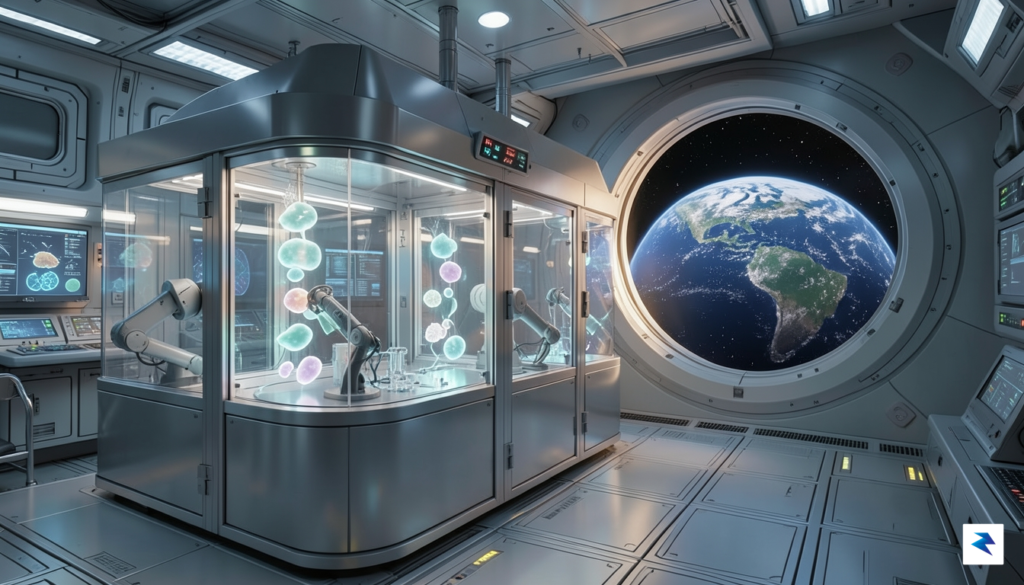
At the heart of this mission lies the persistent struggle with protein crystallization. On Earth, gravity causes crystals to settle and deform as they grow, often resulting in flawed structures that make it nearly impossible for scientists to map the precise architecture of disease-related proteins. In the near-weightless environment of space, these proteins can grow into larger, more perfect, and highly structured crystals. These pristine samples allow researchers to visualize the precise “locks” of our biological machinery, providing the granular data necessary to design drugs that can effectively target the aging process. Without the interference of gravity, we are essentially gaining a high-definition view of the molecular puzzles that contribute to conditions like Alzheimer’s, cardiovascular decline, and cellular senescence.
By marrying the pristine data of orbital crystallization with the computational power of modern machine learning, we are accelerating the discovery timeline for longevity therapeutics by years, if not decades.
This orbital lab acts as a crucial bridge between aerospace technology and biotechnology, serving as a high-fidelity data factory. Once these molecular structures are captured in orbit, the resulting datasets are beamed back to Earth to fuel advanced artificial intelligence models. These AI systems, which are increasingly proficient at predicting protein folding and drug interactions, require the exact, high-quality data that only microgravity can provide. By feeding these “clean” insights into neural networks, researchers can simulate millions of potential therapeutic compounds in a virtual space, identifying promising candidates for longevity treatments at a pace that was previously unimaginable. This convergence of space-based biological discovery and computational intelligence is effectively creating a new paradigm where the stars themselves become our most valuable laboratory for solving the mysteries of human longevity.

To understand why researchers are launching laboratories into the vacuum of space, one must first appreciate the subtle yet destructive role gravity plays in terrestrial biology. On Earth, the process of protein crystallization—a vital step in mapping the three-dimensional architecture of biological molecules—is constantly sabotaged by the very force that keeps our feet on the ground. As protein molecules begin to bond into a structured lattice, the constant downward pull of gravity creates convection currents within the solution. These currents cause uneven growth and density variations, leading to crystals that are often riddled with microscopic defects, jagged edges, or internal fractures that render them difficult to study under X-ray diffraction.
In the quiet, weightless environment of low Earth orbit, these gravity-induced interference patterns simply vanish. Without the constant agitation of buoyancy-driven convection, protein molecules are free to migrate and interact in a pristine, diffusion-dominated environment. The result is a profound difference in outcome: space-grown crystals frequently achieve a level of geometric perfection and size that is physically unattainable in a laboratory on the ground. By eliminating the structural “noise” caused by Earth’s gravity, scientists can cultivate samples that are larger, more uniform, and structurally pure, allowing for the creation of high-resolution maps that reveal the precise atomic positioning of these complex biological machines.

This structural clarity is not merely an academic triumph; it is the cornerstone of modern pharmaceutical innovation. Many diseases, particularly those related to aging, are driven by proteins that have misfolded or mutated, losing their ability to function correctly within the human body. When scientists attempt to design drugs to treat these conditions, they are essentially trying to create a “key” that fits into a biological “lock.” If the map of that lock—the protein structure—is blurry or distorted due to poor crystallization, the resulting drug design will lack the necessary precision to be effective. By achieving near-perfect structural data in microgravity, researchers can identify the exact binding sites needed for therapeutic intervention, potentially accelerating the development of life-saving treatments.
The leap from terrestrial to orbital research represents a fundamental shift in how we approach molecular medicine. By removing the veil of gravitational interference, we are finally seeing the true, uncorrupted architecture of the proteins that define human health and longevity.
Ultimately, the transition to orbital research provides a cleaner, more reliable canvas for biological discovery. Whether it is understanding the amyloid plaques associated with neurodegenerative diseases or identifying the signaling proteins that regulate cellular decay, the ability to study these samples in space provides a distinct advantage. As we continue to refine our ability to conduct these experiments in orbit, we are moving closer to a future where the secrets of our biology are no longer obscured by the limitations of our home planet, but are instead decoded with absolute, atomic precision.

At the foundation of many of humanity’s most stubborn health challenges lies a microscopic malfunction: the process of protein misfolding. Under normal biological conditions, proteins must fold into precise, intricate shapes to perform their specific duties within our cells. However, as we age, this sophisticated machinery often falters, causing proteins to lose their structural integrity and fold into chaotic, dysfunctional configurations. These misfolded proteins are not merely inert; they possess a dangerous tendency to clump together, forming toxic aggregates that can overwhelm cellular defenses and trigger the onset of devastating neurodegenerative conditions, most notably Alzheimer’s disease.
In the brain, these clumps—often referred to as plaques—act like molecular grit, interfering with the essential signaling between neurons. This progressive accumulation is a primary driver of the cognitive decline associated with aging, as the internal environment of the cell becomes cluttered and eventually non-functional. Similarly, in various forms of cancer, the body’s natural quality-control mechanisms fail to identify or clear these misfolded proteins, allowing them to participate in processes that fuel uncontrolled cell growth. By shifting the focus of research to the orbital environment, scientists are effectively removing the confounding variable of gravity, which on Earth often forces these proteins to settle or interact in ways that mask their true, fundamental behaviors.

The space-based laboratory provides a unique “clean room” for molecular observation that is impossible to replicate on the ground. In the microgravity environment of orbit, proteins can remain suspended in fluid solutions for extended periods, allowing researchers to observe the transition from healthy states to misfolded, clumped states in slow motion. This extended observation window is vital because it reveals the intermediate stages of protein degradation that occur far too rapidly under Earth’s gravitational pull. By documenting these precise molecular interactions, the research team is building a comprehensive map of how and why these structures begin to fail, effectively creating a “blueprint” of disease progression.
The ability to observe protein behavior in microgravity provides us with a high-definition lens into the molecular origins of aging, potentially revealing therapeutic windows that have remained closed for decades.
Ultimately, this data serves as the foundation for developing a new generation of precision medicine. By identifying the exact moment a protein begins to misfold, scientists can design small-molecule drugs or targeted therapies that act as molecular “chaperones,” stabilizing these proteins before they have the chance to clump and cause damage. This proactive approach represents a significant departure from traditional symptom management, aiming instead to address the root cause of age-related cellular decay. By unlocking these secrets in the silence of space, researchers hope to eventually translate these findings into transformative treatments that could fundamentally alter the trajectory of Alzheimer’s and cancer, turning once-inevitable decline into a manageable biological process.

The transition of experimental biological data from the microgravity environment of low Earth orbit to terrestrial research centers is a feat of modern engineering, but the true value lies in what happens once that data lands. As the orbital laboratory beams high-fidelity telemetry and imaging back to Earth, this raw information is immediately ingested by sophisticated deep learning architectures. By capturing the granular movements of proteins and cellular structures in a weightless environment, these systems build a massive, multidimensional dataset that is far more complex than anything currently achievable in traditional ground-based laboratories.
At the heart of this process is an AI infrastructure specifically designed for pattern recognition in biological systems. These predictive models utilize recurrent neural networks and transformer architectures to parse through the subtle fluctuations in protein folding behavior—nuances that often escape the limitations of the human eye. By analyzing thousands of temporal sequences simultaneously, the AI identifies hidden correlations between orbital environmental factors and accelerated biological decay. This allows researchers to simulate the progression of age-related diseases with unprecedented speed, effectively turning the orbital lab into a high-throughput engine for discovery.

The integration of synthetic data generated from these space-based experiments is a game-changer for pharmaceutical research. When we feed this “orbital-grade” data into predictive models, it dramatically sharpens the accuracy of digital twins—virtual simulations of human biological systems. Because the space lab provides a unique environment where gravity no longer masks the underlying mechanics of protein interactions, the AI learns to predict drug efficacy with a much higher degree of confidence. This creates a powerful feedback loop: as the AI becomes more accurate, it suggests new parameters for the next round of orbital experiments, creating a cycle of constant, automated scientific refinement.
The marriage of microgravity biology and advanced AI is effectively collapsing the traditional timeline of drug discovery from decades into years, allowing us to see the future of human health in real-time.
Ultimately, this approach represents a departure from trial-and-error chemistry. By leveraging the clean, high-resolution datasets provided by space-based longevity labs, scientists are moving toward a paradigm of in silico medicine. The AI does not merely observe; it anticipates how molecular structures will react to various compounds, filtering out ineffective treatments before they ever reach a clinical trial. This synergy between the vast, silent vacuum of space and the rapid computation of modern AI is not just gathering data—it is actively decoding the fundamental biological mechanisms of aging itself.
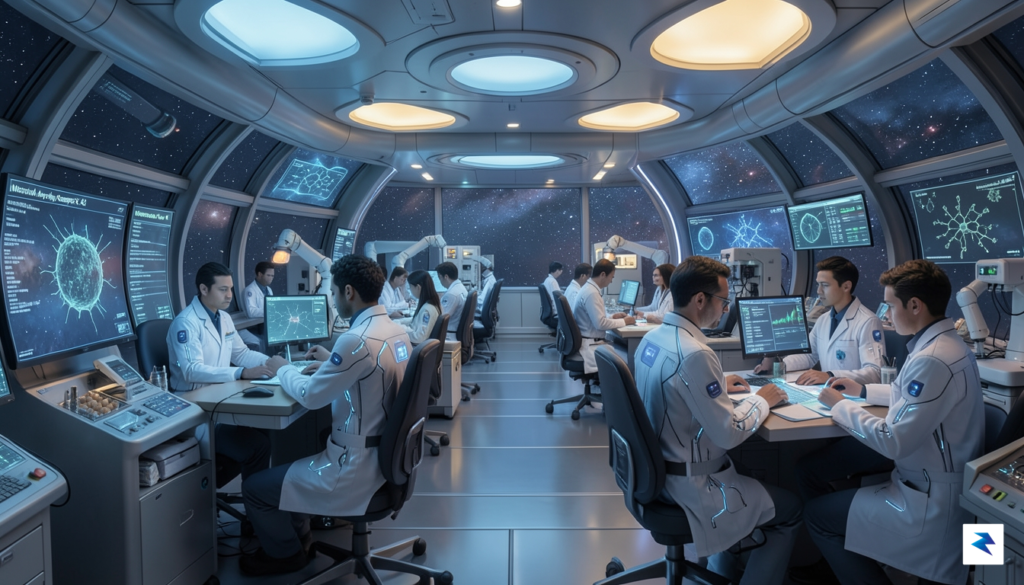
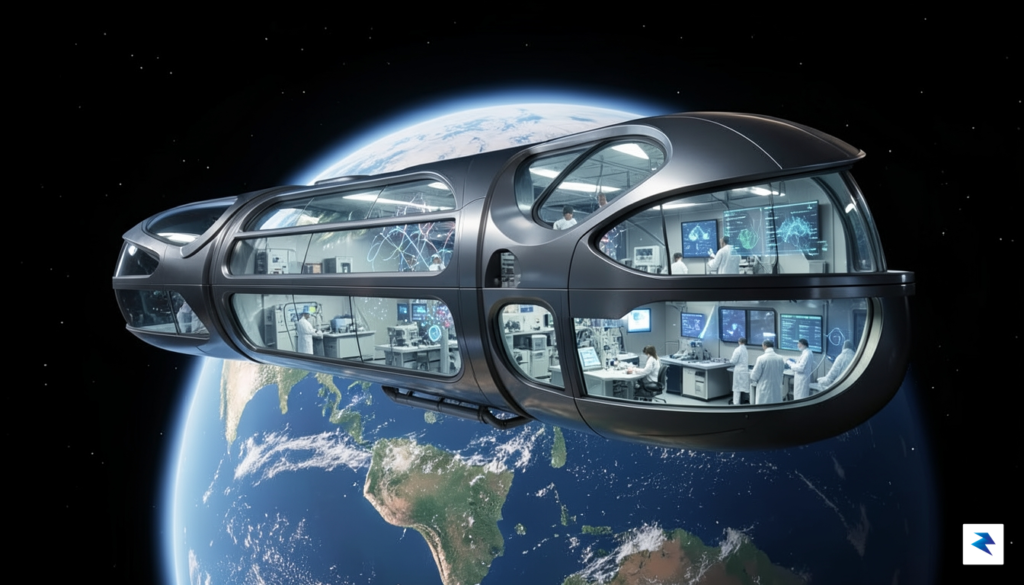
The migration of pharmaceutical research into microgravity is not merely a novelty; it represents a fundamental shift in how we approach the biological limitations of the human body. By removing the constant pull of Earth’s gravity, researchers can observe protein crystallization and cellular behaviors that are often distorted or masked on the ground. As launch costs plummet due to the emergence of a robust private space industry, what was once an experimental niche is rapidly evolving into a scalable, industrial-scale laboratory environment. We are moving toward a paradigm where space-based manufacturing could become as routine as traditional terrestrial clinical trials, allowing scientists to iterate on life-extending compounds with unprecedented speed and precision.
Furthermore, the integration of space-based data will be a cornerstone of the next generation of personalized medicine. In the unique environment of orbit, biological markers that indicate the onset of age-related degeneration become easier to isolate, providing a “cleaner” look at the mechanisms of cellular aging. This clarity allows pharmaceutical developers to tailor interventions that target the specific molecular triggers of longevity, rather than simply treating the symptoms of decay. By leveraging the cosmos as a high-fidelity diagnostic tool, we are moving closer to a future where medical treatments are crafted to address the unique genetic and metabolic profiles of individual patients, significantly enhancing the efficacy of longevity therapies.
The transition of the laboratory from the Earth’s surface to the orbital plane is the ultimate “clean room” experiment, offering a unique vantage point to untangle the complex biological knots of aging that have historically defied terrestrial intervention.
Ultimately, the broader implications of this orbital shift extend far beyond the laboratory itself. By tackling the most complex biological challenges of aging in a microgravity environment, we are essentially accelerating our evolutionary understanding of life. This research could yield breakthroughs that provide not just longer lives, but healthier ones, effectively pushing back the boundaries of the human healthspan. As we continue to refine our ability to conduct high-stakes biology in the stars, the cosmos may well become our most valuable ally in the quest to unlock the secrets of vitality, transforming the way we perceive both the limits of our bodies and the potential of our technology.
You must be logged in to post a comment.