New SEC ‘Reg Crypto’ Proposal Aims to Clear Path for Blockchain Startups
The Shifting Landscape of SEC Crypto Regulation For years, the relationship between the U.S. Securities and Exchange Commission (SEC) and the…
Tokenized equities represent a fundamental evolution in how we conceive of ownership, effectively dismantling the rigid barriers that have historically defined private market participation. At its core, tokenization involves representing shares of a company’s stock as digital tokens on a blockchain ledger. This process allows for granular fractional ownership, enabling investors to purchase pieces of high-value private companies—such as SpaceX—that were once exclusively reserved for institutional heavyweights or ultra-high-net-worth individuals. By leveraging smart contracts and distributed ledger technology, these platforms provide a transparent, immutable record of ownership that operates around the clock, far outpacing the settlement speeds of traditional brokerage systems.

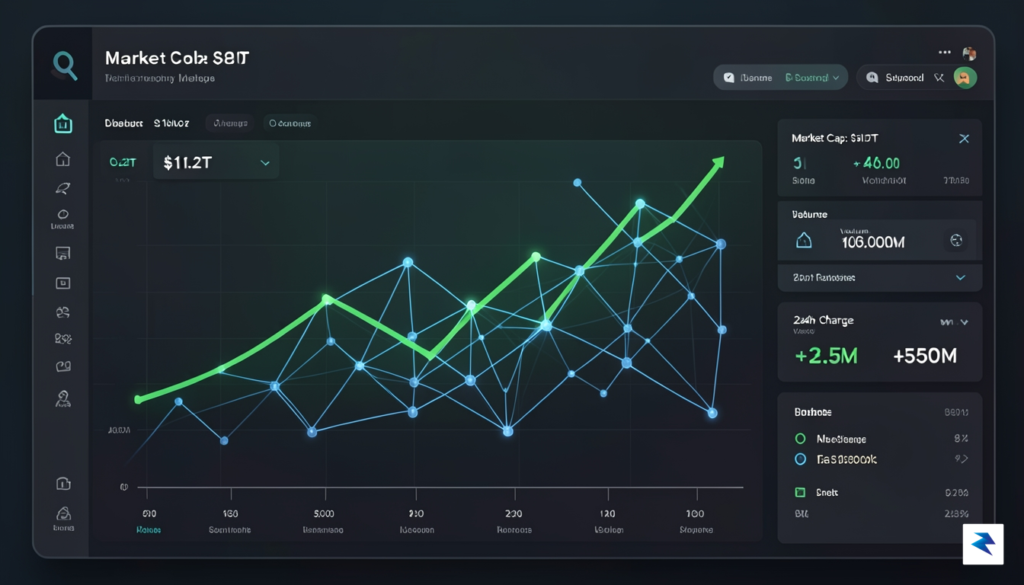
The maturation of this sector was underscored by a landmark performance in June, during which trading volumes for tokenized assets surged to an unprecedented $3.86 billion. This figure is not merely a statistical anomaly; it serves as a powerful indicator that the financial ecosystem is undergoing a structural shift. As decentralized finance (DeFi) protocols increasingly intersect with traditional corporate equity, investors are finding that the liquidity and accessibility offered by tokenized shares provide a compelling alternative to the opaque and often sluggish nature of conventional secondary markets. The sheer scale of this monthly volume highlights a growing institutional and retail appetite for assets that were previously considered illiquid or inaccessible.
The integration of blockchain technology into equity markets is effectively democratizing access to the “pre-IPO” landscape, turning once-exclusive private holdings into highly liquid, tradable digital assets.
Investors are increasingly migrating toward these platforms due to the inherent efficiencies they offer compared to legacy secondary market avenues. Traditional private equity trading is frequently plagued by manual reconciliation processes, limited market hours, and high entry thresholds that can stifle price discovery. In contrast, tokenized equity exchanges operate with near-instant settlement and lower overhead costs, providing a seamless user experience that mirrors the ease of trading public stocks. As regulatory frameworks continue to stabilize and security protocols harden, the movement toward tokenized assets appears to be more than just a fleeting trend; it is a permanent transition toward a more inclusive and efficient global marketplace where ownership is no longer limited by geographic or institutional boundaries.

The recent surge in tokenized equity markets is not merely a byproduct of general crypto-market enthusiasm; it is fundamentally driven by the insatiable appetite for exposure to SpaceX. With a staggering $1.19 billion in trading volume attributed solely to SpaceX-linked assets in June, it is clear that the aerospace giant has become the primary engine fueling this new financial frontier. By accounting for nearly one-third of the total $3.86 billion monthly volume, SpaceX demonstrates that traditional barriers to entry for private equity are rapidly dissolving. Investors, both retail and institutional, are bypassing conventional gatekeepers to capture a slice of a company that is currently redefining the future of space exploration and global telecommunications.

A significant portion of this liquidity has been facilitated by innovative instruments like the SPCX token, offered through platforms such as Backpack. This tokenized approach acts as a bridge, transforming otherwise illiquid, private-market shares into highly tradable digital assets that operate around the clock. By lowering the capital requirements and administrative hurdles typical of private equity participation, these tokens allow a broader demographic of investors to participate in the growth of a company that would otherwise be sequestered behind the walls of venture capital firms and high-net-worth investment syndicates. The success of the SPCX token highlights a shift in investor behavior: people are no longer willing to wait for a traditional IPO to gain exposure to high-growth, industry-disrupting firms.
The rise of tokenized SpaceX shares represents a fundamental shift in capital formation, effectively democratizing access to assets that were previously reserved for the ultra-wealthy.
Why has SpaceX become the preferred asset for this tokenization model? The answer lies in the company’s unique position at the intersection of critical infrastructure and speculative high-growth technology. Unlike companies that merely iterate on existing software models, SpaceX is actively expanding the horizons of human capability, from the Starship development program to the massive scale of the Starlink satellite network. Investors view SpaceX not just as an aerospace company, but as a multi-industry conglomerate with the potential to dominate future markets. Consequently, the tokenization of its equity provides a liquid outlet for the widespread conviction that SpaceX is destined to be one of the most valuable corporations of the 21st century. This blend of massive real-world impact and scarcity of access is precisely what makes it the perfect catalyst for the current boom in tokenized trading.

At the heart of the recent surge in interest surrounding pre-IPO assets lies a sophisticated technological framework known as asset tokenization. Essentially, this process involves creating a digital “wrapper” around traditional private equity, effectively converting ownership rights into blockchain-based tokens. When an investor purchases these tokens, they are not merely holding a digital entry; they are interacting with robust smart contracts that programmatically enforce ownership, dividend distribution, and compliance protocols. By leveraging distributed ledger technology, platforms like Backpack ensure that the underlying equity remains securely held in custody while the digital representation moves seamlessly across the network, allowing users to gain exposure to high-growth companies like SpaceX long before they reach a traditional stock exchange.

The user experience offered by these platforms is a radical departure from the cumbersome processes associated with traditional brokerage houses. In a conventional environment, investors are often shackled by restrictive market hours and archaic settlement cycles—frequently referred to as T+1 or T+2—which mandate that trades take one or two business days to fully finalize. Tokenized equity trading eliminates these inefficiencies by operating on a 24/7 basis, enabling near-instantaneous settlement. Because the smart contract handles the transfer of value and asset ownership simultaneously, the need for clearinghouses, custodians, and various intermediaries is significantly reduced, which in turn lowers transaction costs for the end user.
Tokenized equities democratize access to private markets by collapsing the time and cost barriers that have historically kept retail investors sidelined from unicorn-tier companies.
Beyond the immediate benefit of speed, the transparency provided by blockchain technology offers a new layer of security for participants. Every transaction is recorded on an immutable ledger, providing a verifiable audit trail that is accessible in real-time, unlike the opaque back-office processes of legacy financial institutions. Furthermore, because these tokens are fractionalized, investors are no longer required to commit massive amounts of capital to enter the private market. This modularity allows for a more granular approach to portfolio management, where users can diversify their holdings across multiple pre-IPO assets with the same ease as trading common cryptocurrencies. By bridging the gap between private equity and decentralized finance, tokenization is fundamentally rewriting the rules of how we define and exchange ownership in the modern digital economy.

The recent surge in tokenized equity trading represents a tectonic shift in how individual market participants interact with high-growth private companies. For years, access to pre-IPO giants like SpaceX was restricted to institutional investors, venture capitalists, and ultra-high-net-worth individuals. Tokenization effectively shatters these traditional barriers by allowing retail investors to purchase fractional ownership in assets that were previously locked away behind institutional gates. This democratization means that a broader demographic can now capture the early-stage growth of disruptive technologies, fundamentally changing the landscape of portfolio diversification and wealth creation.
However, this new frontier is not without significant hurdles, particularly regarding the fragmentation of liquidity. Unlike the highly centralized and regulated environments of major stock exchanges, tokenized assets often trade across a variety of decentralized platforms or secondary markets that lack deep order books. This fragmentation can lead to wider bid-ask spreads, making it more expensive to enter or exit positions, and potentially complicating the investor’s ability to execute trades at desired price points. Furthermore, because these tokens are often not directly exchangeable for the underlying equity in the same way a traditional stock certificate is, investors must rely on the integrity of the platform provider to bridge the gap between digital representation and real-world asset ownership.

Beyond liquidity concerns, the intersection of blockchain technology and private equity introduces unique risks related to price discovery and regulatory oversight. In traditional markets, price discovery is driven by a massive, global consensus of participants and rigorous reporting standards. In the tokenized space, pricing can be influenced by lower trading volumes and speculative sentiment, which may result in volatility that does not necessarily reflect the underlying company’s true operational health or financial performance. Additionally, the regulatory landscape for tokenized securities remains in a state of flux; investors operating in this space must be wary of changing legal frameworks that could impact the future tradeability or classification of their holdings.
The core value proposition of tokenization lies in its ability to provide ownership access, yet the long-term success for the retail participant depends entirely on their ability to distinguish between genuine investment opportunities and speculative hype cycles.
For those looking to navigate this market, a disciplined approach to risk management is absolutely paramount. It is essential to treat tokenized private equity as a long-term, high-risk allocation rather than a day-trading vehicle. By prioritizing platforms with transparent custody arrangements and conducting thorough due diligence on the underlying assets, retail investors can better insulate themselves from the inherent instabilities of this emerging market. Ultimately, while tokenization offers a powerful new tool for wealth building, it demands a higher degree of financial literacy and a more cautious strategy than traditional public market investing.

The rapid ascent of tokenized equities, underscored by the massive interest in SpaceX-linked assets, has inevitably placed the sector squarely on the radar of global financial regulators. As trading volumes reach unprecedented heights, authorities are scrutinizing whether these blockchain-based digital representations of ownership provide adequate safeguards for retail participants. The primary challenge lies in reconciling the permissionless, borderless nature of decentralized ledgers with the rigid, jurisdiction-specific mandates of traditional securities law. For this growth to remain sustainable, industry participants must proactively adopt robust compliance frameworks—such as rigorous Know Your Customer (KYC) protocols and Anti-Money Laundering (AML) checks—that mirror the transparency and security found in established stock exchanges.

A critical question for the long-term viability of this sector is how it will adapt once high-profile private companies, such as SpaceX, eventually transition to a formal, traditional initial public offering (IPO). While tokenized platforms currently provide a unique window for exposure to pre-IPO unicorns, a traditional listing could potentially drain liquidity from these decentralized venues. However, many proponents argue that tokenization offers a permanent utility beyond mere speculation, providing 24/7 market access, fractional ownership, and near-instant settlement cycles that traditional legacy systems struggle to replicate. If the industry can successfully integrate these technological advantages into a regulated environment, tokenized equities could evolve from a niche speculative tool into a mainstream financial layer that complements, rather than competes with, institutional exchanges.
The sustainability of the tokenized equity market depends on achieving a delicate equilibrium: maintaining the innovative, high-velocity nature of blockchain trading while embedding the investor protections that define trust in global financial markets.
As we head into the second half of the year, investors should monitor several key indicators to gauge the sector’s maturity. First, watch for shifts in how major regulatory bodies, particularly the SEC and European regulators under MiCA, classify these assets; any move toward standardized legal recognition could trigger a surge in institutional participation. Second, observe the development of interoperable secondary markets that allow for smoother transitions between tokenized assets and fiat currency. Ultimately, the ability of trading platforms to bridge the gap between “crypto-native” speed and “Wall Street” security will determine whether this current record-breaking momentum is merely a temporary trend or the beginning of a fundamental transformation in how global equity markets function.
You must be logged in to post a comment.