
Microsoft’s 25% Emissions Spike: The Hidden Cost of the AI Boom
The AI Paradox: Balancing Innovation with Sustainability The relentless pursuit of generative artificial intelligence, a technological…


The landscape of modern investing is undergoing a profound transformation, moving beyond the traditional pursuit of pure financial returns to embrace a more holistic approach centered on alignment. Today, both retail and institutional investors are increasingly looking to deploy their capital in ways that reflect their personal values, ethical stances, and even their sentiment towards specific corporate leadership. This evolution signifies a powerful shift where the act of investing becomes a form of “voting with your capital,” allowing individuals to actively shape the future by supporting companies and leaders they believe in, or conversely, by divesting from those they oppose. This dynamic trend has given rise to innovative investment vehicles that offer unprecedented levels of personalization and control over one’s portfolio.
At the forefront of this movement are thematic exchange-traded funds (ETFs), which have evolved considerably beyond their initial scope. While early thematic ETFs focused on broad industry trends like renewable energy, artificial intelligence, or water scarcity, a new generation is emerging that targets far more granular preferences. These newer funds are delving into areas that extend beyond traditional sector classifications, allowing for exclusions based on corporate governance practices, social impact records, or even the public persona and perceived volatility of high-profile individual leaders. This marks a significant departure from simply avoiding entire “sin industries” and moves into a more nuanced territory where specific individuals or their leadership styles can become criteria for inclusion or exclusion.
This personalization represents a clear departure from the conventional wisdom of broad-market indexing, where investors passively accept exposure to all companies within a given index, regardless of their individual characteristics or leadership. Historically, an investor keen on the technology sector, for instance, would invest in a broad tech ETF and implicitly gain exposure to all its dominant players, along with their respective leaders. However, the modern investor now has the power to make more granular, sentiment-driven choices. They can select ETFs designed to specifically filter companies based on criteria like diversity in leadership, environmental commitments, or even to actively avoid exposure to particular entrepreneurs whose public behavior or business practices might be seen as controversial or inconsistent with their own values.
The emergence of these highly specialized ETFs empowers investors to construct portfolios that are not only financially diversified but also deeply aligned with their personal ethos. This shift democratizes investment control, moving beyond the simple buy-and-hold mentality into a more active, values-aligned portfolio construction. It suggests a future where corporate behavior, and indeed the conduct of their most prominent figures, will face ever-increasing scrutiny from the capital markets, as investors increasingly wield their financial power to influence the direction of corporate America and beyond. This is not merely a niche trend but a growing force, reshaping how capital is allocated and signaling a broader societal move towards conscious consumption and investment.

The emergence of investment vehicles designed to systematically bypass any company under the influence of Elon Musk represents a sophisticated evolution in thematic indexing. Rather than relying on broad moral or environmental screens, these funds utilize a precise, rules-based methodology to identify and excise specific corporate entities from their portfolios. At the core of this strategy is a rigorous definition of “Musk-led” companies, which typically encompasses any organization where he serves as a founder, current Chief Executive Officer, or a significant controlling shareholder. By establishing these clearly defined parameters, the fund managers ensure that Tesla, SpaceX—should it become public—and other ventures like Neuralink or The Boring Company remain entirely absent from the underlying index, regardless of their market capitalization or historical performance.

The construction process for these indices is intentionally exclusionary, functioning as a “negative screen” that filters out volatility often attributed to high-profile leadership. When the index providers calibrate their holdings, they do not merely look for the presence of a specific ticker symbol; they perform a deep dive into corporate governance structures. This involves analyzing proxy statements and ownership filings to ensure that the exclusion criteria capture indirect influence as well. For example, if a firm were to undergo a structural change that brought it under Musk’s majority control or saw him ascend to an executive position, the index methodology would trigger a mandatory rebalancing to remove that asset. This proactive approach allows investors to maintain exposure to the broader market while effectively insulating their portfolios from the specific idiosyncratic risks that often accompany Musk’s public profile and management style.
The core value proposition of these ETFs is not necessarily an anti-innovation stance, but rather a desire for portfolio purity that avoids the intense market fluctuations often tied to a single, polarizing public figure.
A critical technical challenge for these funds is managing indirect exposure, such as suppliers, technology partners, or companies that rely heavily on Musk’s ecosystem for revenue. To address this, the ETFs employ a tiered exclusion policy that goes beyond simple ownership metrics. While it is virtually impossible to avoid every supply chain connection in a global economy, these funds seek to eliminate companies where Musk’s ventures represent a dominant portion of their business model. By filtering out firms that derive a significant percentage of their annual earnings from Tesla or its affiliates, the funds provide a cleaner separation. This granular level of oversight ensures that the investment product stays true to its stated mission, offering a distinct alternative for those who wish to invest in the market without tethering their capital to the Musk brand.

For many market participants, investment decisions centered on Elon Musk’s corporate empire have become increasingly complex, moving far beyond simple metrics of revenue growth or technological innovation. A growing segment of the investment community is now actively seeking to decouple their portfolios from the influence of one of the world’s most polarizing figures. This shift is largely driven by a combination of high beta volatility and an unpredictable news cycle that frequently sends stock prices on erratic swings, often disconnected from fundamental business performance. For investors who prioritize long-term stability and predictable returns, the constant noise surrounding Musk’s management style and his high-profile social media activity creates a level of exposure that feels less like a traditional investment and more like a speculative gamble.
Beyond the immediate financial volatility, there is a deepening debate surrounding corporate governance and the concentration of power within Musk-led firms. Many institutional and retail investors are becoming increasingly wary of the “key-man risk” associated with a single executive who simultaneously manages several high-stakes companies. When a CEO’s personal focus is divided across diverse sectors—ranging from aerospace and neural technology to social media platforms—it naturally raises questions about board oversight, potential conflicts of interest, and the long-term sustainability of corporate strategy. For shareholders who value rigorous, transparent governance, this lack of traditional executive focus represents a significant departure from standard corporate stewardship, prompting them to seek out alternatives that provide exposure to similar industries without the unpredictable personality-driven risk.
The rise of these specialized ETFs reflects a broader market maturation, where investors are no longer just choosing sectors or asset classes, but are increasingly vetting the cultural and governance architectures of the firms they fund.
Of course, this trend exists in sharp contrast to a robust contingent of investors who continue to embrace the high-risk, high-reward nature of Musk’s companies. For this group, the volatility and the “disruptor” management style are not bugs in the system, but rather features that allow for exponential growth potential. They view the unconventional approach as a necessary byproduct of radical innovation. However, the emergence of ETFs that explicitly exclude Musk-led firms signals that the market is bifurcating; it is no longer a monolithic entity that views Tesla and its sister companies as essential components of every growth portfolio. Instead, a meaningful portion of the market is choosing to prioritize risk mitigation and alignment with more traditional corporate governance structures, effectively voting with their capital to avoid the turbulence that follows the world’s most famous CEO.


For years, the gold standard of investing has been built upon the bedrock of broad diversification. Yet, the modern equity landscape has increasingly become dominated by a handful of mega-cap technology firms, creating a situation where many portfolios are inadvertently concentrated in the same few market leaders. When an investor chooses to utilize an exchange-traded fund (ETF) that explicitly excludes a high-profile figure like Elon Musk, they are not merely making a personal statement; they are engaging in a calculated form of active diversification. By removing a significant driver of market volatility, investors can effectively decouple their holdings from the idiosyncratic risks—such as erratic executive commentary or sector-specific regulatory scrutiny—that often disproportionately impact companies like Tesla.
The primary trade-off in this strategy involves balancing the potential for underperformance against the objective of reduced volatility. Mega-cap tech stocks have historically acted as primary engines for index growth, and opting out of these positions means accepting that your portfolio may diverge significantly from the performance of the S&P 500 or the Nasdaq-100 during bull markets. However, this intentional exclusion serves as a hedge against “key-person risk,” where the fortunes of a multibillion-dollar enterprise are tethered to the public image and strategic whims of a single individual. For the risk-averse investor, the benefit of smoothing out the ride often outweighs the fear of missing out on the hyper-growth periods that define these highly volatile assets.
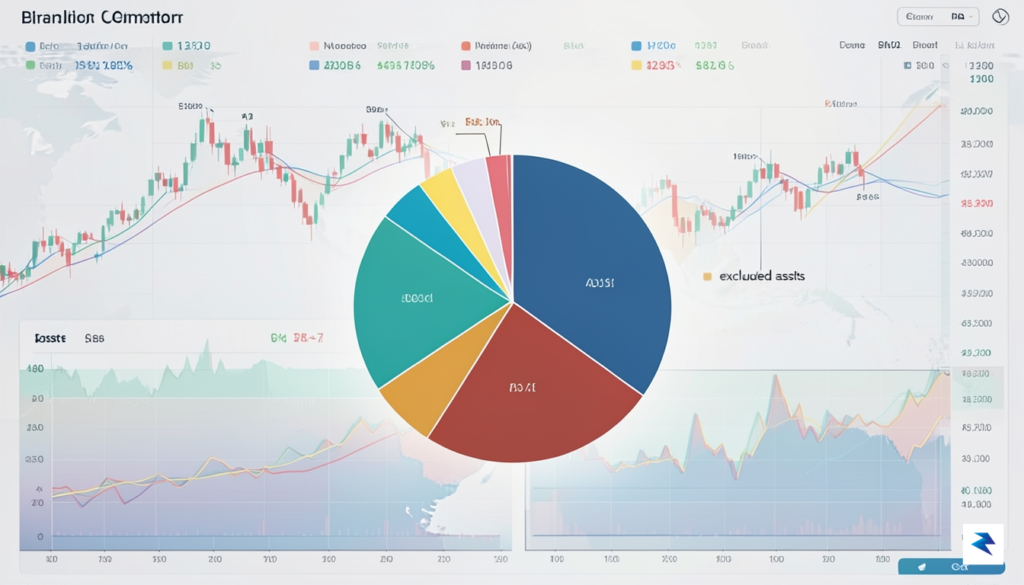
By intentionally curating an investment basket, individuals can transform their portfolio from a passive reflection of market concentration into a customized tool that aligns with their specific risk tolerance and long-term financial objectives.
Integrating these specialized ETFs into a broader, multi-asset strategy requires a nuanced understanding of correlation. When a portfolio is heavily weighted toward tech-heavy indices, it often experiences high correlation to interest rate shifts and speculative growth sentiment. By replacing or supplementing these standard holdings with funds that exclude specific market titans, investors can lower their portfolio’s overall beta relative to those specific segments. This approach does not render a portfolio “safe,” but it does create a more defensive posture that is less susceptible to the sudden, headline-driven swings that characterize the companies of prominent public figures. Ultimately, this strategy represents a sophisticated shift from passive index-following to a more deliberate, risk-aware style of asset allocation.

Before you pivot your portfolio to align with a specific social or personal stance, it is vital to remember that niche ETFs often operate differently than the broad-market index funds that form the bedrock of most retirement accounts. While the desire to exclude a polarizing figure like Elon Musk from your holdings may feel like a clear-cut moral victory, these funds often come with higher expense ratios compared to standard S&P 500 trackers. Because these ETFs must actively screen and rebalance their holdings to maintain their specific exclusion criteria, investors frequently pay a premium for that specialized management. You should carefully examine the fund’s prospectus to ensure that the ongoing management fees do not erode your long-term compounding returns, as even a small difference in basis points can lead to significant wealth gaps over a decade of holding.

Beyond the raw costs, you must also consider the liquidity and tracking error inherent in specialized investment vehicles. Smaller, thematic ETFs often have lower trading volumes, which can lead to wider bid-ask spreads when you decide to buy or sell your position. Furthermore, because these funds deliberately omit a massive market-cap player like Tesla, they are mathematically destined to diverge from the performance of the broader market. This “tracking error” is not necessarily a flaw, but it is a feature you must be comfortable with; your portfolio will move in ways that do not correlate with traditional benchmarks. Before moving capital, look closely at the fund’s underlying holdings to ensure that the remaining companies align with your broader financial goals, rather than focusing solely on the single company being excluded.
Investment decisions should be driven by a cold-eyed assessment of risk and return, rather than purely emotional responses to corporate leadership.
Finally, consider the tax and structural implications of rebalancing your portfolio. Selling existing positions to fund these new ETFs may trigger capital gains taxes, which could immediately diminish your total investable assets. Additionally, you should review how often the fund intends to adjust its “Musk-free” mandate; if the underlying index changes frequently, you could face unexpected tax consequences or transaction costs passed down from the fund manager. Ultimately, your strategy should be anchored in your long-term objectives. If you find that the exclusion of one individual improves your peace of mind and keeps you committed to a disciplined savings plan, that may be a valid trade-off. However, always verify that the fund’s methodology is transparent, sustainable, and capable of weathering market cycles, ensuring that your portfolio remains a tool for financial growth rather than just a platform for personal expression.
You must be logged in to post a comment.