
Meta’s $900M Bet on CRED: How Kunal Shah Will Transform WhatsApp
The Strategic Nexus: Meta, CRED, and the WhatsApp Evolution Meta’s landmark $900 million investment into the Indian fintech powerhouse CRED…

The Ethereum Foundation (EF), long regarded as the bedrock of the world’s most prominent smart-contract ecosystem, has initiated a major organizational pivot that has sent ripples of uncertainty throughout the blockchain industry. By confirming a 20% reduction in its total workforce, the non-profit is signaling a fundamental departure from its previous era of rapid, expansive growth. This restructuring is not merely a bureaucratic adjustment; it is a significant contraction for an entity that has historically acted as the primary steward of Ethereum’s technical evolution and long-term research goals. As the Foundation trims its ranks, observers are left to reconcile the necessity of this austerity with the massive, multifaceted scope of operations that the Ethereum network requires to remain competitive in a rapidly evolving decentralized landscape.
While layoffs have become a familiar, if unfortunate, narrative across the broader technology sector—driven by high interest rates, shifting venture capital sentiment, and a tightening of the global macro-economic environment—the Foundation’s move carries a weight that transcends typical corporate downsizing. Unlike traditional software companies or venture-backed startups, the Ethereum Foundation operates at the intersection of non-profit research and public infrastructure. Its unique position as the primary guardian of a multi-hundred-billion-dollar ecosystem means that its internal health is inextricably linked to the vitality of the entire network. Consequently, this reduction in headcount forces a difficult conversation: can the Foundation maintain its rigorous pace of research and development while grappling with a leaner operating structure?
The decision to downsize highlights the growing pains of a maturing ecosystem, reflecting a broader trend where even the most influential web3 organizations are being forced to prioritize fiscal sustainability over pure, unbridled expansion.
Furthermore, this restructuring arrives at a time when the Ethereum network faces intense scrutiny from competing Layer 1 and Layer 2 solutions. With developers and capital increasingly distributed across a fragmented landscape, the loss of institutional knowledge associated with a 20% staff exodus could potentially impact the Foundation’s ability to pivot quickly in response to emerging technical challenges. The organization now faces the delicate task of maintaining its core developmental roadmap—which includes critical upgrades to scaling, security, and user experience—while managing the morale and operational continuity of its remaining team. Whether this move serves as a necessary pruning to ensure long-term longevity or the beginning of a broader decline in influence remains the central question for stakeholders across the crypto-asset space.

The recent wave of high-profile departures from the Ethereum Foundation transcends a simple budgetary adjustment; it signifies a profound shift in the organization’s structural identity. When key architects and long-tenured leaders step away, they take with them a wealth of institutional memory that is difficult to replace. This exodus suggests that the Foundation is moving out of its “pioneer” phase—dominated by original founders and early contributors who built the core protocol from scratch—and into a more professionalized, administrative era. While this transition is often a necessary milestone for maturing organizations, it inherently creates a tension between the visionary ethos that birthed Ethereum and the bureaucratic demands of managing a multi-billion dollar ecosystem.

The challenge of this internal restructuring lies in maintaining continuity for long-term development goals. Decentralized projects like Ethereum rely heavily on a delicate balance: the Foundation must provide enough guidance to ensure security and scalability, yet it must avoid becoming a single point of failure or a centralized bottleneck. As early contributors exit, the incoming leadership faces the daunting task of preserving the project’s core philosophy while navigating an increasingly complex regulatory and competitive landscape. The departure of these figures often leaves a vacuum in communal trust, forcing the remaining team to prove that the foundation’s strategic direction remains aligned with the needs of the broader decentralized community.
The strength of a decentralized foundation is not found in its individual leaders, but in the resilience of the community it serves. However, the loss of those who understood the “why” behind the code can temporarily weaken the Foundation’s ability to act as a steward of the original vision.
Ultimately, this period of turnover forces a necessary conversation about the definition of decentralization. If the Foundation becomes too top-heavy with administrative professionals, it risks alienating the passionate, volunteer-led developer culture that originally fueled Ethereum’s growth. Conversely, relying solely on a small group of original founders can lead to stagnation or difficulty in scaling operational needs. The path forward requires a careful synthesis of these two worlds: integrating professional management styles without sacrificing the grassroots, open-source spirit that keeps the ecosystem vibrant. As the Foundation recalibrates, the industry will be watching closely to see whether this leadership transition acts as a catalyst for renewed innovation or as a sign of institutional drift.
The recent decision to reduce the Ethereum Foundation’s workforce by 20% serves as a strategic pivot toward leaner, more focused operations. For an organization tasked with stewarding the world’s most prominent programmable blockchain, the primary motivation behind such a significant restructuring is the necessity of optimizing resource allocation. By trimming administrative overhead and consolidating teams, the Foundation is aiming to channel its remaining capital and human talent directly into the most critical aspects of the protocol roadmap. This shift is particularly vital as the community navigates complex technical milestones like the Pectra upgrade and ongoing scaling solutions, where clarity of mission is often more valuable than sheer organizational size.
Managing the Foundation’s treasury remains a delicate balancing act, especially given the volatility inherent in cryptocurrency markets. By streamlining operations now, the leadership is effectively extending the runway of their resources, ensuring that they can remain a consistent, long-term supporter of core research and development. However, this leaner approach is not without its challenges. There is a palpable trade-off between achieving operational efficiency and maintaining the rapid velocity required for cutting-edge R&D. If the organization becomes too lean, it risks creating bottlenecks that could slow down essential security audits, protocol improvements, or the integration of new cryptographic standards that keep Ethereum competitive.

The transition to a more compact organizational structure signals a move away from “all-encompassing” support toward a “protocol-first” philosophy, forcing the broader ecosystem to pick up the mantle in secondary research and community outreach.
Furthermore, this restructuring forces a necessary conversation about the Foundation’s role in a purportedly decentralized ecosystem. Critics often argue that any centralized entity, regardless of its mission, carries the risk of becoming a single point of failure or an unintended arbiter of the network’s future. By reducing its direct footprint, the Ethereum Foundation may inadvertently—or intentionally—encourage greater decentralization of work. As the Foundation steps back from certain secondary initiatives, it creates a vacuum that must be filled by independent developers, academic institutions, and other non-profit entities. This evolution suggests that the Foundation is not just cutting costs; it is maturing into a more specialized entity that focuses solely on the protocol’s base layer, leaving the layers above to flourish in a more decentralized, market-driven environment.
Ultimately, the success of this 20% reduction will be measured by the stability and continued innovation of the Ethereum mainnet. If the leaner team can execute the core roadmap with high precision, the Foundation will have effectively demonstrated that a focused, smaller core can sustain a massive, decentralized network. If the cuts prove too deep, however, the ecosystem may face a period of slower development, potentially testing the resilience of the community-led development model. The path forward requires a rigorous commitment to transparency, ensuring that while the Foundation becomes smaller, its impact on the protocol remains both stable and deeply collaborative.
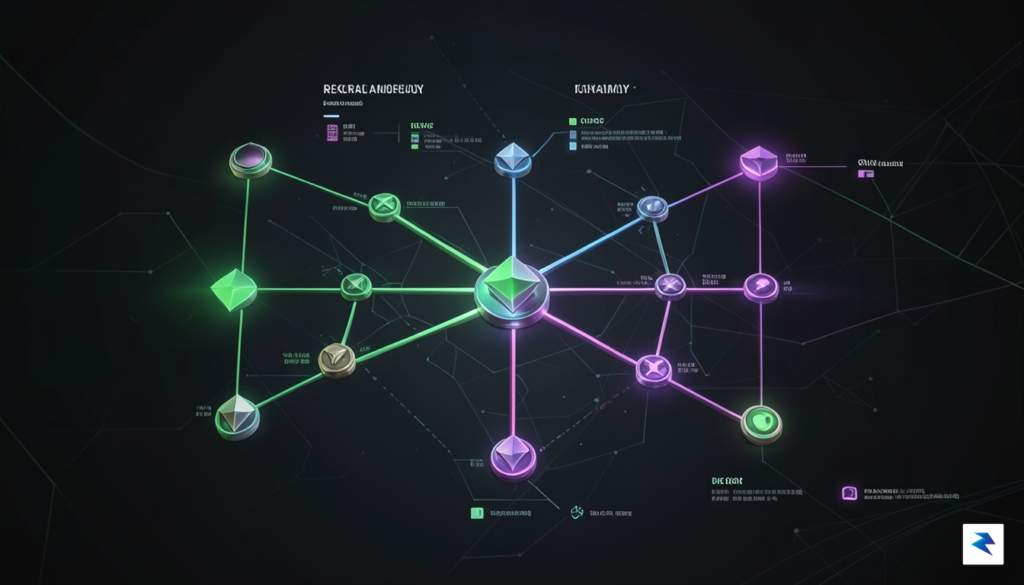
The Ethereum Foundation (EF) serves as the primary engine room for protocol research, grant distribution, and the delicate task of coordinating diverse client teams. By acting as a central clearinghouse for technical specifications, the Foundation ensures that upgrades like Pectra or future iterations of the roadmap remain cohesive across the network’s decentralized architecture. With a 20% reduction in staff, questions naturally arise regarding whether the EF can maintain the same velocity in shepherdng these complex technical milestones. While the Foundation has framed this restructuring as a move toward greater agility, the immediate impact likely involves a rigorous prioritization of projects, forcing the organization to sharpen its focus on the most critical upgrades while potentially deprioritizing experimental or long-tail research initiatives.
Historically, the EF’s funding and organizational support have been the bedrock upon which independent client teams—such as Geth, Prysm, and Lighthouse—have built their robust implementations. A reduction in headcount suggests a shift in how these resources are allocated, potentially moving away from direct, high-touch oversight toward more automated or community-reliant management structures. If the EF scales back its internal research output, the burden of proof and innovation may increasingly fall upon the broader, open-source developer community. This transition is not necessarily a negative outcome, as Ethereum was always designed to be a resilient, decentralized network; however, the short-term friction of realigning these institutional dependencies could lead to delays in the current roadmap if communication channels or administrative support suffer during the transition period.

Despite these internal changes, it is essential to remember that the Ethereum ecosystem is defined by its modularity and its vast, decentralized contributor base. The roadmap is not solely owned by the Foundation; it is the result of years of collaborative EIPs (Ethereum Improvement Proposals) and public consensus-building. The community-led nature of protocol development acts as a significant buffer against institutional instability. Because the core protocol specifications are public and open-source, the expertise exists well beyond the walls of the Foundation to carry the torch forward. The following areas will be critical to monitor as the ecosystem adjusts to this leaner EF structure:
The true resilience of Ethereum lies in its ability to function as a decentralized public good, independent of any single organization’s internal administrative state.
Ultimately, the restructuring forces a maturation process for the Ethereum ecosystem. By moving away from a model that leans heavily on the Foundation for orchestration, the network may accelerate its transition into a more truly decentralized governance environment. While the immediate loss of institutional knowledge is a hurdle, the broader developer community has historically demonstrated a remarkable capacity to self-organize when faced with existential challenges. As we look toward the next set of network upgrades, the collective vigilance of node operators, researchers, and core developers will be the ultimate barometer for the health and continued progress of the Ethereum project.

The recent organizational shift within the Ethereum Foundation represents more than just a reduction in headcount; it serves as a litmus test for the network’s maturity and its ability to function independently of any single governing body. For years, the Foundation has acted as the primary architect and catalyst for the ecosystem, steering research and development with remarkable efficacy. However, the true promise of blockchain technology lies in its resistance to central points of failure. As the organization streamlines its operations, the broader community is reminded that Ethereum’s resilience is not derived from a corporate office, but from the thousands of independent developers, node operators, and researchers who contribute to its open-source stack every single day.

This period of restructuring should be viewed as a necessary chapter in the evolution of a decentralized protocol. While leadership changes and staff departures can create short-term uncertainty, they also provide an opening for new contributors and decentralized autonomous organizations (DAOs) to take a more active role in the network’s governance and development pipeline. The strength of an open-source project is ultimately measured by its ability to persist and thrive even when its primary supporting entity undergoes significant transformation. By diffusing the responsibility of maintenance across a wider array of stakeholders, the ecosystem may actually emerge more robust and less susceptible to the shifting priorities of a single institution.
The long-term viability of Ethereum depends less on the Foundation’s internal stability and more on the continued vigilance and passion of the global community building atop its layers.
Looking ahead, the focus must remain squarely on the principles of open-source development and transparent collaboration. The community’s role in this transition is critical; developers and users alike must maintain a standard of active participation to ensure that the protocol continues to prioritize security, scalability, and decentralization above all else. If the ecosystem uses this moment to further diversify its development efforts—moving away from a reliance on centralized guidance toward a truly distributed model—it will have successfully passed one of the most important milestones in its history. Ethereum was designed to exist beyond the lifespan of any organization, and this restructuring serves as a poignant reminder that the network’s future is owned by those who build upon it, not those who merely manage it.
You must be logged in to post a comment.