
The European Quest for Technological Sovereignty: A Strategic Analysis
The Strategic Shift Toward European Tech Autonomy For the better part of the last two decades, Europe has functioned as a digital colony of…


When Google first introduced its experimental research tool, it was designed as a specialized application for Retrieval-Augmented Generation (RAG). By allowing users to upload specific documents and interact with them through an AI interface, the platform solved one of the most persistent issues in artificial intelligence: the tendency for models to hallucinate or drift away from factual accuracy. This research-focused utility quickly gained a cult following among academics, researchers, and professional writers who needed a reliable way to synthesize vast amounts of information without losing the connection to their original source materials.
The transition from this experimental phase into the broader Gemini Notebook ecosystem marks a significant turning point in Google’s overarching AI strategy. By folding this tool into the Gemini brand, Google is not merely rebranding a successful product; it is signaling a definitive shift toward making highly capable, grounded AI a central pillar of the professional workspace. This rebranding exercise reflects a move away from siloed, niche experiments toward a unified, enterprise-ready environment where sophisticated language models are seamlessly integrated into the daily workflows of knowledge workers.

For many users, the primary appeal of this tool has always been its commitment to “grounding.” Unlike generic AI chatbots that pull information from a massive, often unverified training set, the Gemini Notebook architecture forces the system to look exclusively at the documents provided by the user. This strategic focus ensures that the output is not just statistically probable, but factually tethered to the data that matters most to the individual. As the platform matures into a key component of the Gemini suite, this foundation remains intact, even as it gains access to the more advanced processing capabilities of Google’s flagship models.
The evolution of this tool represents a transition from treating AI as a conversational novelty to positioning it as a rigorous analytical partner that prioritizes factual fidelity and user-owned data.
Ultimately, this evolution mirrors the industry-wide realization that the future of generative AI lies in its ability to handle private, context-heavy information securely. By centralizing these capabilities, Google is positioning Gemini Notebook as the definitive bridge between messy, unstructured information and actionable insights. Whether a user is analyzing legal contracts, summarizing research papers, or organizing project plans, the shift toward a cohesive Gemini identity provides the stability and scalability required to transform a research prototype into an essential daily utility for the modern professional.

The transition to the Gemini model architecture represents a fundamental shift in how NotebookLM processes information, moving far beyond simple pattern matching into the realm of true cognitive synthesis. At the heart of this upgrade is Gemini’s massive context window, which allows the system to ingest and hold an unprecedented volume of data simultaneously. Unlike legacy models that often struggled to maintain coherence when tasked with analyzing dozens of disparate documents, Gemini maintains a holistic view of your entire project library. This means you can upload hundreds of pages of research, technical manuals, and meeting transcripts, and the model will treat them as a single, interconnected knowledge base rather than isolated fragments.
One of the most significant technical advancements is the robust “grounding” mechanism that defines the Gemini experience. Because the model is strictly constrained to reference only the documents, PDFs, and web links you provide, it effectively eliminates the common AI pitfall of hallucination. When you ask a question, the system performs a multi-stage retrieval process, identifying the exact passages in your source material that support its answer. By anchoring every response to specific citations, the platform offers a level of accountability that is essential for high-stakes research. You no longer have to guess whether the information is accurate; you can simply click the citation to verify the source material in real-time.
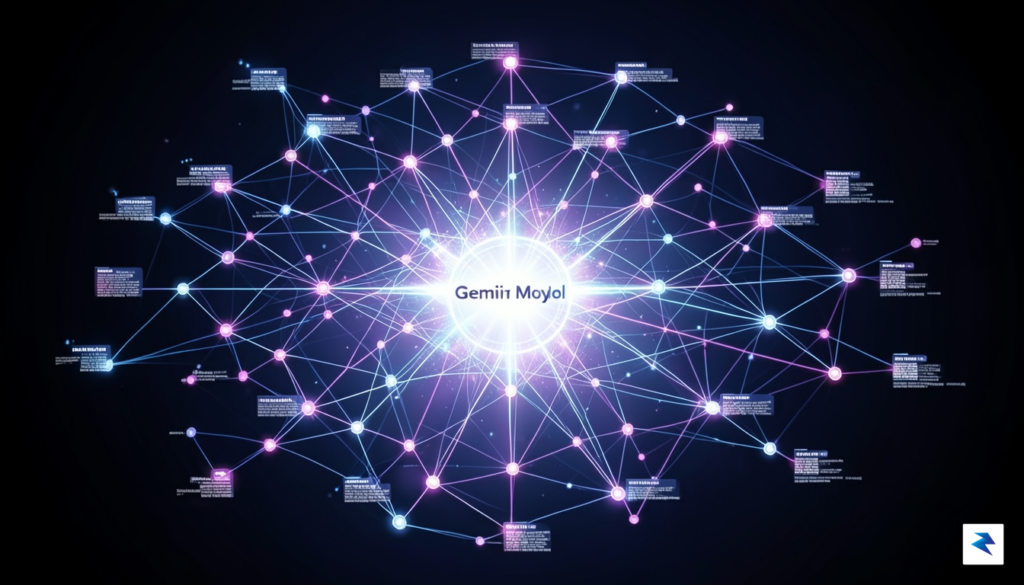
The leap in reasoning capabilities is particularly noticeable when comparing this new iteration to the previous generation. While older systems were adept at summarizing simple text, they often faltered when tasked with identifying nuanced themes or conflicting arguments across large datasets. Gemini, by contrast, excels at complex extraction and logical inference. For instance, a journalist investigating a massive archive of leaked documents can now ask the model to map out the relationships between different entities across years of reporting, a task that would have previously required hours of manual cross-referencing. Similarly, corporate analysts can feed in an entire quarter’s worth of financial reports and competitor white papers to identify subtle shifts in market trends, allowing the model to act as a sophisticated research assistant that never misses a detail.
The power of this integration lies in its ability to turn a static archive into a dynamic, conversational partner that understands the specific context of your work.
Ultimately, this integration transforms the research workflow from a linear, time-consuming struggle into an iterative, high-speed discovery process. Whether you are an academic synthesizing a decade of literature reviews, a corporate strategist evaluating complex risk factors, or a student organizing a thesis, the underlying Gemini architecture ensures that your output is not just generated, but deeply informed by the specific evidence you have curated. By removing the cognitive load of navigating massive information silos, the tool allows you to focus less on the mechanics of searching and more on the higher-level work of analysis, synthesis, and creative decision-making.
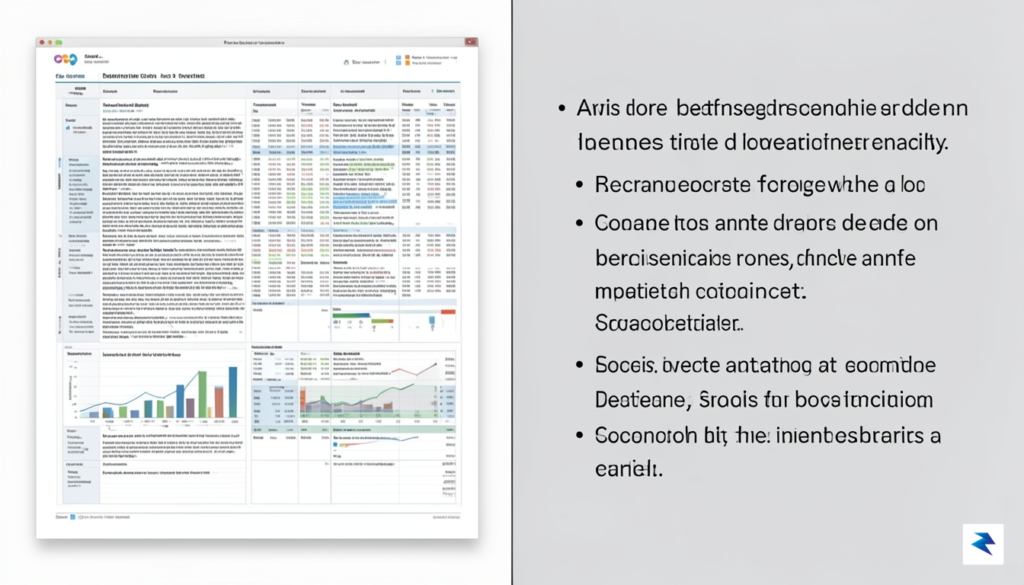
At its core, the platform’s transition to Gemini Notebook represents a significant leap forward for researchers who juggle massive volumes of information. The centerpiece of this evolution is the multi-source synthesis engine, which allows users to upload diverse documents—ranging from PDFs and slide decks to raw text files—and treat them as a unified knowledge base. Rather than forcing you to manually search through individual files, the system intelligently cross-references disparate data points, identifying connections and themes that might otherwise remain buried in the noise. By synthesizing these inputs, the tool acts as a dedicated research assistant that understands the nuances of your specific project.
For those engaged in deep data mining, the custom query engine serves as the ultimate diagnostic tool. Instead of relying on generic search parameters, power users can deploy highly specific prompts to extract complex insights, effectively turning their document collection into a dynamic, queryable database. This capability is further bolstered by a robust citation tracking system, which ensures that every claim or summary generated by the AI is anchored to an explicit source within your uploaded materials. This level of transparency is essential for academic or professional rigor, as it allows users to verify information instantly and maintain a clear audit trail of their research journey.
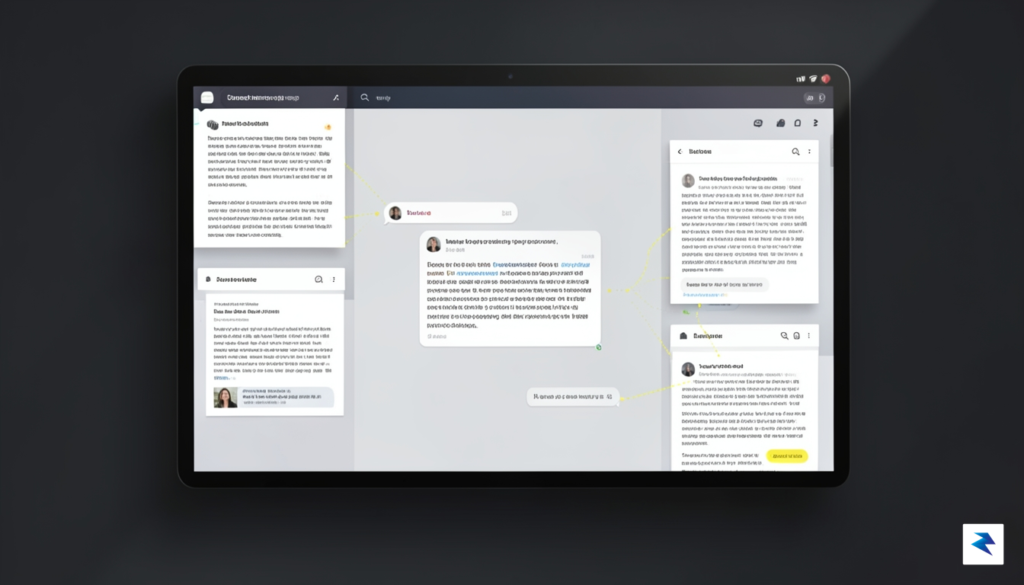
Beyond textual analysis, the platform introduces an innovative ‘Audio Overview’ feature that fundamentally changes how researchers consume information. By converting complex reports or research papers into engaging, conversational audio summaries, the tool makes it possible to absorb dense material while on the move. This is not merely a text-to-speech function; it is a sophisticated synthesis process that distills the core arguments and data points of your sources into a coherent narrative. Such accessibility features ensure that your research is not confined to your desk, allowing for a more flexible and iterative review process.
The true power of Gemini Notebook lies in its ability to transform raw, unstructured data into a structured output, acting as a bridge between massive document ingestion and actionable intelligence.
To maximize these capabilities, optimal retrieval depends on how users organize their source materials. By grouping related documents into specific folders and utilizing clear, descriptive file naming conventions, you provide the AI with better context for its synthesis. When you present the model with a well-curated library, the resulting insights become significantly more accurate and structured. Whether you are generating comprehensive project outlines, comparative tables, or executive summaries, the platform’s structured output generation simplifies the transition from gathering information to drafting your final findings, ultimately saving hours of manual consolidation.
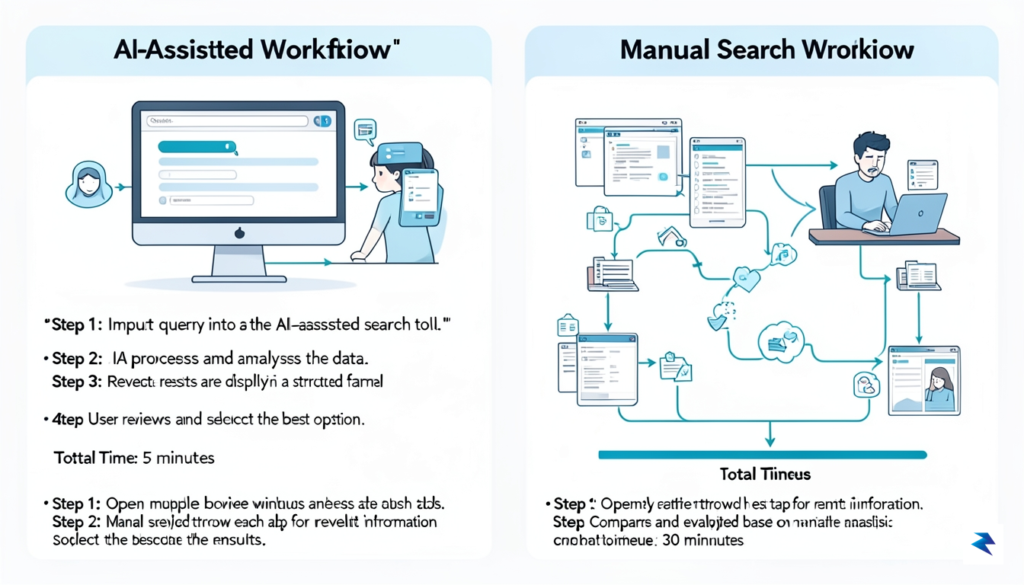
In a saturated landscape of generative AI assistants, the transition from NotebookLM to Gemini Notebook represents a fundamental shift in how we interact with information. While standard chatbots like ChatGPT or Claude are primarily designed to generate creative text based on broad, pre-trained knowledge, Gemini Notebook is built with an entirely different objective: source-based reasoning. General-purpose models often fall into the trap of “hallucinations,” where the AI confidently invents facts because it prioritizes fluent, human-like output over factual accuracy. In contrast, Gemini Notebook anchors its responses strictly to the documents you provide, ensuring that every claim is derived directly from your uploaded materials.
This commitment to “grounding” is the primary differentiator for professionals who cannot afford the ambiguity of a creative engine. When conducting a literature review or analyzing complex technical documentation, you do not want an AI that guesses; you need a partner that tracks evidence. By forcing the model to operate within the constraints of your specific data, Gemini Notebook acts as a rigorous research assistant that provides precise citations for every insight, effectively eliminating the guesswork associated with broader conversational tools.
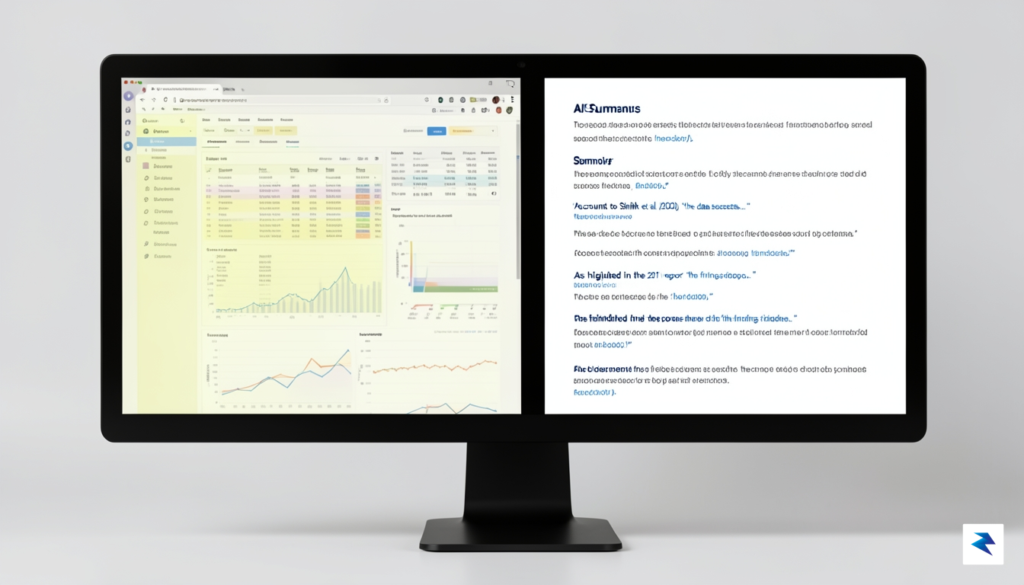
Privacy and attribution remain the most significant hurdles for enterprise adoption of AI, and this is where the platform’s architectural focus shines. Unlike public-facing chatbots that may ingest user queries to refine global models, the infrastructure supporting Gemini Notebook is designed to respect the integrity of your private uploads. When you ask a question about your files, the system doesn’t just pull from a vast, nebulous training set; it maps your query against your specific repository of documents. This transparency allows researchers to verify the information instantly, as the platform clearly identifies which document and which section informed the answer provided.
The true power of Gemini Notebook lies not in its ability to write for you, but in its ability to synthesize what you already know, turning scattered files into a coherent, evidence-backed narrative.
For those working in fields like legal analysis, academic research, or software engineering, the ability to perform “source-aware” queries is a game-changer. While a standard chatbot might provide a high-level summary of a concept, it lacks the context of your specific project files. Gemini Notebook bridges this gap, enabling you to ask nuanced questions—such as comparing specific methodologies across five different research papers—without the risk of the model drifting into generic territory. By prioritizing data fidelity over creative flair, the platform establishes itself as an essential utility for anyone whose work relies on precision, accountability, and the mastery of deep, document-heavy subjects.

To truly unlock the potential of Gemini Notebook, you must move beyond passive reading and adopt a systematic approach to data ingestion. Start by curating your source materials with precision; rather than uploading a chaotic dump of files, organize your documents by specific themes or project phases. Cleaning your text—ensuring that PDFs are readable and that transcripts are properly formatted—allows the AI to index your information with far greater accuracy. By establishing this clean, structured foundation, you effectively minimize the risk of “hallucinations” and ensure that the synthesis provided by the model remains grounded in your primary materials.

Once your documents are uploaded, your ability to extract actionable insights depends heavily on your prompt engineering strategy. Instead of asking vague, open-ended questions, provide the AI with specific personas or task-oriented frameworks. For example, rather than simply asking for a summary, request that the model “act as a project manager to identify three potential risks within these documents” or “synthesize these findings into a list of prioritized action items.” By framing your queries with a clear objective, you guide the model to focus on the nuances that matter most to your current workflow, turning raw data into ready-to-use strategy.
The quality of your output is directly proportional to the specificity of your intent; define the ‘who, what, and why’ in every prompt to sharpen the AI’s analytical lens.
Managing knowledge silos within the interface is equally crucial for long-term productivity. As you populate your notebook, avoid the temptation to create a single, monolithic file for every project. Instead, leverage multiple notebooks to segment different domains of expertise, which prevents the AI from conflating unrelated topics. When navigating these silos, make it a habit to use the “notes” feature to capture your own evolving thoughts alongside the AI’s output. This creates a living document where your human intuition and machine-generated synthesis can coexist, ensuring that you don’t lose the context of your research as the project grows in complexity.
Finally, treat your research process as an iterative cycle rather than a linear task. Always verify critical data points by clicking through the citations provided by the tool, which confirms that the AI is accurately referencing your source text. A recommended workflow template involves three distinct stages:
By implementing this rigorous, multi-step process, you transform the tool from a simple search assistant into a powerful engine for high-level intellectual output.
You must be logged in to post a comment.