
Is the macOS 27 Public Beta Worth the Upgrade? Our First Impressions
Introduction: Exploring the macOS 27 Golden Gate Beta The arrival of the macOS 27 "Golden Gate" public beta signals a transformative moment…


For decades, the promise of nuclear fusion—recreating the power of the stars here on Earth—was relegated to the realm of theoretical physics and high-stakes government-funded laboratory experiments. This narrative has shifted dramatically with the arrival of General Fusion on the Nasdaq, an event that effectively marks the industry’s graduation from a long-term research pursuit into a legitimate, investable asset class. By stepping into the public equity markets, the company has provided a tangible benchmark for the fusion sector, signaling to institutional and retail investors alike that the transition from scientific curiosity to commercial utility is now underway.

The historical significance of being the first publicly traded fusion entity cannot be overstated, as it provides a necessary mechanism for price discovery in a field that has historically relied exclusively on private venture capital and government grants. This public debut allows the broader market to participate in the development of near-limitless clean energy, effectively democratizing access to what many believe is the “holy grail” of power generation. Furthermore, the move creates a new level of transparency and accountability for the firm, as it must now balance its ambitious engineering milestones with the rigorous reporting requirements and performance expectations of public shareholders.
The leap to the public market is not merely a financial milestone; it serves as a vote of confidence in the underlying technology, proving that the engineering hurdles of fusion are finally being viewed as solvable operational challenges rather than insurmountable scientific mysteries.
Despite the current climate of macroeconomic uncertainty and volatile energy markets, the initial reception of General Fusion’s stock has been notably resilient. This enthusiasm suggests that investors are increasingly looking past short-term market fluctuations to identify companies capable of solving existential, long-term global problems. By securing capital through a public offering, General Fusion is now better positioned to accelerate its path toward commercial pilot plants and prototype validation. This influx of liquidity is essential, as it provides the runway necessary to bridge the gap between bench-scale demonstration and grid-scale deployment, proving that the era of fusion energy is no longer a distant aspiration, but a tangible participant in the modern financial landscape.
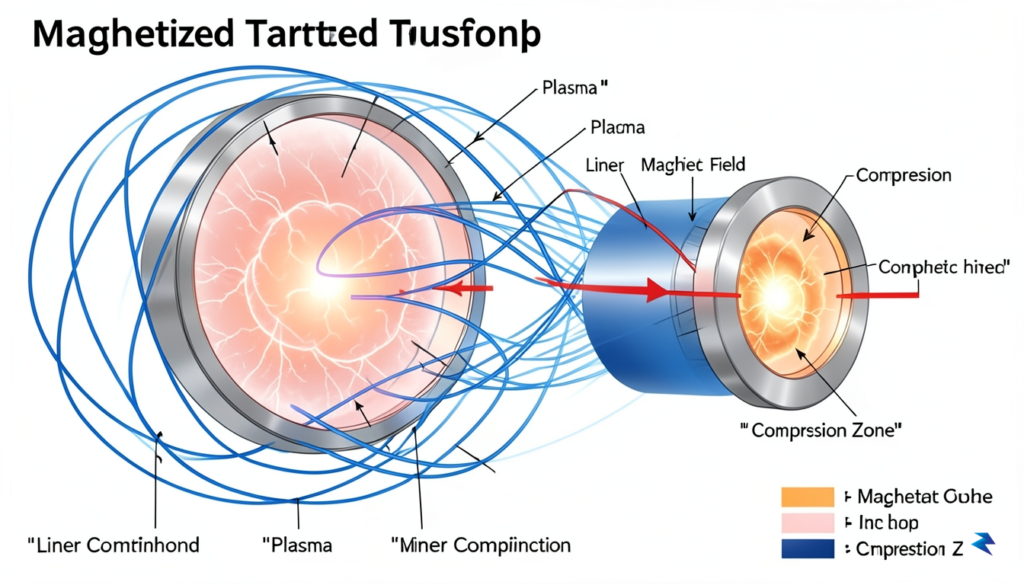
At the heart of General Fusion’s strategy is a unique methodology known as Magnetized Target Fusion (MTF). While many industry players focus on either the massive, sustained magnetic fields of a Tokamak or the rapid-fire laser pulses of inertial confinement, General Fusion has carved a middle path. MTF works by injecting a magnetized plasma into a chamber lined with a spinning vortex of molten lead-lithium. Once the plasma is centered, a series of precisely timed pistons compress the liquid metal, causing the plasma to shrink rapidly and reach the extreme temperatures and pressures required for fusion. This hybrid approach seeks to capture the stability of magnetic confinement while leveraging the high-density power potential of inertial systems, effectively bridging the gap between two of the field’s most storied traditions.
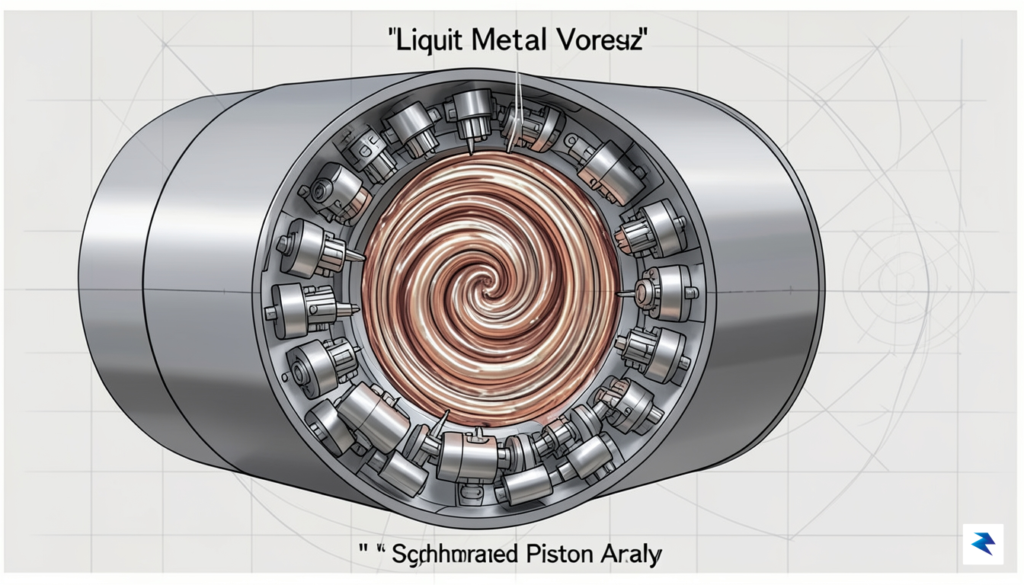
The company’s implementation of a liquid metal wall serves two critical functions that set it apart from traditional fusion designs. First, the swirling lead-lithium acts as a protective barrier, absorbing the intense neutron radiation generated during the fusion reaction, which would otherwise degrade the structural integrity of the vessel walls in a standard reactor. Second, this liquid metal acts as a heat transfer medium, capturing the energy released by the fusion process and carrying it to a heat exchanger to produce steam for electricity generation. By integrating the reactor wall directly into the power-conversion cycle, the design simplifies the complex engineering required to harness fusion energy, potentially reducing the overall material stress that has historically plagued stationary magnetic confinement reactors.
The marriage of magnetized plasma and mechanical compression allows General Fusion to operate on a more modular and potentially more cost-effective scale than the multi-billion-dollar, building-sized Tokamaks currently under construction globally.
Compared to the massive, stationary Tokamak designs—which rely on massive superconducting magnets to suspend plasma in a vacuum indefinitely—the MTF approach is fundamentally more pulsatory. Tokamaks are prone to plasma instabilities that can damage the internal components of the reactor if not managed with extreme precision, often requiring massive, expensive infrastructure. In contrast, General Fusion’s mechanical compression cycle is designed to be repeatable and robust. However, this is not without its own set of significant engineering hurdles. The company is currently focused on perfecting the synchronization of the piston array, ensuring that the compression is perfectly uniform to prevent plasma leakage, and maintaining the stability of the spinning liquid metal vortex at the extreme velocities required for ignition. As they move toward commercialization, their ability to scale this pulse-based technology efficiently will be the ultimate test of whether their hybrid design can deliver on the promise of clean, baseload power.

The journey toward public listing via a reverse merger—frequently executed through a Special Purpose Acquisition Company (SPAC)—serves as a distinct alternative to the traditional Initial Public Offering (IPO). For a capital-intensive sector like nuclear fusion, where development timelines are measured in decades rather than quarters, this route offers a streamlined path to liquidity and market visibility. By merging with an existing shell company, General Fusion bypassed the lengthy roadshow and regulatory scrutiny typically associated with a traditional IPO. However, this expedited entry into the public markets comes with a complex set of financial mechanics that can significantly alter a company’s capitalization strategy overnight.

A critical challenge inherent in this strategy involves redemption rates, which occur when early shareholders choose to reclaim their cash rather than remain invested in the newly merged entity. In the current economic climate, investors have become increasingly cautious, often opting to redeem their shares if they perceive the merger’s valuation to be misaligned with market volatility. When redemption rates are high, the liquid cash reserves intended to fund research, development, and the construction of pilot plants can be drastically reduced. This leaves the company with a smaller “war chest” than initially anticipated, forcing management to reconcile the high costs of fusion energy R&D with a tighter balance sheet.
The true test for a fusion company post-merger is not just the ability to raise capital, but the capacity to sustain long-term operations despite the volatility inherent in public equity markets.
Despite these headwinds, the decision to pursue a reverse merger suggests a long-term strategic calculation regarding capital access. By becoming a publicly traded entity, General Fusion gains a permanent platform to tap into secondary offerings and institutional investment rounds, which may provide more stability than relying solely on private venture capital. Furthermore, public status often elevates the company’s profile, potentially attracting partnerships and government grants that are frequently tethered to the transparency and accountability mandates of public reporting. While the initial redemption pressure creates a short-term hurdle for liquidity, the broader goal remains the creation of a sustainable, transparent capital structure capable of supporting the multi-billion dollar endeavor of commercializing fusion energy.

The transition to a net-zero global economy requires more than just scaling existing wind and solar infrastructure; it demands a fundamental shift toward high-density, reliable, and dispatchable energy sources. While intermittent renewables are essential to decarbonizing the grid, fusion energy represents the ultimate “holy grail” of power generation. Unlike traditional renewables that rely on favorable weather conditions, fusion provides an unparalleled energy density capable of delivering constant, baseload power without the carbon footprint of fossil fuels or the long-lived radioactive waste associated with current fission reactors. As General Fusion enters the public markets, it transforms the narrative from theoretical physics to actionable industrial strategy, signaling to the global energy sector that fusion is transitioning from a laboratory curiosity to a viable commercial asset.

The timeline for commercial viability remains the most significant hurdle, yet public capital is proving to be the essential accelerant needed to bridge the gap between experimental prototypes and grid-scale implementation. Historically, fusion research was confined to state-sponsored academic settings, which often moved at a glacial pace due to bureaucratic constraints and fragmented funding cycles. By tapping into public equity markets, companies like General Fusion are subjected to a new level of rigorous scrutiny and transparency that forces a disciplined approach to research and development. This influx of capital allows for faster iteration cycles, enabling firms to test advanced materials, superconducting magnets, and plasma containment systems at a scale and speed that was previously unattainable in private research silos.
The leap to a publicly traded fusion model changes the risk-reward calculus, shifting the focus from purely scientific discovery toward the engineering discipline required for large-scale energy deployment.
The competitive landscape is intensifying as the global race to achieve the first commercial-scale fusion power plant gains momentum. Various startups and established players are experimenting with divergent approaches, from magnetic confinement to target-driven inertial systems, all vying to prove that they can achieve the elusive “Q-factor”—the point where the energy generated by the reaction exceeds the energy required to sustain it. This competition is not merely about prestige; it is a race to define the standard for the next century of power generation. As investors pour capital into these diverse technical pathways, the market is effectively running a massive, parallel-processing experiment that will inevitably shorten the time to market for the entire industry.
Ultimately, the move to public markets serves as a litmus test for the world’s commitment to climate action. If fusion energy is to play a decisive role in mitigating the worst impacts of climate change by the middle of this century, the industry must demonstrate not only scientific prowess but also economic scalability. By inviting public investment, fusion developers are committing to a future where clean, near-infinite energy is no longer a distant dream but a regulated, predictable, and essential component of the global energy mix. This transition marks the beginning of a new chapter in energy history, where the fusion of capital and cutting-edge physics finally aligns with the urgent demands of a warming planet.

Investing in the dawn of the commercial fusion era is undeniably an exciting prospect, yet it requires a sober assessment of the financial landscape. Because companies like General Fusion are essentially deep-tech ventures that have yet to generate consistent revenue, their valuations are often tied more to future promises than current balance sheets. This creates an environment of inherent volatility where stock prices can swing wildly based on shifts in investor sentiment, broader market cycles, or incremental technical updates. Prospective shareholders must be prepared for a “long game” strategy, as the journey from experimental plasma physics to a grid-connected power plant spans years, if not decades, of capital-intensive research and development.
Beyond the typical market swings, the fusion sector is uniquely sensitive to the complex web of international nuclear regulations and safety standards. Developing a fusion reactor is not merely a challenge of engineering; it is a hurdle of policy and public perception. Regulatory frameworks for nuclear energy are historically rigorous, and any unforeseen changes in government oversight or environmental policy could lead to significant project delays or increased operational costs. Investors should view these entities not as traditional utility stocks that offer steady dividends, but as high-stakes research initiatives where the primary asset is intellectual property and the potential to disrupt the global energy market entirely.
Success in the fusion market is measured in breakthroughs, not quarterly earnings. Investors who prioritize short-term price movements over long-term technical milestones are likely to find the experience unnecessarily stressful.
To navigate this volatile terrain, savvy investors should look past the daily ticker tape and focus on concrete technical milestones. Tracking a company’s progress involves monitoring peer-reviewed publications, the successful scaling of magnetic confinement or target injection systems, and the establishment of strategic partnerships with governments or global energy conglomerates. These developments serve as the true indicators of a company’s trajectory and its ability to overcome the “valley of death” that often claims pre-revenue technology firms.

Ultimately, a balanced approach is essential for those looking to gain exposure to this sector. Diversification—ensuring that a fusion investment represents only a small, calculated portion of a broader portfolio—is the most prudent strategy for mitigating the risks of early-stage deep-tech. By maintaining a long-term perspective and keeping a close watch on technical feasibility rather than speculative hype, investors can participate in the transition toward a cleaner energy future while acknowledging the significant hurdles that remain before fusion becomes a standard reality.
You must be logged in to post a comment.