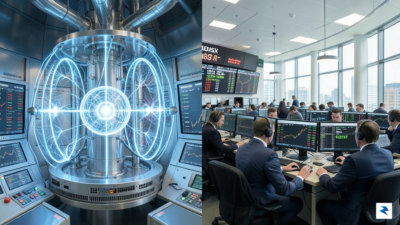
General Fusion Hits the Nasdaq: What Investors Need to Know
The New Era of Fusion Energy Markets For decades, the promise of nuclear fusion—recreating the power of the stars here on Earth—was relegated…


For years, the discourse surrounding artificial intelligence was dominated by either utopian visions of limitless productivity or hyperbolic science-fiction scenarios. However, the publication of a landmark open letter signed by nearly 200 of the world’s most influential economists and technology leaders has effectively punctured this speculative bubble, ushering in a new era of pragmatic, evidence-based concern. This coalition, which spans the halls of prestigious academic institutions and the boardrooms of Silicon Valley’s most innovative firms, represents a rare alignment of intellectual firepower. By bridging the gap between theoretical economic modeling and the practical realities of software deployment, these signatories are signaling that the rapid integration of AI is no longer just a technological milestone—it is a systemic economic event that demands urgent, coordinated oversight.
The core argument presented by these experts shifts the focus away from the abstract potential of AI and toward its tangible, potentially disruptive role in global labor markets. Unlike previous waves of automation, which largely targeted repetitive manual labor, these leaders argue that AI’s unique ability to augment or replace cognitive, analytical, and creative tasks creates an unprecedented risk profile. The signatories contend that we are approaching a critical juncture where the speed of technological adoption may far outpace the capacity of our social safety nets and educational institutions to adapt. Consequently, they suggest that without proactive policy frameworks, we risk exacerbating wealth inequality and triggering widespread structural unemployment that could destabilize entire sectors of the economy.

The transition from a productivity-focused narrative to a risk-aware framework marks a fundamental turning point in how society evaluates the long-term sustainability of the AI revolution.
The significance of this intervention cannot be overstated, particularly because it originates from the very individuals who are currently steering the development of these powerful systems. When those who build the technology join forces with those who study its economic ripple effects, the resulting consensus carries a weight that policymakers can no longer afford to ignore. This isn’t merely an alarmist reaction; it is a calculated call for guardrails that protect the workforce while allowing for sustainable innovation. By highlighting that labor markets are not self-correcting mechanisms in the face of such rapid technological displacement, these leaders are advocating for a more human-centric approach to the digital economy. As the global debate intensifies, this letter serves as a definitive marker that the honeymoon phase of AI development has concluded, replaced by a sober and necessary assessment of the risks we must collectively navigate.

For generations, the narrative of technological progress centered on the replacement of physical labor. From the looms of the Industrial Revolution to the robotic assembly lines of the 20th century, machines primarily supplanted tasks that required repetitive, manual effort. However, the current evolution of artificial intelligence represents a departure from this historical trajectory. We are no longer merely witnessing the mechanization of the factory floor; we are entering an era of “cognitive automation” that targets the very professions once thought to be the exclusive domain of human intellect. Legal analysis, medical diagnostics, financial modeling, and creative writing—fields that demand years of specialized training—are increasingly susceptible to algorithmic proficiency.
This shift introduces a profound systemic risk to economic stability, as the protection once afforded by high-skill education is rapidly eroding. In previous decades, technological advancement tended to complement high-skill workers, making their expertise more valuable and productive. Today, the rapid deployment of large language models and generative AI risks decoupling productivity from human contribution entirely. When a software program can perform in seconds what previously required a team of analysts, the market value of that human-centric expertise faces a dangerous downward pressure. This creates a scenario where corporate productivity may skyrocket, yet the compensation for the workers traditionally responsible for that output remains stagnant or diminishes, further widening the chasm between capital owners and the labor force.

The true risk of the AI revolution lies not in the total elimination of jobs, but in the systematic devaluation of cognitive labor, which could fundamentally reshape the middle-class social contract.
Furthermore, the velocity at which these changes are occurring is unprecedented. Historical shifts in technology generally allowed for a generational transition; as one set of skills became obsolete, the economy gradually shifted, allowing time for education systems and labor markets to adapt. AI, by contrast, operates on a compressed timeline, scaling its capabilities across multiple industries simultaneously. This broad-spectrum impact makes it significantly more difficult for the workforce to pivot or retrain before the next wave of innovation renders their new skills redundant. If the fruits of this technological leap accrue primarily to a narrow group of technology firms while the broader professional class faces a erosion of their bargaining power, we may see a period of prolonged economic volatility that challenges the foundations of consumer-driven growth.

The current legislative landscape is defined by a reactive posture that is fundamentally ill-equipped to manage the exponential trajectory of machine learning. By the time a policy is drafted, debated, and signed into law, the underlying technology has often evolved beyond the scope of the original regulation. This “governance lag” creates a dangerous void where private interests can scale powerful systems without meaningful public oversight. Relying on traditional, slow-moving legal frameworks to govern a technology that iterates at the speed of software is akin to using a compass to navigate a supersonic jet; the tools are simply not calibrated for the velocity of the change at hand.
To bridge this divide, we must transition toward a model of anticipatory governance. Rather than waiting for widespread economic disruption or systemic failure to occur, policymakers should establish flexible, living frameworks that evolve alongside the technology. This approach requires a fundamental shift in how we view safety rails: instead of seeing regulation as a hurdle to innovation, we should frame it as the necessary infrastructure that sustains public trust in new tools. Without clear, proactive guardrails, the long-term viability of the AI industry is threatened by the very chaos its unchecked deployment may invite.

The tension between fostering high-velocity innovation and implementing essential safety measures is perhaps the most significant challenge facing modern governments. There is a persistent fear that overly stringent regulation will stifle development, ceding a competitive advantage to global rivals. However, this binary view—innovation versus regulation—is a false dichotomy. In reality, market stability requires clear rules of the road. Investors and developers alike are often hesitant to commit long-term capital to technologies that operate in a regulatory gray zone where future liabilities remain undefined and potentially catastrophic.
True innovation is not merely about the speed of advancement, but the sustainability of its integration into the human experience.
Furthermore, the focus of our legislative efforts must shift toward the human-centric impacts of AI, specifically concerning labor and economic security. As automation begins to displace traditional roles at an unprecedented rate, our existing social safety nets—designed for the industrial era—are proving woefully inadequate. Policymakers must urgently address:
The window for proactive intervention is narrowing. By centering policy on the long-term welfare of the workforce and the integrity of our information ecosystems, we can ensure that artificial intelligence serves as a tool for broad-based prosperity rather than a catalyst for systemic inequality. It is time for lawmakers to move past the cycle of reactive crisis management and embrace a future-oriented strategy that prioritizes human agency above all else.

As the integration of artificial intelligence accelerates, the most valuable currency in the modern job market is no longer a static set of technical skills, but the capacity for radical adaptability. We are moving toward a human-in-the-loop paradigm, where the goal is not to have machines replace professionals, but to have humans leverage algorithmic power to achieve higher-order outcomes. This shift requires us to stop viewing education as a finite chapter of our youth and instead embrace it as a continuous, lifelong pursuit. To remain resilient, workers must cultivate a hybrid skill set that blends fundamental technical literacy with the uniquely human capabilities that machines struggle to replicate, such as profound empathy, nuanced critical thinking, and the ability to navigate complex ethical dilemmas.

Lifelong learning can no longer be a buzzword; it must become a structural component of every career path. Reskilling initiatives should focus on bridging the gap between legacy expertise and emerging digital tools. For instance, a marketing professional might augment their creative instincts with an understanding of generative AI prompting, while a project manager could utilize predictive analytics to better allocate team resources. By proactively seeking out micro-credentials, workshops, and immersive learning experiences, individuals can ensure that their professional value proposition evolves at the same pace as the technology they utilize.
The future of work will not be defined by a choice between humans and machines, but by the synergy created when the two operate in tandem.
Employers, too, bear a significant responsibility in facilitating this transition. Organizations that treat their workforce as a legacy asset to be discarded rather than a dynamic system to be developed will inevitably struggle with retention and innovation. Companies should implement internal “upskilling pipelines” that provide employees with the time and resources to master AI-enhanced workflows. This includes mentorship programs where tech-savvy younger employees and veteran subject matter experts exchange knowledge, creating a culture of mutual learning. When employers prioritize transparent communication regarding how AI will alter specific roles, they reduce anxiety and empower their staff to take ownership of their professional development.
Ultimately, the transition toward an AI-augmented economy is an invitation to redefine what it means to be a professional. While machines handle the repetitive, data-heavy tasks, the human workforce is freed to focus on high-value initiatives that require deep strategy and human connection. By fostering resilience through constant curiosity and strategic skill-stacking, workers can move from a place of vulnerability to one of significant leverage. Adapting to this new reality demands that we view the machine as an extension of our own potential, rather than a competitor for our livelihood.

The imperative to address the rapid evolution of artificial intelligence is not a call to stifle ingenuity, but rather a necessary recalibration of our collective trajectory. To ensure that technological advancement serves as a tide that lifts all boats, we must move beyond the current landscape of fragmented development and toward a model of deep, structural collaboration. By fostering a tripartite alliance between tech giants, sovereign governments, and academic institutions, we can create a robust framework that prioritizes human-centric outcomes. This partnership must be built on the understanding that innovation is only as valuable as its ability to enhance, rather than displace, the fundamental dignity and economic security of the workforce.
Transparency must transition from an industry buzzword to an operational requirement. As AI systems become more deeply integrated into our financial, healthcare, and labor sectors, the “black box” nature of these technologies becomes an unacceptable liability. Establishing universal ethical standards—governed by rigorous, third-party auditing—will provide the necessary guardrails to mitigate systemic risk. These standards should focus on accountability for algorithmic bias, data privacy, and the long-term impacts of automation on income inequality. When developers are held to clear, measurable benchmarks, they are incentivized to build systems that complement human labor, effectively turning AI into a tool for empowerment rather than a mechanism for widespread economic instability.
The true test of our progress lies not in the speed of our computation, but in the stability of our society as we integrate these powerful new capabilities into our daily lives.
Looking toward the horizon, the path forward is one of cautious optimism. We are standing at a unique technological crossroads where the potential for unprecedented prosperity is matched only by the risk of profound disruption. If we choose to prioritize human-centric safeguards today, we can cultivate an economy where AI acts as a sophisticated catalyst for productivity, freeing workers from repetitive tasks and allowing them to engage in higher-value, creative endeavors. This vision requires the political will to enact forward-looking policies and the corporate responsibility to place human welfare at the center of the bottom line. By steering this ship with both innovation and empathy, we can ensure that the age of artificial intelligence remains a chapter of human flourishing.

You must be logged in to post a comment.