
Can the U.S. Become the Global Capital of Crypto? CZ Weighs In
The Shift Toward a Crypto-Forward United States For years, the relationship between the United States regulatory apparatus and the digital…

For years, the artificial intelligence landscape has been dominated by massive, general-purpose models, celebrated for their ability to engage in broad conversations, generate creative content, and answer a vast array of general knowledge questions. These ‘one-size-fits-all’ solutions, while undeniably impressive in their versatility, often fall short when confronted with the intricate, high-stakes demands of highly specialized domains. The sheer complexity and ever-evolving nature of modern cyber threats require an understanding far deeper than what a generalist model, no matter how large, can typically provide without extensive, domain-specific fine-tuning.
A significant paradigm shift is now underway, signaling a critical transition in how we approach automated threat detection and code analysis. We are witnessing the rise of specialized Large Language Models (LLMs) meticulously engineered for the unique challenges of cybersecurity. These aren’t simply larger models; they are architecturally and functionally distinct, built from the ground up or heavily adapted to process and interpret the highly technical, often adversarial, nuances inherent in security research and operations. This new wave of AI agents is poised to redefine the capabilities of automated defenses and proactive security measures.
GLM-5.2 stands as a prime example of this emerging specialized intelligence. Unlike its generalist counterparts, GLM-5.2 is not optimized for casual chat or creative writing; its core purpose is to act as a sophisticated tool for security research, threat intelligence, and vulnerability assessment. It has been rigorously trained on vast, curated datasets comprising everything from exploit databases, vulnerability reports, and malware analysis to secure coding best practices, network traffic logs, and adversarial techniques. This deep immersion in cyber-specific data allows it to develop an unparalleled contextual understanding essential for identifying subtle anomalies and intricate attack patterns that generalist models frequently miss.
The performance metrics that define excellence for a generalist model, such as fluency in conversation or creative storytelling prowess, bear little relevance to its efficacy in complex cybersecurity tasks. A model might excel at generating a compelling narrative, but this capability offers minimal insight into its capacity to, for instance, accurately pinpoint a zero-day vulnerability within thousands of lines of C++ code, or to trace the obfuscated logic of a sophisticated ransomware variant. Cybersecurity demands precise, actionable intelligence, where the cost of a false positive or a missed threat can be catastrophic. Therefore, benchmarks for specialized cyber LLMs focus on entirely different criteria, such as low false positive rates in threat detection, high accuracy in vulnerability identification, the ability to interpret complex security protocols, and proficiency in secure code generation or auditing.
This fundamental divergence highlights why a model like GLM-5.2 can significantly outperform generalist LLMs, even those celebrated for their broad intelligence, in the specific arena of cybersecurity. It’s a testament to the power of specialization, demonstrating that for tasks requiring surgical precision and deep domain expertise, a purpose-built agent will invariably surpass a versatile but less focused generalist. The future of robust digital defense lies not just in bigger AI, but in smarter, more specialized AI.

The landscape of large language models is constantly evolving, with new benchmarks frequently challenging our perceptions of AI capabilities. Recent evaluations conducted by Semgrep have cast a fascinating light on the performance of GLM-5.2, particularly when pitted against industry giants like Claude in highly specialized domains. These rigorous benchmarks reveal a compelling narrative: that targeted, domain-specific fine-tuning can indeed yield superior results over larger, more general-purpose models, especially within the intricate world of cybersecurity.
To truly appreciate GLM-5.2’s standout performance, it’s crucial to understand the specific metrics and tasks employed in these evaluations. The benchmarks were meticulously designed around core cyber-relevant tasks, moving beyond generic language understanding to focus on actionable security intelligence. Key areas included Abstract Syntax Tree (AST) parsing, which involves breaking down code into its fundamental structural components to understand its logic; exploit identification, requiring the model to accurately pinpoint potential vulnerabilities and attack vectors within code; and adherence to secure coding practices, assessing the model’s ability to suggest or identify code that aligns with robust security principles. These are not trivial tests; they demand a deep, nuanced comprehension of programming languages, security paradigms, and potential exploits.
When comparing the raw numbers, GLM-5.2 consistently demonstrated higher precision and recall rates across these critical cybersecurity tasks. Precision, in this context, refers to the accuracy of the model’s findings—how many of its identified vulnerabilities or parsing results were truly correct, avoiding false positives. Recall, conversely, measures the model’s completeness—how many actual vulnerabilities or correct parsing elements it managed to identify out of the total present. GLM-5.2 significantly outstripped leading generalist models in both aspects, meaning it not only made fewer mistakes but also caught a greater percentage of the issues it was designed to find. This superior performance is particularly pronounced in identifying subtle, complex exploits that often elude less specialized AI systems.
The significance of these findings, observed within a controlled and highly specialized testing environment, cannot be overstated. It underscores the powerful impact of dedicated fine-tuning and domain-specific knowledge integration. While models like Claude excel at a vast array of general language tasks, their broad training may dilute their expertise in niche, technical domains where precision and contextual understanding are paramount. GLM-5.2’s architecture and training data, presumably honed with extensive cybersecurity datasets, allowed it to develop a deeper, more refined understanding of code structures, common vulnerabilities, and secure patterns, giving it a distinct advantage where it matters most.
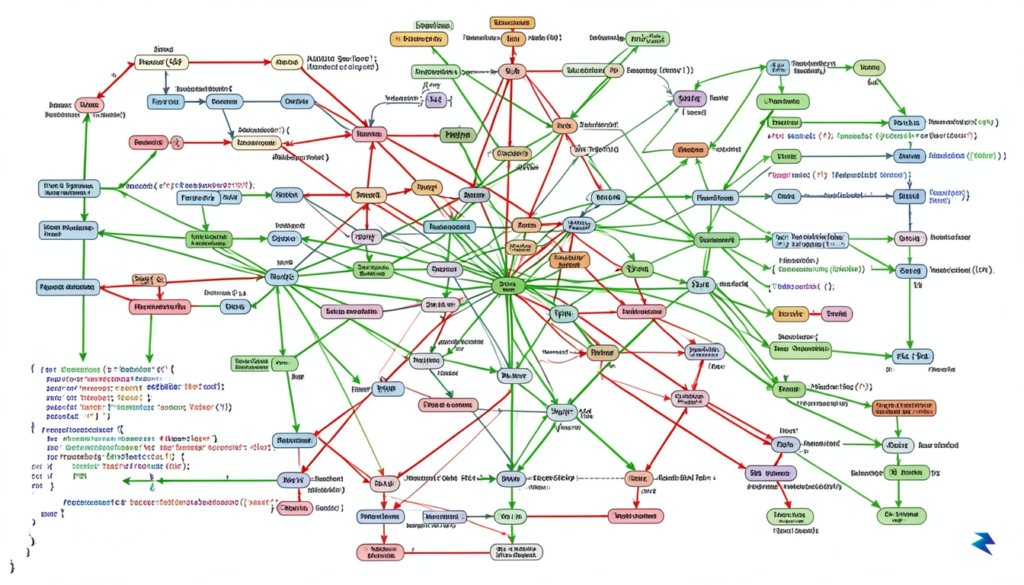
Ultimately, these benchmark results serve as a compelling testament to the value of specialized AI development. They suggest that for highly critical, domain-specific applications like cybersecurity, an AI model that is purpose-built and meticulously fine-tuned for that specific challenge can often surpass even the most powerful general-purpose counterparts. This doesn’t diminish the impressive capabilities of broad AI models, but rather highlights a crucial strategic consideration: organizations seeking to leverage AI for specific, high-stakes tasks may find greater efficacy and reliability in solutions engineered with a laser focus on their particular domain, rather than relying solely on the general intelligence of larger, less specialized systems.
At the core of the struggle for general-purpose large language models (LLMs) in the cybersecurity space lies a fundamental “context gap.” While models like Claude are trained on vast, diverse datasets encompassing everything from creative literature to general programming tutorials, they lack the specialized density required to navigate the high-stakes environment of threat mitigation. In cybersecurity, the difference between a secure system and a catastrophic breach is often found in the most obscure, low-level details of an abstract syntax tree (AST) or a legacy API integration. Generalist models, by their very design, prioritize linguistic probability over technical precision, often treating a critical security configuration with the same probabilistic weight as a common comment block in a standard script.
This reliance on broad, generalized training corpora creates a dangerous disconnect when the model encounters sophisticated, domain-specific challenges. Because these models are optimized to predict the most likely next token based on a vast, heterogeneous knowledge base, they frequently struggle to differentiate between common, benign coding patterns and nuanced security vulnerabilities. For instance, a generalist model might successfully generate functional boilerplate code, but it often fails to recognize when that same code introduces a subtle injection flaw or a race condition. This inability to parse the “intent” behind complex, adversarial code leads to a high rate of false negatives in threat detection, where the model essentially misses the forest for the trees.
The primary failure point of generalist LLMs in security is their reliance on statistical averages rather than the structural logic of secure software development.
Furthermore, the phenomenon of “hallucination” in code generation becomes a critical liability in security-sensitive contexts. When a generalist model is tasked with suggesting a fix for a library dependency vulnerability, it may confidently propose a solution that appears syntactically correct but is functionally flawed or insecure. This occurs because the model is effectively “guessing” based on fragmented patterns rather than understanding the underlying security posture of the software. Instead of relying on a deep, formal grounding in security protocols, the model mimics the appearance of expertise, which can be disastrous for developers who trust these outputs during high-pressure incident response scenarios.

To overcome these hurdles, a model must move beyond simple pattern recognition and toward a structural understanding of how software vulnerabilities manifest. This is where specialized training becomes indispensable. By grounding a model in domain-specific corpora—such as verified CVE databases, hardened secure coding standards, and complex security audit logs—the architecture can learn to prioritize safety-critical pathways over general convenience. Unlike its generalist counterparts, a specialized model like GLM-5.2 is designed to treat security as a primary constraint rather than an optional feature, ensuring that its suggestions are not just grammatically coherent, but architecturally sound and resistant to modern exploit techniques.

Reliable benchmarks serve as the bedrock of artificial intelligence progress, yet standard leaderboards often fail to capture the nuance required for specialized domains like cybersecurity. To determine if a model is truly “cyber-smart,” we moved beyond generic pattern matching and static language tasks, opting instead for a rigorous framework that simulates high-stakes, real-world application scenarios. Our methodology prioritizes functional utility over rote memorization, ensuring that the performance metrics we report reflect a model’s ability to reason through complex vulnerabilities, synthesize security patches, and navigate intricate system architectures under pressure.

To achieve this level of precision, our testing environment was built upon a diverse corpus of proprietary and open-source codebases, including legacy enterprise systems, modern microservices, and obfuscated malware samples. By exposing GLM-5.2 and its competitors to these specific datasets, we forced the models to demonstrate not just syntactic correctness, but a deep understanding of security context and architectural intent. We structured our query bank into three distinct tiers:
True cybersecurity intelligence is not found in the ability to recall common exploit signatures, but in the capability to reason through unique, undocumented security flaws within a dynamic, evolving environment.
Mitigating bias is a critical component of our research, as even the most sophisticated models can suffer from “data contamination,” where the training set accidentally includes the test questions. To combat this, we implemented a dynamic evaluation protocol where every query is randomized and obfuscated to ensure that the AI cannot rely on prior familiarity with specific public repository snippets. Furthermore, we utilized a blind scoring system where human security experts verified the outputs without knowing which model produced the response. By removing identifiers and ensuring that all models were tested on identical, non-public edge cases, we established a level playing field that highlights GLM-5.2’s genuine inferential superiority over established industry peers like Claude. This commitment to a blind, high-fidelity testing environment ensures that our findings are not merely statistically significant, but practically actionable for professionals tasked with securing mission-critical infrastructure.

For security engineers and CISOs, the performance lead demonstrated by specialized models like GLM-5.2 signals a critical pivot point in how organizations should architect their defensive stacks. While generalist conversational assistants have served as helpful starting points for brainstorming or summarizing policy documents, their limitations in nuanced threat detection and exploit identification are becoming increasingly apparent. Moving forward, security leaders should prioritize integrating specialized LLMs directly into DevSecOps pipelines. By embedding these models into CI/CD workflows, teams can perform automated, context-aware code analysis that captures vulnerabilities which broader, less-focused models often overlook or hallucinate away.
The transition from general-purpose tools to specialized models requires a thoughtful approach to data handling and model orchestration. Rather than replacing human analysts, these models should act as force multipliers that handle the repetitive, high-volume tasks of parsing logs or reviewing routine pull requests. Organizations should begin by creating dedicated API gateways that route security-related queries to specialized models, ensuring that sensitive data is processed in environments where domain-specific fine-tuning has already occurred. This allows your team to maintain a human-in-the-loop architecture, where the AI provides the initial triage and the security engineer provides the final verification, effectively bridging the gap between raw speed and tactical accuracy.

When assessing new AI tools for internal security audits, CISOs must look beyond the marketing hype of generic benchmarks and focus on precision-recall metrics relevant to their specific stack. It is essential to test these models against your own historical incident data—specifically past false negatives—to see if the new tool can catch what was previously missed. Consider the following criteria when vetting a model for production use:
The true value of an AI security tool is not measured by its conversational fluency, but by its ability to identify the subtle, non-obvious patterns of a sophisticated intrusion before it escalates into a breach.
Ultimately, the decision between deploying a generalist model versus a specialized one comes down to a trade-off between convenience and efficacy. While generalist models offer ease of use and broad accessibility, they often introduce risks associated with generalized knowledge, such as increased false positives or missed edge cases in complex environments. In contrast, specialized deployments require more initial engineering effort but yield significantly higher returns in terms of security posture. By investing in tools that are purpose-built for the rigor of threat intelligence and code auditing, organizations can create a more resilient security architecture that is capable of keeping pace with the evolving threat landscape.

The recent advancements demonstrated by specialized large language models in critical benchmarks, particularly within the cybersecurity domain, are not merely isolated achievements but rather herald a significant paradigm shift. We are moving beyond the era where a single, monolithic AI model was expected to solve all problems. Instead, the future of artificial intelligence, especially in highly complex and adversarial fields like cybersecurity, will be characterized by a profound fragmentation into powerful, domain-specific modules. Imagine a sophisticated security stack operating as a meticulously orchestrated symphony of AI models, each finely tuned and optimized for a particular function—from parsing obscure threat intelligence reports and identifying novel malware signatures to predicting attack vectors and even initiating automated remediation protocols. This specialized approach allows for unparalleled depth and precision, far surpassing the capabilities of a general-purpose model attempting to cover too many bases.
Crucial to fostering this next generation of highly specialized AI capabilities is the vibrant and accelerating momentum of open-source contributions. The collaborative spirit of the open-source community provides an essential crucible for innovation, allowing researchers, practitioners, and ethical hackers worldwide to collectively refine models, share invaluable datasets, and scrutinize algorithms for vulnerabilities and biases. This communal effort ensures that as AI fragments into these powerful modules, they are built on transparent foundations, subjected to rigorous peer review, and continually improved through diverse perspectives. Such an environment not only accelerates the development cycle but also democratizes access to cutting-edge tools, ensuring that the benefits of advanced AI are not confined to a privileged few but can be leveraged across the entire security landscape, strengthening collective defenses against ever-evolving threats.
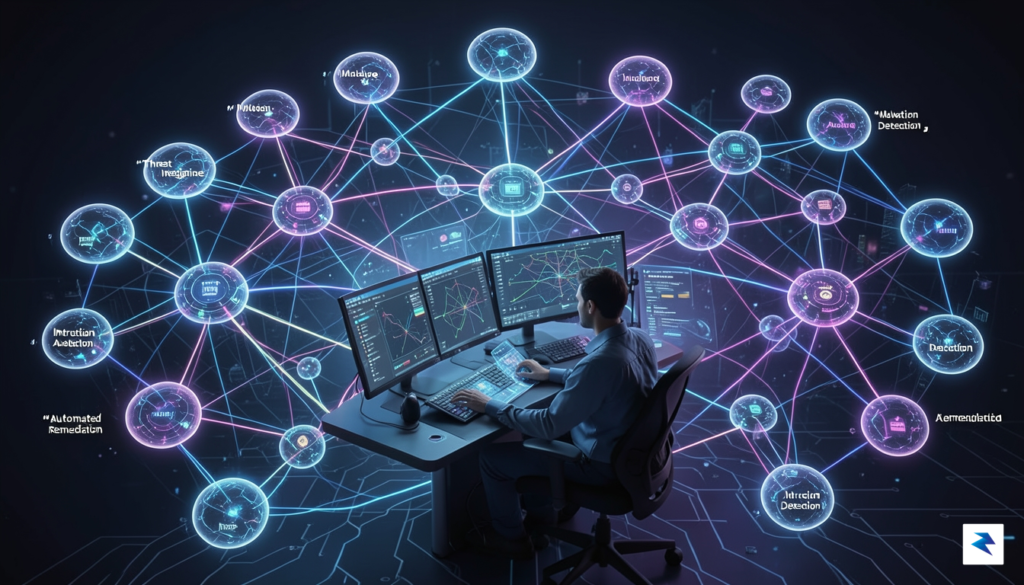
However, the rise of increasingly autonomous cyber tools, powered by these specialized AI modules, also necessitates a robust commitment to ongoing evaluation and, critically, persistent human oversight. While these AI systems promise unprecedented speed and scale in threat detection and response, they are ultimately sophisticated instruments designed by humans, and thus carry inherent limitations and potential for unforeseen consequences. Continuous performance monitoring, adversarial testing, and rigorous ethical frameworks must be ingrained into every stage of their deployment. Human experts will remain indispensable, serving as the strategic architects, ethical guardians, and ultimate decision-makers, guiding these intelligent systems and intervening when nuanced judgment or creative problem-solving is required. The most resilient cybersecurity postures will emerge from a powerful partnership between highly specialized AI and astute human intelligence, ensuring that technology serves as an augmentation, not a replacement, for our deepest understanding of security challenges.
You must be logged in to post a comment.