
Busy Bar: The Flipper Zero Team’s New Productivity Multitool Explained
The Evolution of Productivity: From Flipper Zero to Busy Bar The engineering team behind Flipper Zero carved out a niche by creating a tool…
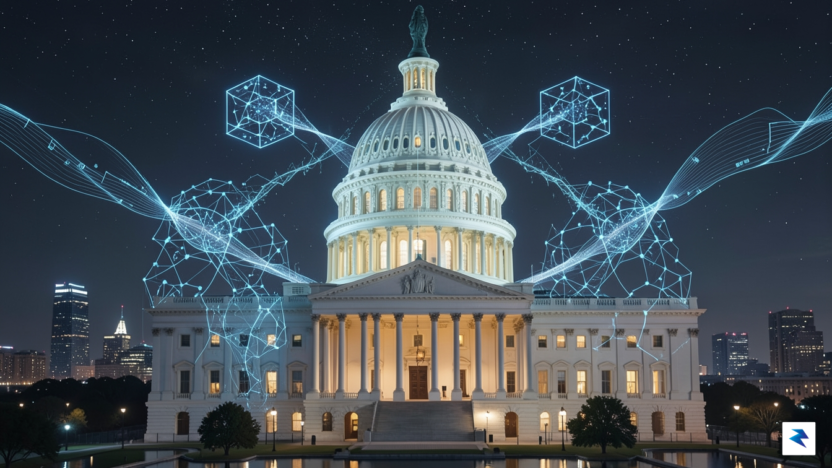

For years, the relationship between the United States regulatory apparatus and the digital asset industry has been defined by friction. Agencies like the Securities and Exchange Commission (SEC) have frequently relied on a strategy of “regulation by enforcement,” leaving many crypto firms feeling sidelined and uncertain about their legal standing. This adversarial climate created a chilling effect that pushed innovation toward more permissive jurisdictions, forcing startups to navigate a labyrinth of conflicting guidelines. However, the tide appears to be turning as the dialogue shifts from punitive measures to the realization that digital assets represent an inevitable evolution of the global financial architecture.
Changpeng Zhao (CZ), a central figure in the industry, has long championed the idea that the United States possesses the innate infrastructure, human capital, and financial depth required to lead this transition. Despite the historical headwinds, CZ argues that the country’s inherent strengths—such as its robust venture capital ecosystem and deep-seated culture of technological entrepreneurship—make it the most logical home for the next generation of blockchain innovation. By moving away from restrictive policies, the U.S. could effectively pivot from a posture of skepticism to one of strategic leadership, capturing the massive economic potential of a decentralized economy.

“The United States has all the ingredients to lead the world in digital asset adoption, provided the regulatory framework evolves to foster growth rather than stifle it.”
The argument for this transition is not merely rooted in optimism but in a pragmatic assessment of global competition. As other nations race to develop comprehensive regulatory frameworks to attract blockchain companies, the U.S. faces the risk of falling behind if it remains tethered to outdated methodologies. A pro-crypto shift would necessitate a collaborative approach where policymakers and industry leaders work in tandem to establish clear, predictable rules of the road. This transition would not only provide much-needed clarity for institutional investors but also solidify the U.S. dollar’s influence within the emerging crypto-denominated landscape, ensuring that the country remains the center of gravity for global finance in the coming decades.
Ultimately, the objective is to create a sustainable environment where innovation can thrive without compromising investor protection. By embracing this evolution, the U.S. stands at a pivotal crossroads where it can define the standards for transparency, security, and scalability in the digital age. As the industry matures, the integration of blockchain technology into the mainstream financial system will likely prove to be one of the most significant economic developments of the 21st century, and the decisions made today will determine whether the United States remains at the forefront of that transformation.

At the heart of the proposal to transform the United States into a global crypto powerhouse lies a fundamental shift in philosophy: moving away from the reactive, often unpredictable practice of “regulation by enforcement.” Instead, the focus shifts toward establishing a proactive, transparent framework that empowers innovators rather than stifling them. By codifying clear rules of the road, the industry can transition from a state of constant legal anxiety to a structured environment where businesses can plan their growth with confidence. This shift is not merely about making life easier for exchanges; it is about creating a stable ecosystem where developers, startups, and legacy financial institutions can operate without the looming threat of sudden litigation.

A primary pillar of this strategic vision involves the standardization of legal definitions for digital assets. Currently, the industry is hampered by ambiguity regarding whether various tokens should be classified as securities, commodities, or something entirely new. By establishing uniform definitions that accurately reflect the unique utility and functionality of blockchain assets, regulators can eliminate the “gray zones” that currently discourage institutional participation. When major investment firms and corporations know exactly how an asset is categorized and what regulatory requirements apply to its custody and trading, they are far more likely to deploy capital into the market, thereby driving liquidity and long-term stability.
“Regulatory clarity is the bedrock of institutional adoption; without a defined map, even the most innovative players will remain on the sidelines.”
Furthermore, this move toward legal certainty serves as a vital safeguard for the average consumer. When the rules are clear, it becomes significantly easier to hold bad actors accountable while fostering legitimate projects that adhere to established standards. This alignment creates a natural filter that promotes higher-quality market participants and reduces the prevalence of fraudulent activity. Ultimately, by fostering an environment that balances robust consumer protection with an innovation-friendly stance, the U.S. can effectively bridge the gap between speculative volatility and a mature, sustainable asset class that earns its place in the global financial system. Such a transformation would not only secure the country’s position as a technological leader but would also cement its reputation as a reliable and forward-thinking hub for the next iteration of the internet economy.

Transforming the United States into a global nexus for digital assets requires navigating a labyrinth of legacy financial regulations that were never designed for a decentralized, borderless economy. At its core, the tension lies between the traditional mandate of oversight—which relies on centralized intermediaries to track transactions and verify identities—and the ethos of blockchain technology, which seeks to minimize or eliminate these very intermediaries. Reconciling these two worlds is not merely a technical challenge but a profound legal undertaking that necessitates a shift in how federal agencies define assets, securities, and property in a digital context.
The path forward is complicated by the current division of labor in Washington, where federal agencies like the SEC and the CFTC often operate with overlapping jurisdictions, leading to a climate of regulatory uncertainty. For the U.S. to truly become a crypto hub, Congress must step in to provide the legislative clarity that executive agencies cannot unilaterally offer. Without a comprehensive legal framework, innovators are forced to operate in a “gray zone,” which stifles domestic growth and pushes promising projects to more crypto-friendly jurisdictions overseas. A bipartisan legislative effort is essential to codify rules that protect consumers while ensuring that the U.S. financial system remains competitive in the age of global digital finance.

The goal is not to dismantle the oversight that maintains the stability of our financial markets, but to evolve it so that it accounts for the unique, decentralized nature of blockchain-based innovation without stifling its potential.
Achieving this balance between fostering innovation and maintaining systemic stability is the ultimate “tightrope walk” for policymakers. On one hand, overly restrictive mandates could inadvertently drive capital and talent away from American soil, hindering the potential for a new wave of financial inclusion. On the other hand, a “move fast and break things” approach risks exposing retail investors to catastrophic losses and systemic failures that could spill over into the broader economy. Therefore, any modernization of the financial infrastructure must be rooted in transparency, robust cybersecurity standards, and clear accountability, ensuring that the integrity of the U.S. dollar and the stability of its markets are never compromised by the rapid adoption of new, experimental digital instruments.

The United States has long served as the primary engine for global financial innovation, acting as the epicenter where technology meets capital markets. Because the U.S. dollar remains the world’s primary reserve currency and American capital markets are the deepest in existence, any significant shift in how the nation approaches digital assets inevitably sends shockwaves throughout the global economy. When the U.S. establishes a clear, consistent regulatory framework for crypto, it does not merely govern domestic activity; it effectively drafts a blueprint that other jurisdictions are likely to mirror. This “first-mover advantage” is crucial, as nations are currently in a high-stakes race to attract the brightest developers, the most robust venture capital firms, and the next generation of decentralized infrastructure.

Should the U.S. solidify its position as a crypto-friendly environment, it would likely trigger an unprecedented surge in venture capital flow. Investors are inherently risk-averse regarding regulatory ambiguity, and by providing legal clarity, the U.S. could unlock trillions of dollars in institutional capital currently sitting on the sidelines. This influx of investment would not just benefit American startups; it would provide the necessary liquidity to scale decentralized finance (DeFi) protocols globally. As these protocols mature under a clearer U.S. regulatory lens, they gain legitimacy in the eyes of traditional financial institutions, creating a bridge between legacy banking and the decentralized future. This international ripple effect ensures that innovation isn’t siloed, but rather exported across borders, accelerating the pace of global financial inclusion.
The regulatory stance of the United States acts as a de facto global standard. By fostering a transparent and encouraging environment, the U.S. doesn’t just invite innovation—it defines the rules of engagement for the entire international digital economy.
Furthermore, the geopolitical significance of this leadership cannot be overstated. As digital assets become increasingly integrated into sovereign wealth strategies and cross-border trade, the nation that dominates the underlying technology will likely hold a distinct advantage in shaping the future of global finance. If the U.S. adopts a stance that favors openness and technical growth, it secures its influence over the next iteration of the internet, often referred to as Web3. Conversely, a failure to lead in this arena risks ceding that ground to other global powers that are already aggressively competing for dominance in the digital asset space. Ultimately, when the U.S. leads, it creates a stable, scalable, and secure environment that allows developers worldwide to build with confidence, ensuring that the next wave of financial revolution is built on a foundation of American innovation.

As the conversation around domestic digital asset policy shifts toward clarity and structured growth, we are witnessing the early stages of a transition from a purely speculative market to a robust, utility-based ecosystem. For years, the crypto landscape was largely defined by extreme volatility and the “wild west” nature of early-stage adoption. However, a move toward a more crypto-friendly U.S. regulatory environment suggests that the next phase of development will prioritize infrastructure that supports real-world applications, such as decentralized finance, tokenized real-world assets, and efficient cross-border payments. This evolution is vital for investors, as it shifts the focus from chasing short-term price movements to evaluating projects based on their fundamental technological contributions and long-term viability.
For developers and entrepreneurs, a stable policy framework serves as a foundational layer, allowing them to build products with the assurance that they are operating within a legitimate, well-defined legal perimeter. When the rules of the road are clear, the fear of sudden, punitive enforcement actions dissipates, encouraging greater investment in innovation and talent acquisition within the United States. This environment does not just benefit crypto-native firms; it invites traditional tech giants and financial institutions to integrate blockchain technology into their existing stacks, effectively bridging the gap between legacy systems and the future of digital finance. Consequently, the average user stands to gain the most, as this integration will likely result in more intuitive interfaces, increased security, and the widespread availability of financial services that were previously inaccessible or prohibitively expensive.

The transition toward a regulated, mature crypto market is not merely about compliance; it is about establishing the trust necessary to bring digital assets into the daily lives of millions.
Despite this optimistic trajectory, it is essential to maintain a balanced perspective on the remaining risks. While regulatory clarity is a major step forward, the crypto ecosystem remains inherently complex, and market participants must continue to prioritize education and risk management. True stability will not be achieved through top-down mandates alone, but rather through a sustained, transparent dialogue between industry leaders, technological innovators, and policymakers. By fostering this collaborative environment, the United States can effectively mitigate systemic risks while simultaneously cultivating a fertile ground for the next generation of financial technology. Ultimately, the path forward is one of cautious optimism, where the focus remains on building sustainable value that benefits the broader economy rather than just a niche group of early adopters.
You must be logged in to post a comment.