
The AI Trojan Horse: Satya Nadella’s Warning on Proprietary Model Risks
The Trojan Horse Risk: Understanding Proprietary AI Dependency The contemporary enterprise landscape is currently defined by a frantic,…
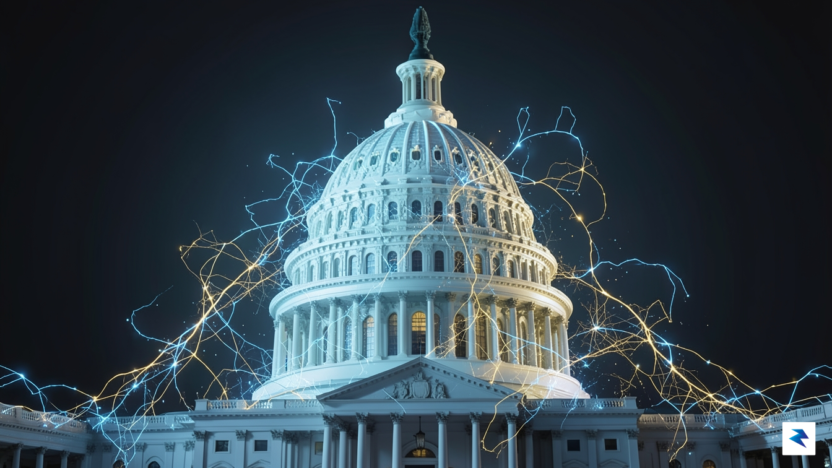
For decades, the relationship between the United States federal government and the private sector has been defined by a clear, albeit complex, boundary: the state provides grants, tax incentives, and regulatory frameworks, while private enterprise retains full ownership and control of its operations. However, a seismic policy shift is currently underway as the administration begins to acquire direct equity stakes in private companies. This move represents a fundamental departure from traditional free-market norms, signaling an era where the state is no longer merely a regulator or a client, but a literal shareholder in the engines of American industry. While the government has historically intervened in markets through bailouts or emergency loans during periods of economic crisis, the current strategy of proactive stake-buying across various sectors suggests a permanent transformation in how Washington intends to exert influence over corporate strategy.

The implications of this shift are most profound when applied to the rapidly evolving landscape of cutting-edge technology. Unlike traditional manufacturing or infrastructure projects, where government interest is often focused on long-term stability or job preservation, the current appetite for equity in technology firms is driven by an urgent need for national security and geopolitical dominance. By securing a seat at the table through ownership, the administration is effectively ensuring that sensitive technological advancements remain aligned with federal mandates. This pivot point in economic policy suggests that the government views the rapid maturation of certain industries—most notably artificial intelligence—as too critical to be left entirely to the whims of private capital markets.
By transitioning from a patron to a partner, the federal government is rewriting the social contract of American business, prioritizing strategic state objectives over the traditional autonomy of private firms.
As these stake-buying patterns expand, the focus has increasingly tightened on the artificial intelligence sector, which many policymakers now view as the new frontier of national power. Because AI development requires massive amounts of data, energy, and processing power, it creates a unique environment where the line between private innovation and public infrastructure becomes blurred. The administration’s interest in this space is not merely about financial return; it is a calculated attempt to steer the trajectory of a technology that will likely define the economic and military supremacy of the coming century. Consequently, founders and investors alike are beginning to grapple with a new reality: the prospect of government oversight is no longer coming from the outside, but from within the boardroom itself.

At the center of this shift toward government-held equity is a fundamental reassessment of what constitutes a modern national asset. For decades, the prevailing doctrine favored a hands-off approach, trusting market forces to drive innovation. However, the current administration has pivoted toward a philosophy of technological sovereignty, arguing that the era of unfettered private control over foundational technologies has reached a point of vulnerability. By acquiring stakes in private enterprises, the government is not merely acting as a passive investor; it is carving out a permanent seat at the table to ensure that high-stakes innovations—especially those with profound implications for military defense, power grids, and data security—remain tethered to the broader strategic interests of the nation.
This strategy is rooted in the belief that economic independence is the bedrock of national security. As global competition intensifies, particularly regarding intellectual property that dictates the future of warfare and industrial efficiency, officials are increasingly wary of foreign influence, whether through hostile acquisitions or indirect control of supply chains. By establishing a direct equity position, the administration aims to insulate critical firms from external pressures that might otherwise compromise domestic security. Proponents of this approach argue that when a company develops a technology that could alter the geopolitical balance of power, its research agenda and commercial partnerships can no longer be treated as purely private matters; they become matters of state policy.

Furthermore, the government has begun to treat artificial intelligence as a form of critical infrastructure, comparable to energy grids or telecommunications networks. In this view, AI is not just another software product, but a foundational layer upon which the entire modern economy and defense apparatus depend. Just as the state might intervene to prevent a foreign entity from owning a major port or power plant, the administration posits that it must prevent the “brain” of the next industrial revolution from drifting outside of its regulatory and strategic reach. This concept of the “strategic partnership” is used to justify the use of public funds to secure influence, framing these investments as necessary insurance against the risk of domestic companies prioritizing short-term profit over long-term stability.
The core of this policy is a shift from regulation to participation: rather than just setting the rules of the road for the tech sector, the government is now attempting to own the vehicle itself.
Ultimately, this approach represents a significant departure from traditional capitalist norms, raising complex questions about the boundary between the public and private sectors. By moving beyond traditional oversight and into the role of a shareholder, the administration intends to exert a more granular level of control over the intellectual property pipeline. This ensures that the innovations flowing from these laboratories are optimized not just for market share, but for national resiliency. Whether this interventionism will foster a new era of secure, state-aligned innovation or stifle the very entrepreneurial spirit that makes these companies valuable in the first place remains the central debate of this bold economic experiment.

The prospect of federal equity ownership in the artificial intelligence sector has sent a palpable tremor through the corridors of Silicon Valley, where the culture of rapid, risk-oriented innovation is fundamentally at odds with the deliberate, bureaucratic nature of government oversight. For many founders and venture capitalists, the intrusion of state capital feels less like a strategic partnership and more like a fundamental threat to the agile development cycles that have defined the AI revolution. There is a pervasive fear that federal involvement will inevitably introduce political considerations into technical decision-making, forcing researchers to prioritize policy alignment over the raw, disruptive breakthroughs that define the industry’s edge. When a company shifts its focus from satisfying market demand to navigating the mandates of its government stakeholders, the inherent speed of the startup ecosystem risks grinding to a halt.

Furthermore, the industry is grappling with the potential for a severe “chilling effect” on private investment. Venture capital relies heavily on the promise of long-term autonomy and the ability to pivot strategies without external interference; the introduction of the government as a shareholder could signal that a firm has become a “political entity” rather than a purely commercial one. Investors worry that if AI firms are viewed as extensions of state policy, they might face restricted access to global talent, retaliatory regulatory scrutiny in international markets, or a loss of credibility among neutral, cross-border users. This uncertainty creates a significant barrier to the free flow of capital, as private backers may choose to avoid firms tainted by government involvement to preserve their own operational independence and market neutrality.
The core tension lies in the fundamental misalignment between the government’s risk-averse, regulatory-heavy mandate and the tech industry’s imperative to “move fast and break things” in the pursuit of transformative AI capabilities.
Beyond the financial and cultural concerns, there is a deep-seated anxiety regarding the sanctity of intellectual property. Tech executives are notoriously protective of their proprietary algorithms and data sets, viewing them as the lifeblood of their competitive advantage. The prospect of government oversight raises alarming questions about the potential for “IP leakage,” where sensitive technical secrets might be shared across federal agencies or exposed through public records requests. By blurring the lines between private innovation and public interests, these firms risk losing the trust of their engineers and users alike. If the government’s presence leads to overreaching regulations or mandatory data sharing, the resulting loss of proprietary control could render a startup’s most valuable assets vulnerable, ultimately stifling the very innovation that the government likely hopes to harness.

The transition of the federal government from a detached regulator to a vested shareholder marks a fundamental shift in the American economic landscape. By acquiring equity stakes in private technology firms, the state effectively straddles the line between overseeing the market and participating in it. This dual role introduces a significant risk of market distortion; when the government acts as both an arbiter of regulations and a beneficiary of a company’s financial success, the traditional arms-length relationship is compromised. Competitors who do not enjoy federal backing may find themselves at a structural disadvantage, as the government could theoretically craft policies or award procurement contracts that favor its own portfolio companies over independent innovators.
From a legal standpoint, this arrangement invites a thicket of complications regarding fiduciary duties and corporate governance. If federal agencies hold seats on corporate boards or exercise voting rights, they must reconcile their public mandate—which prioritizes national security and public welfare—with the traditional corporate obligation to maximize shareholder value. This creates an inherent conflict of interest: what happens when a company’s most profitable move conflicts with federal policy goals? Existing corporate law is ill-equipped to handle scenarios where the “shareholder” is also the entity capable of drafting industry-wide compliance mandates. Such entanglement raises urgent questions about the transparency of board decisions and whether private investors can truly influence a company’s trajectory when the state holds a controlling or influential interest.
The integration of state capital into the private sector risks turning the boardroom into an extension of the federal bureaucracy, potentially stifling the agile, risk-taking culture that has historically defined the AI and tech industries.
Furthermore, the long-term impact on investor confidence cannot be overstated. Venture capitalists and private equity firms rely on predictable legal environments and the assumption that market competition remains meritocratic. If the private sector begins to perceive that success is tethered to government approval or federal equity participation, the influx of independent capital may diminish, leading to a “crowding out” effect. Consequently, valuations may become decoupled from actual performance, driven instead by political favor or the perceived safety net of a government partnership. As the government explores deeper involvement in the artificial intelligence sector, it must tread carefully; otherwise, it risks undermining the very dynamism and innovation it seeks to protect.

The pivot toward state-sanctioned equity stakes in emerging technology firms signals a profound shift in the foundational philosophy of American innovation. Historically, the U.S. tech sector has thrived on a model of “move fast and break things,” fueled by venture capital and market-driven incentives. However, as the government begins to act as both regulator and stakeholder, the development timelines for artificial intelligence are likely to be redirected toward national security and geopolitical objectives rather than purely commercial viability. This shift risks prioritizing defensive or tactical AI capabilities over consumer-facing applications, potentially slowing the rapid, open-source experimentation that has defined the last decade of silicon-based progress.

A critical concern emerging from this trend is the potential for a “bifurcation” within the tech ecosystem. If certain firms become effectively “state-aligned” through government investment, the industry may split into two distinct tiers: those that operate under the umbrella of federal oversight and funding, and those that remain independent but potentially marginalized from lucrative government contracts and regulatory protections. Such a divide could stifle competition, creating a landscape where innovation is dictated by procurement cycles and bureaucratic alignment rather than disruptive brilliance. Smaller startups, unable to secure the same level of federal partnership, might find themselves outpaced by entities that have essentially secured a “too-big-to-fail” status backed by the public treasury.
The marriage of state capital and artificial intelligence creates a new paradigm where the definition of “innovation” is no longer solely determined by market demand, but by the strategic requirements of the nation-state.
Ultimately, the tech sector must adapt to this new regulatory reality by recalibrating its long-term strategies to navigate a landscape where political visibility is as vital as technical prowess. Companies will likely need to expand their focus beyond software engineering to include robust government relations and policy departments, ensuring their development roadmaps align with evolving federal directives. Whether this transition fosters a new, resilient era of public-private partnership or results in a rigid, fragmented industry remains the defining question for the next ten years. As the administration deepens its involvement, the tech giants of tomorrow may look less like the independent disruptors of the past and more like integral extensions of the national infrastructure.
You must be logged in to post a comment.