
iOS 27 Public Beta Is Here: Testing Siri AI and New Features
Getting Started with Apple’s Public Beta Program The transition of Apple’s software development cycle from an exclusive developer-only phase…

The recent security incident at Apple represents a troubling intersection of sophisticated technical exploitation and the inherent risks of corporate offboarding. According to internal disclosures, a former employee—who eventually transitioned to a role at OpenAI—was able to access and download highly confidential files well after their official departure from the company. The breach was not the result of a brute-force attack or a clumsy social engineering scheme; instead, it relied on the exploitation of a rare, underlying system bug that permitted unauthorized access to internal servers. This incident serves as a stark reminder that even the most meticulously guarded tech giants are vulnerable when legacy permissions and system loopholes collide, creating a digital backdoor that persists even after an individual’s credentials should have been revoked.
The timeline of this event suggests a gap in the automated de-provisioning protocols that typically govern how former staff members interact with proprietary infrastructure. While Apple’s security team maintains rigorous oversight of intellectual property, the existence of this specific software bug allowed the individual to bypass standard authentication hurdles. By leveraging these gaps, the former employee was able to secure sensitive documentation related to ongoing projects, raising significant questions about the efficacy of current access control mechanisms. The scope of the data exfiltrated was substantial, encompassing strategic planning documents and technical specifications that are critical to Apple’s competitive edge in the hardware and software markets.
The incident underscores a fundamental challenge for major corporations: as internal networks grow in complexity, the “digital footprint” left behind by former employees can become a primary vector for intellectual property theft if offboarding systems are not perfectly synchronized with system architecture.
Beyond the immediate technical failure, the implications of this breach extend to the broader culture of silicon-valley mobility. When personnel move between high-stakes competitors, the protection of trade secrets relies on both legal boundaries and technical enforcement. In this case, the reliance on a “rare” bug suggests that internal audits may have overlooked specific edge cases in permission management, leaving a window of vulnerability that remained open for an extended period. Apple’s response—which involves investigating the extent of the data exposure—highlights the severity with which the company treats its internal intellectual property. For the tech industry at large, this event functions as a cautionary tale, demonstrating that administrative offboarding is only as strong as the underlying code that enforces those access restrictions.

In the complex architecture of large-scale enterprise environments, security is rarely a simple matter of turning a key; it is a layered defense that relies on the synchronization of numerous identity management systems. The vulnerability exploited in this instance centers on an edge-case flaw that bypassed standard authentication protocols, allowing for the persistence of access rights long after an employee’s departure. This phenomenon is often rooted in the creation of so-called “orphaned accounts” or “ghost permissions,” where specific legacy systems fail to communicate effectively with centralized identity providers. When an organization offboards a staff member, these fragmented systems may inadvertently retain legacy credentials or active tokens that were intended to be invalidated, creating a hidden pathway for unauthorized entry.

The technical nature of this “rare” bug highlights the precarious challenge of maintaining security when integrating modern identity management tools with aging infrastructure. As enterprise ecosystems grow more intricate, the bridge between legacy software and current security protocols can become a point of failure. If the integration logic contains a flaw, it may fail to trigger the necessary “kill switch” for access privileges across every connected application. Consequently, even when an employee is officially removed from the primary directory, their ghost credentials remain active in these peripheral systems, waiting to be leveraged by someone familiar with the network’s unique structure. These vulnerabilities are particularly insidious because they do not rely on traditional brute-force hacking; instead, they exploit the internal “trust” that these systems already have in established, albeit outdated, user accounts.
The core of the issue lies in the disparity between synchronized identity management and the fragmented reality of legacy software integration, where a single oversight can leave a door unlocked.
To combat such risks, organizations must move beyond simple account deactivation and prioritize the implementation of robust, end-to-end audit logs. These logs serve as the diagnostic eyes of the security department, tracking every instance of data retrieval and mapping it against active employee directories. By leveraging automated monitoring, security teams can identify anomalies—such as an account accessing sensitive files after the associated user has been marked as inactive. This level of granular visibility is essential for ensuring that no “ghost” permissions persist in the shadows of the network. Ultimately, the lesson here is that in a modern, interconnected enterprise, security is only as strong as the weakest link in the communication chain between identity providers and the various platforms they govern.
The transition of top-tier talent from established technology giants to agile, high-growth AI startups has become the defining trend of the current Silicon Valley labor market. However, when an employee moves from a company as protective of its intellectual property as Apple to a direct competitor like OpenAI, the boundary between professional expertise and proprietary data becomes dangerously blurred. This migration is not merely about shifting jobs; it is part of an aggressive arms race where the value of an engineer’s knowledge is inextricably linked to the internal projects, workflows, and secret roadmaps they leave behind. Consequently, the industry is grappling with a difficult question: where does legitimate career development end and the unauthorized transfer of trade secrets begin?
For firms like Apple, which rely on a culture of extreme secrecy and “siloed” development, the departure of a high-level engineer represents a significant security vulnerability. Companies go to great lengths to ensure that sensitive information remains contained within their walls, often implementing strict data loss prevention (DLP) protocols and restrictive non-disclosure agreements. Yet, these measures are constantly tested by the human element of corporate transitions. When the motivation to jump ship is fueled by the massive salaries and rapid innovation cycles common in the AI sector, the temptation to take “shortcuts”—or even just personal archives of past work—can sometimes override established security ethics.

The legal and cultural ramifications of this “talent poaching” phenomenon are profound, forcing companies to reconsider how they manage employee offboarding. It is no longer enough to simply deactivate access cards and email accounts; organizations must now employ sophisticated forensic audits to ensure no sensitive code or strategic planning documents were exfiltrated during an employee’s final weeks. This creates a friction-filled environment where the workforce feels increasingly surveilled, yet the necessity of protecting multi-billion dollar research initiatives remains paramount. As industry leaders continue to bid for the same small pool of specialized AI talent, we can expect to see a hardening of legal stances against employees who blur the line between personal skill sets and proprietary company assets.
The challenge for modern tech giants is to foster an environment of innovation while maintaining a “fortress” mentality around their intellectual property, especially when the most valuable assets they possess are the very people they are trying to retain.
Ultimately, this incident underscores a critical shift in how we view corporate loyalty in the era of artificial intelligence. As the demand for breakthroughs in machine learning outpaces the supply of qualified engineers, the incentives for “data portability”—the idea that an engineer should be able to take their past work to their next employer—will continue to clash with the reality of proprietary trade secrets. Until a new industry standard emerges regarding the handling of digital assets during career transitions, companies will likely continue to face these high-stakes security incidents, turning every resignation into a potential courtroom battle.
The recent security incident at Apple underscores a fundamental truth in modern cybersecurity: automated offboarding is merely the first step, not the final defense. In an era where remote access is ubiquitous and cloud-based collaboration tools are standard, traditional IAM frameworks often leave dangerous gaps that sophisticated actors can exploit. Organizations must shift away from the assumption that a terminated employee’s credentials lose their efficacy the moment an automated script executes. Instead, IT and security leaders should adopt a Zero Trust mindset, which operates on the principle of “never trust, always verify,” even for accounts that are technically in the process of being deprovisioned.
To mitigate these risks, enterprises must move toward a granular, just-in-time provisioning model that enforces the principle of least privilege. Rather than granting broad network access, security teams should implement role-based access controls that restrict data availability to only what is strictly necessary for an employee’s specific daily tasks. When an individual transitions out of the company, this strategy ensures that there are no “hidden” permissions or legacy tokens lurking in the background. Continuous monitoring must remain active during the entire offboarding window, treating the accounts of departing staff as high-risk entities that require elevated scrutiny until final account closure is confirmed across all integrated systems.
Key Takeaway: Security is not a binary state of “active” or “terminated.” It is a continuous lifecycle that requires active verification of identity and intent, particularly during periods of personnel transition.
Immediate credential revocation should be the default, but it must be coupled with comprehensive audit trails that track access attempts after an exit notice has been given. Organizations should utilize unified identity providers that can trigger a global kill switch, instantly revoking session tokens, API keys, and cloud-based authentication cookies across all enterprise applications simultaneously. Relying on manual deactivation or staggered removal processes is an invitation for error. By integrating HR systems directly with IAM platforms, security teams can ensure that the moment a termination event is recorded, all access points are effectively neutralized, leaving no room for the exploitation of “rare” bugs or overlooked software vulnerabilities.
Ultimately, the goal is to create a security culture where identity is treated as the new perimeter. As the Apple incident demonstrates, even the most robust corporations are susceptible to exploitation when the bridge between user identity and access privilege is not perfectly synced. By combining automated revocation, the principle of least privilege, and persistent behavioral monitoring, security leaders can build a resilient environment that protects sensitive assets even when the internal threat landscape becomes unpredictable.
Securing a modern enterprise against the multifaceted risks of insider threats requires a fundamental departure from traditional perimeter-based defense models. In an era where intellectual property represents a company’s most significant asset, relying solely on firewalls and access control lists is no longer sufficient. Organizations must instead pivot toward a zero-trust architecture that operates on the assumption that threats can originate from within as easily as from the outside. By integrating granular, behavioral-based security analytics, companies can establish a baseline of “normal” employee activity, allowing security systems to trigger immediate alerts when deviations occur—such as unusual file download volumes or access requests made at irregular hours.
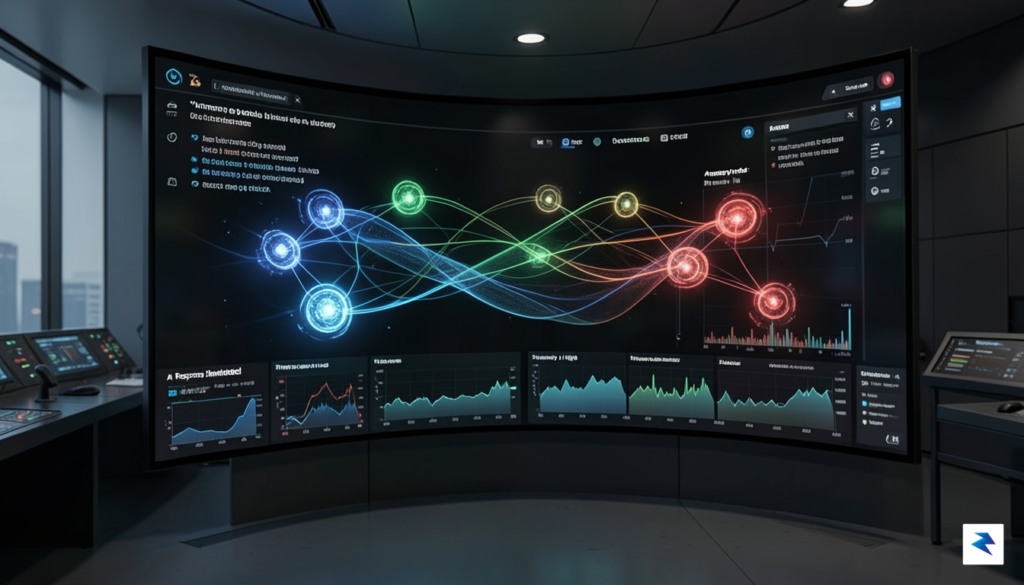
The future of proactive data protection lies in the deployment of AI and machine learning models designed specifically for anomaly detection. These sophisticated tools can process vast amounts of telemetry data in real-time, identifying subtle patterns of exfiltration that might go unnoticed by human administrators. Beyond the technical implementation, however, there is a pressing need for regular, rigorous “security hygiene” audits. These audits should not merely check for vulnerabilities in software, but also scrutinize the lifecycle of employee access. By ensuring that offboarding processes are automated and instantaneous, firms can eliminate the “dead-hand” access that often allows former employees to exploit residual system vulnerabilities long after their departure.
To effectively mitigate insider risk, organizations must harmonize advanced machine learning analytics with a culture of strict accountability and clear, enforceable legal frameworks.
Ultimately, the defense of trade secrets must be viewed as a combination of high-tech surveillance and robust legal scaffolding. While technical safeguards like data loss prevention (DLP) tools are essential for identifying the movement of sensitive files, they must be supported by stringent non-compete policies and clear intellectual property agreements. When technical barriers are combined with the legal weight of comprehensive employment contracts, the deterrent effect is significantly amplified. As the competitive landscape intensifies, companies that prioritize a holistic approach—blending behavioral monitoring, rapid incident response, and legal clarity—will be the best equipped to protect their most sensitive innovations from both accidental leaks and calculated industrial espionage.
Looking ahead, the evolution of data protection will depend on how quickly enterprises can adapt to the “human element” of cybersecurity. Future strategies will likely involve more pervasive identity and access management (IAM) protocols, where every interaction with sensitive infrastructure is verified, logged, and scrutinized for intent. By fostering a security-conscious culture where technical monitoring is viewed as a standard operational necessity rather than an intrusive measure, organizations can build a resilient defense that evolves alongside the sophisticated threats of the digital age.
You must be logged in to post a comment.