
Why China, Not OPEC, Is Now Calling the Shots on Global Oil Prices
The Shifting Dynamics of Global Oil Markets For the better part of the late 20th century, the global energy landscape was defined by the…
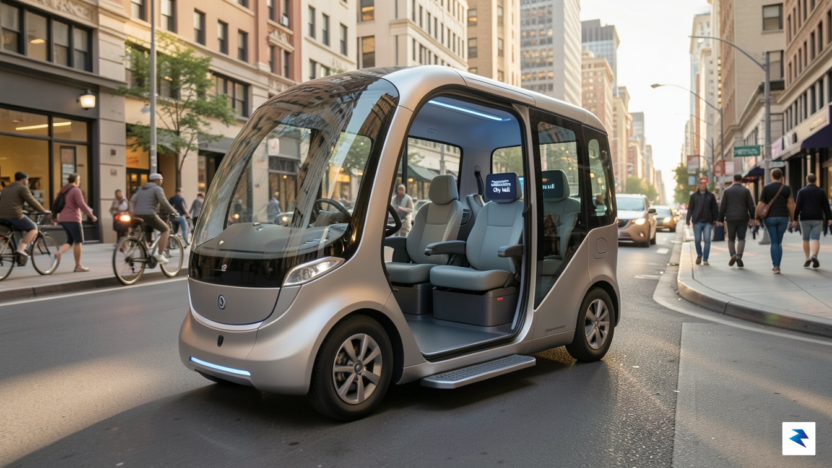
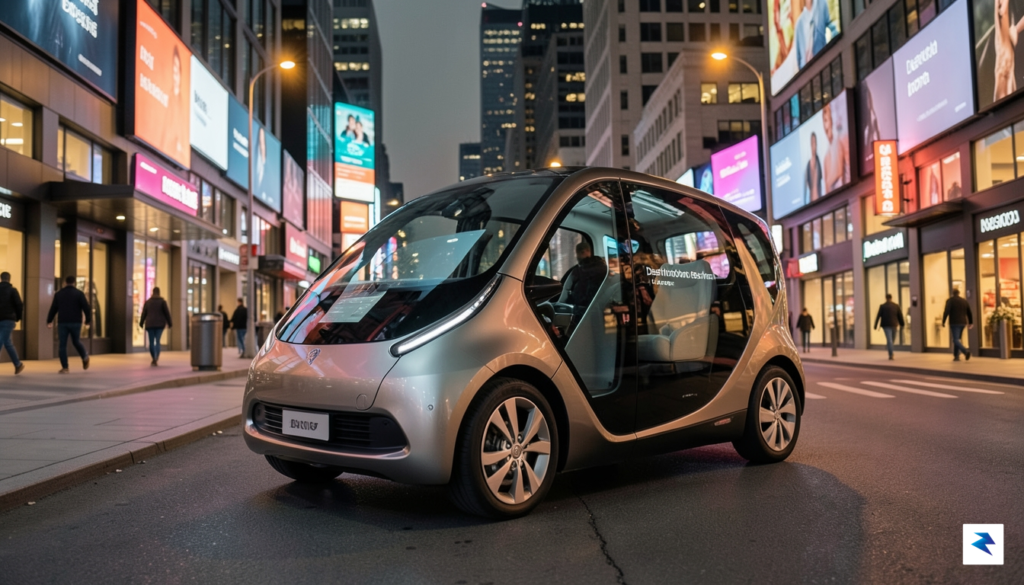
As the race for autonomous vehicle (AV) dominance intensifies globally, the discourse surrounding the future of transportation is finally evolving beyond mere technological automation to embrace a far more critical dimension: universal accessibility. Tesla’s recent confirmation that it is actively developing a wheelchair-accessible version of its much-anticipated robotaxi marks a truly pivotal moment, signaling a profound shift in automotive design philosophy and the broader vision for urban mobility. This move is not just an incremental improvement; it represents a fundamental rethinking of who gets to participate in the future of self-driving transit.
Historically, accessibility has often been an afterthought in the design and implementation of public transit systems. Many traditional buses, trains, and subways, built decades ago, were not conceived with universal access in mind, leading to costly and often imperfect retrofits. Individuals with mobility impairments frequently encounter challenges ranging from unreliable ramps and non-functional elevators to limited space and inconsistent service, which together create significant barriers to independent travel. These systemic shortcomings contribute to a pervasive sense of exclusion, limiting educational, employment, and social opportunities for a substantial segment of the population.
The advent of modern ride-hailing services, while offering unprecedented convenience for many, also largely perpetuated these accessibility gaps. Despite the proliferation of companies like Uber and Lyft, consistently finding a wheelchair-accessible vehicle (WAV) remains a significant hurdle in most cities. Users often report longer wait times, higher fares, and general unpredictability when requesting an accessible ride, undermining the very promise of on-demand transportation. This persistent inadequacy highlights a critical unmet need that the next generation of autonomous vehicles has the potential to address comprehensively, but only if accessibility is integrated from the ground up.
This is precisely where the concept of ‘universal design’ emerges as the next frontier for tech giants venturing into the mobility space. Universal design advocates for creating products and environments that are usable by all people, to the greatest extent possible, without the need for adaptation or specialized design. For autonomous vehicles, this means moving beyond simply automating the driving task to designing interiors, entry/exit mechanisms, and user interfaces that accommodate a diverse range of physical and cognitive abilities. For companies of Tesla’s stature, embracing universal design is not just a moral imperative but also a strategic business decision, tapping into an underserved market and meeting increasing regulatory demands for inclusivity, thereby future-proofing their innovations.
Crucially, Tesla’s commitment to a wheelchair-accessible robotaxi underscores a significant strategic pivot for the company itself. For years, Tesla has been synonymous with high-performance, luxury electric vehicles primarily targeting private ownership. However, the development of a robotaxi fleet signals a fundamental shift towards providing a public, service-oriented infrastructure for urban mobility. This transition from selling individual cars to operating a network of shared autonomous vehicles inherently demands a broader consideration of public utility and equitable access. A public service, by its very nature, must be inclusive to truly fulfill its potential and serve a diverse citizenry, making accessibility a core requirement rather than an optional feature.
This development sets an important precedent for the entire autonomous vehicle industry, challenging competitors to integrate universal design principles into their own future mobility solutions. By proactively tackling the complexities of accessibility in a self-driving context, Tesla is not just enhancing its own product offering but also contributing to a broader paradigm shift in how we envision and implement transportation for all. It signals a powerful recognition that the future of mobility must be equitable, independent, and truly accessible, moving the conversation beyond mere technological prowess to one of profound societal impact and universal inclusion.
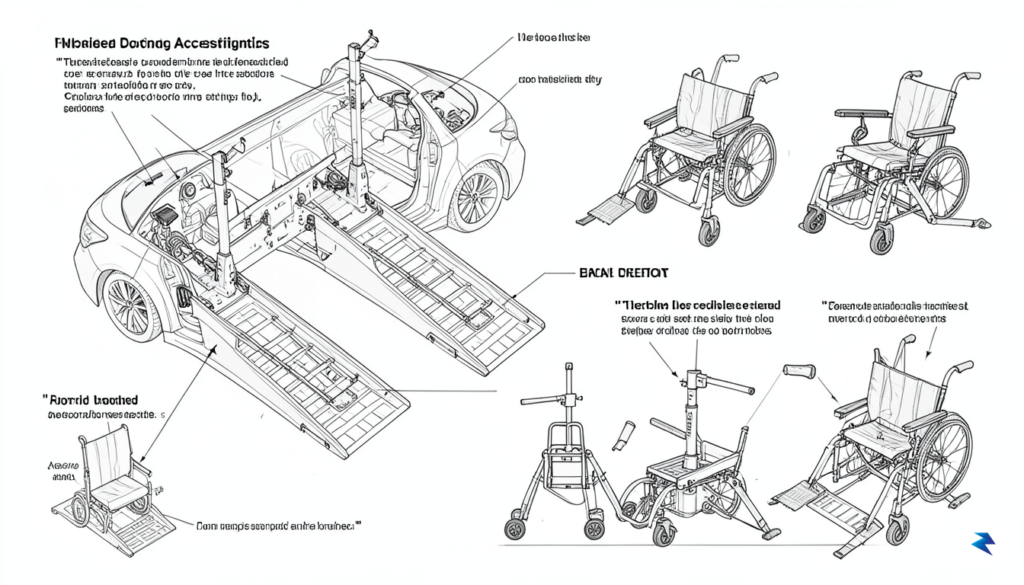
Engineering a truly inclusive autonomous vehicle represents a paradigm shift in automotive design, moving far beyond the standard sedan architecture. To accommodate wheelchair users, engineers must move away from the traditional low-slung, cramped cabin and rethink the fundamental geometry of the vehicle. This involves implementing high-clearance automatic ramps or lift systems that can deploy seamlessly onto uneven curbs, requiring complex sensor fusion to ensure the deployment zone is clear of debris or obstructions. Inside, the cabin must provide a generous turning radius for various mobility devices, which necessitates a modular interior layout that can shift from a standard passenger configuration to an open-floor design without sacrificing structural integrity.
The mechanical challenges extend into the critical realm of safety and securement technology. Unlike a traditional bus that employs a human operator to latch a wheelchair into place, a robotaxi must utilize automated, self-locking restraint systems that can securely anchor a variety of chair types without requiring manual intervention. This level of automation is difficult to achieve because it must account for vastly different wheelchair dimensions, weight distributions, and center-of-gravity profiles. Furthermore, the vehicle’s sensor suite—typically mounted for exterior navigation—must be recalibrated to account for these internal mechanical movements, ensuring that the vehicle’s “brain” remains aware of the shifting weight distribution to maintain stable handling and regenerative braking performance.
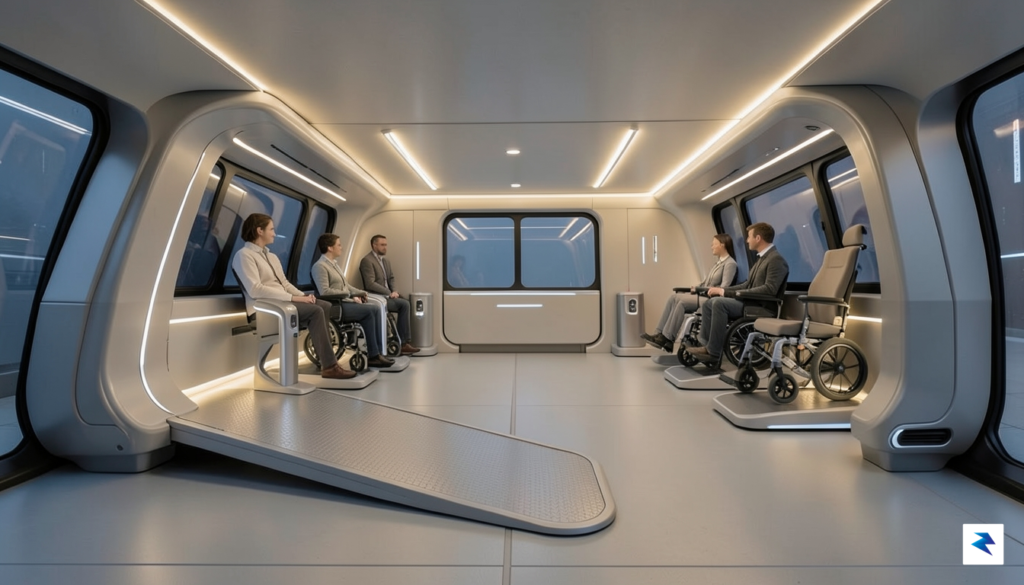
Beyond the physical chassis, the human-machine interface (HMI) must be reimagined to provide universal access for passengers with diverse sensory needs. For a vehicle to be fully autonomous and accessible, it must communicate its status, route, and emergency protocols through redundant channels. This includes high-contrast visual displays for the hearing impaired, haptic feedback zones for those with vision loss, and intuitive voice-command systems that can be activated from any position within the cabin. These interfaces must be robust enough to operate without a driver’s assistance, effectively replacing the helpful hand of a traditional transit operator with sophisticated, reliable software logic.
True accessibility in autonomous transit isn’t just about adding a ramp; it’s about creating a frictionless, dignified experience where the vehicle adapts to the passenger, rather than forcing the passenger to adapt to the vehicle.
Finally, there is the persistent challenge of battery-electric vehicle (BEV) optimization. Integrating heavy-duty ramp mechanisms and reinforced floor structures increases the vehicle’s curb weight, which directly impacts energy efficiency and range. Engineers are currently tasked with finding a delicate balance: using lightweight, aerospace-grade materials to offset the added hardware, while ensuring the battery pack remains protected and properly balanced. As these autonomous platforms evolve, the success of the robotaxi will depend on how effectively these mechanical complexities are solved without compromising the safety, speed, or environmental goals of the fleet.
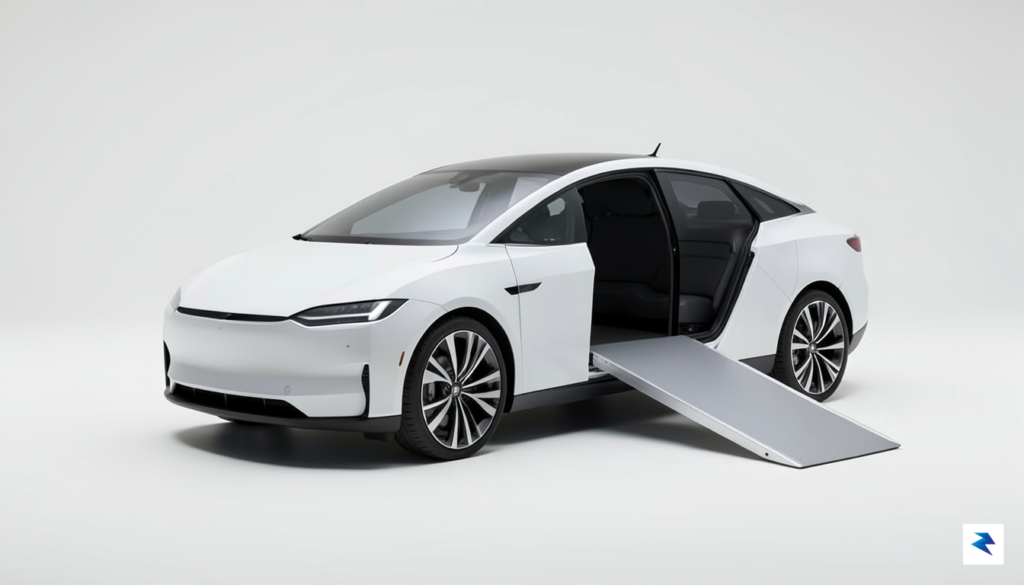
By stripping away the traditional driver-centric architecture, Tesla’s Cybercab presents a unique opportunity to reimagine the vehicle cabin as a modular, inclusive living space. In a standard vehicle, interior design is perpetually constrained by the steering column, pedals, and the ergonomic requirements of a human operator, all of which dictate a fixed layout. By leveraging steer-by-wire technology, Tesla effectively removes these mechanical obstructions, allowing for a completely flat floor and a significantly expanded entry point. This “blank slate” approach is transformative for accessibility, as it provides the necessary floor-to-ceiling clearance required for motorized wheelchair ramps or automated lift systems to operate seamlessly within the vehicle’s footprint.
The transition toward a software-defined interior also means that accessibility is no longer limited to physical modifications, but is instead baked into the very operating system of the ride. Engineers are focusing on a suite of digital tools that empower passengers with limited mobility to control their environment with unprecedented autonomy. For instance, integrated voice-controlled navigation and climate systems allow users to dictate their preferences without needing to reach for physical knobs or touchscreens that might be positioned outside of their natural range of motion. Furthermore, the vehicle’s sensor suite can be programmed to provide automated boarding alerts, ensuring that the car stays perfectly still and provides tactile or auditory cues to the passenger when it is safe to enter or exit the cabin.
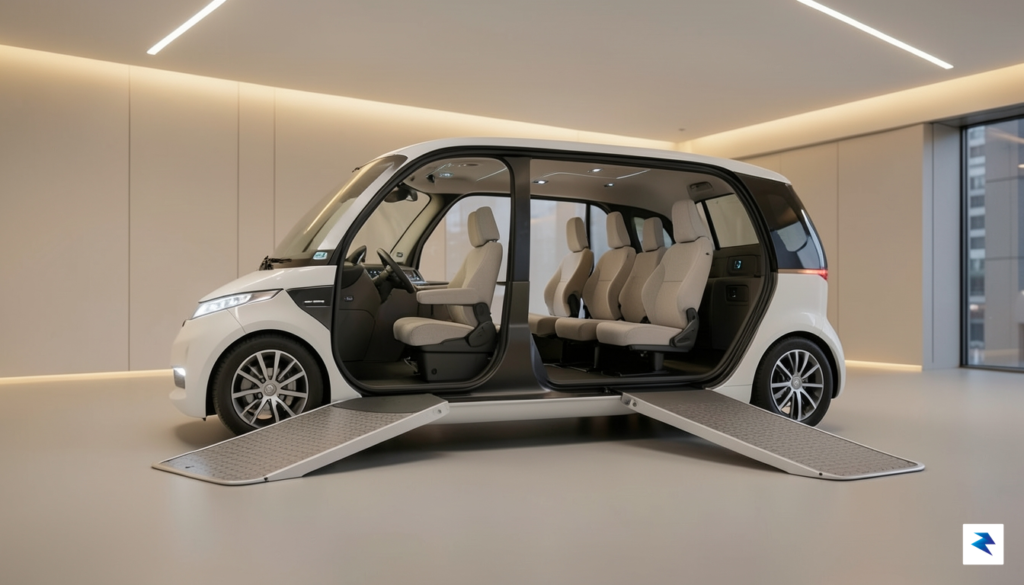
Beyond the physical chassis, the success of an inclusive robotaxi ecosystem hinges on the synchronization between the vehicle and the user’s mobile device. Tesla’s existing software architecture is already well-positioned to handle this, as the app could act as a digital concierge for passengers with disabilities. Before the vehicle even arrives at the curb, the user could pre-set specific accessibility requirements, such as the deployment of an automated ramp or the adjustment of internal lighting for those with visual impairments. This level of customization ensures that the vehicle is ready to meet the passenger’s needs the moment it arrives, effectively removing the logistical friction that has historically plagued public transit and ride-hailing services for people with disabilities.
The true innovation of the Cybercab lies not just in the removal of the steering wheel, but in the repurposing of that recovered space to prioritize the comfort and dignity of every passenger, regardless of their physical abilities.
Ultimately, by treating accessibility as a foundational engineering constraint rather than an aftermarket add-on, Tesla has the potential to set a new industry standard for inclusive mobility. When safety and convenience are managed through software, the “driver” becomes a service layer that adapts to the passenger, rather than the passenger having to adapt to the limitations of the vehicle. This integration of steer-by-wire hardware and intelligent, voice-activated software creates a cohesive ecosystem that promises to make autonomous transit more reliable, dignified, and accessible for everyone.
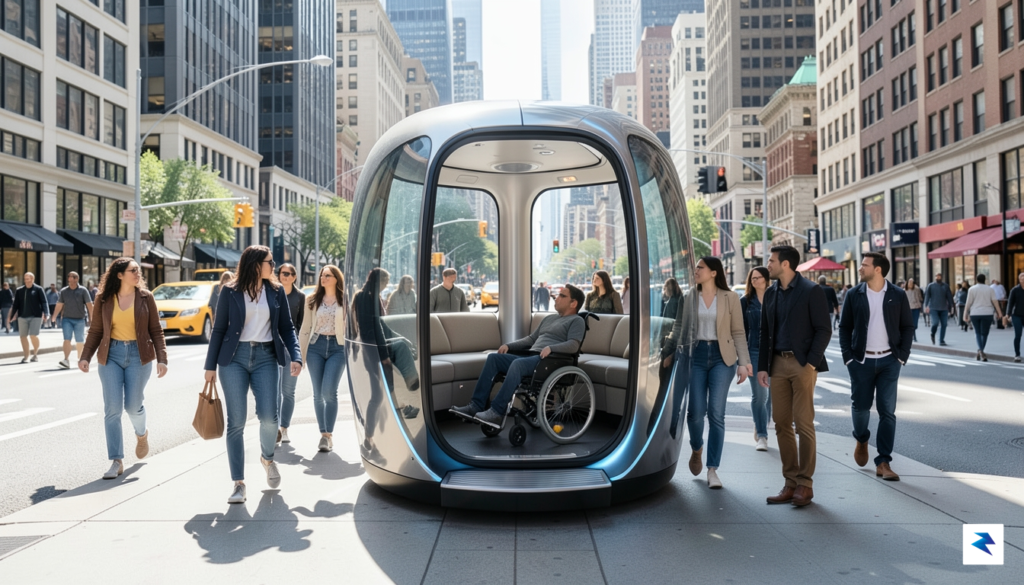
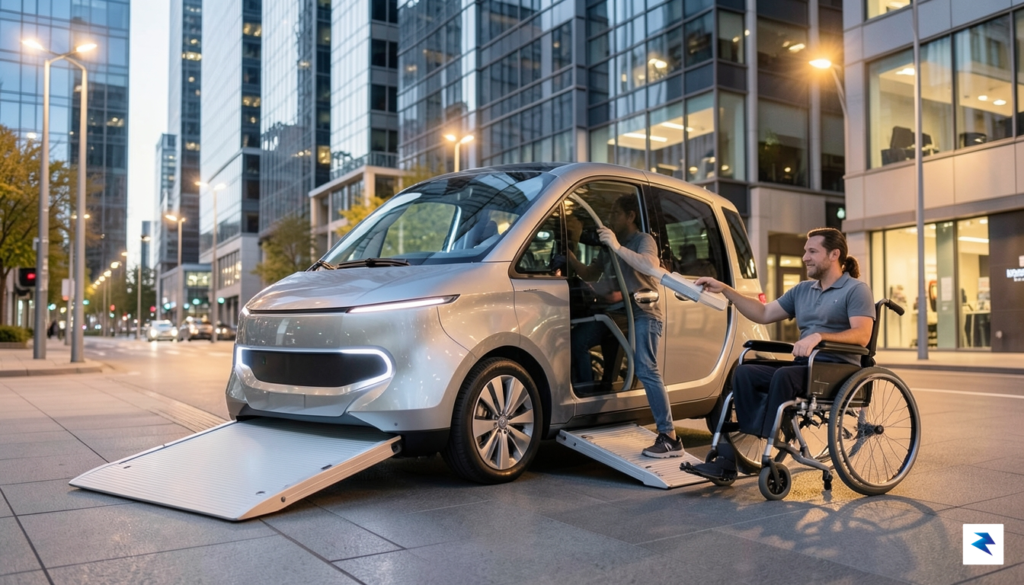
The widespread deployment of accessible robotaxis represents far more than a mere technological convenience; it signifies a potential seismic shift in the socioeconomic landscape for millions of individuals living with mobility impairments. Currently, many cities function as “transit deserts” for the disability community, where the lack of reliable, accessible infrastructure creates significant barriers to movement. When individuals are forced to rely on specialized paratransit services, they often face rigid scheduling requirements, lengthy wait times, and a lack of spontaneity that is simply not present for the average commuter. By integrating wheelchair-accessible designs into the core of autonomous fleets, manufacturers could effectively dismantle these logistical silos, offering a level of autonomy that has long been out of reach for those who cannot navigate traditional public transit or standard ride-hailing vehicles.
Reliable, on-demand transportation is the cornerstone of social participation; without it, the promise of equal access to the modern economy remains largely theoretical.
From an economic perspective, the transition from government-subsidized, appointment-based paratransit to a high-volume robotaxi model could drastically lower the cost-per-mile for users. Traditional paratransit is notoriously expensive to maintain, often requiring human operators and inefficient route planning that balloons the cost per trip. Conversely, an autonomous, scalable fleet could optimize routing in real-time, significantly reducing the financial burden on both the service provider and the passenger. As these costs decrease, the barriers to entry for daily commuting, social outings, and emergency travel will diminish. This shift is not merely about transportation; it is about facilitating workforce participation. When reliable transit becomes a commodity rather than a logistical hurdle, individuals with disabilities gain the freedom to pursue career opportunities that were previously inaccessible due to geographical limitations or inconsistent transportation schedules.
Ultimately, the goal of this innovation is the creation of a truly inclusive urban environment where independence is the default rather than the exception. True independence requires the ability to navigate one’s community without needing to navigate a complex web of special requests or accommodations. If autonomous technology can successfully bridge the gap between specialized mobility needs and the convenience of modern ride-sharing, it will fundamentally redefine the concept of social mobility. By removing the physical and financial obstacles that currently restrict movement, cities can begin to foster a more equitable society where the right to travel is genuinely universal, regardless of a person’s physical ability.

While the vision of a fully autonomous, wheelchair-accessible vehicle is undeniably revolutionary, the path to bringing such a machine to public roads is paved with significant regulatory and technical uncertainty. Tesla has long been known for its aggressive product roadmaps, yet the company’s history is punctuated by launch timelines that frequently shift as engineering challenges collide with the realities of mass production. Introducing specialized accessibility features—such as automated ramps, securement systems, and the interior cabin space required to maneuver a wheelchair—adds a layer of structural complexity that goes far beyond the standard chassis design. Translating these conceptual blueprints into a vehicle that meets the rigorous safety standards required for driverless operation is a task that will likely extend well beyond the company’s initial optimistic projections.
From a regulatory perspective, the transition to a truly “unsupervised” robotaxi requires satisfying a dense web of federal and local oversight. The National Highway Traffic Safety Administration (NHTSA) maintains stringent safety standards for passenger vehicles, and removing the human driver entirely shifts the burden of liability and safety compliance entirely onto the software architecture. Furthermore, the Americans with Disabilities Act (ADA) mandates specific standards for public transit accessibility, ensuring that passengers with mobility needs receive equitable service. Harmonizing Tesla’s Full Self-Driving (FSD) software with these legal mandates is no small feat; regulators will need to be convinced that an autonomous vehicle can safely manage the boarding and deboarding process for passengers with disabilities without any human operator present to assist in the event of a mechanical failure or an emergency.
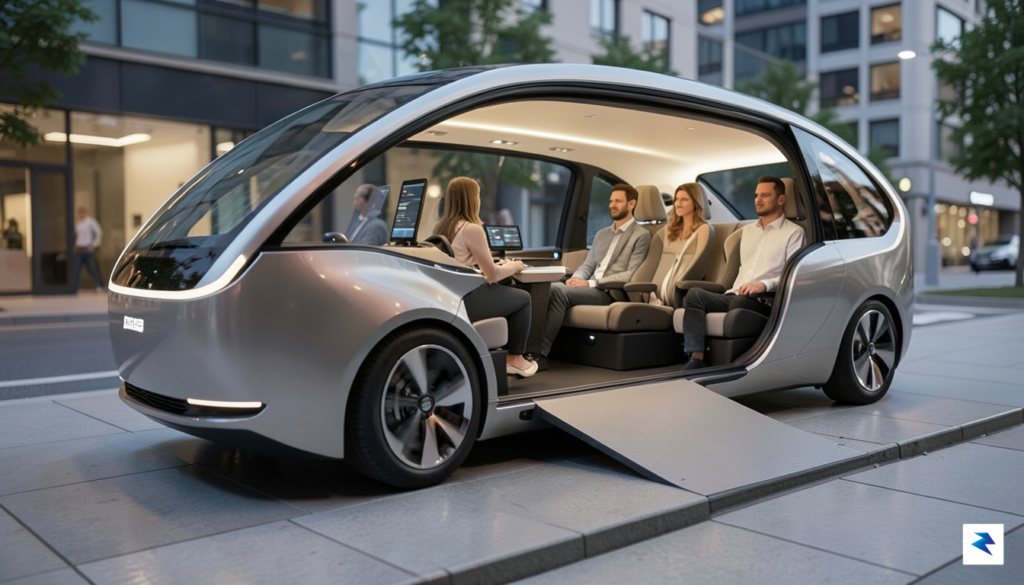
The true test for Tesla will not just be the sophistication of its artificial intelligence, but its ability to prove to federal regulators that a machine can handle the delicate, non-standardized needs of every passenger with the same level of care as a human driver.
Additionally, the current state of FSD technology remains a subject of intense debate among industry analysts and safety experts. While Tesla continues to collect vast amounts of data from its global fleet to refine its neural networks, the jump from “supervised” autonomy to “Level 5” fully autonomous transit is vast. Without a steering wheel or pedals, the vehicle must be capable of navigating edge cases—such as unpredictable weather, complex urban intersections, and human-error scenarios—with a near-zero margin for failure. When you layer the unique requirements of assistive transport onto this already demanding technical challenge, the timeline becomes even more nebulous. Stakeholders should therefore view these announcements with cautious optimism, recognizing that while the goal is transformative, the intersection of autonomous technology and universal design will require years of rigorous testing, public trials, and legislative advocacy before it becomes a standard feature of our daily commute.
You must be logged in to post a comment.