
Inside Apple’s Trade Secret Lawsuit: The Most Shocking Allegations Against OpenAI
Introduction: The High-Stakes Battle Over Silicon Valley Intellectual Property The relentless pace of innovation in artificial intelligence…
The Federal Reserve currently stands at a critical juncture, balancing its dual mandate to foster maximum employment and maintain price stability. For years, the central bank’s primary focus was stimulating a post-pandemic recovery, but the persistent rise in consumer prices has forced a decisive pivot toward inflation control. By aggressively lifting interest rates from near-zero levels, the Fed has sought to cool an overheated economy and bring the annual inflation rate back toward its long-term target of 2%. However, this journey has been anything but linear, as economic data continues to present a mix of surprising resilience and lingering structural pressures.
The prevailing narrative among policymakers has shifted toward a “higher for longer” stance, a strategy designed to ensure that the restrictive effects of high borrowing costs fully permeate the economy. This approach is rooted in the fear that easing policy too soon could cause inflation to rebound, effectively undoing the progress made over the past several months. Consequently, market participants are now bracing for an environment where interest rates remain elevated, forcing both businesses and households to adjust their long-term financial planning to a reality of more expensive credit and tighter liquidity.
Within this complex decision-making framework, Governor Christopher Waller has emerged as a particularly influential voice. Known for his analytical rigor and data-centric approach, Waller has consistently pushed back against premature optimism regarding rate cuts. His recent commentary serves as a stark reminder that the Federal Reserve will not be rushed into a policy shift unless the data provides undeniable evidence that inflation is retreating sustainably. By emphasizing that the strength of the labor market gives the Fed room to remain patient, Waller has effectively recalibrated market expectations, signaling that the central bank is prepared to maintain its current trajectory for as long as price pressures remain elevated.
The core of the current monetary strategy is not just about where interest rates are today, but rather how long they must remain at restrictive levels to ensure that inflation does not become a permanent feature of the economic landscape.
Ultimately, the Fed’s current stance is a testament to the risks of declaring an early victory over inflation. As the central bank waits for further confirmation that its policies are working as intended, the tension between maintaining robust employment and curbing price growth remains the primary driver of market volatility. Investors and consumers alike must recognize that until the data definitively confirms that inflation is on a firm path toward the 2% target, the Federal Reserve will likely continue to favor caution over comfort, keeping the financial landscape in a state of high-interest vigilance.
For Governor Christopher Waller, the path back to price stability is not measured in weeks, but in consistent, durable trends. While financial markets often react with exuberance to a single favorable monthly report, Waller remains steadfast in his insistence that a solitary data point does not constitute a victory. His policy framework requires evidence of inflation cooling over several consecutive months before the Federal Reserve can reasonably consider pivoting toward a less restrictive interest rate environment. By demanding a sustained trajectory rather than a fleeting dip, Waller is effectively insulating the central bank from the risks of “policy whiplash,” where premature rate cuts could inadvertently reignite inflationary pressures that took years to suppress.
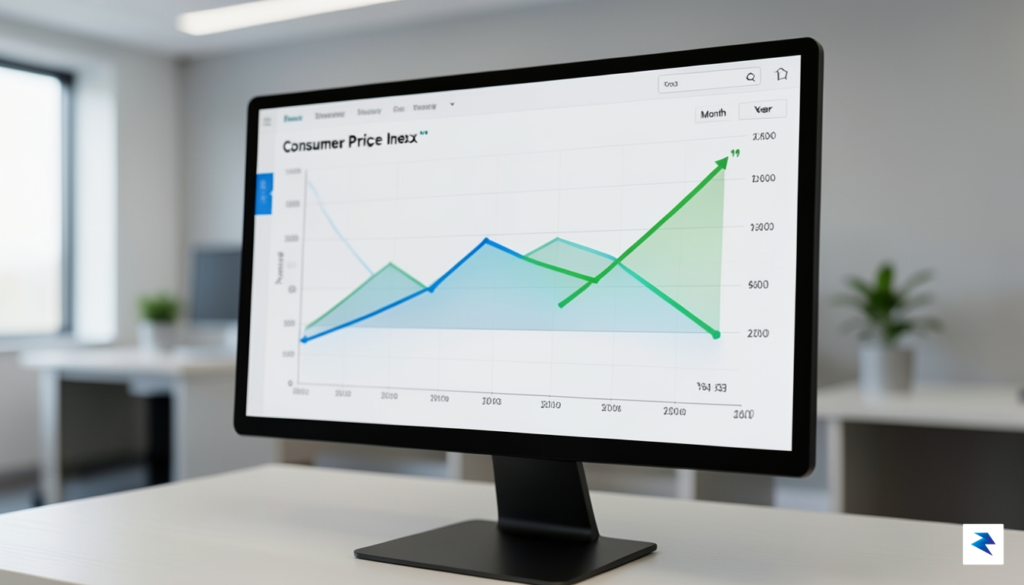
The core of Waller’s “data-dependent” approach lies in the distinction between noise and signal. In the complex world of modern macroeconomics, monthly economic reports can be heavily influenced by seasonal adjustments, supply chain anomalies, or one-off price spikes. To filter out this background noise, the Fed relies heavily on a combination of the Consumer Price Index (CPI) and the Personal Consumption Expenditures (PCE) price index. While the CPI provides a snapshot of the out-of-pocket costs for households, the PCE is the Fed’s preferred metric because it accounts for how consumers shift their spending habits in response to changing prices. Waller’s caution stems from the fact that both metrics must move in tandem toward the two-percent target to provide the central bank with the necessary confidence that the economy is cooling sustainably.
“We need to see a series of reports that convince us that inflation is on a firm path down to our target. One good month is a start, but it is not a trend that warrants a change in our current restrictive stance.”
This conservative outlook often puts Waller at odds with the short-term optimism of Wall Street traders, who frequently price in aggressive rate cuts at the first sign of softening inflation. However, the Fed’s mandate is not to satisfy market speculation, but to ensure long-term macroeconomic stability. Waller’s strategy prioritizes structural integrity over quick relief; he understands that if the Fed eases too soon, the cost of fighting a second wave of inflation would be far more damaging to the economy than maintaining elevated rates for a few months longer than expected. By signaling that he is comfortable keeping rates high until there is undeniable proof of a cooling economy, he is attempting to anchor market expectations to reality, ensuring that the transition to a lower-rate environment is built on a foundation of genuine price stability rather than premature hope.
The Federal Reserve’s commitment to maintaining elevated interest rates serves as a powerful, albeit heavy-handed, tool designed to bring stubborn inflation back toward the two-percent target. For the average consumer, this policy shift has fundamentally altered the financial landscape, particularly regarding access to credit. As borrowing costs rise, the dream of homeownership has become increasingly elusive, with mortgage rates hovering near multi-decade highs that dampen buyer enthusiasm and stall inventory turnover. Similarly, high-interest rates on credit cards and personal loans are squeezing household budgets, forcing many families to pull back on discretionary spending as a larger portion of their monthly income is diverted toward servicing existing debt rather than fueling consumption.
Beyond the household level, corporate America is feeling the weight of this restrictive monetary environment as well. Companies that previously relied on cheap capital to fund aggressive expansion and research projects are now exercising significant caution. When the cost of capital climbs, businesses often postpone capital expenditures, leading to a noticeable slowdown in long-term investment. This recalibration is not necessarily a sign of failure, but rather a structural shift in how firms approach risk and growth. Projects that were viable in a low-rate environment may no longer pass the hurdle rate required to justify borrowing, which effectively cools industrial output and forces companies to prioritize balance sheet stability over rapid scaling.

High interest rates serve as a dual-edged sword: while they are essential for curbing the inflationary fire, they simultaneously introduce a degree of friction that can slow the broader economic engine if sustained for too long.
The central challenge facing policymakers is finding the elusive “soft landing”—a state where inflation is tamed without triggering a sharp, painful recession. This balancing act is complicated by the surprising resilience of the labor market. Despite the clear pressure from higher borrowing costs, hiring remains relatively robust, and unemployment figures have stayed near historic lows. This tight labor market has provided a buffer, allowing the economy to absorb the shock of higher rates without immediate, widespread layoffs. However, economists remain wary; if the Fed holds rates at these levels for too long, the cumulative effect of these higher costs could eventually erode corporate profits to the point where businesses are forced to cut staff, potentially turning today’s controlled cooling into tomorrow’s economic downturn.
Ultimately, the economy is currently navigating a period of transition where the primary goal is to shift from an era of cheap money to one of disciplined pricing. While the short-term friction is palpable in both the housing and corporate sectors, the Fed is clearly signaling that the risk of unanchored inflation outweighs the discomfort of higher borrowing costs. As the market continues to adjust, investors and consumers alike must prepare for a landscape where capital is no longer free, placing a premium on efficiency, saving, and strategic financial planning.

In the current financial climate, uncertainty has become the only true constant, requiring both investors and households to adopt a more resilient posture. As Governor Waller’s recent commentary suggests, the Federal Reserve is firmly in a “wait-and-see” mode, meaning that future policy decisions will be strictly dictated by incoming data rather than predetermined timelines. For investors, this signifies that market volatility is likely to persist as every monthly report on consumer prices and payrolls will trigger significant shifts in sentiment. Instead of trying to time the market based on speculative rumors, the most prudent strategy is to maintain a diversified portfolio that can withstand periods of elevated interest rates and to avoid over-leveraging positions that rely on the assumption of near-term rate cuts.
For the average consumer, the message is equally clear: high-interest debt is becoming increasingly expensive to service. Because the Fed is signaling that borrowing costs may remain restrictive for a longer duration, it is an opportune time to prioritize the aggressive pay-down of variable-rate debt, such as credit card balances or home equity lines of credit. If you have been banking on a rapid decline in interest rates to refinance your debt, it is essential to recalibrate your budget to accommodate higher payments for the foreseeable future. Taking proactive steps to lock in fixed rates where possible—or simply reducing exposure to high-interest obligations—can provide a vital buffer against further economic unpredictability.
The primary takeaway for the coming months is that patience is a strategic asset. By focusing on debt reduction and long-term financial stability rather than reacting to every headline, individuals can insulate themselves from the pressures of a fluctuating policy environment.
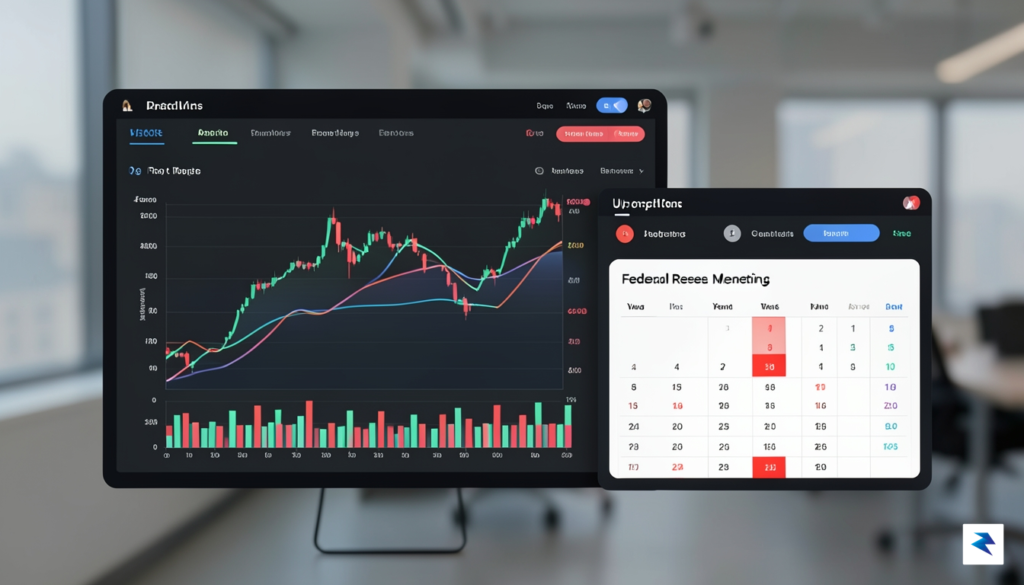
To stay ahead of these shifts, it is helpful to keep a close eye on the calendar for upcoming Federal Open Market Committee (FOMC) meetings. These gatherings serve as the primary inflection points where the Fed will release their updated summary of economic projections. When reviewing these updates, pay particular attention to the “dot plot,” which provides a visual representation of where committee members believe rates should head in the long term. While it is natural to feel anxious about the daily ups and downs of the market, maintaining a long-term perspective is essential. Economic cycles are rarely linear, and while the current focus is on the persistence of inflation, history shows that disciplined financial planning—rooted in steady contributions and long-term goals—remains the most effective way to navigate even the most challenging fiscal landscapes.
You must be logged in to post a comment.