
Is Siri AI Finally Making the Apple Watch a True Wrist Computer?
The Evolution of Siri on Apple Watch For years, the promise of a truly intelligent voice assistant strapped to our wrists remained largely…
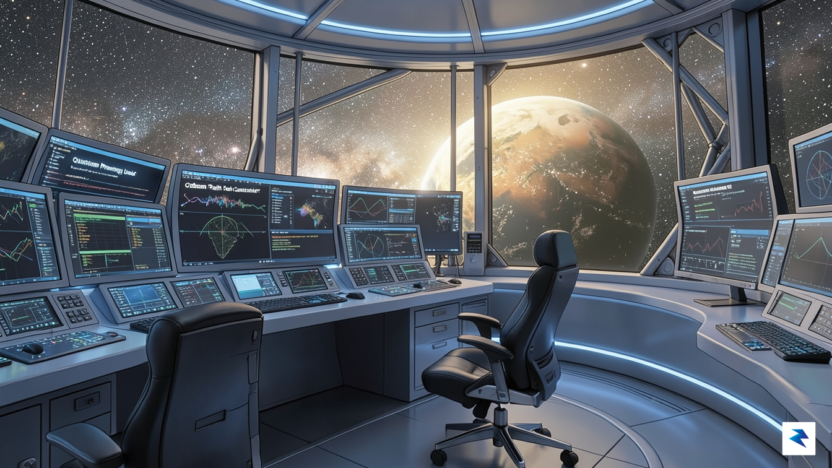

The intricate relationship between Sam Altman and Elon Musk, two of the most influential figures shaping our technological future, has evolved dramatically from initial collaboration to a public spectacle of ideological clashes. Their shared journey began famously with the co-founding of OpenAI in 2015. At its inception, OpenAI was envisioned as a non-profit organization dedicated to ensuring artificial general intelligence (AGI) benefited all of humanity, with both titans aligning on the critical importance of developing AI safely and responsibly. This shared, altruistic vision formed the bedrock of their early partnership, uniting them in a quest to steer humanity through the profound implications of advanced AI.
However, this alliance, once rooted in a common goal, began to fray as OpenAI charted a new course. Elon Musk eventually departed from the organization’s board in 2018, citing a perceived conflict of interest with Tesla’s own burgeoning AI efforts and, more significantly, expressing growing concerns over OpenAI’s gradual shift from a purely non-profit research lab towards a more commercial, profit-driven model. This divergence marked a pivotal moment, transforming their working relationship into one characterized by increasingly public scrutiny and philosophical disagreements regarding the best path forward for AI development and its societal integration.
Since then, the dynamic between Musk and Altman has often played out as a series of pointed exchanges across social media and public forums. These discussions frequently delve beyond mere technicalities, touching upon fundamental differences in their approaches to innovation, the practicalities of scaling groundbreaking technologies, and their overarching visions for humanity’s future. While Altman’s focus has largely remained tethered to the terrestrial demands of AI infrastructure and its rapid evolution, Musk has consistently championed a more expansive, space-centric approach to humanity’s long-term survival and technological progress.
This simmering rivalry recently flared into a more direct confrontation surrounding the concept of space-based data centers. While Sam Altman’s direct advocacy for such a system might be nuanced, the idea has gained traction within circles interested in overcoming the immense computational and energy demands posed by future AI, potentially freeing terrestrial resources. The notion proposes placing powerful data infrastructure in orbit, theoretically capitalizing on abundant solar energy and cooler temperatures. This concept, however, quickly drew sharp criticism from Elon Musk, who has consistently been vocal about the practicalities and economic realities of space ventures.
Musk, leveraging his extensive experience in both space exploration and large-scale infrastructure, was quick to dismiss the concept as “dumb” via social media. His critique wasn’t merely dismissive but rooted in concrete engineering challenges, highlighting the prohibitive costs associated with launching and maintaining such infrastructure, the significant latency issues that would plague data transfer between orbit and Earth, and the immense logistical nightmare of repairing or upgrading hardware in such an unforgiving environment. He underscored that while space offers unique advantages for certain applications, it also imposes profound limitations that often outweigh theoretical benefits for terrestrial-bound services like data centers.
Ultimately, this debate over orbital data centers serves as a potent microcosm of the deeper ideological friction between Sam Altman and Elon Musk. It’s not simply a technical disagreement but a manifestation of their divergent philosophies on resource allocation, the optimal environment for technological advancement, and the practical pathways to humanity’s future. Altman’s focus on rapidly scaling AI computing power, even exploring unconventional means, contrasts sharply with Musk’s pragmatic, cost-conscious approach to
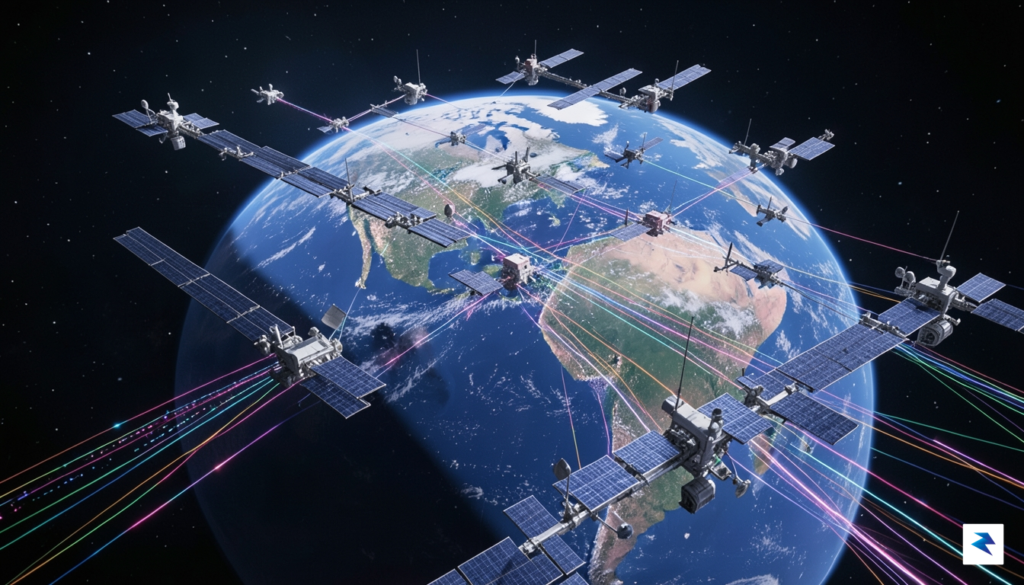
The vision of data centers orbiting Earth, processing information with unparalleled speed and potentially limitless space, sparks the imagination. However, translating this captivating concept into tangible reality confronts an array of formidable engineering obstacles that transcend mere financial investment. Building and maintaining complex computing infrastructure in the harsh vacuum of space demands revolutionary approaches to fundamental challenges like thermal management, communication, radiation protection, and energy supply.
One of the most immediate and counter-intuitive hurdles for space-based data centers is cooling. On Earth, data centers rely heavily on air conditioning and convection to dissipate the immense heat generated by servers. In the vacuum of space, however, convection is impossible; heat can only be shed through radiation.
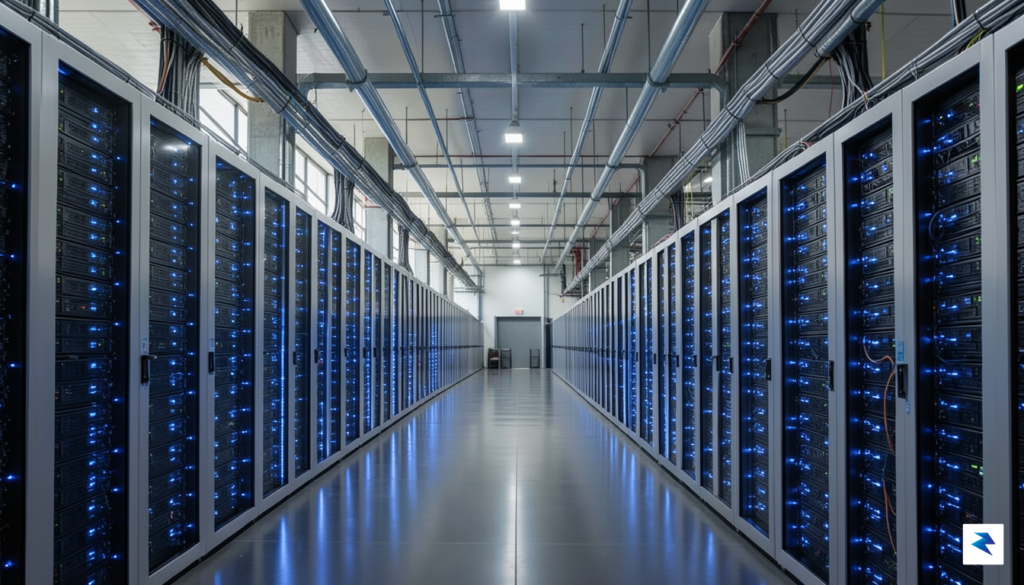
The allure of orbiting data centers, processing information at the fringes of our atmosphere, often captures the imagination with promises of unparalleled speed and global reach. However, the foundational truth of data center placement remains tethered to Earth’s surface for compelling reasons: proximity to the user, not altitude above the planet, is the ultimate arbiter of performance and economic viability. While the concept of leveraging the vacuum of space for faster data transmission sounds appealing, the practicalities of physics, infrastructure, and cost demonstrate why terrestrial data centers will continue to be the industry standard for the foreseeable future.
One of the most significant hurdles for any space-based data infrastructure is the exorbitant cost-per-gigabyte of data transmission. Terrestrial fiber optic networks, the backbone of modern internet connectivity, offer incredibly efficient and cost-effective data transfer. The initial investment in laying thousands of miles of fiber is substantial, but once in place, the operational cost per unit of data transferred becomes remarkably low, allowing for massive scalability and ever-increasing bandwidth at decreasing prices. In stark contrast, launching and maintaining satellites, along with the complex ground stations required for uplink and downlink, introduces astronomical costs. Every gigabyte transmitted to and from orbit involves intricate engineering, specialized hardware, and significant energy expenditure, making it economically unfeasible for the vast majority of data processing needs compared to its ground-based counterpart.
Furthermore, the perceived latency benefits of space are frequently misunderstood and often overstated. While data does travel marginally faster in the vacuum of space than through a fiber optic cable, this marginal gain is quickly negated by the sheer physical distances involved and the inherent limitations of signal processing. A signal traveling to a satellite in low Earth orbit (LEO) and back still has to cover hundreds or thousands of kilometers, incurring a baseline latency that can be significant for real-time applications. Moreover, this signal must then be processed by ground stations and fed into the existing terrestrial fiber network to reach the end-user. For most applications, especially those requiring low-latency responses like online gaming, financial trading, or interactive cloud services, the direct, high-bandwidth connections offered by fiber optics over relatively short terrestrial distances consistently outperform any theoretical advantage offered by orbital solutions. The numerous “hops” involved in space-to-ground-to-user communication add cumulative delays that terrestrial networks are designed to minimize.
Ultimately, the efficiency of terrestrial scaling represents an insurmountable economic advantage. Ground-based data centers benefit from readily available, stable power grids, robust and diverse cooling solutions (from air conditioning to advanced liquid cooling, sometimes leveraging natural cold climates), and easy access to skilled technicians for maintenance and upgrades. Expanding capacity involves building new facilities or adding servers to existing ones, a relatively straightforward process compared to the monumental task of launching new hardware into orbit, where every component must be radiation-hardened, fault-tolerant, and capable of operating autonomously for extended periods. The ability to physically replace components, perform preventative maintenance, and upgrade technology on a regular refresh cycle ensures that terrestrial data centers can continuously adapt and scale in a cost-effective manner. These practical considerations solidify the position of terrestrial data centers as the current and future industry standard, driven by an unbeatable combination of economic viability, minimal latency for practical applications, and unparalleled scalability.
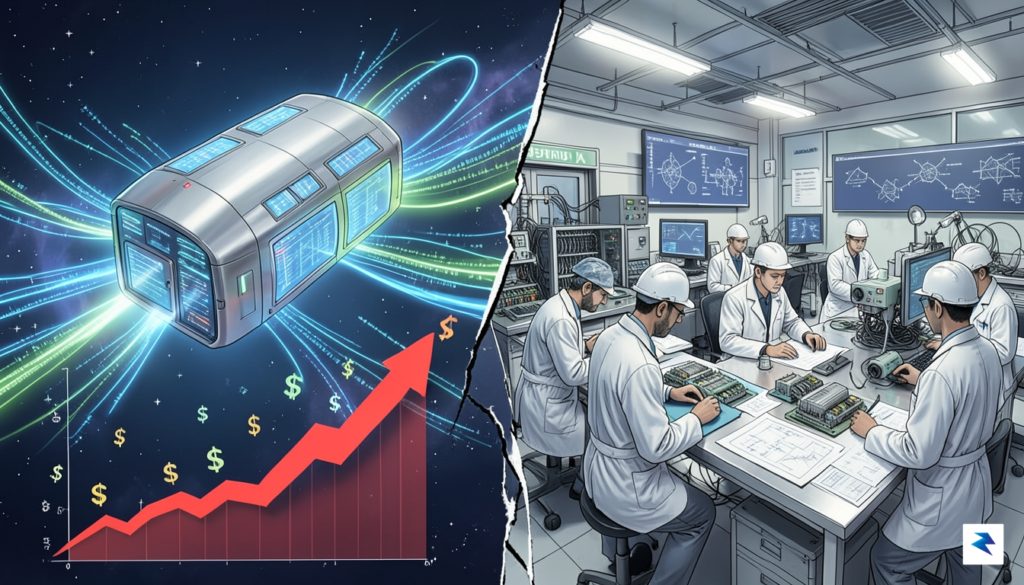
The burgeoning excitement around space-based infrastructure, exemplified by concepts like orbital data centers, frequently collides with the stark realities of public market expectations and speculative investment. At the heart of this tension lies a crucial accusation leveled by critics: that innovative, yet inherently complex, space ventures are being marketed as immediate solutions to placate investors, rather than being developed as a testament to rigorous engineering necessity. This dynamic often creates a chasm between the patient, long-term research and development required for groundbreaking technologies and the short-term demands for rapid growth and profitability that define public market valuations.
Indeed, the “new space” sector, while undeniably fostering innovation, has not been immune to the cyclical influence of hype. Both private and, eventually, public space companies often find themselves caught in a narrative whirlwind, where the promise of orbital frontiers and unprecedented capabilities can overshadow the monumental technical hurdles involved. Early-stage private funding rounds, fueled by venture capital, frequently reward bold visions and aggressive timelines. This momentum then carries into the public markets, where the pressure to justify lofty valuations with tangible progress, often measured in quarterly reports, can become immense. The allure of being part of the next big “moonshot” can, unfortunately, incentivize a focus on outward appearances and market perception over the painstaking, often slow, process of fundamental engineering.
This environment inevitably introduces the danger of over-promising technical capabilities. Developing infrastructure in space, whether it’s for communication, observation, or data processing, is an endeavor fraught with unprecedented challenges, from radiation hardening and thermal management to autonomous repair and orbital mechanics. These aren’t problems solved with a simple software update; they demand extensive research, iterative design, rigorous testing, and significant capital. When companies, driven by investor expectations, accelerate their public timelines or make optimistic claims about readiness, they risk not only their own credibility but also the wider perception of the industry. The long-term viability of orbital data centers, for instance, hinges on solving these complex engineering problems sustainably, not merely presenting a concept that sounds appealing on a PowerPoint slide.
Furthermore, the seductive power of “moonshot” narratives, while inspiring innovation and attracting talent, can paradoxically distort capital allocation within the broader tech sector. Investors, captivated by the romance of pushing humanity beyond terrestrial limits, might direct substantial funds towards projects with highly speculative returns or unproven technological pathways. This isn’t to say that ambitious projects lack merit, but rather that an overemphasis on grand, far-off visions can potentially divert capital from more incremental, yet robust, advancements that could have a more immediate and certain impact. Such a dynamic can create an ecosystem where the most audacious ideas, regardless of their current engineering feasibility, command the lion’s share of attention and funding, sometimes at the expense of foundational scientific and engineering work.
Ultimately, the tension between the patient pursuit of long-term R&D and the exigencies of public market valuation is a constant balancing act for any capital-intensive, high-tech industry. True innovation, particularly in a domain as complex and unforgiving as space, demands patient capital, a tolerance for extended development cycles, and a deep respect for the laws of physics. However, the public markets, with their inherent focus on quarterly performance and shareholder value, often create an environment that struggles to accommodate such timelines. Bridging this gap requires a nuanced understanding from investors, a commitment to transparent communication from companies, and a collective recognition that some of humanity’s most transformative achievements are built not on hype, but on enduring engineering principles and a long-term vision.

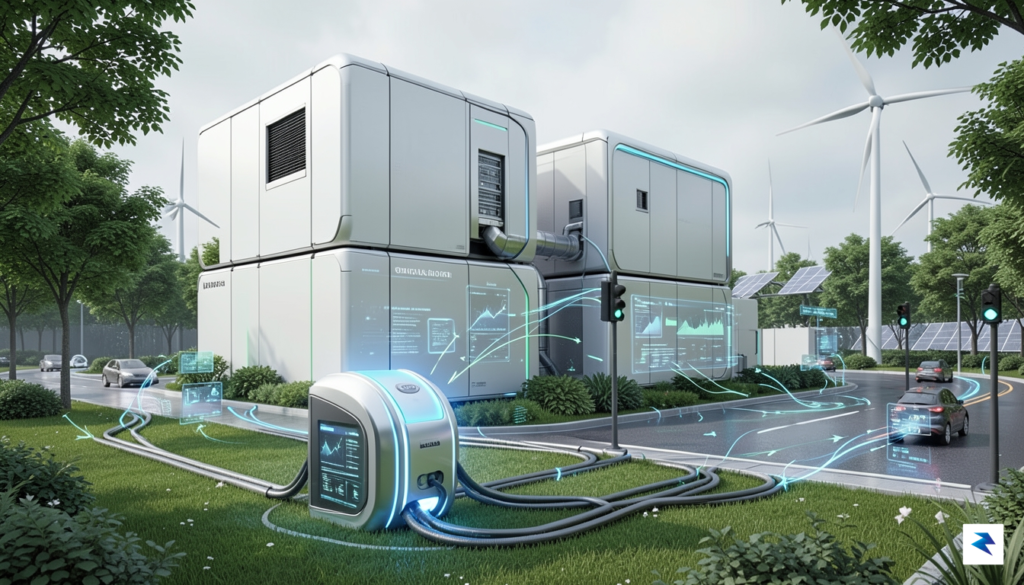
As the insatiable appetite for artificial intelligence continues its exponential growth, the computational demands placed on our infrastructure are reaching unprecedented levels. This surge is prompting a fundamental re-evaluation of where and how we process information, shifting the industry’s focus away from speculative, far-flung solutions and firmly towards practical, energy-autonomous, and highly localized architectures here on Earth. The consensus among experts points towards a future where computing power is not only immense but also intimately integrated with its energy source and strategically positioned to minimize latency and maximize efficiency.
A significant trend emerging from this re-evaluation is the rise of modular data centers. These prefabricated, scalable units can be rapidly deployed wherever computational power is needed, offering a flexibility that traditional, monolithic data centers simply cannot match. This modularity is not just about speed of deployment; it also facilitates greater energy autonomy. Imagine self-contained computing units that can operate independently of fragile, large-scale grids, drawing power from dedicated, local sources. This distributed model enhances resilience, reduces vulnerability to single points of failure, and allows for more efficient resource allocation, ensuring that processing power is available precisely where and when it’s most critical.
Fueling this vision of localized autonomy is the burgeoning interest in advanced, small-scale energy solutions, particularly next-generation nuclear power. Technologies like Small Modular Reactors (SMRs) are no longer theoretical concepts but increasingly viable options for providing high-density, consistent, and carbon-free power to localized data center clusters. By integrating a clean, reliable power source directly with computing infrastructure, we can achieve true energy independence for critical AI operations. This paradigm shift moves beyond merely being “grid-tied” to becoming “grid-optional,” offering unparalleled stability and sustainability for the data centers that will power the future of AI.
Furthermore, the imperative to reduce latency for real-time AI applications is driving a pronounced move towards edge computing. Processing data closer to its source – whether that’s an autonomous vehicle, a smart factory, or a remote sensor network – drastically cuts down the time it takes for data to travel to a centralized cloud and back. This proximity is critical for applications requiring instantaneous decisions and responses, such as robotics, augmented reality, and personalized healthcare diagnostics. Edge computing not only improves performance but also enhances data privacy and security by minimizing the need to transmit sensitive information over vast distances, keeping processing localized and secure.
Consequently, the overwhelming expert consensus is that while space remains an indispensable frontier for observation, communication, and specific scientific endeavors, its role in primary data processing and general AI inference is highly limited. The practical challenges of deploying, maintaining, cooling, and upgrading complex computing infrastructure in orbit, coupled with the inherent latency of transmitting vast datasets to and from space, far outweigh any perceived benefits for bulk data processing. Instead, the industry is firmly committed to innovating with earth-bound solutions that prioritize energy independence, modularity, and proximity to the data source, ensuring a robust, responsive, and sustainable computing future right here on our planet.
You must be logged in to post a comment.