iOS 27 Hands-On: How Apple’s New AI Actually Changes Your Workflow
The New Era of iOS: Beyond the Hype With the arrival of iOS 27, Apple has ushered in a truly foundational shift in its mobile operating system…
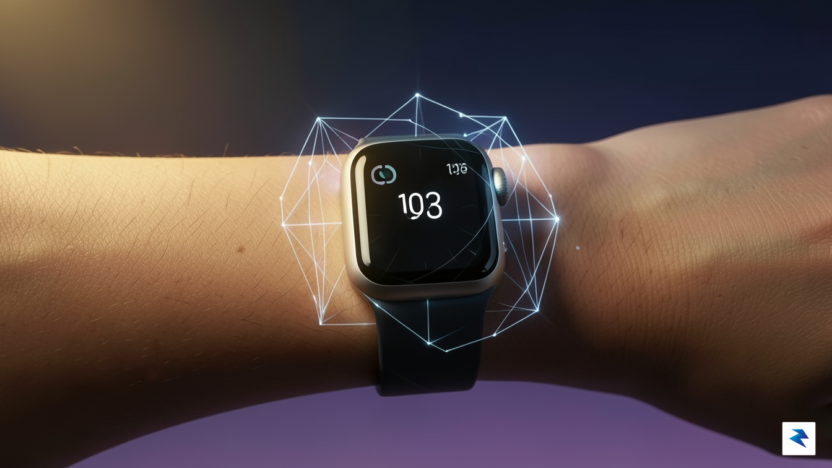
For years, the promise of a truly intelligent voice assistant strapped to our wrists remained largely unfulfilled. While the concept of conversing with a wearable device was captivating, the reality for early voice assistants on smartwatches, including Siri on the Apple Watch, often fell short of science fiction’s grand visions. These initial iterations served primarily as reactive tools, capable of executing straightforward commands with varying degrees of accuracy and speed. Users quickly learned the precise phrasing required to set a timer, check the weather, or initiate a call, but venturing beyond these basic functions often led to frustration and a stark reminder of the technology’s inherent limitations.
This period cemented a persistent ‘timer-only’ stigma around Siri on the Apple Watch. It wasn’t entirely unwarranted; for many, the device excelled at simple, immediate tasks like timing a workout interval or a cooking session, yet struggled with more nuanced requests or those requiring contextual understanding. The assistant felt less like a smart companion and more like a digital stopwatch, a convenient but ultimately superficial layer over the device’s core functionalities. Its reliance on cloud processing for many queries also introduced latency, further hindering the seamless, instantaneous interactions one would expect from a device designed for quick glances and immediate action.
The core challenge lay in Siri’s foundational architecture on the watch, which historically treated each interaction as a discrete event rather than part of an ongoing conversation or a broader understanding of the user’s day. There was a distinct lack of contextual intelligence; Siri rarely remembered previous questions or anticipated subsequent needs based on your location, calendar, or health data. This meant repetitive commands, a lack of personalization, and an overall experience that felt more like shouting instructions into a void than engaging with an intelligent agent. The Apple Watch, despite its myriad sensors and incredible potential, was still waiting for its voice assistant to catch up to its hardware capabilities.
However, a significant paradigm shift has arrived with the latest watchOS 27 update and its deep integration of advanced AI models. This isn’t merely an incremental improvement; it represents a fundamental re-architecture of how Siri operates on the Apple Watch, transforming it from a simple voice-activated command processor into a sophisticated, proactive intelligence layer. By leveraging cutting-edge on-device machine learning and more powerful neural engines, Siri can now process complex queries directly on the wrist, dramatically reducing latency and enhancing privacy. This crucial development allows the assistant to move beyond its reactive past, ushering in an era where it truly understands and anticipates user needs without constant explicit instruction.
This evolution marks a turning point, pivoting Siri from a basic utility to a truly intelligent assistant capable of understanding context, nuance, and even predicting your next move. No longer confined to simple voice commands, the updated Siri can now interpret natural language more effectively, drawing on a wealth of personal data – from your calendar and health metrics to your location and past habits – to offer genuinely useful, proactive suggestions. Imagine asking your watch, “What’s my schedule like today, and do I need an umbrella?” and receiving not just a list of appointments, but also a notification about a potential rain shower later, coupled with a suggestion to leave a few minutes early for your next meeting due to anticipated traffic. This shift from a reactive assistant to a proactive intelligence layer is what finally elevates the Apple Watch experience, making it feel less like a notification hub and more like a true wrist computer.
The arrival of generative artificial intelligence fundamentally redefines the Apple Watch, transforming it from a mere extension of your iPhone—a wrist-worn notification mirror—into an active, intelligent agent capable of understanding and anticipating your needs. This isn’t just an incremental update; it’s a paradigm shift in how the device processes information and interacts with its user. Previous iterations of Siri on the watch largely relied on sending requests to the cloud for processing, where powerful servers would interpret commands and send back a response. This often introduced latency and limited the watch’s standalone capabilities, making it feel less like an independent computing device and more like a tethered accessory.
The technical core of this transformation lies in a significant shift towards on-device processing. While complex, open-ended queries requiring vast external knowledge bases might still leverage cloud resources, the initial interpretation of user intent and the handling of many common tasks now occur directly on the watch itself. This local processing brings immediate benefits: enhanced privacy, as sensitive data doesn’t always leave your device, and significantly reduced latency. Imagine speaking a command and having it executed almost instantaneously, without the micro-delays associated with network round trips. This blend of powerful local inference with intelligent cloud augmentation creates a hybrid model that maximizes both responsiveness and capability, pushing the boundaries of what’s possible on such a small form factor.
This new generative AI model excels at interpreting complex natural language in a way that was previously unattainable for a device of this size. Older systems often struggled with nuance, relying heavily on keyword matching. If your phrasing wasn’t precise, Siri might misunderstand or ask for clarification. The generative model, however, can now infer context, understand implied meaning, and even handle multi-step requests more effectively. For instance, rather than simply recognizing “set a timer,” it can now grasp the intent behind “remind me in 15 minutes to take the lasagna out,” understanding both the action and the context without needing explicit keywords for ‘timer’ or ‘alarm’. This deeper comprehension is pivotal for creating a truly intuitive wrist-worn experience, moving beyond rigid commands to natural conversation.
The most immediate and user-palpable impact of this advanced interpretation is a dramatic reduction in those frustrating “Siri didn’t quite get that” moments. By leveraging sophisticated contextual understanding and predictive capabilities, the AI can better disambiguate vague requests and fill in missing information based on your habits, location, and previous interactions. It learns from your patterns, making each subsequent interaction smoother and more accurate. This leap in understanding means less fumbling with your watch, fewer repeated commands, and a far more reliable digital assistant always at your beck and call. It’s the difference between talking to a sophisticated machine and engaging with an assistant that genuinely understands you.
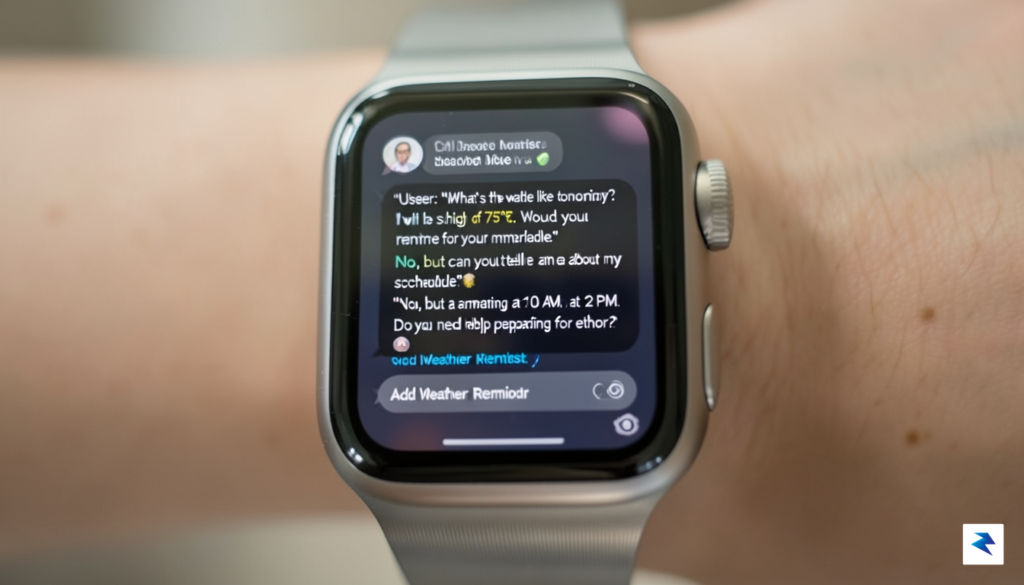
Ultimately, this technological advancement translates directly into improved screen-time efficiency and a more seamless user experience. When your wrist-worn device can accurately and quickly handle a wider array of requests, you spend less time pulling out your phone, navigating menus, or correcting errors. The watch becomes a genuinely independent and powerful tool for managing your day, from scheduling appointments and sending messages to controlling smart home devices and accessing information on the fly. This efficiency is critical to the vision of the Apple Watch as a true wrist computer, enabling users to accomplish tasks with minimal friction, keeping their focus on the world around them rather than being constantly tethered to a larger screen. It marks a significant step towards a future where technology fades into the background, empowering us without demanding constant attention.
The advent of an AI-powered Siri on the Apple Watch fundamentally reshapes how we interact with our wrist, transforming it from a mere notification hub into a truly capable command center. No longer is the Watch a tethered extension of your iPhone, reliant on you pulling out your primary device for anything beyond basic tasks. Instead, the upgraded Siri understands and executes complex, multi-step requests entirely from your wrist, making daily workflows significantly more efficient and genuinely hands-free. This leap in capability means users can now integrate their Watch into their daily routines in ways previously unimaginable, streamlining productivity across various personal and professional spheres.
Consider the common scenario of drafting an email on the go. With previous iterations of Siri, you might say, “Hey Siri, send an email to John Smith.” Siri would then prompt you for the subject, then the body, requiring multiple distinct voice commands and often forcing you to pull out your iPhone to review or correct the fragmented message. Now, with the AI-augmented Siri, a single, natural language command suffices: “Hey Siri, draft an email to John Smith, subject ‘Meeting Follow-up,’ saying ‘Hi John, just wanted to follow up on our discussion earlier. I’ve attached the document we reviewed. Let me know if you have any questions.'” The Watch processes this entire request, intelligently drafting the email and presenting it for a quick review and send, all without ever needing to touch your phone. This seamless, conversational interaction saves precious time and reduces friction in communication.
Complex calendar scheduling also becomes remarkably intuitive. Gone are the days of laboriously dictating meeting parameters one by one. Imagine needing to schedule a team meeting: the legacy Siri workflow would involve a series of prompts for date, time, attendees, and title, making it cumbersome to handle anything beyond the simplest arrangements. The new AI, however, can handle multi-variable requests with ease. You can simply say, “Hey Siri, find a 30-minute slot next Tuesday afternoon when both Sarah and I are free, and schedule a meeting titled ‘Project Alpha Brainstorm’ in our usual conference room.” Siri intelligently cross-references calendars, identifies available times, sends invitations, and even pre-fills location details, executing what was once a multi-device task directly from your wrist.
Real-time navigation adjustments illustrate another profound shift. While the Watch has always been helpful for basic directions, dynamic, contextual changes mid-journey were often out of reach. Previously, you might ask for directions home, but if unexpected traffic arose or you needed to make an unscheduled stop, you’d typically default to your iPhone. Now, in the middle of navigating, you can issue a layered command: “Hey Siri, avoid highways for the next 10 miles due to heavy traffic, and find the nearest gas station that accepts Apple Pay after that.” Siri will dynamically reroute your journey to bypass congestion and then integrate a search for a specific type of waypoint, all while keeping your hands on the wheel and eyes on the road.
Even controlling your smart home becomes a more sophisticated experience. Beyond simple “turn on the lights” commands, the AI-powered Siri can orchestrate entire scenes with nuanced adjustments. Instead of activating a pre-set “Evening Chill” scene and then manually dimming specific lights or checking other devices, you can now issue a holistic command: “Hey Siri, activate ‘Evening Chill’ scene, but dim the kitchen lights to 30% and ensure the patio heater is off, then set the thermostat to 72 degrees.” This single voice prompt triggers a complex sequence of actions across multiple smart devices, demonstrating a contextual awareness and multi-command execution that truly elevates the Watch’s role as a central control point for your connected environment. These capabilities underscore a fundamental shift, allowing the Apple Watch to move beyond mere convenience and truly empower users with a powerful, independent wrist computer.
The ambition of transforming the Apple Watch into a truly intelligent wrist computer, powered by advanced AI, runs headfirst into a fundamental engineering challenge: the immutable laws of physics governing small, battery-constrained devices. Delivering “desktop-class” artificial intelligence, particularly large language models (LLMs), on a device no bigger than a matchbox demands an extraordinary balancing act between raw processing power, energy efficiency, and thermal management. Apple’s approach to this intricate problem hinges on deeply integrated hardware and software design, leveraging custom silicon to push the boundaries of what’s possible within such tight constraints.
At the heart of this endeavor lies Apple’s bespoke S-series silicon, purpose-built for the unique demands of the Apple Watch. Unlike general-purpose CPUs, these chips are meticulously engineered to maximize performance per watt, incorporating dedicated Neural Engines specifically designed to accelerate machine learning tasks. These specialized cores efficiently handle the complex computations required for on-device AI models, offloading the burden from the CPU and GPU, which would otherwise consume significantly more power. This architectural choice is crucial for enabling features like real-time language processing and context understanding directly on your wrist, all while striving to maintain the all-day battery life users have come to expect.
Nevertheless, running sophisticated AI algorithms inherently demands energy, leading to a constant dance with energy efficiency trade-offs. Apple employs a multi-faceted strategy to mitigate this. Dynamic voltage and frequency scaling allows the S-series chip to adjust its performance levels in real-time, only drawing the power necessary for the task at hand. When Siri is invoked or a complex query is processed, the chip can briefly ramp up, but it quickly scales back down to conserve energy during less demanding periods. Furthermore, intelligent task scheduling within watchOS ensures that AI workloads are executed with minimal overhead, preventing unnecessary components from drawing power and managing heat dissipation effectively within the watch’s compact enclosure.
A cornerstone of Apple’s philosophy, especially concerning AI, is the meticulous balance between local processing for privacy and leveraging cloud-based intelligence for scale. For many common Siri requests, dictation, and personal data analysis, the Apple Watch now performs computations entirely on-device, offering unparalleled speed, offline capability, and crucially, enhanced user privacy. This keeps sensitive personal information from ever leaving the device. However, for more expansive queries, particularly those requiring vast, up-to-the-minute knowledge bases or complex generative AI tasks that exceed the watch’s local model capacity, a secure, anonymized handoff to cloud servers becomes necessary. This hybrid approach intelligently determines the most efficient and private pathway for each request, ensuring the user gets the best of both worlds without compromising their data.
Despite these extensive optimizations, it’s an undeniable reality that increased reliance on advanced AI will inevitably impact battery life, particularly for power users. Individuals who frequently engage with Siri for complex, multi-turn conversations, continuously use on-device language processing, or leverage AI-driven health features throughout the day might notice a more significant drain on their watch’s charge. While Apple strives for an “all-day” battery experience under typical use, intensive AI interaction pushes the boundaries. Future hardware iterations and smarter software management, such as more aggressive low-power modes specifically tailored for AI workloads, will undoubtedly continue to evolve as Apple seeks to further refine this delicate balance between cutting-edge intelligence and enduring power.
We are on the cusp of a profound transformation in how we interact with technology, moving decidedly into a ‘post-screen’ era where the interface itself becomes secondary to the intelligence it provides. Over the next five years, our wearables, spearheaded by devices like the Apple Watch, will evolve from mere notification hubs into truly proactive, intuitive assistants. This shift is driven by increasingly sophisticated AI, which will enable these devices to anticipate our needs and blend seamlessly into the fabric of our daily lives, making the concept of a ‘wrist computer’ far more integrated and less demanding of our direct attention than ever before.
Perhaps the most impactful evolution will be in the realm of proactive health monitoring. Current wearables excel at reactive alerts, notifying us of high heart rates or irregular rhythms, but the next generation of AI will delve much deeper. Imagine a device that continuously analyzes subtle biomarkers, sleep patterns, activity levels, and even stress indicators to predict potential health issues days or weeks before symptoms manifest. This could mean personalized dietary suggestions to mitigate developing risks, prompts for stress reduction techniques during high-pressure periods, or even early warnings for conditions like diabetes or cardiovascular strain, transforming healthcare from reactive treatment to preventative wellness on an unprecedented scale.
Beyond continuous health insights, the future of wearable AI will be profoundly multimodal, integrating not just voice commands but also vision and environmental audio. Tiny, discreet cameras could allow your wrist device to interpret visual cues, recognizing objects, people, or even subtle changes in your surroundings. Coupled with advanced audio processing that understands not just what you say, but the nuances of your environment, your wearable could become an incredibly perceptive companion. For instance, it might identify a plant you’re curious about, translate a foreign sign in real-time, or guide you through a bustling airport by interpreting visual layouts and ambient soundscapes, all while providing feedback through haptics or whispered audio without demanding you stare at a screen.
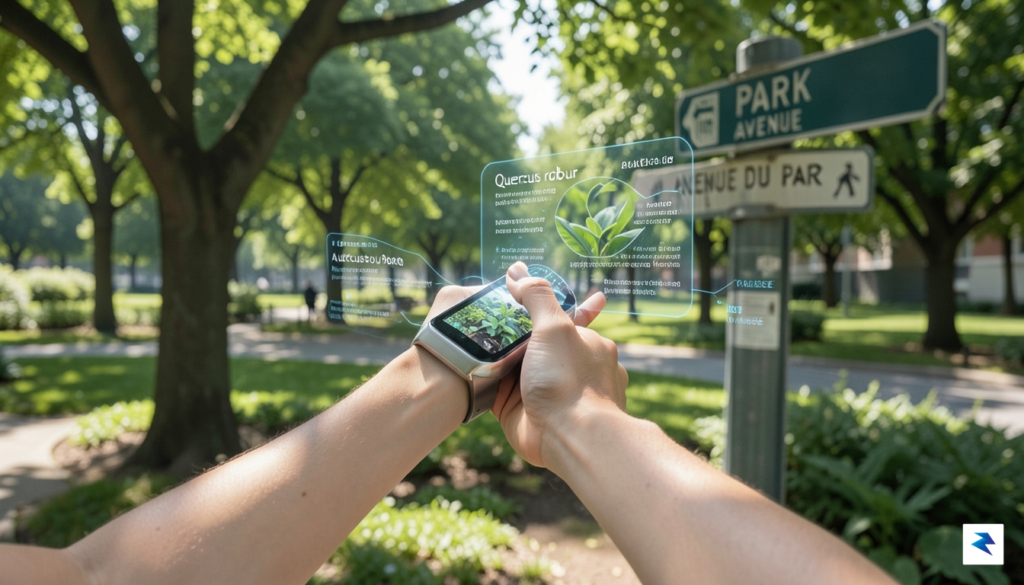
Ultimately, these advancements herald a true age of ambient computing, where technology intelligently fades into the background, ever-present but rarely intrusive. The ‘wrist computer’ won’t just be a powerful device you consult; it will be an intelligent extension of yourself, learning your habits, understanding your context, and anticipating your needs with remarkable precision. It will provide crucial information and assistance without you having to explicitly ask, allowing you to remain fully present in the moment while still benefiting from cutting-edge intelligence. This paradigm shift promises a future where our devices don’t just respond to us, but truly understand us, making technology a more natural, intuitive, and deeply integrated part of being human.
You must be logged in to post a comment.