
Tesla’s Wheelchair-Accessible Robotaxi: What We Know About the Future of Inclusive Transit
The Evolution of Autonomous Mobility: Beyond Standard Design As the race for autonomous vehicle (AV) dominance intensifies globally, the…


Wi-Fi 8, officially designated by the IEEE as 802.11bn, marks the latest evolution in the long-standing timeline of wireless networking standards. While its predecessor, Wi-Fi 7, focused heavily on pushing the boundaries of raw throughput and channel width, Wi-Fi 8 shifts the industry’s strategic focus toward a concept known as Ultra High Reliability (UHR). Rather than simply chasing higher theoretical speeds, this new standard aims to harmonize the way data flows through increasingly congested digital environments. It serves as a natural refinement of the multi-link operations established in previous iterations, ensuring that the connection remains stable, predictable, and resilient even when dozens of smart devices are competing for bandwidth simultaneously.

The transition from Wi-Fi 6 and 7 to Wi-Fi 8 represents a fundamental change in how we perceive network health. Where previous generations were often marketed based on their ability to deliver staggering “peak speeds,” Wi-Fi 8 acknowledges that the average modern household has moved past the era of single-device streaming. Today, we manage a dense ecosystem of IoT sensors, high-definition security cameras, cloud-synced workstations, and immersive gaming consoles. Consequently, the 802.11bn standard is being engineered to optimize the management of these devices, reducing latency and preventing the “jitter” that occurs when a network becomes overwhelmed by high-density traffic. It is less about how fast the highway can go and more about how efficiently we can manage the flow of traffic to prevent gridlock.
Wi-Fi 8 is not merely a speed upgrade; it is a sophisticated recalibration of network intelligence, prioritizing consistent performance for a world saturated with interconnected technology.
By building upon the robust foundation laid by Wi-Fi 7, this upcoming standard emphasizes smarter coordination between access points and client devices. This iterative improvement is designed to handle the growing complexities of modern infrastructure, ensuring that the wireless experience remains seamless as we integrate more autonomous and data-hungry hardware into our daily routines. In essence, Wi-Fi 8 acts as the “traffic controller” for the smart home of the future, turning what was once a chaotic competition for airtime into a streamlined, orchestrated symphony of data transmission. As we look toward its eventual rollout, users can expect a standard that values the quality of the connection just as much as the quantity of data transferred.

While previous iterations of wireless standards have primarily focused on the pursuit of higher peak data rates, Wi-Fi 8 represents a fundamental shift toward network reliability and intelligent traffic management. Instead of merely pushing for faster bursts of data, this standard emphasizes the stability of the connection in environments where dozens of devices are clamoring for attention simultaneously. By focusing on the orchestration of data packets rather than raw throughput, Wi-Fi 8 ensures that your smart home, office equipment, and personal devices can operate in harmony without the common pitfalls of latency spikes or signal dropouts.
One of the most significant technical leaps is the evolution of enhanced beamforming and multi-user MIMO (MU-MIMO) capabilities. While beamforming has existed in previous standards, Wi-Fi 8 refines these algorithms to create more precise “spatial streams” that follow the user through the home or office. By dynamically calculating the physical location of a device, the router can focus its signal energy with surgical accuracy, effectively neutralizing dead zones that previously plagued large floor plans. When paired with advanced MU-MIMO, which allows the router to communicate with multiple devices at the exact same time rather than cycling through them in a rapid queue, the result is a significantly more responsive network experience that feels instantaneous even under heavy loads.
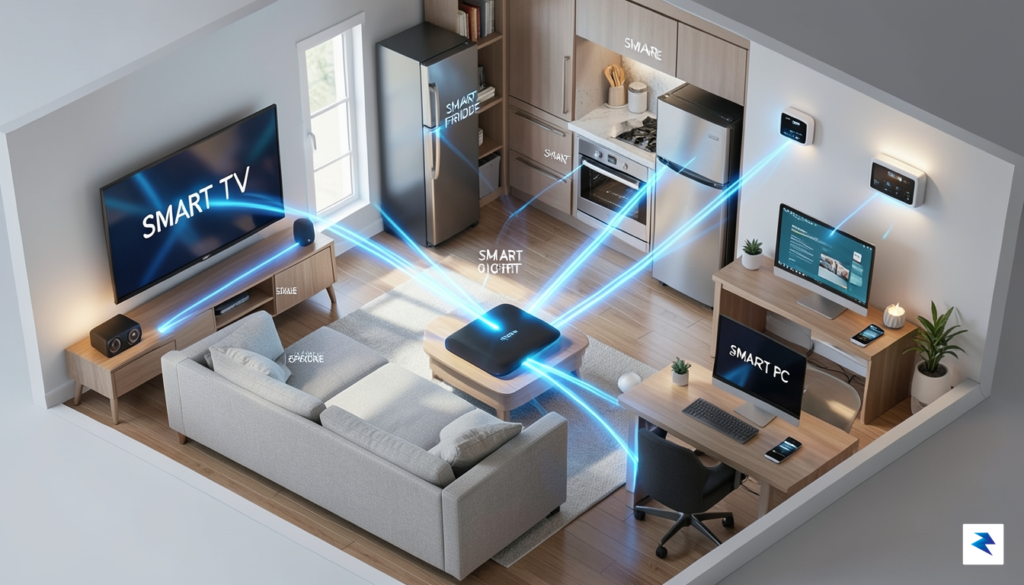
Furthermore, the refinement of how the 6GHz spectrum is utilized serves as the backbone for this increased efficiency. Wi-Fi 8 leverages more sophisticated channel bonding and dynamic spectrum access to squeeze more utility out of available airwaves, effectively widening the “lanes” on the digital highway. This ensures that high-bandwidth activities—such as 8K streaming, cloud gaming, or real-time collaborative editing—are not throttled by the background noise of smaller, low-priority IoT devices. By intelligently segmenting traffic based on the specific requirements of the application, the network maintains high-performance streams without the degradation traditionally caused by congestion.
The core philosophy of Wi-Fi 8 is not to make the pipe wider, but to make the traffic flow more intelligently, ensuring that every connected device receives the bandwidth it needs without interfering with its neighbors.
Ultimately, these advancements culminate in a network that feels remarkably consistent. By automating the hand-off between frequency bands and optimizing how data packets are prioritized, Wi-Fi 8 addresses the core frustration of modern connectivity: the “crowded room” effect. Whether you are managing a smart home with dozens of sensors or a high-traffic office requiring constant video conferencing, the architecture of Wi-Fi 8 is designed to keep your connection seamless, stable, and remarkably resilient against the interference that has historically hampered wireless performance.
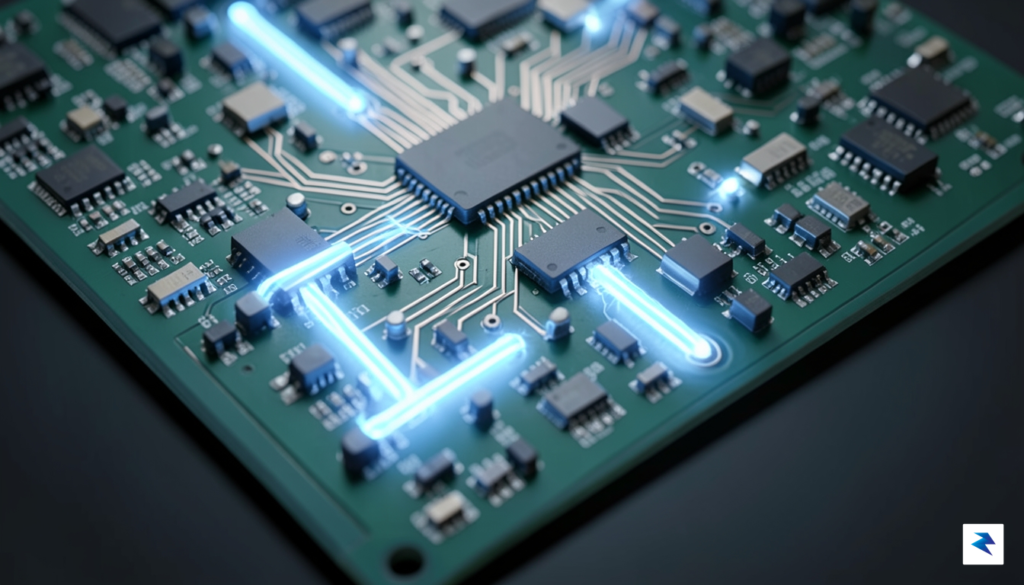
At the core of the next-generation wireless experience lies the concept of Ultra High Reliability (UHR). While previous iterations focused primarily on increasing raw data throughput, Wi-Fi 8 shifts the spotlight toward maintaining a consistent, jitter-free connection in increasingly congested environments. For users operating in dense smart homes or bustling office spaces, this means the end of the “bandwidth bottleneck.” By refining the way data packets are scheduled, the protocol ensures that even when dozens of devices are competing for airtime, your most critical tasks remain prioritized without interruption.
One of the most significant advancements in this standard is the sophisticated evolution of Multi-Link Operation (MLO). While Wi-Fi 7 introduced the ability to aggregate bands to boost speed, Wi-Fi 8 enhances this capability by implementing more intelligent, dynamic switching between spectrums. Instead of simply relying on a primary connection, the system can now split data streams across multiple frequency bands simultaneously with near-zero switching time. This architectural shift means that if a specific channel experiences sudden interference, the network instantly compensates, ensuring that latency-sensitive applications—such as immersive VR/AR sessions or competitive cloud-based gaming—never experience the dreaded “micro-stutter” that plagues current connections.

Beyond speed and stability, the protocol introduces a more granular approach to traffic prioritization. By utilizing advanced AI-driven traffic management, Wi-Fi 8 can identify the “type” of data being transmitted in real-time. Whether it is a packet for a high-definition video call or a background file synchronization, the router can now intelligently allocate resources to ensure that time-critical packets jump to the front of the queue. This is particularly vital for the future of the internet, where real-time responsiveness is just as important as download speed.
The true measure of Wi-Fi 8 is not how much data it can move at once, but how seamlessly it keeps every device connected without the friction of latency spikes or signal degradation.
Ultimately, this evolution creates a backbone for the future of connected living. As our reliance on remote work tools, interactive digital environments, and real-time remote healthcare grows, the tolerance for network instability effectively drops to zero. Wi-Fi 8 addresses this by moving away from “best-effort” delivery and toward a deterministic model, where reliability is baked into the very foundation of the wireless handshake. By harmonizing bandwidth availability with superior traffic management, the standard guarantees a level of performance that feels just as stable and robust as a direct, hard-wired ethernet connection.
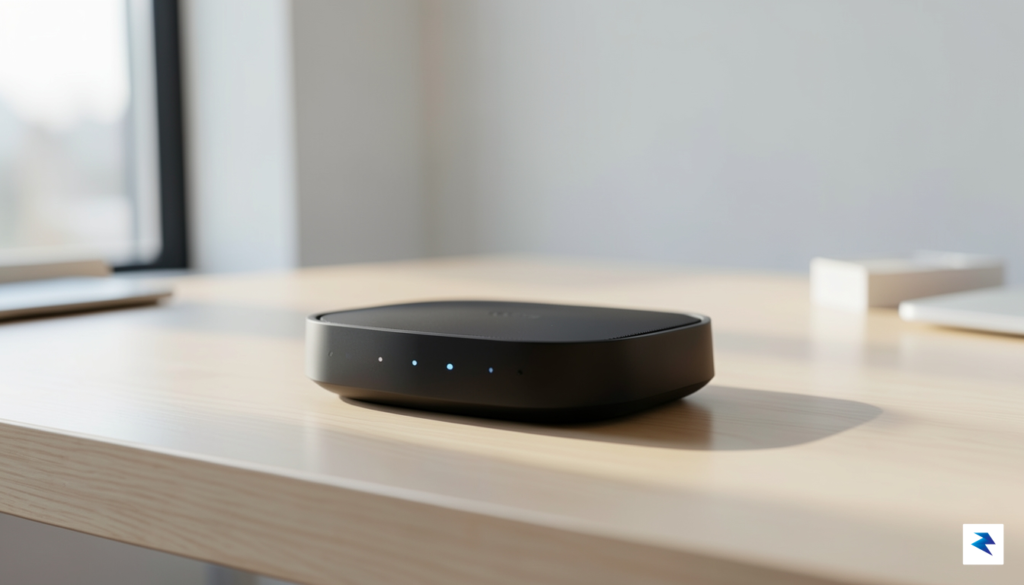
Understanding the arrival of the next generation of wireless technology requires a realistic look at the IEEE standardization timeline. While industry excitement is building, the shift from technical draft to consumer hardware is a deliberate, multi-year process. Typically, the development cycle for a new Wi-Fi standard spans approximately two to three years from the initial drafting phases to final ratification. Even after the official standard is set, the Wi-Fi Alliance must complete its rigorous certification process to ensure interoperability across diverse devices, meaning we are likely looking at a rollout window starting around 2027 or 2028 for widespread commercial availability.
In the early stages of this transition, we can expect the first wave of Wi-Fi 8 hardware to be heavily skewed toward enterprise-grade infrastructure and high-end enthusiast routers. Corporations will likely be the primary early adopters, utilizing the improved latency and reliability features to support massive IoT deployments and high-density office environments. If you are a typical household user, this means that while the technology will technically exist, it will likely be prohibitively expensive and largely unnecessary for standard streaming, gaming, or general web browsing during those initial years of release.
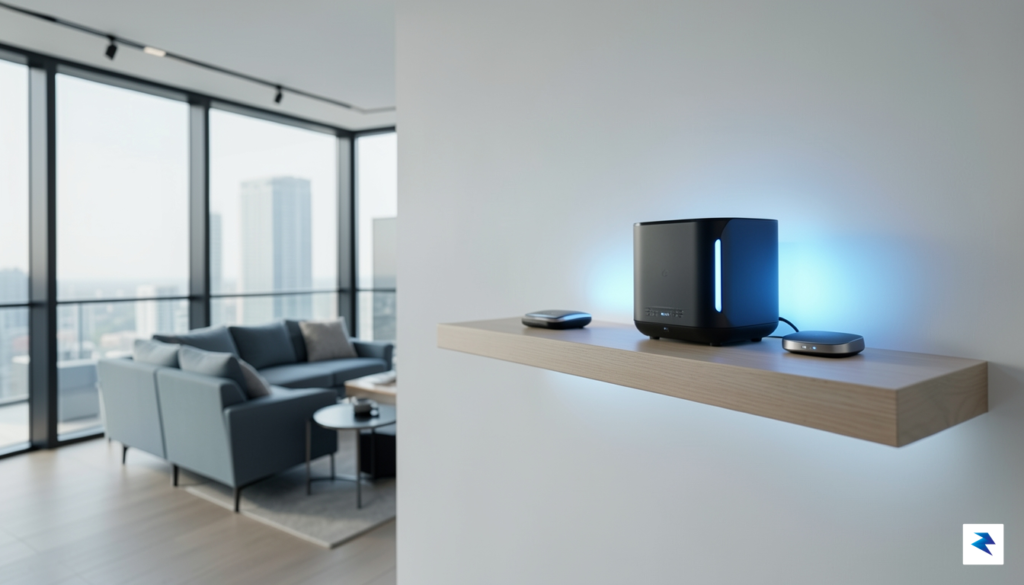
Many consumers currently weighing their options often ask whether they should hold off on purchasing the latest Wi-Fi 7 gear in anticipation of this future standard. The reality is that Wi-Fi 7 is already a significant leap forward in terms of multi-link operation and throughput, making it a robust solution that will remain more than capable for years to come. Because Wi-Fi 8 is designed to refine and optimize existing foundations rather than rewrite the rulebook, there is little reason for the average person to wait for the newer standard if they need a network upgrade today.
The best approach for most users is to focus on current high-performance standards rather than waiting for hypothetical future specs that are still several years away from consumer reality.
Ultimately, the jump to Wi-Fi 8 will be most beneficial for those managing extremely complex networks, such as homes filled with dozens of smart devices, high-fidelity VR setups, or professional content creators who frequently move massive files. If your current network is struggling to keep up with your devices, upgrading to a mature Wi-Fi 7 system is a smart, forward-thinking decision. By the time Wi-Fi 8 becomes truly mainstream and affordable, your current hardware will have already provided years of reliable service, and you will be well-positioned to evaluate whether the incremental gains of the next standard align with your evolving needs at that time.
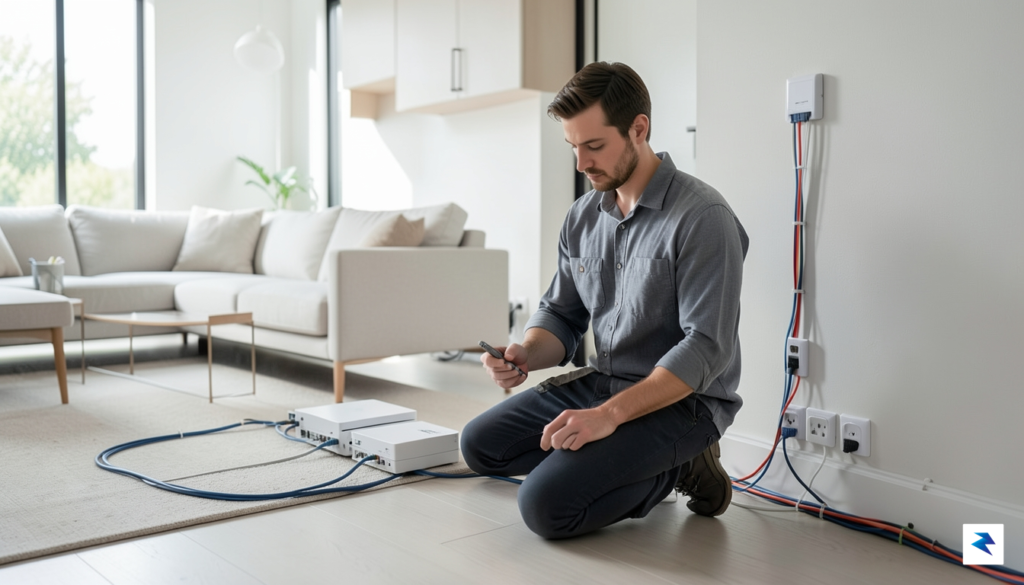
Transitioning to the next wireless frontier requires more than simply swapping out your old router for the latest hardware; it demands a strategic look at your home’s underlying infrastructure. While Wi-Fi 8 promises unprecedented speeds and lower latency, these advancements can be easily throttled if your physical connection points are outdated. To truly future-proof your living space, start by auditing your current Ethernet cabling. If you are still relying on older Cat5 or Cat5e cables, you are likely creating a bottleneck before the data even reaches your wireless access points. Upgrading to Cat6a or Cat7 cabling for your backhaul—the connection between your router and satellite nodes—ensures that your network can handle multi-gigabit throughput without signal degradation.
Beyond cabling, the physical placement of your networking hardware plays a pivotal role in performance. Wi-Fi signals at higher frequencies struggle to penetrate dense obstacles like concrete walls, large appliances, or metallic shelving. Instead of tucking your router away inside a media cabinet or a basement closet, aim for a centralized, elevated position that provides a clear line of sight to the areas where your devices are most frequently used. By utilizing a mesh system with hardwired Ethernet backhauls, you can eliminate dead zones entirely, ensuring that every corner of your home benefits from the technological leaps provided by the latest standards.

Even the most sophisticated Wi-Fi 8 router is only as capable as the data pipeline feeding it. Always verify that your broadband plan provides enough bandwidth to actually leverage the router’s top-tier features.
Finally, it is essential to remember that your wireless network is ultimately downstream of your Internet Service Provider (ISP). Before investing heavily in next-generation networking gear, take a moment to evaluate your current broadband plan. If your ISP is providing a slow or unstable connection, even the most expensive router will fail to deliver a premium experience. Contact your provider to see if they offer fiber-optic or high-tier cable packages that can support the multi-gigabit potential of your new equipment. By synchronizing your ISP speed, internal wiring, and hardware placement, you build a robust foundation that will remain efficient and reliable for years to come.
You must be logged in to post a comment.