
Airbnb Host Demanding More Money? How to Protect Your Booking During Major Events
The Airbnb Price Hike Dilemma: When Your Confirmed Booking Isn't Secure For most travelers, the moment a confirmation email lands in…


For many retail investors captivated by the rapid advancements in aerospace technology, the primary hurdle to investing in SpaceX is a fundamental structural one: the company remains strictly private. Unlike industry peers or legacy aerospace giants that trade on major exchanges like the NYSE or Nasdaq, SpaceX has not conducted an initial public offering (IPO). Consequently, you will not find a ticker symbol for the company on popular brokerage platforms such as Robinhood, Fidelity, or E*TRADE. Searching for such a symbol often leads to confusion, as the lack of public availability means that the standard mechanisms for buying and selling shares simply do not apply to this organization.
The distinction between a public and private company is critical for understanding why retail access is currently nonexistent. A public company is required by the Securities and Exchange Commission (SEC) to provide regular, transparent financial disclosures, allowing anyone with a brokerage account to purchase fractional ownership. In contrast, SpaceX operates under a private ownership model, which grants the leadership team—led by Elon Musk—the autonomy to pursue long-term, high-risk projects like the Starship program without the quarterly earnings pressure typical of publicly traded firms. Because they do not need to raise capital through the public markets to fund their operations, they have no immediate incentive to undergo the rigorous regulatory scrutiny required for a public listing.

Investors must be extremely cautious: because SpaceX shares are not traded on public exchanges, any website or social media advertisement claiming to sell “SpaceX stock” directly to the public is almost certainly a fraudulent scheme or a predatory scam.
Because the demand for equity in a high-growth company like SpaceX is so immense, opportunistic bad actors often prey on uninformed investors. If you encounter a platform promising guaranteed access to SpaceX shares for a low minimum investment, you are likely looking at a sophisticated phishing attempt or an unauthorized financial vehicle. These entities often use the company’s name and branding to create a false sense of legitimacy, hoping to siphon funds from individuals who do not realize that direct ownership is legally restricted to institutional investors, high-net-worth individuals, or current and former SpaceX employees. It is essential to remember that legitimate private equity transactions involving SpaceX are complex, highly regulated, and generally inaccessible to the average retail trader.
Ultimately, the barrier to entry is intentional, serving to protect the company’s strategic vision from the volatility of public market speculation. While it is natural to want a piece of a company that is fundamentally changing the economics of space travel, the reality is that there is no shortcut to ownership. Until the company chooses to pursue an IPO or a direct listing, retail investors must content themselves with watching from the sidelines. Protecting your portfolio from scams should be the highest priority, and you should view any “opportunity” to purchase SpaceX stock through a standard retail platform as a significant red flag.

SpaceX’s continued status as a privately held company is far from an accident or an oversight; it is a deeply calculated business strategy meticulously designed to facilitate its ambitious, long-term goals. Unlike many rapidly growing tech ventures that rush to public markets, SpaceX has deliberately chosen to operate outside the glare and demands of Wall Street. This strategic decision grants the company unparalleled freedom to pursue groundbreaking innovation in space exploration and development without the constant pressure to deliver short-term financial results, a common burden for publicly traded entities.
One of the most significant advantages of remaining private is the insulation from the relentless scrutiny of quarterly earnings reports. Public companies are often compelled to prioritize immediate profitability and predictable growth to satisfy shareholders, which can stifle investment in truly revolutionary, but inherently risky, research and development projects. SpaceX, on the other hand, can allocate its capital and resources towards decades-long endeavors, such as making humanity multi-planetary or establishing a global satellite internet constellation, knowing that setbacks or extended development timelines won’t immediately trigger a stock price plummet or shareholder revolt. This strategic patience is critical for projects with unprecedented technical challenges and uncertain timelines.
Furthermore, staying private shields SpaceX from the intense market volatility that can plague public companies. Stock prices can fluctuate wildly based on economic trends, geopolitical events, or even speculative news, often unrelated to a company’s fundamental performance. By avoiding an IPO, SpaceX maintains greater control over its valuation and strategic direction, allowing it to concentrate on engineering breakthroughs rather than managing investor sentiment. This stability is invaluable when undertaking capital-intensive, high-risk ventures where failures are part of the learning process and require significant time and resources to overcome.
Beyond market pressures, the regulatory burdens associated with being a publicly traded company are substantial. An initial public offering (IPO) brings with it a host of compliance requirements, stringent financial disclosures, and heightened legal scrutiny from bodies like the Securities and Exchange Commission (SEC). These obligations demand significant time, resources, and personnel, diverting focus and capital that SpaceX prefers to channel directly into its core mission of advancing space technology. By remaining private, the company can maintain a leaner operational structure and greater agility in its decision-making processes, unencumbered by the extensive reporting and governance overhead inherent in public markets.
Despite not being publicly traded, SpaceX has successfully raised substantial capital to fund its monumental projects. Instead of an IPO, the company relies on strategic private funding rounds, attracting a sophisticated network of venture capitalists, institutional investors, and high-net-worth individuals who understand and are aligned with its long-term vision. These investors are typically more patient and willing to accept the extended timelines and higher risks associated with disruptive space technology, focusing on the potential for massive returns far into the future. This selective approach ensures that SpaceX’s investor base consists of partners who truly believe in and support its ambitious, transformative goals, rather than those solely seeking immediate financial gratification.

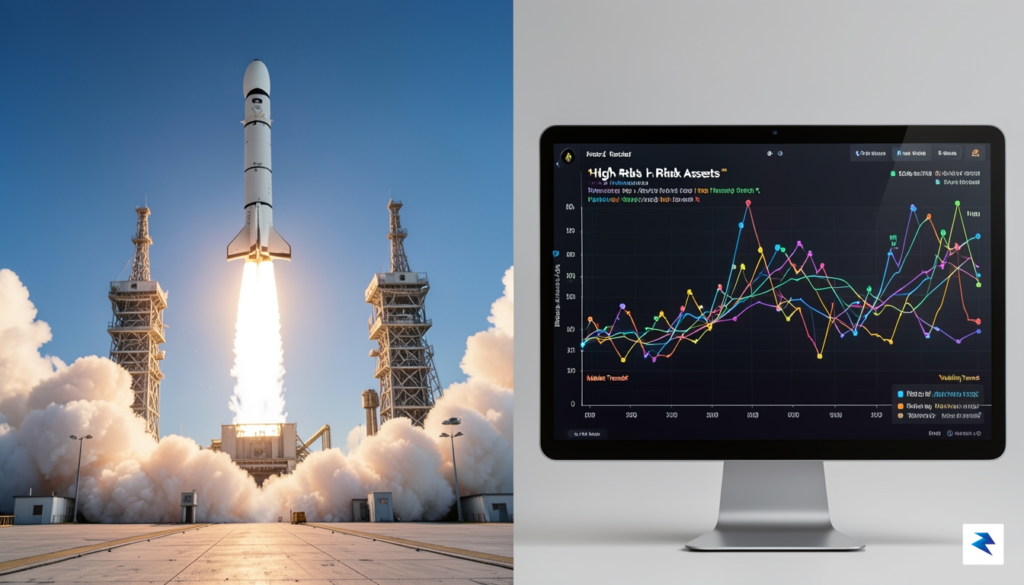
The allure of funding the next giant leap for humanity is undeniably compelling, yet the financial mechanics behind private space ventures are significantly more complex than buying shares in a publicly traded tech giant. Unlike the stocks you might trade on a mobile app with the click of a button, SpaceX and its peers operate within the realm of private equity. This creates a fundamental barrier known as illiquidity. When you invest in a private company, your capital is often locked away for years, sometimes indefinitely, until a “liquidity event”—such as an initial public offering (IPO) or a private secondary market sale—occurs. For the average retail investor, this means that once your money is committed to a space venture, you lose the ability to easily pivot or withdraw those funds if your personal financial circumstances change.

Beyond the logistical constraints of liquidity, the space industry itself is characterized by extreme volatility and technical unpredictability. Aerospace engineering is unforgiving; a single launch failure can result in the catastrophic loss of hundreds of millions of dollars in hardware and research. Furthermore, these companies face daunting regulatory hurdles, international policy shifts, and the constant pressure to innovate at a pace that keeps them ahead of global competitors. While the long-term growth potential of a company like SpaceX is touted as astronomical, investors must reconcile this with the very real possibility of total capital loss. Technological setbacks are not just theoretical risks—they are periodic realities that can delay revenue streams by years or even bring an entire project to a grinding halt.
Investing in private space exploration is a high-stakes endeavor that requires a long-term horizon; investors should be prepared for the possibility that their capital remains inaccessible while simultaneously bearing the brunt of the industry’s inherent operational risks.
Ultimately, navigating this sector requires a mindset shift from traditional stock picking to long-term venture capital strategy. You aren’t just betting on a company’s quarterly earnings; you are betting on the successful execution of high-risk, multi-decade engineering milestones. It is crucial for potential investors to conduct a rigorous self-assessment regarding their risk tolerance before seeking ways to access private space equity. Because there is no public ticker to monitor, you must be comfortable with a lack of transparency compared to public markets, where real-time financial filings and analyst coverage provide constant feedback. In the space sector, patience isn’t just a virtue—it is a financial necessity, as the journey from early-stage funding to potential market dominance is fraught with obstacles that would collapse less resilient enterprises.
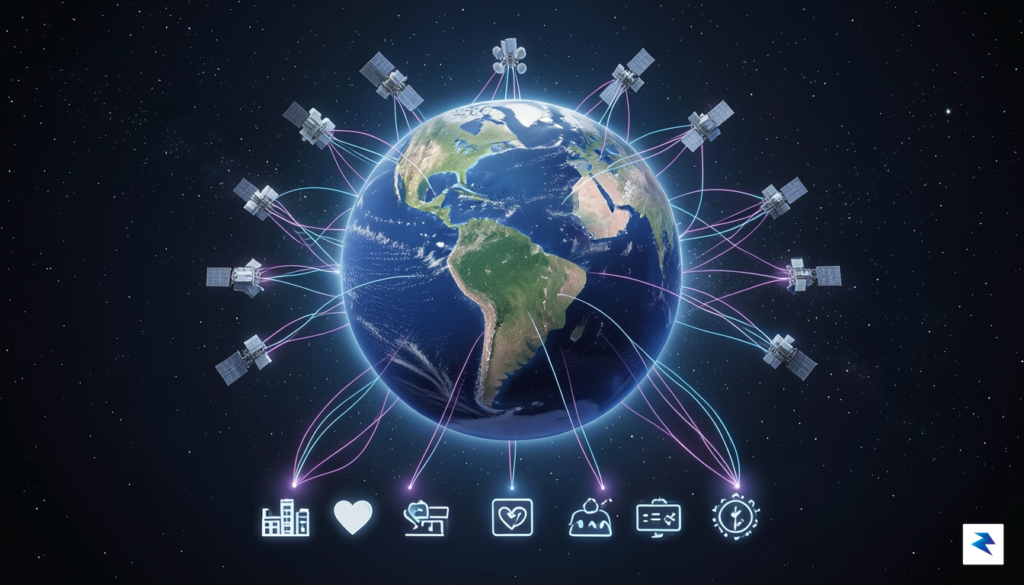
While SpaceX remains a private entity accessible primarily to institutional investors and venture capitalists, the broader space economy is far more accessible than most retail investors realize. You do not need a direct stake in a private company to benefit from the massive growth in satellite deployment, deep-space exploration, and orbital infrastructure. Instead, you can look toward the established aerospace and defense giants that provide the backbone for modern spaceflight. Companies like Lockheed Martin and Northrop Grumman are deeply entrenched in government contracts and hardware manufacturing, effectively serving as the foundational pillars upon which private space ventures often rely.

Beyond traditional aerospace, investors should consider the critical roles played by telecommunications and specialized technology suppliers. The modern “Space Economy” is heavily reliant on firms that specialize in materials science, propulsion components, and satellite communications systems. For instance, companies that manufacture high-grade composite materials or specialized semiconductors are essential to both SpaceX and its competitors. By investing in these suppliers, you are essentially betting on the growth of the entire sector rather than the success of a single launch vehicle. This strategy often yields a more stable, albeit less speculative, path toward portfolio growth.
Diversification is the primary defense against the high volatility inherent in the space sector. By spreading your exposure across hardware, software, and service providers, you mitigate the risk of a single failed launch or contract loss impacting your entire investment.
For those who prefer a more hands-off approach, space-themed Exchange Traded Funds (ETFs) offer a streamlined way to gain broad market exposure. These funds pool together various companies involved in space exploration, orbital logistics, and satellite-based connectivity. By purchasing a single share of such an ETF, you gain a slice of dozens of companies that are actively building the space economy. This method is particularly useful for retail investors who wish to avoid the time-intensive process of analyzing individual balance sheets while still participating in the long-term upward trajectory of space-related technologies.
Regardless of the path you choose, rigorous due diligence is non-negotiable. The space industry is notoriously capital-intensive and subject to unpredictable regulatory and geopolitical shifts. Before allocating capital, investigate the debt levels, revenue streams, and contract backlogs of any publicly traded firm you are considering. Ensure that your investment aligns with your personal risk tolerance and long-term financial goals. While the allure of the stars is undeniably strong, successful investing relies on a cold, calculated evaluation of the underlying business fundamentals rather than the excitement of the next rocket launch.

The allure of investing in a company like SpaceX is undeniable; it represents the cutting edge of human innovation and the promise of a multi-planetary future. However, financial advisers consistently warn that the excitement surrounding such high-profile, speculative opportunities should never overshadow the foundational principles of sound money management. Before you allocate a single dollar toward moonshot stocks or private space ventures, you must ensure that your primary financial house is not just standing, but fortified against volatility. This means addressing high-interest consumer debt, building a robust emergency fund, and consistently funding your long-term retirement accounts should always take precedence over chasing the next big technological breakthrough.
To navigate the tension between wealth preservation and the desire for aggressive growth, many seasoned investors adopt a core-and-satellite strategy. In this framework, the vast majority of your portfolio—typically 80% to 90%—is allocated to broad, low-cost index funds or diversified exchange-traded funds that provide exposure to the total market. This “core” acts as your anchor, ensuring that you participate in steady, long-term economic growth while minimizing the risk of a single company’s failure derailing your financial future. The “satellite” portion, which should represent a very small fraction of your net worth, is where you can afford to take calculated risks on speculative assets like SpaceX or other pre-IPO opportunities.

A speculative investment should be treated as money you are comfortable losing entirely. If the potential loss of that capital keeps you up at night, your position is too large for your current financial situation.
Furthermore, it is essential to distinguish between gambling and disciplined speculation. While the potential for exponential returns is attractive, the nature of private equity and high-growth tech firms involves significant liquidity risks and information asymmetry that can catch retail investors off guard. By prioritizing tax-advantaged accounts—such as 401(k)s and IRAs—you leverage the power of compounding and tax efficiency, which are far more reliable wealth-building tools than betting on a single stock. When you finally decide to allocate funds toward a speculative venture, do so only after you have confirmed that your financial foundation is bulletproof, ensuring that your long-term stability remains intact regardless of the outcome of your speculative bets.
You must be logged in to post a comment.