
Can You Buy SpaceX Stock? A Realistic Guide for Retail Investors
The Reality of SpaceX Stock Availability For many retail investors captivated by the rapid advancements in aerospace technology, the primary…


The traditional hiring funnel, once a reliable mechanism for filtering talent, is currently suffering from a massive structural imbalance. For decades, the friction associated with applying for a job—crafting a unique cover letter, tailoring a resume, and researching a company—served as a natural gatekeeper that ensured only genuinely interested candidates moved forward. Today, that friction has been almost entirely eliminated by the proliferation of AI-powered tools. Candidates can now deploy automated agents to submit hundreds of applications in a matter of hours, turning the job search process into a high-speed numbers game that favors volume over intentionality.
This shift has fundamentally altered the “noise-to-signal” ratio for recruiters and hiring teams. Where a role might have previously attracted a manageable pool of fifty thoughtful applicants, that same posting now frequently sees an influx of thousands of submissions. Because these applications are generated by large language models, they often look indistinguishable from one another: polished, grammatically perfect, and entirely devoid of authentic context or specific connection to the company’s mission. Consequently, the very tools designed to help job seekers stand out have inadvertently rendered them invisible, as the sheer density of generic content makes it nearly impossible to identify the genuine talent hidden within the digital pile.

The paradox of modern recruitment is that while the barrier to entry for applicants has plummeted, the barrier to discovery for truly qualified talent has never been higher.
The psychological impact on hiring managers, who find themselves drowning in this sea of low-effort submissions, cannot be overstated. When a talent acquisition team spends the vast majority of their time simply discarding irrelevant or bot-generated applications, they inevitably suffer from “evaluation fatigue.” This burnout leads to a defensive posture where recruiters become increasingly reliant on rigid, automated keyword filters to cope with the volume. Unfortunately, this creates a vicious cycle: as human oversight diminishes in favor of algorithmic screening, high-potential candidates who don’t fit the exact, narrow parameters of an automated search are filtered out alongside the spam. As a result, the early-stage funnel is no longer a filter for quality; it has become a chaotic lottery that risks alienating the very people companies are trying to attract.

The promise of automated hiring was simple: replace human fatigue with algorithmic precision. Yet, in the rush to streamline the top of the funnel, companies have inadvertently replaced discernment with a game of cat-and-mouse. By relying heavily on Applicant Tracking Systems (ATS) configured to scan for specific keyword densities, organizations have incentivized a new breed of adversarial candidates. These applicants are no longer focused on showcasing their professional competency; instead, they are masters of SEO-style resume engineering, stuffing their documents with hidden text and buzzwords designed solely to bypass the digital gatekeeper. The result is a paradox where the system identifies “perfect” matches that possess zero actual capability, leaving hiring managers to sift through a haystack of manufactured excellence.

This reliance on automation has fundamentally stripped the hiring process of its necessary nuance, particularly concerning soft skills and cultural fit. AI models, while adept at pattern recognition, struggle to interpret the subtext of a career trajectory or the subtle evidence of leadership and emotional intelligence. When a machine determines viability based on a binary checklist, it inevitably discards the “non-traditional” candidate—the person whose resume doesn’t fit the rigid keyword mold but whose experience and cognitive adaptability make them a high-performer. Consequently, companies are narrowing their talent pool to a homogeneous group of people who are simply the best at describing their work, rather than the best at performing it.
The irony of our current hiring crisis is that the tools designed to identify talent are now the primary mechanism for filtering it out, creating an environment where the most qualified individuals are the most likely to be rejected by an algorithm.
Perhaps the most damaging byproduct of this automated efficiency is the negative feedback loop it creates among high-quality candidates. Top-tier professionals, aware that their carefully crafted applications are being discarded by bots, have begun to view the traditional application process as a black hole. They increasingly bypass public job boards entirely, opting instead for network-based referrals or stealth-mode opportunities where human judgment still prevails. This exodus leaves the public hiring funnel populated almost exclusively by those who have the time and technical savvy to game the system. As a result, firms are trapped in a cycle of mediocrity: they rely on automation because they are overwhelmed by low-quality applications, yet they are overwhelmed by low-quality applications precisely because their automation-first strategy has alienated the very people they are trying to attract.

For the modern high-quality candidate, the job hunt has transformed into a bewildering encounter with a digital “black box.” Gone are the days when a standout portfolio or a thoughtful cover letter could bridge the gap between talent and opportunity; today, those materials are often stripped of their nuance by automated parsing software long before a human eye ever registers their existence. This algorithmic gatekeeping creates a profound sense of alienation, as exceptionally qualified professionals find themselves rejected by silent code that fails to account for creativity, adaptability, or the subtle complexities of career trajectory. When a candidate spends hours tailoring an application, only to receive an automated rejection minutes later, the message received is clear: their professional identity has been reduced to a set of data points that didn’t quite hit the target.

This systemic reliance on AI-driven filtering has inadvertently forced a shift in how professionals present themselves. Rather than focusing on genuine professional development—such as mastering new skills or taking on challenging, diverse projects—many candidates feel compelled to engage in “resume optimization.” This is a hollow exercise in keyword stuffing and formatting gymnastics, designed specifically to trick an algorithm rather than to communicate value to a hiring manager. Consequently, the labor market is becoming saturated with highly optimized, yet increasingly homogenized, applications. This arms race of optimization rewards those who understand the mechanics of the software better than those who are simply the most capable at the actual job, effectively incentivizing a culture of performative application writing over substantive professional growth.
The most dangerous byproduct of an algorithmic hiring funnel is not the rejection of unqualified applicants, but the systematic discouragement of the best talent, who eventually opt out of the process entirely to seek more human-centric organizations.
The long-term risk for companies clinging to these broken funnels is an invisible but steady brain drain. Top-tier talent, recognizing that they are being treated as commodities rather than individuals, is increasingly gravitating toward competitors who prioritize a human touch in their recruitment efforts. When a company relies too heavily on automation, they forfeit the nuance required to identify “diamond-in-the-rough” candidates—those whose unconventional backgrounds or non-linear career paths don’t fit the rigid requirements of a filter. By the time a firm realizes their funnel is failing to attract the industry’s brightest minds, those candidates have already been snapped up by organizations that understand that hiring is, first and foremost, a human endeavor. Ultimately, the companies that will define the next decade are those that view technology as a supportive tool for recruitment, not a cold replacement for the judgment and empathy of a hiring team.

To restore integrity to the hiring process, organizations must first dismantle the architecture of convenience that has turned recruitment into a volume-based numbers game. The proliferation of “easy-apply” buttons—designed to lower friction for candidates—has inadvertently flooded the funnel with noise, making it nearly impossible for talent acquisition teams to distinguish between genuine interest and automated spam. By intentionally reintroducing friction, companies can filter out non-serious applicants while signaling to high-caliber talent that the role requires a specific, thoughtful commitment. Moving away from one-click applications is not about creating barriers; it is about establishing a meaningful threshold that honors the complexity of the work being performed.

A transformative strategy for reclaiming quality is the implementation of “proof-of-work” assessments early in the funnel. Instead of relying on static resumes—which are easily optimized by AI tools to pass through Applicant Tracking Systems—companies should prompt candidates to complete a small, relevant task that mirrors the actual challenges of the job. Whether it is a brief technical challenge, a creative pitch, or a strategic critique, these artifacts provide concrete evidence of capability. When candidates are asked to demonstrate their expertise before moving to a formal interview, they become invested in the process, and hiring managers gain a reliable data point that goes far beyond a curated work history.
The most effective recruitment strategies prioritize depth over breadth, replacing the illusion of efficiency with the reality of engagement.
Furthermore, it is essential to reintroduce human intuition into the initial screening phases. While automation is useful for administrative organization, relying on algorithmic filtering to judge candidate potential often leads to the systematic exclusion of unconventional but highly capable talent. By dedicating time to human review—or at least human-supervised auditing—recruitment teams can catch the nuances, cultural alignments, and creative sparks that code simply cannot detect. This shift requires a cultural recalibration where recruiters are incentivized based on the long-term success of their hires rather than the speed of their pipeline movement.
Rebuilding a human-centric funnel does not mean abandoning technology entirely; rather, it means delegating the right tasks to the right tools. Automation should be relegated to the back-end—handling scheduling, status updates, and documentation—while the front-end must be reclaimed by human interaction. By using AI to handle the logistics of the process, recruiters are liberated to engage in genuine dialogue, providing candidates with the context and transparency they deserve. Ultimately, when companies treat recruitment as a partnership rather than a processing task, they create a pipeline defined by mutual respect and high-caliber results.
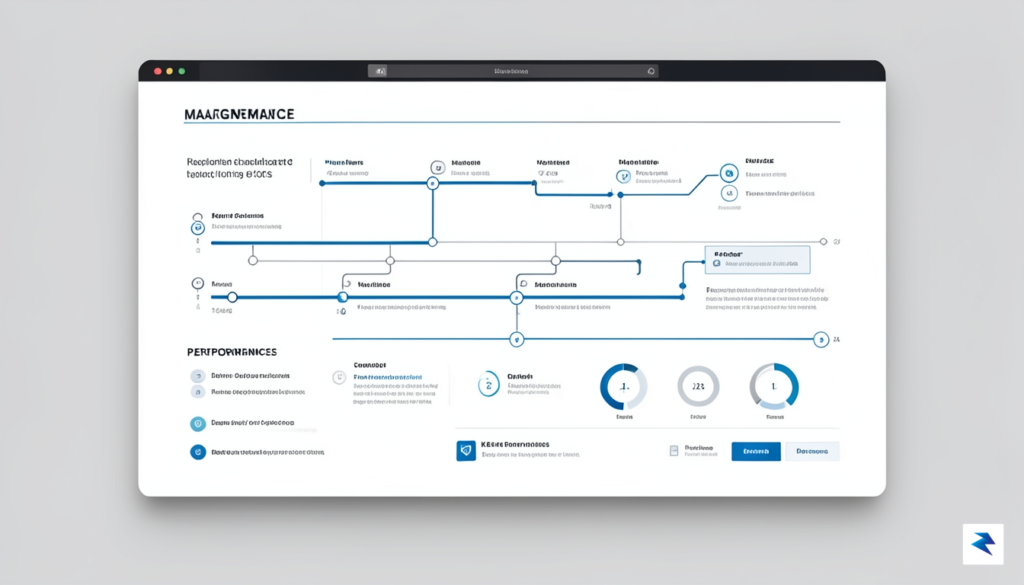
To dismantle the unsustainable cycle of high-volume, low-intent hiring, organizations must transition toward an “Intent-First” application model. This approach requires shifting the burden of effort from the recruiter to the applicant, not through tedious administrative hurdles, but through meaningful, role-specific engagement. By replacing the “one-click apply” button with a mandatory, high-signal task—such as a brief, context-specific problem-solving exercise or a direct response to a strategic challenge the team is currently facing—HR leaders can immediately filter out automated bot submissions and passive, low-effort candidates. This structural friction acts as a natural quality gate, ensuring that only those who have genuinely researched the company and possess the requisite capabilities proceed to the interview stage.

Modern assessments must move beyond generic aptitude tests, which are increasingly susceptible to AI-generated solutions. Instead, leaders should design “work-sample” assessments that mirror the day-to-day realities of the role. For instance, instead of asking a candidate to describe their workflow in a vacuum, provide them with a sanitized data set or a hypothetical project brief that reflects current organizational priorities. When assessments require the application of nuanced, company-specific context, they become nearly impossible for generic AI models to fake effectively. Furthermore, these assessments provide candidates with a realistic preview of the job, which significantly increases long-term retention by aligning expectations before a formal offer is ever extended.
Moving away from the saturated, noisy environment of public job boards is essential for stabilizing the funnel. HR departments should prioritize “warm-entry” strategies by incentivizing internal referrals and actively engaging with niche professional communities where high-intent candidates already congregate. By treating the employer brand as a curated network rather than a broadcast platform, firms can bypass the volume-driven chaos of global job aggregators. This shift relies on building long-term relationships with talent long before a requisition is opened, effectively turning the acquisition process from a reactive scramble into a proactive, steady-state pipeline of vetted individuals.
The goal of a sustainable hiring strategy is not to maximize the number of applicants, but to maximize the density of qualified, intent-driven talent within the funnel.
Ultimately, the ROI of this slower, more intentional process becomes evident in reduced time-to-productivity and lower turnover rates. While it may feel counterintuitive to introduce friction into a process traditionally optimized for speed, the long-term cost of a “bad hire” far outweighs the administrative savings of a high-volume funnel. By auditing current workflows to strip away vanity metrics—like total application volume—and replacing them with quality-focused milestones, organizations can build a resilient talent acquisition framework that thrives even as the broader job market becomes increasingly automated and noisy.
You must be logged in to post a comment.