Why Nothing Delayed the Next CMF Phone: The Impact of Rising RAM Prices
The RAM Crisis: Why Memory Costs Are Shaping Smartphone Roadmaps The global smartphone industry finds itself at a critical juncture,…
For over two decades, the name Jean-Baptiste Kempf has been inextricably linked to VLC Media Player, the ubiquitous open-source software that fundamentally changed how the world consumes digital media. By creating a cross-platform engine capable of decoding virtually any video format without the need for cumbersome external codecs, Kempf helped democratize high-quality playback for millions of users. His work on VLC was not merely about functionality; it was a masterclass in relentless performance optimization. In an era where hardware was often limited, Kempf’s focus on low-latency processing and efficient resource management allowed users to run complex media streams on even the most modest devices, setting a gold standard for what open-source collaboration could achieve.
The transition from optimizing multimedia streams to mastering robotic control may seem like an unconventional leap, yet the core technical challenges are strikingly similar. At its heart, VLC is an exercise in managing data throughput under strict time constraints; a single stutter in a video frame is immediately noticeable to the human eye, much like a delay in a robotic response can lead to physical failure. Kempf is now applying these same rigorous lessons in low-latency signal processing to the field of robotics. In modern autonomous systems, the demand for “real-time” performance is absolute. Robots must process massive streams of telemetry, sensor fusion, and visual data instantaneously to navigate their environments safely. By treating the robot’s internal data streams with the same architectural precision once reserved for high-definition video packets, Kempf is addressing the latency bottlenecks that currently prevent robots from moving with true fluidity and speed.
“The leap from software media players to physical robotics is less about changing the craft and more about scaling the stakes of latency.”
This evolution represents a significant shift in how we approach hardware control. Where traditional industrial robotics often relied on proprietary, rigid systems, Kempf’s new mission seeks to bring the flexibility and modularity of the open-source ethos to the physical world. By refining how data moves between sensors and actuators, he is effectively building a “media player for the physical world”—a system designed to ensure that instructions are executed with the same seamless, stutter-free reliability that once made VLC a household name. As he pivots from pixels to gears, Kempf is proving that the principles of efficient computing are universal, providing a foundational blueprint for a future where robots can react to the world as naturally as a modern computer renders a stream of video.
In the world of robotics, the concept of latency—the time delay between a command being sent and the machine executing that action—is far more than a minor technical inconvenience. It is the primary barrier preventing robots from leaving the safety of controlled laboratories and entering the unpredictable, high-stakes environments of the real world. While a half-second delay in loading a web page results in minor user frustration, a similar delay in a robotic arm moving near a human worker or a remote-controlled drone navigating a disaster zone can result in catastrophic hardware failure, physical injury, or total mission collapse. Speed, in this context, is not merely a performance metric; it is a fundamental safety requirement that dictates whether a machine is a useful tool or a dangerous liability.
The core of this problem lies in the architecture of our existing network protocols. Most of the internet, including the standard TCP and HTTP protocols that power our daily web browsing, was engineered to favor reliability and data integrity over sheer speed. These systems prioritize “handshaking”—a process where every packet of data is confirmed and verified before the next one is sent. While this ensures that your emails arrive without missing words and your videos buffer steadily, it introduces a “chattiness” that is poison to real-time machine actuation. When a robot needs to adjust its balance or calibrate its grip based on sensor feedback, waiting for a server to verify a packet is an eternity that the machine simply cannot afford.
To achieve true autonomy and seamless remote operation, we must shift from a model that prioritizes data delivery to one that prioritizes instantaneous, non-blocking feedback loops.
There is a stark contrast between the needs of traditional media streaming and the requirements of physical robotics. When you watch a video, your device uses a buffer to hide the inconsistencies of the network; it downloads the next few seconds of footage in advance so that you experience a smooth playback regardless of minor jitter. However, a robot cannot “buffer” the physical world. It cannot predict the exact trajectory of a falling object or the sudden shift in terrain three seconds before it happens. Therefore, streaming protocols that rely on large buffers are fundamentally incompatible with real-time actuation. The shift required is moving from the “store-and-forward” logic of the early internet toward a deterministic, low-latency architecture that treats every millisecond of movement as an urgent, non-negotiable priority.
To overcome this, developers are being forced to rethink how data travels across the edge. Instead of routing commands through centralized cloud servers that add geographical distance and processing overhead, the industry is moving toward localized, direct-communication protocols. By stripping away the bloated overhead of general-purpose web protocols, engineers can create a “fast path” for robotic control signals. This is the new frontier of innovation: building a digital nervous system for robots that treats the network as an extension of the machine’s own internal wiring, rather than a slow, unreliable messenger.
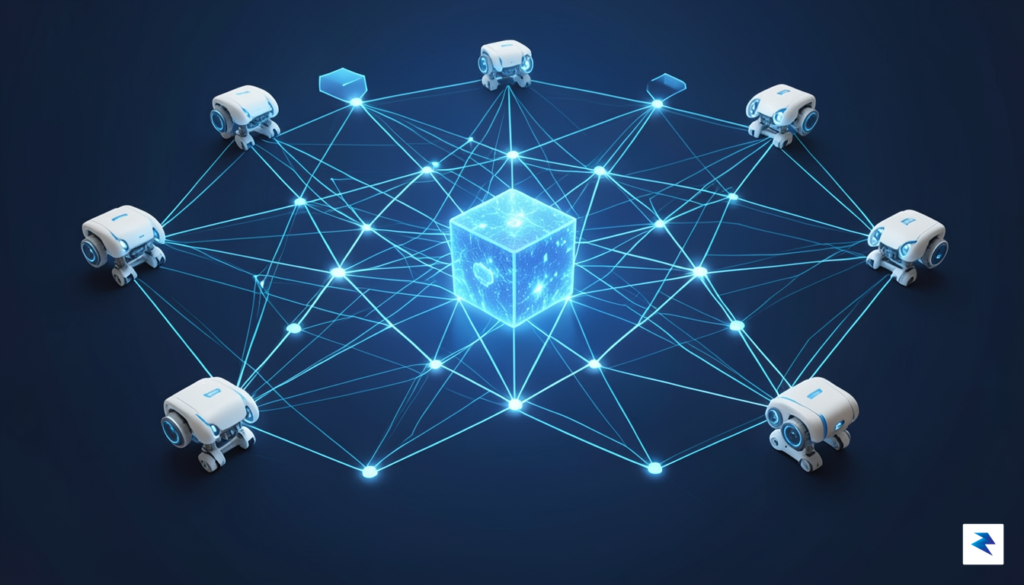
At the heart of this technological pivot is Kyber, an ambitious infrastructure layer designed to fundamentally rethink how we command autonomous systems. For years, the robotics industry has relied on legacy architectural patterns—systems where a robot acts as a passive client, intermittently “polling” a server for instructions. While this works for simple automation, it creates a lethal bottleneck for real-time applications, resulting in the dreaded “ping” delay that keeps robots hesitant and jittery. Kyber flips this model on its head by establishing a persistent, high-fidelity bridge between the machine and its controller, whether that controller is a human operator or a sophisticated AI model.
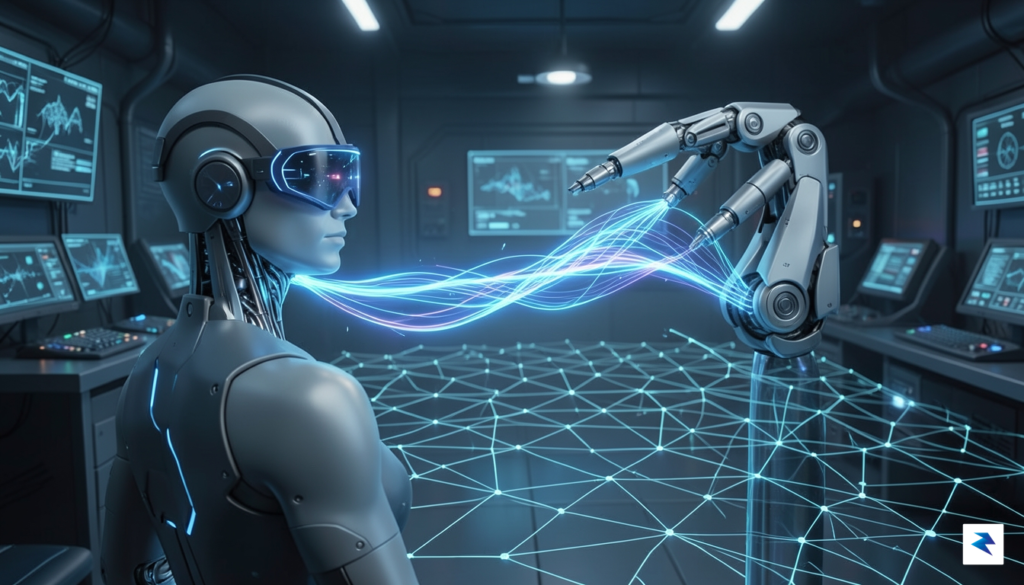
The architectural philosophy behind Kyber is rooted in the same principles that made high-definition video streaming seamless: the absolute minimization of state uncertainty. By treating the connection as a continuous, optimized stream rather than a series of disjointed requests, the platform ensures that data flows at the “speed of thought.” This means that when a command is issued, the robot receives it within a window so narrow it is virtually indistinguishable from human reaction time. This level of synchronization is not merely a performance upgrade; it is a prerequisite for robots to operate safely in dynamic, unpredictable environments where split-second decisions define the difference between success and failure.
The goal of Kyber is to remove the digital friction between intent and action, ensuring that a robot’s physical response is an immediate extension of the controller’s logic.
To manage this effectively, Kyber utilizes a sophisticated state-synchronization engine that maintains a “live” mirror of the robot’s environment at both ends of the connection. By predicting and compensating for network fluctuations, the system maintains a consistent state even when connection quality wavers. This is a radical departure from traditional methods, which often force the robot to stop or “freeze” while waiting for data packets to arrive. Instead, Kyber intelligently prioritizes critical control information, ensuring that even under heavy network load, the robot remains responsive, fluid, and perfectly aligned with its operator’s objectives. By bridging the gap between high-level intent and low-level physical execution, Kyber is effectively turning the latency-heavy robots of yesterday into the agile, real-time performers of tomorrow.
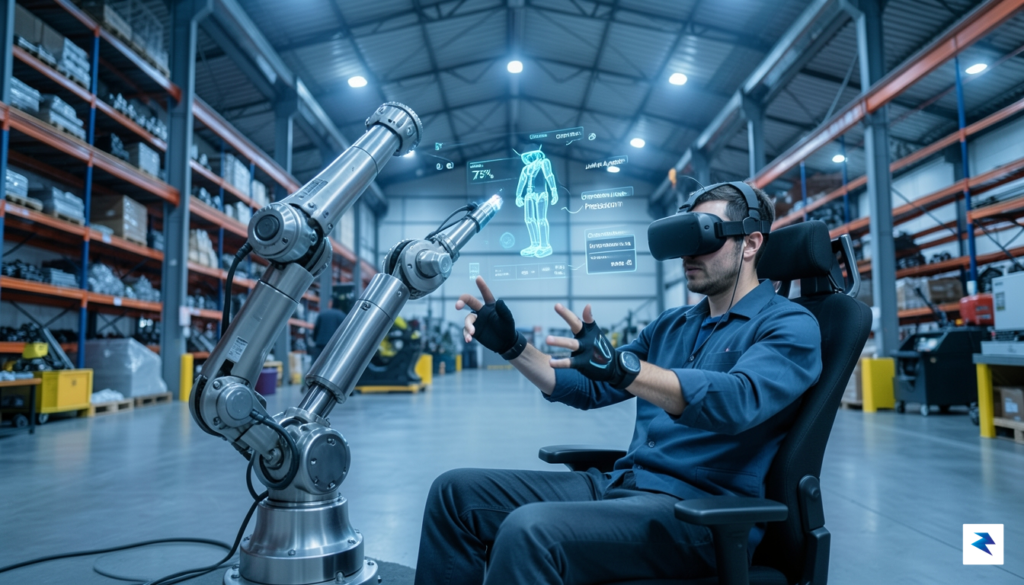
The transition from streaming media to real-time robotics represents one of the most demanding engineering hurdles of the modern era. While buffering a video file is a minor inconvenience for a home viewer, a millisecond of lag in a remote-controlled surgical theater or a hazardous waste disposal site can lead to catastrophic consequences. Kyber addresses this by creating a robust, low-latency communication layer that treats the physical world with the same precision as a digital data stream. By prioritizing stability in environments where network connectivity is inherently unpredictable, the platform ensures that robotic limbs respond with the immediacy of a human reflex, effectively bridging the gap between an operator in a control room and a machine thousands of miles away.
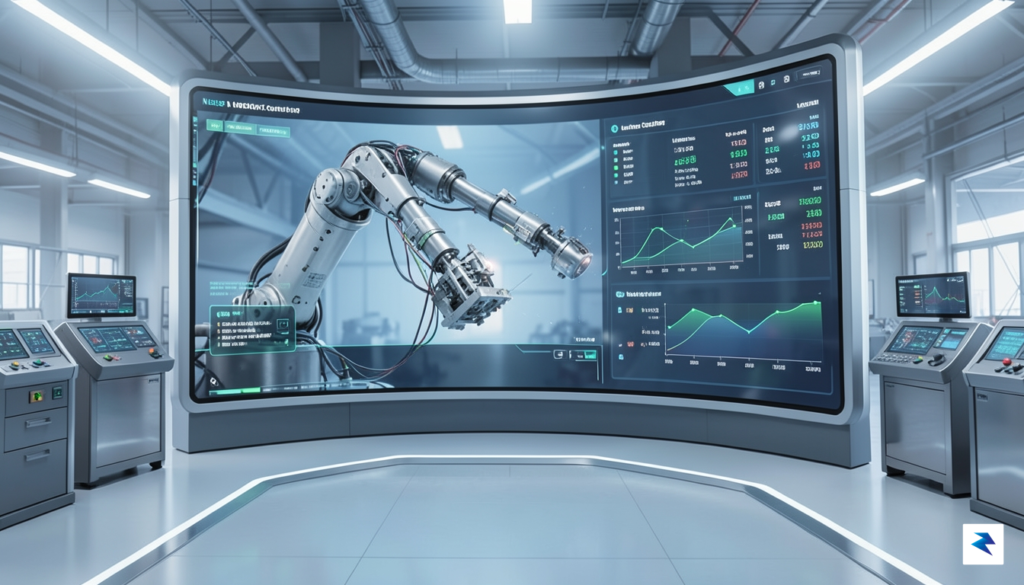
In industries ranging from deep-sea exploration to disaster recovery, the ability to operate machinery remotely is no longer a futuristic convenience; it is a fundamental requirement for safety and efficiency. Traditional networking protocols were never designed for the extreme demands of bi-directional, high-fidelity robotics control. Kyber overcomes these limitations by dynamically navigating network instability and packet loss, which are common in rugged or remote field settings. Through sophisticated congestion control and adaptive bitrate technologies—the very same principles that revolutionized smooth video playback—Kyber maintains a consistent “heartbeat” of data. This reliability allows human operators to maintain a seamless sense of presence, ensuring that complex industrial automation tasks, such as handling volatile chemicals or navigating unstable wreckage, can be performed with absolute confidence.
Reliability in remote operation is not just a technical metric; it is the cornerstone of human trust in autonomous and semi-autonomous systems.
The commercial implications of this technology are vast, particularly as companies seek to scale their operations in high-risk zones. By minimizing the impact of jitter and latency spikes, Kyber enables a new standard of remote operation that was previously considered impractical or too risky for global deployment. Beyond just basic connectivity, the system empowers a centralized workforce to oversee robotic fleets across multiple continents, drastically reducing the need for personnel to be physically present in dangerous environments. This shift not only enhances worker safety but also unlocks new logistical possibilities, allowing for specialized talent to manage intricate robotic tasks from anywhere in the world, ultimately making sophisticated remote robotics a scalable reality for modern enterprise.
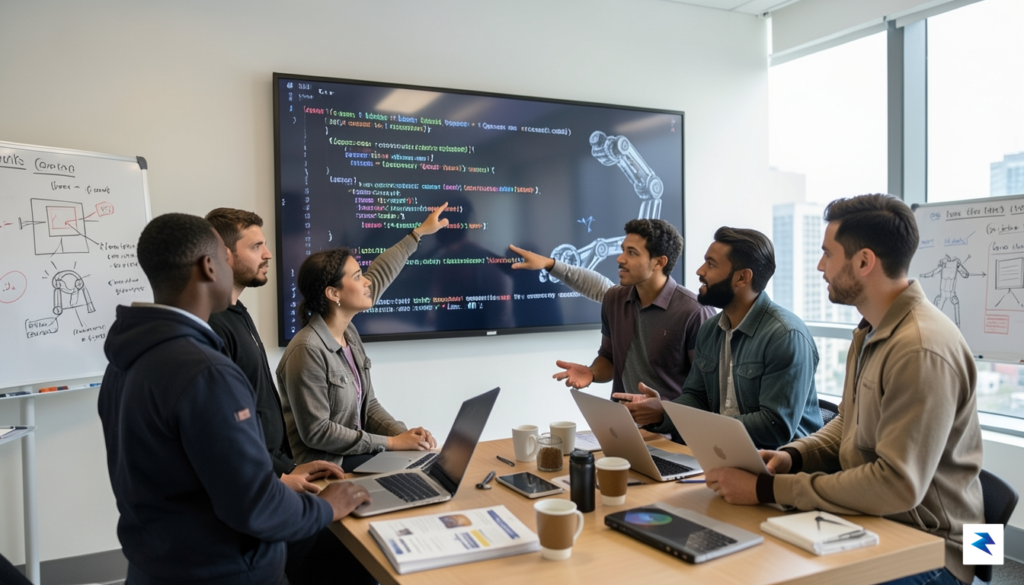
In the early days of digital media, the landscape was a fractured mess of incompatible file formats and proprietary codecs, leaving users frustrated by constant crashes and software limitations. Jean-Baptiste Kempf changed that paradigm by championing VLC Media Player, an open-source tool that democratized video playback and established a universal standard. Today, he is applying that same philosophy to the world of robotics. By positioning his new project, Kyber, as an open-source foundational layer, he aims to solve the industry’s most pressing challenge: the lack of a cohesive, interoperable infrastructure that allows different robotic systems to “speak” the same language.
The robotics industry currently suffers from a phenomenon often described as the “silo effect.” Many companies develop sophisticated hardware and software stacks that are entirely proprietary, locking customers into specific ecosystems that make it nearly impossible to integrate third-party tools or hardware. This fragmentation acts as a significant drag on innovation, as developers are forced to reinvent the wheel for every new project rather than building on a shared, reliable foundation. Without an open standard, the cost of entry remains prohibitively high, and the potential for cross-platform collaboration is severely stifled.
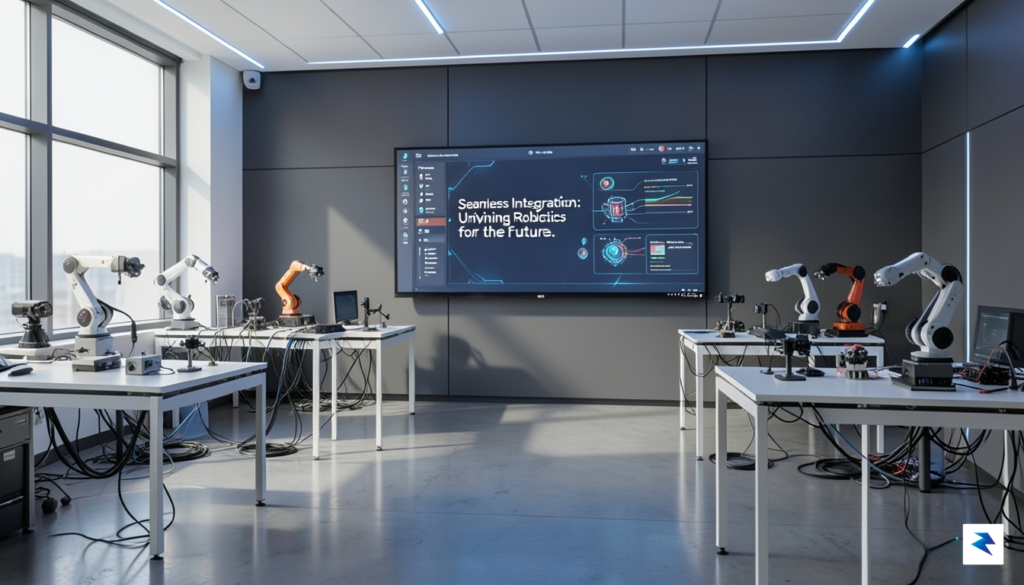
By leveraging an open-source model, Kyber provides a modular, transparent architecture that encourages rapid iteration and community-led improvements. When the underlying code is accessible to all, the development cycle accelerates; researchers and engineers can contribute fixes, optimize performance, and adapt the software to new use cases without waiting for a single corporate entity to authorize changes. This approach is not merely about convenience; it is about establishing a robust, community-driven security audit process. In a world where robots are increasingly interacting with human environments, having a transparent codebase allows for constant, rigorous vetting of security protocols, ensuring that vulnerabilities are identified and patched long before they can be exploited.
The strength of an open-source ecosystem lies in its ability to turn individual contributions into collective progress, transforming a fractured market into a unified, collaborative future.
Ultimately, the transition toward an open-source backbone represents a move away from the “walled gardens” that have historically defined industrial automation. When standard interfaces and protocols are available as open resources, the focus of robotics companies shifts from defending proprietary turf to competing on actual innovation and utility. This shift is essential for the maturation of the robotics sector, mirroring the path taken by the internet and the modern web, which thrived precisely because they were built upon open, interoperable standards. By ensuring that the foundational layer remains neutral and accessible, Kempf is laying the groundwork for a future where robots can finally operate with the same seamless efficiency that we have come to expect from our digital tools.
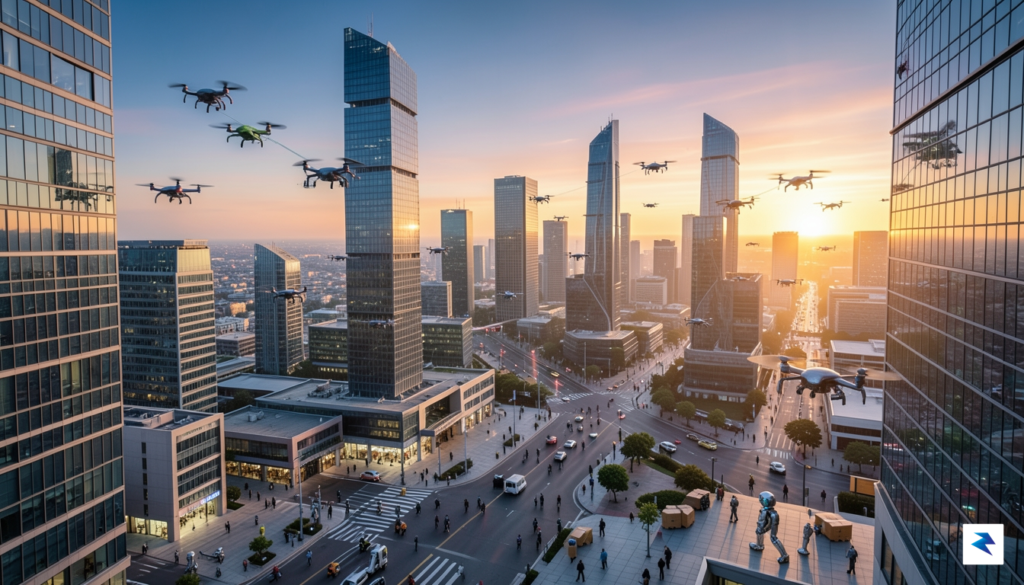
The transition from optimizing media playback to orchestrating the complex, high-stakes movements of industrial robots represents more than just a change in technology; it is a fundamental shift in how we perceive remote connectivity. Jean-Baptiste Kempf’s work with Kyber is currently poised to become the invisible backbone of the next generation of automation, moving beyond simple streaming to enable real-time, low-latency control of physical hardware. While the initial challenges involve refining the protocol to handle the immense variables of physical environments—such as fluctuating network interference and mechanical feedback—the architectural foundation is already built on the battle-tested principles that made VLC a global standard for stability and efficiency.
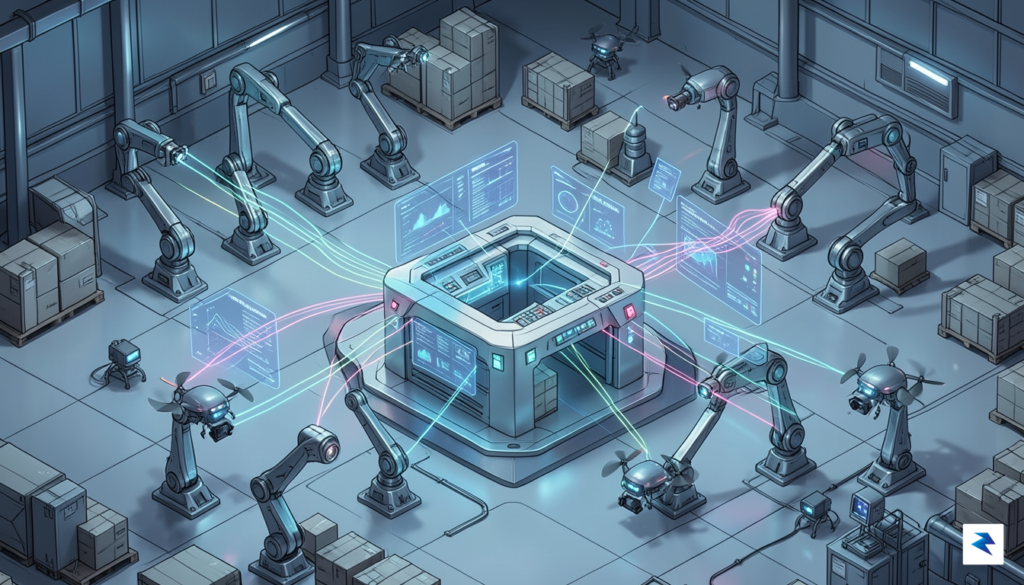
Scaling this technology for global industrial use will undoubtedly face hurdles, particularly regarding the standardization of hardware across disparate manufacturers. However, the true strength of this approach lies in its hardware-agnostic nature, which allows it to serve as a universal translator for a fragmented robotics market. As industries shift toward remote operations—where a technician in one country might control a repair robot on the other side of the globe—the demand for a “smooth” experience becomes a safety and operational necessity rather than a luxury. By eliminating the jitter and lag that currently plague remote robotic interfaces, Kyber is effectively removing the primary barrier to the widespread adoption of tele-robotics.
The future of robotics will not be defined by the robots themselves, but by the reliability of the networks that allow them to be felt, seen, and controlled from anywhere on Earth.
Looking further ahead, the long-term vision is to create an ecosystem where high-performance remote control is as ubiquitous and reliable as the internet itself. Kempf’s impact on this industry will likely be measured by the unseen efficiency of the global supply chain, where downtime is minimized by robots that function with the fluidity of human movement. As these intelligent systems become more integrated into our infrastructure, the underlying protocols will remain the silent, essential gears turning in the background. Ultimately, the success of this mission will determine how quickly society can transition into a future where geography no longer dictates the limits of our mechanical capabilities.
You must be logged in to post a comment.