
OpenAI’s GPT-5.6: What the Security Review Means for Enterprise AI
The Evolution of GPT-5.6: What the US Security Review Means The progression from the iterative refinement of GPT-4 and the multimodal…

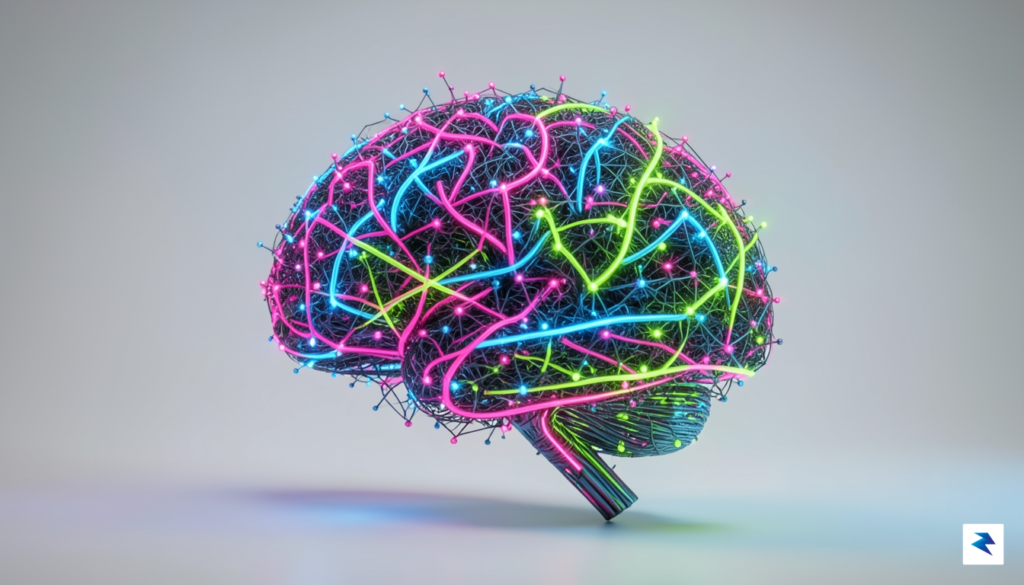
At its core, Meta’s Muse represents a fundamental departure from the diffusion models that have dominated the AI image generation landscape over the past few years. While models like Stable Diffusion or DALL-E 2 rely on a iterative process—slowly refining a canvas of pure static noise until a coherent image emerges—Muse operates on a fundamentally different principle. By utilizing a masked generative transformer architecture, Muse treats the creation of visual data more like the composition of a complex sentence in a language model. This transition from pixel-by-pixel diffusion to a parallelized, prediction-based approach allows the system to understand the spatial relationships and structural hierarchies of an image with far greater fluidity.

The secret behind this efficiency lies in the tokenization process, which is the engine driving Muse’s speed. Instead of processing millions of individual pixels—a computationally expensive and time-consuming task—the model translates images into discrete, compact tokens. By treating these tokens like words in a vocabulary, the transformer can predict missing segments of an image simultaneously rather than sequentially. This is akin to a human artist sketching the rough outline of a composition before filling in the details, rather than painstakingly painting a single corner of the canvas to completion before moving to the next. Because the model can predict multiple tokens at once, it achieves inference speeds that are significantly faster than traditional diffusion-based counterparts.
Key Takeaway: By moving away from iterative noise-reduction, Muse drastically reduces the number of steps required to generate high-quality visuals, making real-time image synthesis a tangible possibility for social platforms.
Beyond simple speed, this architecture yields massive improvements in computational resource management. Traditional diffusion models often require high-end hardware to perform the thousands of steps necessary to “denoise” an image, which limits their accessibility and scalability. In contrast, Muse’s transformer-based approach requires fewer passes over the data to reach a final output. This efficiency means that the model can run on less powerful hardware without sacrificing the artistic fidelity or compositional accuracy that users expect from modern AI. By prioritizing mathematical elegance over raw, brute-force iterations, Meta has positioned Muse as a highly scalable solution that could eventually bring high-resolution, generative art to the fingertips of millions of mobile users simultaneously.
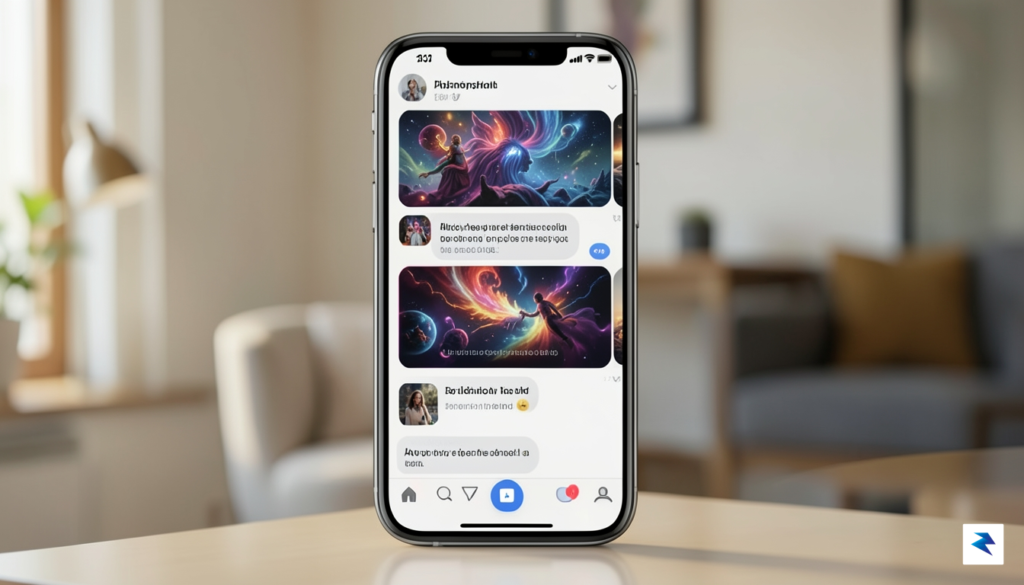
The true brilliance of Muse lies not merely in its underlying generative architecture, but in how seamlessly it weaves into the fabric of the Meta ecosystem. By embedding this sophisticated model directly into the platforms billions of users visit daily, Meta has effectively turned abstract creative potential into a practical, utilitarian feature. Rather than forcing creators to navigate complex third-party software, Muse lives exactly where the conversation happens, allowing for a fluid transition between social interaction and visual expression.
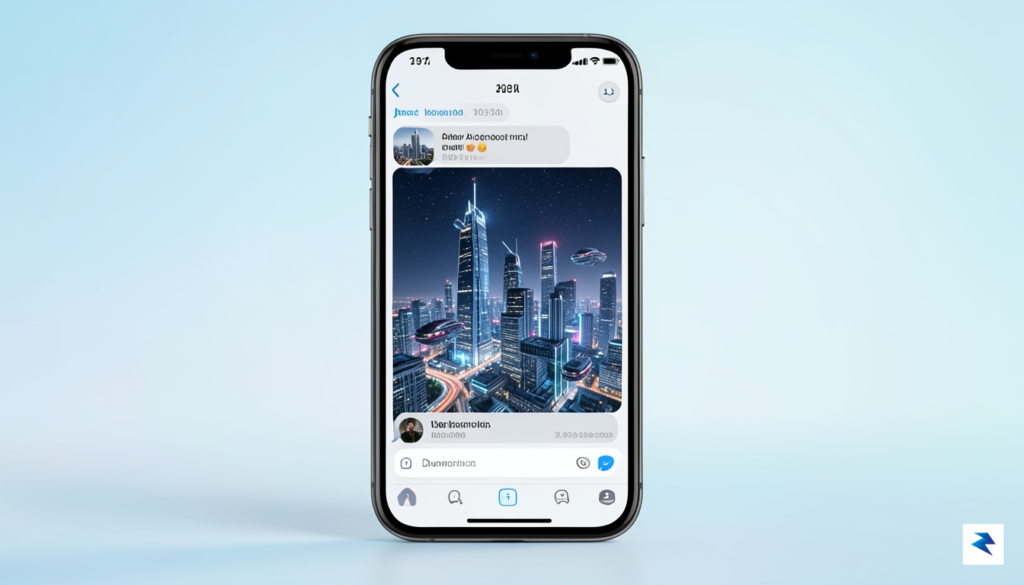
Within the Meta AI chat interface, the implementation is designed for maximum accessibility and immediate gratification. Users can simply invoke the model using natural language prompts, bypassing the need for technical jargon or complex parameter tuning. Whether you are brainstorming ideas for a birthday party or looking to visualize a concept on the fly, the low-latency generation ensures that your request is transformed into a high-quality visual in mere seconds. This responsiveness removes the friction typically associated with AI tools, making the process feel less like a rigid software command and more like a collaborative brainstorm with a creative partner.
The integration of Muse into WhatsApp and Instagram marks a paradigm shift: visual generation is no longer a destination, but a native component of the communication flow.
For the Instagram creator community, the implications are particularly transformative. Content creators often face the challenge of maintaining a consistent visual aesthetic while managing rapid production cycles. With Muse, creators can generate supplemental assets or unique story backgrounds directly within the app, significantly reducing the reliance on external design software. This “on-the-fly” capability allows for dynamic content creation that can adapt to trending topics or spontaneous ideas without breaking the creator’s workflow. By bridging the gap between social engagement and professional-grade generation, Meta empowers users to act on their creative impulses instantly.
Furthermore, the integration within WhatsApp elevates the messaging experience by allowing users to co-create visuals with friends and family in real-time. By simply typing a command within a group thread, users can generate shared visuals to illustrate inside jokes, clarify complex plans, or simply experiment with new artistic styles. This accessibility democratizes high-end generative technology, ensuring that the power of Muse is available to everyone, regardless of their technical proficiency. As this technology continues to scale across Meta’s platforms, the boundary between text-based communication and visual storytelling will likely continue to blur, fostering an environment where ideas are materialized as quickly as they are spoken.
The generative AI landscape is currently dominated by high-fidelity powerhouses like Midjourney and DALL-E, which prioritize artistic complexity and photorealism above almost all other metrics. These platforms function primarily as standalone creative studios, often requiring significant processing time—measured in seconds or even minutes—to refine the intricate details of a high-resolution output. In contrast, Meta’s Muse architecture takes a fundamentally different philosophical approach. Instead of aiming for the slow-burn, gallery-quality perfection associated with a desktop-bound creative suite, Muse is engineered for the high-velocity requirements of social media ecosystems. By utilizing a masked generative transformer model, Muse achieves a level of inference speed that makes real-time image editing and interactive content creation a tangible reality rather than an aspirational goal.
When placing Muse alongside industry stalwarts like Stable Diffusion, the distinction between open-source flexibility and platform-native integration becomes clear. While Stable Diffusion offers unparalleled control for power users who want to host their own models and tweak every hyper-parameter, Meta has opted for a closed, highly optimized path that prioritizes ease of use and mobile efficiency. This design choice suggests that Meta is less concerned with competing for the professional graphic design market and more focused on injecting AI-driven personalization directly into the palm of the user’s hand. Because Muse is built to operate within Meta’s existing hardware and software infrastructure, it minimizes the latency that often plagues cloud-based generation, allowing for seamless photo manipulation and style transfers that feel almost instantaneous during a standard scrolling session.
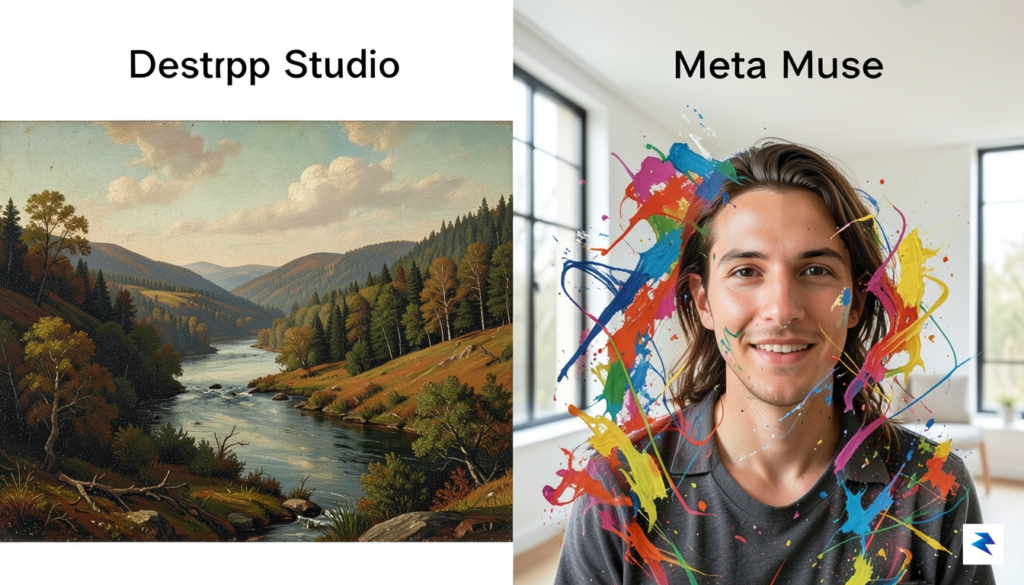
While traditional models trade time for texture, Muse trades compute overhead for the ability to edit imagery in real-time, effectively bridging the gap between static social posts and interactive media.
Ultimately, the competitive advantage of this new model lies in its specific utility for the everyday consumer. Where Midjourney requires a Discord interface and a degree of prompt engineering expertise to produce stunning results, Muse is designed to function as an invisible engine behind familiar social media features. This “Meta-centric” approach means the model is optimized for mobile interaction, focusing on the specific aspect ratios and visual styles that thrive on platforms like Instagram and Facebook. By prioritizing speed and platform-native integration, Meta has carved out a niche that moves away from the “art generator” paradigm and toward a “creative companion” model, ensuring that AI-assisted content becomes a standard, friction-free component of the social experience.

As Meta integrates Muse across its vast ecosystem of billions of user accounts, the company finds itself under a microscope regarding how it manages the inherent risks of generative artificial intelligence. The primary challenge lies in balancing the creative potential of the model with the necessity of preventing the spread of deceptive content. To address these concerns, Meta has implemented a multi-layered approach to safety, beginning with the deployment of “invisible watermarking.” This technology embeds a cryptographically secure signal directly into the pixel data of AI-generated images, allowing Meta’s systems—and potentially third-party tools—to identify when a visual asset was not created by a human. By signaling the origin of these images, the company aims to provide a baseline for transparency in an era where distinguishing reality from synthesis is becoming increasingly difficult.

Beyond technical watermarking, Meta has installed rigorous safety guardrails designed to restrict the model from generating harmful, explicit, or copyright-infringing content. These filters operate in real-time, analyzing user prompts against a comprehensive database of prohibited topics, including hate speech, non-consensual sexual imagery, and political misinformation. However, the efficacy of these guardrails is a subject of ongoing debate among privacy advocates. While Meta maintains that user-generated prompts are processed under strict privacy protocols, the sheer volume of data processed by Muse necessitates a level of algorithmic oversight that can sometimes result in “false negatives”—where harmful content slips through—or “over-censorship,” where benign creative prompts are unfairly flagged and blocked.
The challenge of AI safety is not merely a technical hurdle but a socio-technical one; as models become more capable, the systems governing them must evolve to anticipate creative misuse rather than just reacting to it.
The potential for deepfakes remains the most significant ethical hurdle for Muse as it scales within social feeds. Because Meta’s platforms are primary hubs for news and social interaction, the danger of AI-generated misinformation being weaponized to influence public opinion or damage personal reputations is profound. To combat this, Meta has committed to a policy of continuous monitoring, promising to update its safety training sets based on emerging patterns of abuse. Furthermore, the company asserts that it does not use private, encrypted user communications to train its models, aiming to assuage fears regarding data harvesting. Despite these assurances, the broader community remains watchful, demanding greater clarity on how Meta balances the “black box” nature of its training data with the public’s right to know exactly what influence these models have on the information ecosystem.

The arrival of advanced generative AI models marks more than just an incremental update to our digital toolkit; it signals a fundamental paradigm shift in how we interact with social platforms. We are witnessing the nascent stages of a transition from mere content-sharing hubs to dynamic, generative-content ecosystems. This profound transformation will redefine digital expression, allowing individuals and brands alike unprecedented creative freedom and efficiency. No longer will platforms solely facilitate the distribution of human-created media; they will increasingly become powerful engines for generating and curating an endless stream of novel, AI-synthesized experiences.
This evolving landscape dramatically lowers the barrier to entry for content creation, democratizing what was once the exclusive domain of skilled professionals. Historically, producing high-quality visuals or engaging narratives required expertise in design, photography, or writing, alongside access to sophisticated software. With generative AI, a compelling image or a captivating story can be conjured with a few descriptive words, empowering anyone with an idea to become a creator. This accessibility fosters an explosion of diverse content, enabling niche communities to flourish and individual voices to be heard with clarity and visual impact, regardless of their technical proficiency or artistic background.
As users become accustomed to directing AI to manifest their visions, a new form of digital literacy, often dubbed ‘prompt engineering,’ will undoubtedly emerge as a valuable social skill. This isn’t just about technical mastery; it’s about the art of crafting precise, imaginative instructions that yield desired outcomes from an AI model. We can anticipate social media becoming a vibrant arena for sharing effective prompts, showcasing AI-generated masterpieces, and even fostering communities dedicated to refining this craft. The ability to articulate complex visual or conceptual ideas into concise prompts will become a celebrated talent, adding a fresh layer of intellectual and creative engagement to our online interactions, moving beyond passive consumption to active, guided creation.
Ultimately, this generative revolution paves the way for a future of hyper-personalized advertising and profoundly dynamic social experiences. Imagine a world where advertisements aren’t just targeted based on your interests but are custom-generated in real-time to resonate with your current mood, context, or even the specific content you’re engaging with. Beyond marketing, social platforms could offer ever-evolving, AI-generated backdrops for video calls, personalized avatars that dynamically reflect your personality, or interactive narratives that adapt their storyline based on your choices. This creates an unparalleled level of bespoke engagement, transforming the digital realm into an infinitely adaptable space that feels uniquely tailored to each individual, fostering deeper connections and richer, more immersive interactions.
You must be logged in to post a comment.