
Meta Muse Explained: The AI Image Generator Changing Your Social Feed
What is Meta Muse? Understanding the Underlying Technology At its core, Meta’s Muse represents a fundamental departure from the diffusion…

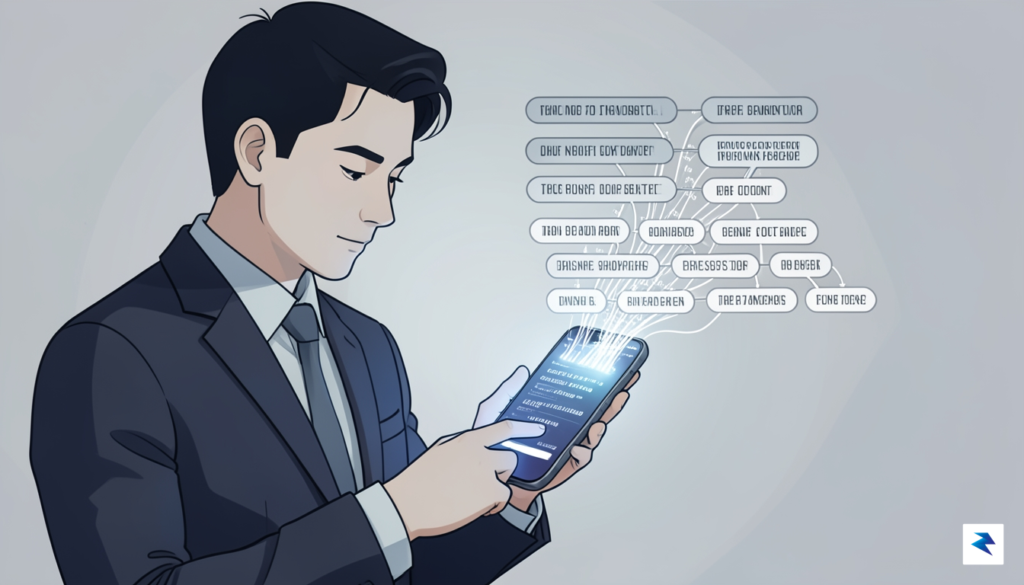
The transformation of professional networking into a digital echo chamber has been rapid and relentless, driven primarily by the frictionless accessibility of generative AI tools. Where once LinkedIn served as a repository for nuanced industry analysis and authentic personal anecdotes, it is now increasingly defined by a predictable, rhythmic cadence of AI-assisted output. This shift is not merely a change in convenience; it represents a fundamental transition in how professionals represent their expertise. By leveraging large language models to draft thought leadership, users can now produce high-volume content with minimal cognitive effort, effectively automating the professional voice.
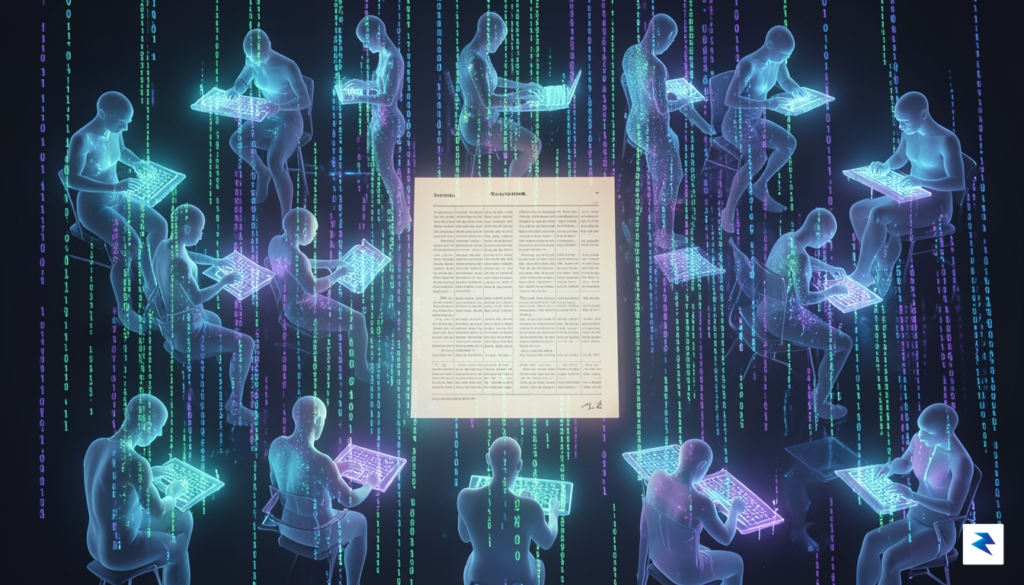
This widespread reliance on algorithmic drafting has birthed a distinct phenomenon often described as the “homogenization of tone.” Because most generative tools are trained on a massive corpus of existing professional success stories, they gravitate toward a specific, sterilized style—often characterized by aggressive bullet points, forced vulnerability, and a ubiquitous, overly optimistic outlook. As a result, the feed has become a repetitive loop of identical sentence structures and borrowed wisdom. The nuance of individual experience is frequently sacrificed for the sake of a polished, safe, and highly optimized aesthetic that the algorithm has learned to reward with higher engagement metrics.
The true cost of automated content is not the lack of effort, but the loss of the idiosyncratic human perspective that makes professional discourse genuinely valuable.
The pressure to maintain a constant presence is the primary engine behind this trend. LinkedIn’s current algorithmic architecture heavily incentivizes high-frequency posting, rewarding those who stay visible above all else. Consequently, many professionals feel that they must choose between being “seen” through AI-assisted velocity or being “ignored” by sticking to their own slower, more considered writing process. This creates a feedback loop where quality is sidelined in favor of quantity, and the genuine narrative arc of a career—complete with its messy, non-linear realities—is replaced by a sleek, artificial script designed specifically to game the system.
Ultimately, this reliance on AI-generated output threatens to erode the very trust that professional networking is meant to build. When readers can no longer discern if a post reflects the lived experience of a colleague or the probabilistic output of a machine, the incentive for meaningful interaction diminishes. If every perspective feels like a variation of the same prompt, professional discourse ceases to be a dialogue and instead becomes a chorus of digital mirrors. We must ask ourselves whether the convenience of a generated post is worth the erosion of the unique human voice that defines true leadership and expertise.

The current landscape of professional networking platforms is increasingly defined by a sophisticated, automated assembly line. At the heart of this shift are integrated workflows where generative AI tools are paired with bulk-scheduling software, allowing a single user to broadcast dozens of posts across multiple accounts simultaneously. These workflows often begin with a prompt-engineered template designed to mimic the “thought leadership” style—typically a hook, a problem-solution narrative, and a forced call to action. By stripping away the need for human reflection, this infrastructure prioritizes the velocity of publication over the actual substance of the message, effectively turning personal brands into content mills.

This systematic approach leads to a set of hallmark characteristics that have become painfully easy to spot. Because most large language models are trained on the same massive datasets, they naturally gravitate toward the “average” of human discourse. This manifests as a reliance on overused buzzwords like “leverage,” “game-changer,” and “deep dive,” paired with a structured, almost robotic rhythm of short, punchy sentences followed by tidy bullet points. Crucially, these posts often lack the messy, specific, and contradictory anecdotes that define true human experience. Instead, they offer sanitized, universal advice that feels technically correct but emotionally hollow, leaving readers with a sense of déjà vu as they scroll through their screens.
The paradox of AI-driven content is that in the race to achieve maximum reach, creators are stripping away the very humanity that makes professional connection possible.
The business model driving this phenomenon is rooted in the “quantity over quality” fallacy, where the algorithm is treated as a hungry beast that must be fed at all costs. By focusing on high-frequency posting, these automated systems aim to “game” the platform’s engagement metrics, hoping that sheer volume will eventually result in a viral breakthrough. However, this strategy ignores the inherent limitations of current LLMs in maintaining a unique brand voice. While an AI can mimic the syntax of a specific executive or consultant, it struggles to replicate the idiosyncratic nuance, local cultural context, or genuine vulnerability that builds long-term trust. As a result, the feed becomes flooded with a predictable, rhythmic output that may generate fleeting impressions, but rarely succeeds in forging a meaningful professional bond.
As users become more adept at identifying these patterns, the unintended consequence is a growing wall of skepticism. When every post begins with a variation of “I’ve learned three things about…” or “Stop doing this if you want to succeed,” the audience begins to tune out the noise entirely. This creates a feedback loop where, to compensate for dwindling engagement, the AI tools are pushed to produce even more aggressive or sensationalist content. Ultimately, the reliance on automated infrastructure does not just change how we write; it threatens to degrade the quality of the professional discourse itself, turning our shared digital spaces into echo chambers of synthetic, uninspired noise.

The honeymoon phase with generative AI in professional spaces has officially ended, leaving behind a digital landscape cluttered with hollow echoes of human thought. As readers scroll through their networks, they have developed a sophisticated, almost intuitive radar for the synthetic cadence of large language models. When a post relies on formulaic structures—the inevitable “hook,” the bulleted list of generic takeaways, and the overly optimistic closing question—it signals to the reader that the author has prioritized efficiency over connection. This erosion of trust is profound; once a reader identifies a piece as AI-generated, they instinctively devalue the expertise behind it, viewing the content not as a contribution to professional discourse, but as digital noise that clogs their mental workspace.

This phenomenon has ushered in a state of profound content fatigue, where the sheer volume of high-polish, low-soul output makes it harder than ever for meaningful ideas to surface. Engagement metrics often tell a deceptive story; while AI-assisted posts might garner superficial vanity metrics like automated likes or passive scrolls, they rarely spark the meaningful comments or long-term community building that define true thought leadership. The psychological cost of this shift is that audiences are becoming increasingly cynical. They are learning to ignore the “experts” who outsource their voice to algorithms, recognizing that if a professional cannot articulate their own unique perspective, they likely do not have a compelling one to offer in the first place.
The most valuable currency in the modern professional ecosystem is no longer information, but the non-replicable human perspective that turns cold data into actionable, lived wisdom.
To break through this barrier of indifference, creators must pivot toward radical authenticity. The new gold standard for engagement is rooted in vulnerability—the willingness to share specific, messy, and non-replicable experiences that an algorithm simply cannot manufacture. Whether it is a hard-won lesson from a failed project, a nuanced take on a controversial industry shift, or a personal anecdote that illustrates a deeper professional philosophy, these elements provide the “human friction” that AI is designed to smooth over. When we strip away the synthetic veneer, we invite our audience to engage with a person rather than a processor. In an era where anything can be written in seconds, the most radical act a professional can perform is to slow down, write with their own voice, and lean into the imperfections that prove they were actually there.

The solution to the current influx of synthetic, generic content is not to engage in an arms race of volume, but to pivot toward a strategy of radical authenticity. Machines are masters of the average; they are trained to synthesize consensus, which inherently makes their output feel safe, predictable, and ultimately forgettable. To stand out, you must lean into the “Human-First” framework by prioritizing anecdotal evidence and lived experience over generalized industry advice. When you share a story about a specific project failure, a hard-won lesson from a difficult negotiation, or a moment of professional vulnerability, you provide something that no language model can simulate: emotional weight and verifiable reality.

One of the most effective ways to reclaim your professional narrative is to embrace contrarian or highly specific viewpoints that AI models are typically programmed to avoid. Because algorithms are designed to minimize risk and avoid controversy, they often produce “middle-of-the-road” content that pleases everyone but resonates with no one. By contrast, deep, nuanced perspectives—even those that challenge the status quo—create a polarizing effect that builds genuine loyalty. Whether you are arguing against a popular industry trend or revealing a counter-intuitive truth about your line of work, your willingness to take a firm, opinionated stance signals to your audience that a living, breathing expert is behind the screen.
True authority isn’t found in the aggregation of popular opinions, but in the articulation of personal convictions that have been forged through real-world experience.
If you choose to use AI as a drafting assistant, you must apply a rigorous editing process to ensure your “human fingerprint” remains visible. Start by stripping away the polished, corporate jargon that AI defaults to, such as words like “transformative,” “landscape,” or “synergy.” Instead, inject your own cadence: use the regional idioms, industry slang, or specific metaphors that you use in face-to-face meetings. Furthermore, replace high-level generalizations with concrete, granular details—names, dates, specific dollar amounts, or the exact phrasing used in a client interaction. By anchoring your content in the messy, unpolished, and specific details of your daily life, you transform a piece of digital text into a genuine connection with another human being.

The ubiquity of automated text on professional platforms has created a paradox: while we have more content than ever, we are simultaneously starving for genuine human connection. Rather than viewing generative technology as a threat to your professional brand, consider it a specialized research assistant or a drafting partner. When you relegate AI to the role of a tool—using it for tasks like brainstorming initial angles, structuring complex arguments, or summarizing industry reports—you maintain control over the substance of your work. The goal is to leverage these tools to overcome the blank page, not to bypass the cognitive heavy lifting that actually builds your reputation and credibility.

The most critical safeguard in this process is the “Human in the Loop” editorial standard. If you rely on an algorithm to generate your final output without significant intervention, you risk diluting your unique perspective and, worse, publishing hallucinations or inaccuracies. AI models are prone to confidence-based errors, meaning they can present incorrect data with a tone of absolute certainty. Consequently, your responsibility as a creator is to verify every claim, statistic, and quote before it reaches your audience. By treating AI output as a rough draft that requires rigorous fact-checking and critical analysis, you ensure that the final piece is not just a collection of plausible-sounding sentences, but a reflection of your own vetted professional expertise.
The value of your LinkedIn presence lies in your lived experience, your professional failures, and your unique synthesis of ideas—things that no language model can authentically replicate.
To successfully integrate these tools without losing your voice, consider applying this humanization checklist to every draft before you hit publish:
Ultimately, the objective is to use technology to amplify your voice, not to replace it. When you prioritize your own insights and subject matter expertise as the foundation of your writing, AI becomes a powerful lever that allows you to communicate more efficiently. By maintaining rigorous editorial control, you distinguish yourself from the sea of automated noise and solidify your position as a trusted, authentic voice in your industry.
You must be logged in to post a comment.