
The Death of the Human Feed? Why LinkedIn Is Overrun by AI
The AI Saturation Point: Why Your LinkedIn Feed Feels Familiar The transformation of professional networking into a digital echo chamber has…


In the high-stakes arena of national governance, the margin for error is razor-thin, yet the consequences of a single oversight can ripple through an entire economy. Estonia, a global leader in digital infrastructure, learned this truth the hard way when a seemingly minor linguistic ambiguity in a piece of legislation ballooned into a $28 million fiscal catastrophe. The incident underscored a fundamental reality: when human drafters rely on traditional, manual methods to verify complex legal texts, the potential for misinterpretation is not just a theoretical risk—it is a mathematical certainty. This specific oversight, which hinged on a singular, poorly defined word, forced the government to reckon with the inherent fragility of human-led legislative processes.
The manual review of legal documents has long been the standard operating procedure for parliaments worldwide, yet this traditional approach is increasingly ill-equipped to handle the complexities of modern policy. Human reviewers, no matter how diligent or experienced, are susceptible to fatigue, cognitive biases, and the simple misreading of context that occurs during the tedious drafting of thousands of pages of law. When these human-centric workflows fail, the result is often a disconnect between the intended spirit of a law and its technical application. In the case of Estonia, the $28 million hole in the budget served as a harsh wake-up call, proving that the cost of “doing things the way they’ve always been done” had finally eclipsed the budget of a small nation.

“Precision is not merely a linguistic preference in governance; it is the bedrock of economic stability. When a single word can trigger a multi-million dollar liability, the process of law-making must evolve beyond human capacity alone.”
Following this realization, the Estonian government recognized that the transition from manual oversight to automated, algorithmic verification was no longer optional—it was an urgent necessity. The legislative process is inherently prone to “semantic drift,” where the meaning of terms shifts as they move from committee debates to final ratification. By integrating artificial intelligence into the drafting process, Estonia sought to create a digital safeguard that could cross-reference new laws against existing statutes, identifying contradictions and linguistic traps before they could be codified into law. This shift toward AI-driven “Fuckup Finders” represents a broader transformation in how states view technology: it is no longer just a tool for efficiency, but a critical defense mechanism against the fallibility of human administration.
Ultimately, this expensive lesson catalyzed a shift in the national mindset, moving away from a reliance on intuition and toward a model of data-backed, verifiable legislative integrity. By deploying AI systems capable of parsing legal jargon with machine-like consistency, Estonia is not just patching a loophole; it is fundamentally future-proofing its legal ecosystem. As other nations struggle with the mounting complexity of modern regulation, Estonia’s pivot serves as a blueprint for how states can mitigate the risks of human error by embracing the cold, hard precision of automated oversight.
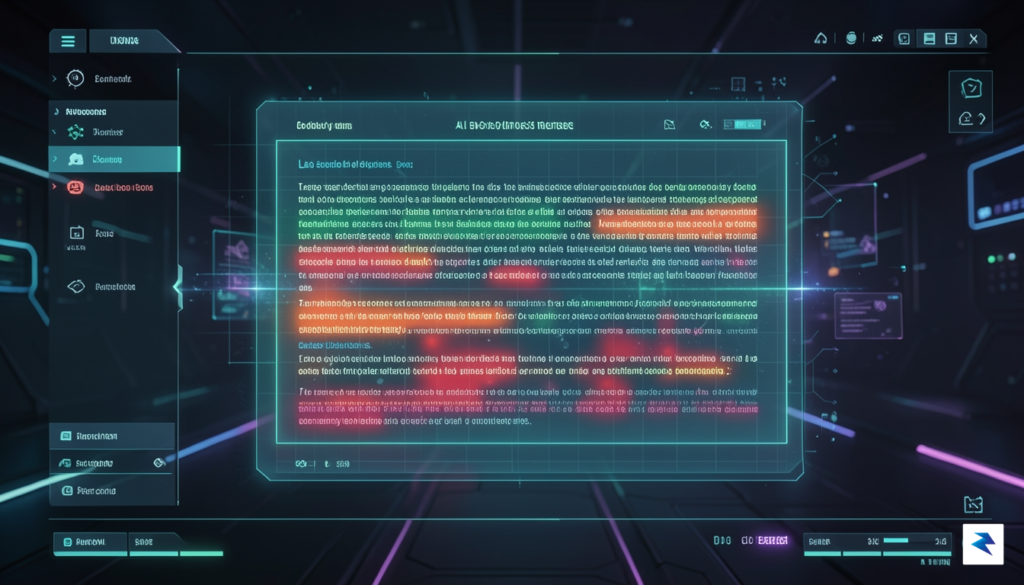
Estonia’s transition toward an automated legislative framework centers on a sophisticated application of natural language processing (NLP) designed to act as a digital safety net for the country’s legal system. At its core, the tool—colloquially known as the “Fuckup Finder”—functions by continuously parsing draft legislation against the vast, interconnected web of existing statutes, constitutional mandates, and regulatory frameworks. By leveraging advanced machine learning models trained on the nuances of legal terminology, the system can identify linguistic contradictions, redundant clauses, or accidental deviations from established legislative intent that might otherwise remain hidden until a court challenge arises. This proactive stance marks a radical departure from traditional, human-only proofreading, which is inherently susceptible to fatigue and the sheer complexity of thousands of cross-referenced laws.
The technical architecture of this system relies on high-dimensional semantic mapping, which allows the AI to understand the context of a legal provision rather than just its literal wording. When a new bill is introduced, the algorithm performs a comparative analysis across the national legal database, flagging instances where a new rule might inadvertently undermine an existing law. If a draft bill proposes a tax regulation that conflicts with a pre-existing social welfare directive, for instance, the AI highlights the discrepancy and alerts legal drafters to the specific articles involved. This constant synchronization ensures that the legislative body maintains a coherent legal ecosystem, reducing the long-term risk of systemic errors that could lead to financial instability or legal paralysis.

Modernizing the legislative workflow through NLP is not merely about accelerating the speed of drafting; it is about enhancing the structural integrity of the laws themselves. By automating the identification of inconsistencies, Estonia is effectively treating legislation as a living, version-controlled repository similar to professional software development. This methodology allows policy experts to iterate on drafts with the confidence that they are not inadvertently breaking unrelated parts of the legal architecture. As these systems grow more robust, they provide a secondary layer of “quality control” that operates 24/7, catching errors that even the most meticulous human legal teams might overlook in the rush to meet legislative deadlines.
The integration of AI into the legislative process represents a shift from reactive legal repair to predictive governance, ensuring that the law remains a stable foundation for society rather than a source of administrative friction.
Ultimately, this technological leap demonstrates that GovTech is no longer limited to digital ID cards or online tax filing; it is now penetrating the deepest layers of statecraft. By integrating automated discovery tools into the very earliest stages of bill drafting, Estonia is setting a global precedent for how nations can “future-proof” their legal systems. As the complexity of global regulations continues to expand, the ability to rely on algorithmic verification will become an essential component of any resilient modern democracy, transforming the way laws are written, reviewed, and finalized.

While the “Fuckup Finder” began as a reactive mechanism to identify costly legal inconsistencies, it has evolved into the cornerstone of Estonia’s ambitious vision for a fully automated state. The country is not merely looking to catch mistakes after they happen; rather, it is pioneering a move toward proactive policy drafting where AI models simulate the impact of new legislation before it ever reaches the floor of parliament. By running proposed bills through sophisticated algorithmic sandboxes, lawmakers can visualize potential regulatory conflicts, fiscal loopholes, or administrative bottlenecks, effectively “stress-testing” the law against the existing digital ecosystem. This transition shifts the role of the state from a rigid bureaucracy to a dynamic, self-correcting system that learns from its own legislative history.

The primary advantage of this roadmap is the dramatic reduction of manual labor for state employees, freeing them from the soul-crushing repetition of cross-referencing thousands of pages of static legislation. In traditional governance models, civil servants spend countless hours performing “data plumbing”—manually ensuring that a new tax policy doesn’t accidentally invalidate a social welfare benefit. By automating these cross-checks, Estonia allows its workforce to pivot toward high-level policy design, ethics oversight, and complex human-centric decision-making that no machine can replicate. This shift doesn’t just save millions in potential errors; it fundamentally reclaims the time of the nation’s brightest minds, allowing them to focus on innovation rather than administrative maintenance.
The goal of algorithmic governance is not to replace human judgment, but to create a “digital immune system” that protects the integrity of the state’s operations while removing the friction of legacy bureaucracy.
Looking toward the future, Estonia is actively exploring how these intelligent systems can integrate into the broader digital public infrastructure, moving toward a “zero-bureaucracy” state. In this paradigm, citizens would rarely need to interact with a government official, as the systems governing their rights and responsibilities would be interoperable, transparent, and inherently consistent. By treating laws as code, the government ensures that policy updates are rolled out with the precision of a software patch, minimizing the “version control” issues that plague traditional legal systems. As other nations struggle with the inertia of analog governance, Estonia’s commitment to algorithmic oversight demonstrates that the future of the state is not found in more regulation, but in smarter, machine-readable rules that evolve alongside society.

The allure of artificial intelligence in governance lies in its capacity to process vast, complex legislative datasets at speeds no human team could ever hope to replicate. However, the $28 million error that brought this issue to light serves as a sobering reminder that speed is not a substitute for wisdom. When we delegate the interpretation of law to algorithms, we risk creating a “black box” environment where accountability becomes diffuse. If an automated system misinterprets a statute or applies an outdated mandate, the resulting damage—financial or otherwise—cannot simply be blamed on a line of code. True democratic oversight requires that a human hand remains on the wheel, ensuring that the nuance, empathy, and contextual awareness inherent in legal judgment are never sacrificed for the sake of mechanical efficiency.
To avoid the pitfalls of blind automation, we must shift our perspective from viewing AI as a replacement for decision-makers to recognizing it as a sophisticated diagnostic tool. A hybrid model, often described as “human-in-the-loop” governance, allows algorithms to flag potential discrepancies or legislative conflicts while reserving the final, binding judgment for qualified professionals. This collaborative approach preserves the integrity of the state’s decision-making process by keeping human accountability at the forefront. By using AI to highlight the “what” and “where” of a legal problem, officials are empowered to focus their expertise on the “why” and “how,” leading to more equitable and considered outcomes.

Transparency and auditing requirements are the non-negotiable pillars of this transition. If a government agency relies on algorithmic output to influence policy or legal application, the logic behind that software must be open to public and professional scrutiny. We cannot build trust in a system that operates behind a veil of proprietary secrecy. Instead, state-sanctioned AI must be subjected to rigorous, ongoing audits to ensure that the datasets feeding these models are not biased and that the interpretative logic aligns with current constitutional standards.
The goal of state-sponsored AI should not be to automate the law, but to illuminate the path for those responsible for upholding it.
Ultimately, the scalability of digital governance is only as strong as the safeguards we build around it. As we integrate these powerful tools into the machinery of statehood, we must prioritize the development of clear frameworks for liability. When an algorithm makes a mistake, there must be a defined mechanism for recourse and correction that does not end with a software update. By maintaining human-centric oversight, we ensure that as our systems become more powerful, they also become more reliable, more transparent, and—most importantly—more accountable to the citizens they are designed to serve.

Estonia’s transition from a post-Soviet state to a global vanguard of digital governance serves as a compelling case study for nations grappling with the complexities of modern bureaucracy. By treating a multi-million dollar failure not as a source of political shame, but as a diagnostic tool for systemic improvement, the Estonian government has demonstrated a rare form of institutional maturity. This pragmatic philosophy—that the cost of an error is far lower than the cost of stagnation—is the cornerstone of their success. For policymakers worldwide, the lesson is clear: digital transformation is not merely about importing software or digitizing paper forms; it is about cultivating a culture of transparency that welcomes accountability, even when it exposes institutional shortcomings.
The development of AI-driven tools to audit legislative impact suggests a future where democratic institutions can finally keep pace with the velocity of technological change. Traditionally, the gap between drafting a law and understanding its real-world effectiveness has been filled by years of partisan debate and anecdotal evidence. By integrating artificial intelligence to map legislative friction and identify regulatory “fuckups,” Estonia is effectively creating a self-healing legal system. This approach provides a concrete blueprint for other democracies to reduce the administrative burden on their citizens while simultaneously enhancing the integrity of their public services.
The true measure of a digital state is not found in the sophistication of its algorithms, but in its willingness to use those algorithms to hold its own bureaucracy accountable.

As we look toward the future of global digital statehood, the Estonian model underscores the necessity of balancing rapid innovation with rigorous legislative integrity. It is not enough to simply automate; leaders must ensure that the underlying principles of justice, equity, and civic participation remain embedded in the code. By proactively seeking out errors and refining the law, Estonia has proven that digital sovereignty is a continuous process of calibration rather than a fixed destination. For other nations, the path forward requires a shift in mindset: moving away from the fear of failure and toward a model of persistent, data-informed evolution. Ultimately, the future of democracy may well depend on our ability to build systems that are as humble enough to recognize their mistakes as they are powerful enough to correct them.
You must be logged in to post a comment.