
AppleCare Plus Price Hike: Is It Still Worth the Cost?
Understanding the AppleCare Plus Price Adjustment Apple has quietly adjusted the financial landscape for its premium protection service,…

For years, the narrative surrounding Microsoft’s ascent in the artificial intelligence sector was defined by its massive, multi-billion-dollar partnership with OpenAI. By integrating GPT-4 into the backbone of the Azure cloud platform and the entire Office suite, Microsoft effectively positioned itself as the primary gateway for enterprises looking to harness the power of large language models. This symbiotic relationship allowed Microsoft to capture an early lead in the generative AI race, leveraging OpenAI’s cutting-edge research to revitalize its software ecosystem and cloud services. However, this honeymoon phase is rapidly evolving as Microsoft realizes that relying exclusively on external innovators leaves them vulnerable to shifting market dynamics and long-term dependency risks.

The company is now aggressively recalibrating its sales strategy, moving away from being a mere distributor of third-party intelligence toward positioning its own proprietary technology as the definitive choice for the enterprise market. Behind the scenes, Microsoft has been pouring significant capital into the development of custom silicon and internal foundation models, such as the Maia accelerator chips and the Phi series of small language models. These investments signal a strategic pivot intended to reduce reliance on OpenAI’s infrastructure. By fostering an internal ecosystem, Microsoft is not only cutting costs related to high-compute inference but is also gaining granular control over security, latency, and model performance—attributes that are non-negotiable for their Fortune 500 clientele.
The core of Microsoft’s new sales philosophy lies in the belief that proprietary, vertically integrated solutions offer greater reliability, data sovereignty, and long-term stability than those built on external, fast-moving research partnerships.
This internal shift has fundamentally altered how Microsoft’s sales force interacts with potential customers, moving from a position of “OpenAI advocacy” to one of “Microsoft-first preference.” The company now views its external partners—including OpenAI and Anthropic—as potential competitors for the same enterprise market share. When a salesperson engages with a client today, the goal is to highlight the unique advantages of Microsoft’s own stack, framing their native AI capabilities as more seamlessly integrated and better optimized for the Azure environment. By emphasizing that their proprietary models are built for the specific, complex needs of modern business, Microsoft is effectively creating a competitive moat that separates their internal offerings from the broader, more generalized models provided by their former collaborators.

At the heart of Microsoft’s aggressive sales pivot lies a calculated desire to reclaim sovereignty over the artificial intelligence stack. For years, the company has operated in a symbiotic, albeit complex, relationship with OpenAI, fueling its massive infrastructure growth through the Azure cloud. However, as the AI market matures, Microsoft is clearly signaling that it no longer wishes to be merely a high-performance host for third-party models. By training its sales force to cast doubt on the reliability and long-term viability of external providers like OpenAI and Anthropic, Microsoft is attempting to steer enterprise clients toward its own proprietary, Azure-native solutions. This strategy is fundamentally about vertical integration: the company wants to ensure that the entire value chain—from compute power and model deployment to security and governance—is contained within the Microsoft ecosystem, thereby insulating its bottom line from the volatility of external partnerships.

The criticisms leveled by Microsoft’s sales representatives are designed to exploit the anxieties inherent in corporate IT decision-making. Specifically, the sales teams are reportedly highlighting the unpredictable cost structures associated with relying on external APIs. When companies build their products on top of OpenAI or Anthropic’s models, they are often subject to usage-based pricing models that can fluctuate wildly as traffic scales. In contrast, Microsoft is positioning Azure-native tools as a more predictable, cost-efficient investment for the enterprise. By emphasizing the hidden overhead of managing disparate API connections, Microsoft is making a compelling, if self-serving, argument for the “all-in-one” convenience of their own native platforms.
The pivot toward Azure-native AI is less about technical superiority and more about establishing a closed-loop system where Microsoft controls the architecture, the data flow, and the recurring subscription revenue.
Beyond fiscal concerns, Microsoft is banking on the growing obsession with data sovereignty and enterprise security. A major selling point for their sales force is the argument that using external APIs requires sensitive corporate data to transit through third-party environments, potentially creating compliance gaps or intellectual property risks. Microsoft contends that by utilizing their proprietary Azure-native AI services, enterprises can keep their data strictly within their own private cloud partitions, shielded by Microsoft’s established security framework. This narrative is strategically crafted to make third-party model providers seem like a security liability, effectively framing the choice as one between a fragmented, high-risk approach and a unified, enterprise-grade solution. Through this methodical repositioning, Microsoft is not just selling software; they are attempting to define the very standards of safety and stability for the next generation of business intelligence.
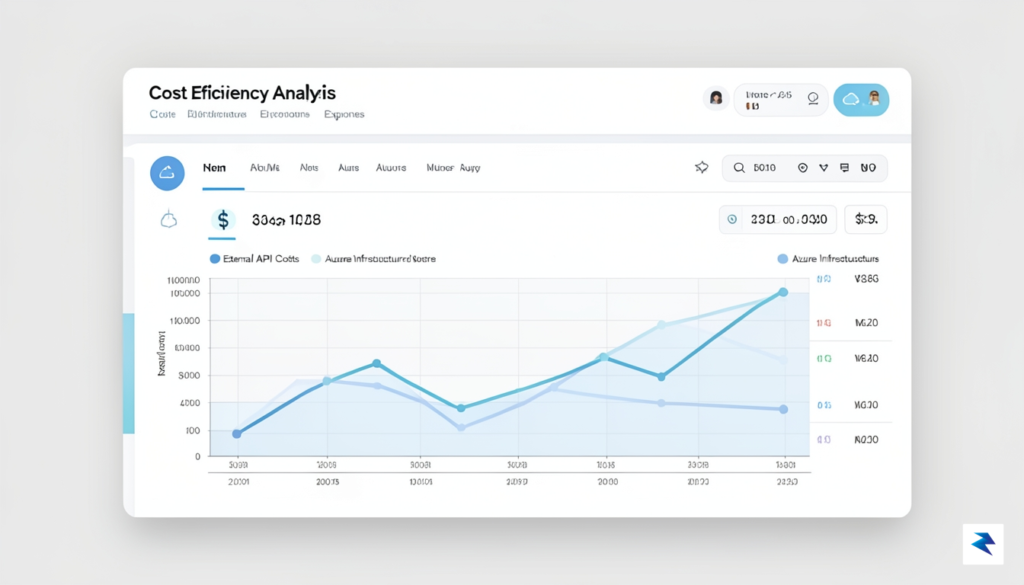
For large-scale enterprises, the initial excitement surrounding generative AI is rapidly giving way to the harsh reality of balance sheets. As companies look to integrate large language models into core business processes, the cost of scaling these operations via third-party APIs has become a significant boardroom concern. Microsoft is strategically positioning its in-house models—such as the Phi series and proprietary Azure-native deployments—as the fiscal answer to this volatility. By moving away from the consumption-based pricing models typical of external vendors, Microsoft aims to offer corporate clients a more predictable, long-term return on investment that aligns better with standard enterprise software procurement cycles.
The financial argument against relying solely on third-party APIs often centers on the lack of cost control at scale. When an organization integrates an external model into a customer-facing product, their operational costs rise in direct proportion to usage, creating a variable expense model that is notoriously difficult to forecast. Furthermore, hidden costs—including high latency that requires expensive engineering workarounds and the infrastructure overhead of routing data through multiple endpoints—can erode the value proposition of these powerful tools. Microsoft leverages its vertical integration, from the underlying silicon to the cloud orchestration layer, to absorb these inefficiencies, allowing them to offer bundled pricing structures that independent providers simply cannot replicate.
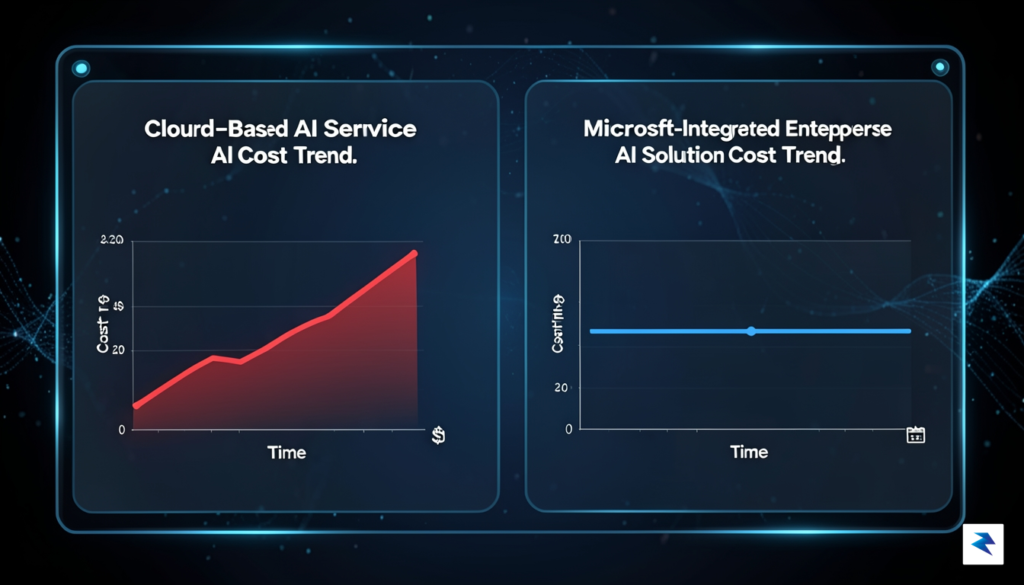
“The ultimate goal for the enterprise is not just intelligence, but sustainable intelligence. When operational costs fluctuate unpredictably, the barrier to widespread adoption remains high; Microsoft is banking on stability to win the long-term contract.”
Beyond simple per-token pricing, there is the matter of compute efficiency. Microsoft’s internal development teams are increasingly focused on creating smaller, specialized models that perform at a high level without the massive compute requirements of general-purpose “frontier” models like those from OpenAI or Anthropic. By steering clients toward these refined, in-house alternatives, Microsoft effectively lowers the barrier to entry for complex workflows. This shift allows enterprises to achieve 90% of the performance of a massive model at a fraction of the compute cost, fundamentally changing the economics of AI deployment. By controlling the entire stack, Microsoft is not just selling a model; they are selling a managed, cost-optimized environment that promises to keep AI budgets from spiraling out of control as projects transition from experimental pilots to full-scale production.

At the heart of Microsoft’s enterprise strategy lies a delicate, high-stakes game of “coopetition”—a business hybrid where intense rivalry and deep partnership exist simultaneously. For years, Redmond has positioned itself as the ultimate gateway to OpenAI’s cutting-edge models, leveraging this high-profile alliance to skyrocket its own cloud and enterprise valuation. However, as Microsoft aggressively develops and markets its own proprietary models alongside open-source alternatives, the sales floor has transformed into a strategic tightrope. Sales representatives must now master the art of whispering doubts about the very partners that anchored their initial AI dominance, attempting to steer clients toward in-house Azure solutions without appearing hypocritical or undermining the foundational technology they spent billions to support.

For enterprise customers, this shifting sales narrative introduces a profound sense of anxiety regarding vendor lock-in and platform neutrality. When a trusted cloud provider begins subtly discouraging the use of industry-standard models like Anthropic’s Claude or OpenAI’s GPT-4 in favor of its native offerings, IT decision-makers are forced to re-evaluate their long-term architecture. Businesses fear that committing too heavily to Microsoft’s bespoke ecosystem might strip away their agility, leaving them vulnerable to sudden pricing shifts or technological stagnation if Microsoft’s in-house models fall behind the state of the art. Consequently, this aggressive internal push risks alienating sophisticated buyers who prioritize multi-model flexibility and fear being trapped within a single provider’s walled garden.
Beyond the immediate sales pipeline, Microsoft’s internal pivot sends a chilling psychological signal throughout the broader artificial intelligence ecosystem. Startups and established tech firms alike are realizing that no partnership, regardless of how lucrative or highly publicized, is immune to the gravity of platform self-interest. This aggressive posturing suggests that hosting one’s models on Azure might eventually mean competing against the very infrastructure provider powering your business. As a result, developers and AI researchers are increasingly looking toward neutral cloud alternatives or hybrid deployment strategies to safeguard their intellectual property and market share from being cannibalized by their host.
The delicate dance of selling a competitor’s product while building your own replacement highlights a fundamental truth in the tech industry: in the race for AI dominance, alliances are merely temporary bridges to self-sufficiency.
Ultimately, navigating this trust paradox requires Microsoft to perform a masterclass in corporate communication, balancing short-term sales targets against long-term ecosystem credibility. If the sales force pushes too hard against external partners, they risk damaging the reputation of Azure as an open, collaborative cloud environment designed for all AI workloads. Conversely, failing to establish their own proprietary models leaves Microsoft perpetually dependent on external IP, a position of vulnerability that a trillion-dollar giant cannot tolerate. How Microsoft resolves this internal tension will not only define the future of its enterprise sales but will also set the rules of engagement for the entire generative AI landscape for years to come.

For CTOs and technical leads, this shifting landscape signals that the era of “set it and forget it” AI integration is officially over. When major infrastructure providers begin actively discouraging the use of their partners’ models, it creates a layer of vendor risk that must be addressed at the architectural level. Relying on a single proprietary API—whether it is GPT-4 or Claude—creates a dangerous dependency that can lead to unexpected cost hikes, sudden deprecations, or strategic misalignment. To mitigate these risks, organizations must prioritize model-agnostic development patterns that allow for swapping underlying providers without refactoring the entire application stack.

The most effective strategy for today’s enterprise is to decouple your application logic from the underlying model provider. By implementing an abstraction layer or a gateway service, your developers can act as “model agnostics,” routing prompts to the most cost-effective or performance-optimized LLM based on the specific task. This approach not only provides a hedge against the inevitable friction between Microsoft, OpenAI, and Anthropic but also gives your team the freedom to leverage open-source alternatives like Llama 3 or Mistral. When you stop hard-coding your infrastructure to a single vendor’s ecosystem, you gain the leverage to negotiate better terms and maintain continuity even if a specific API becomes unstable or prohibitively expensive.
The goal of a modern AI roadmap should be modularity: build your internal workflows so that the model is a replaceable component, not the foundation of your architecture.
When evaluating whether to commit to a Microsoft-native solution—such as Azure OpenAI—versus a direct integration with Anthropic or another provider, consider the total cost of ownership beyond just the price per token. Microsoft often bundles AI into its broader security, compliance, and enterprise support frameworks, which can be a significant value-add for highly regulated industries. However, if your roadmap requires extreme fine-tuning, specific latency profiles, or independence from the Microsoft ecosystem, these bundled benefits might become liabilities. Conduct a thorough audit of your internal requirements: if your primary need is internal productivity, the integrated Microsoft path is likely the path of least resistance. Conversely, if your product is a customer-facing AI application, maintaining a multi-model strategy is essential to ensuring you remain competitive regardless of which tech giant wins the current market share battle.
You must be logged in to post a comment.