Open Book Touch: The Future of Open-Source Reading
The Philosophy of Open-Source Hardware in Reading In an increasingly digital world, the act of reading has undergone a profound…


The rapid proliferation of Large Language Models (LLMs) within the modern enterprise has fundamentally altered the corporate digital landscape, transforming how organizations process information and interact with their own data. As businesses move beyond experimental deployments and into full-scale operational integration, the attack surface has expanded at an unprecedented rate, rendering traditional perimeter-based security measures increasingly obsolete. While firewalls and legacy intrusion detection systems were designed to intercept malicious code or block unauthorized network access, they are largely blind to the nuanced, semantic-based threats inherent in AI-driven workflows. Consequently, we are witnessing a critical shift toward an era where AI must actively monitor AI, creating a self-regulating ecosystem capable of identifying threats that are far more sophisticated than simple binary exploits.

Modern LLM vulnerabilities represent a unique class of security challenges that defy conventional mitigation strategies. Unlike traditional software bugs, threats such as prompt injection—where a user manipulates an AI to bypass its safety guardrails—and sophisticated data leakage scenarios occur at the application layer, often appearing as legitimate, albeit harmful, queries. Furthermore, the persistent struggle with model hallucinations introduces a new dimension of risk, where an AI might inadvertently fabricate sensitive information or leak proprietary intellectual property during a standard interaction. Because these vulnerabilities are embedded within the logic of the models themselves rather than the underlying infrastructure, organizations are finding that human-led oversight is no longer sufficient to keep pace with the velocity of AI-generated content.
The transition from reactive cybersecurity to proactive, AI-native defense is not merely an operational upgrade; it is an existential necessity for enterprises relying on LLMs to handle sensitive intellectual property and customer data.
Despite the growing urgency, there remains a glaring disconnect in the current market regarding accessible, cost-effective monitoring tools. Many existing solutions are either too rudimentary to detect complex adversarial attacks or prohibitively expensive and resource-intensive to implement across an entire enterprise. This gap forces many organizations into a precarious position, leaving them to choose between under-protected AI deployments or high-friction security protocols that stifle innovation and slow down internal workflows. As we look toward the future of enterprise defense, the goal must be to bridge this divide with intelligent, scalable frameworks—like those envisioned in emerging initiatives—that can provide deep visibility into model behavior without compromising the performance or economic viability of AI adoption.

At its core, Project Perception pivots away from the traditional, monolithic security model where a single, massive AI overseer is tasked with monitoring every aspect of an enterprise environment. Instead, Microsoft’s architecture leverages a sophisticated ensemble methodology, utilizing a distributed network of specialized models that function in concert. By breaking down security responsibilities into distinct, modular components, the system can assign specific tasks—such as pattern recognition, heuristic analysis, and behavioral auditing—to models that have been optimized for those particular domains. This decentralized approach ensures that no single point of failure can compromise the entire safety infrastructure, creating a more resilient defense mechanism that adapts to the multifaceted nature of modern cyber threats.

The primary advantage of this multi-model design lies in its ability to dramatically suppress the “noise” that often plagues legacy security tools. In conventional systems, a single model might trigger excessive false positives by misinterpreting benign user behavior as malicious simply because it lacks deep context. Project Perception mitigates this by allowing models to cross-reference their findings; for instance, a model tasked with monitoring data exfiltration can consult a secondary model that specializes in identity verification to confirm whether the activity is legitimate. This collaborative cross-validation process ensures that only high-confidence threats are escalated to human security teams, thereby reducing the cognitive load on analysts and ensuring that genuine security gaps are not buried under a mountain of irrelevant alerts.
The strength of the ensemble approach is not just in detection, but in the intelligence of the verification process; by requiring consensus among specialized models, Microsoft has essentially engineered a system that thinks before it reacts.
Furthermore, this architecture facilitates significantly faster anomaly detection within massive, complex enterprise datasets. Because the models operate in parallel rather than in a rigid, sequential queue, the system can ingest and process terabytes of telemetry data in near real-time. This efficiency is critical for modern businesses that operate on global scales, where even a millisecond of latency in threat detection can be the difference between a minor incident and a significant data breach. As the system continuously ingests new data, the models undergo iterative refinement, allowing the ensemble to evolve its defensive posture dynamically. By distributing the computational weight across these specialized agents, Microsoft has created a framework that is not only more accurate but also computationally leaner than the heavy, resource-intensive models that have dominated the industry until now.

The landscape of AI-driven cybersecurity is undergoing a significant transformation as major technology players pivot toward more robust, integrated defensive frameworks. Anthropic’s Mythos has long been regarded as the gold standard for specialized security, largely because of its highly refined, proprietary focus on identifying latent vulnerabilities within complex language models. By prioritizing extreme precision and deep-dive forensic analysis, Mythos has carved out a niche that appeals to organizations requiring bespoke protection for mission-critical AI applications. However, this level of exclusivity often comes with significant barriers to entry, including steep integration costs and a reliance on specialized workflows that can be difficult for general enterprise IT teams to manage at scale.
In contrast, Microsoft is positioning Project Perception as a transformative challenger designed to democratize high-level AI security. Rather than isolating security protocols within a siloed environment, Microsoft is leaning into its unparalleled dominance in cloud infrastructure and enterprise software. The core philosophy here is one of seamless integration; by embedding security intelligence directly into the existing Azure ecosystem, Microsoft aims to make advanced threat detection a standard operational feature rather than an optional, specialized add-on. This strategic move suggests that the future of security lies not just in the depth of the algorithm, but in the breadth of its application across a global, multi-cloud environment.

Microsoft’s shift toward accessibility represents a critical pivot: shifting the responsibility of AI security from a luxury for the few to a foundational requirement for all.
The competition between these two approaches reflects a broader debate within the tech industry: is it more effective to have a highly specialized, proprietary tool, or a ubiquitous, ecosystem-integrated solution? Anthropic’s Mythos excels by offering a surgical approach to security, which is undeniably effective for high-stakes, specific use cases. Yet, Microsoft is betting heavily on the idea that the modern enterprise requires scalability above all else. By leveraging the existing Microsoft 365 and Azure frameworks, Project Perception is poised to reach a user base that simply lacks the resources to implement standalone specialized security suites. As these two titans continue to iterate, the ultimate beneficiaries will be organizations that now have a wider array of choices between high-touch specialized defense and wide-scale, automated infrastructure protection.
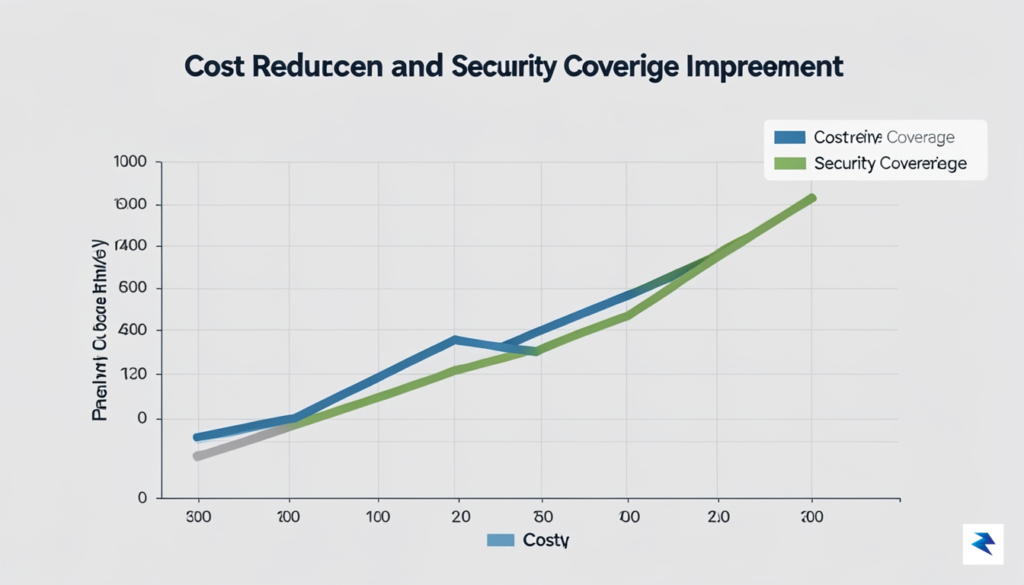
For years, the promise of AI-driven cybersecurity has been locked behind a paywall of massive infrastructure requirements and enterprise-grade pricing models. While high-end security solutions are undoubtedly robust, they have remained functionally inaccessible for the vast majority of mid-market enterprises. This economic disparity creates a dangerous “security gap,” where smaller firms in sectors like healthcare, finance, and legal remain vulnerable to sophisticated threats simply because they cannot afford the compute-heavy, proprietary defensive layers currently dominating the market. Project Perception represents a fundamental shift in this landscape, aiming to democratize these tools by prioritizing cost efficiency as a core design principle rather than an afterthought.
The economic burden of current AI security solutions is largely tied to the sheer volume of compute power required to monitor, detect, and neutralize threats in real time. When security tools demand exorbitant cloud expenditures, organizations are often forced to choose between comprehensive protection and operational sustainability. By optimizing model efficiency, Project Perception seeks to reduce the underlying compute overhead, effectively lowering the barrier to entry for businesses that are not Fortune 500 entities. This is not merely a matter of convenience; it is a critical evolution in how we view digital resilience. If advanced security becomes a commodity rather than a luxury, we can expect a tectonic shift in the industry, where small-to-medium enterprises are finally equipped with the same caliber of defense as their larger counterparts.
The democratization of AI security is the missing link for widespread adoption; until advanced threat detection is as affordable as it is effective, the digital ecosystem will remain inherently fragile.
In highly regulated fields like legal and healthcare, the stakes for data integrity are extraordinarily high, yet the profit margins for many firms in these sectors are squeezed by administrative costs. When security software is priced as a premium add-on, it often gets deferred or scaled back, leaving sensitive client and patient data exposed to modern AI-driven vectors. By focusing on model efficiency and leaner architectures, initiatives like Project Perception allow these organizations to allocate their budgets more effectively. This shift allows for the integration of intelligent threat detection without compromising the fiscal health of the business, proving that security is not a zero-sum game between protection and profitability.

Ultimately, the move toward cost-efficient AI defense will likely accelerate the transition from reactive to proactive security postures across the entire economy. When organizations no longer have to worry about the prohibitive cost of continuous monitoring, they are more likely to adopt “security-first” architectures as a default. This creates a stronger, more resilient network of interconnected businesses that can collectively withstand the evolving tactics of cybercriminals. By refining the efficiency of the underlying AI models, we are effectively leveling the playing field, ensuring that the most sophisticated defensive technology is available to those who need it most, regardless of their size or sector.

For CTOs and CISOs, the emergence of Project Perception serves as a definitive signal that the era of manual, perimeter-based security is rapidly waning. As these sophisticated AI-driven defense mechanisms begin to integrate into the enterprise, IT leaders must shift their focus from reactive patching to proactive, multi-model orchestration. This transition requires a fundamental re-evaluation of existing security stacks to ensure they can handle the high-velocity, autonomous nature of next-generation threat detection. By auditing current infrastructure now, leaders can identify gaps where rigid legacy tools fail to keep pace with the polymorphic nature of AI-generated cyberattacks.
Proactive preparation begins with the recognition that no single AI model can solve every security challenge. Relying on a monolithic defense strategy creates a dangerous single point of failure, making vendor diversification a top priority for modern security architects. Organizations should actively seek a hybrid ecosystem that integrates tools from various providers, ensuring that if one model experiences a blind spot or a bias-related failure, another layer of the stack can identify and mitigate the threat.
To navigate this landscape, IT departments should consider the following steps to modernize their defensive posture:

When evaluating new security tools as they enter the market, it is vital to apply a rigorous assessment checklist to avoid “shiny object syndrome.” First, investigate the transparency of the model’s decision-making process; explainable AI (XAI) is critical for compliance and incident response. Second, verify the tool’s interoperability—does it play nicely with your current SIEM and SOAR platforms, or does it create a new silo? Finally, demand clear metrics on false-positive rates. An AI tool that generates excessive noise will only lead to analyst burnout, ultimately weakening your security posture rather than strengthening it.
The goal of integrating tools like Project Perception is not to replace human judgment, but to amplify it. By automating the identification of sophisticated threats, security professionals can reclaim the time necessary for high-level strategy and incident remediation.
As these technologies evolve, the most successful organizations will be those that treat AI integration as a continuous, iterative process rather than a one-time deployment. By fostering an environment of agility and maintaining a diverse vendor portfolio, IT leaders can ensure their enterprise remains resilient, regardless of which specific AI model is leading the charge in the threat landscape of tomorrow.
You must be logged in to post a comment.