Zero-Downtime Deployments with Docker Compose: A Practical Guide
The Case for Lightweight Deployments In the modern DevOps landscape, there is a pervasive assumption that production-grade infrastructure is…

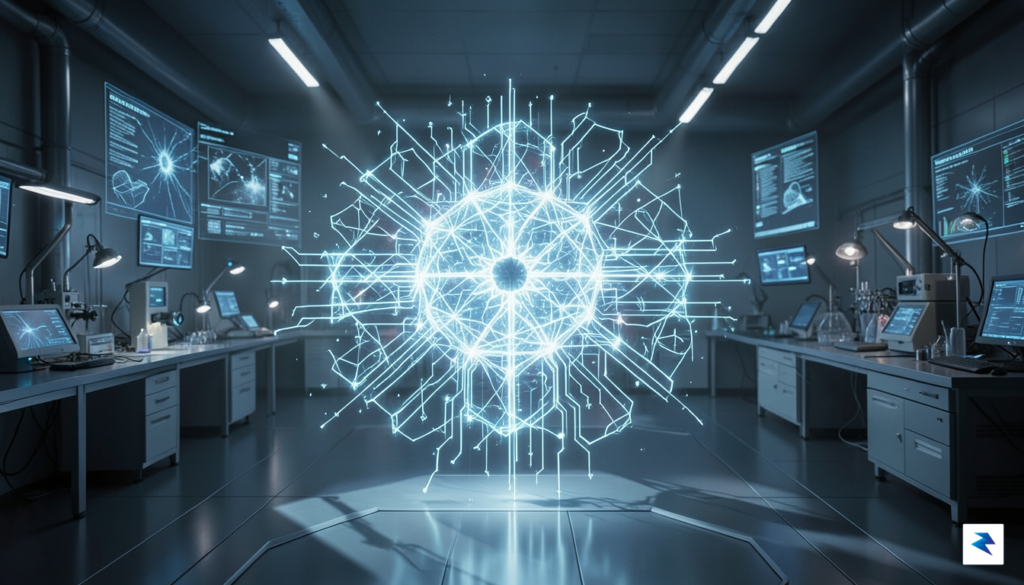
The current landscape of quantum computing is dominated by what researchers call Noisy Intermediate-Scale Quantum (NISQ) devices. These systems represent a significant technological achievement, yet they remain plagued by extreme fragility. Because qubits—the fundamental units of quantum information—are hyper-sensitive to their environment, even the slightest thermal fluctuation or electromagnetic interference can cause “decoherence,” effectively destroying the data before a calculation completes. This instability necessitates massive, complex error-correction schemes that consume the vast majority of a processor’s power, leaving very little actual computational capacity for solving real-world problems.
Microsoft’s entry into this race was predicated on a radical departure from the standard approach: the topological qubit. Unlike traditional qubits, which rely on delicate physical states that are easily disrupted, topological qubits are theoretically protected by the geometry of the system itself. By harnessing exotic particles known as Majorana zero modes, Microsoft proposed a design where information is encoded globally across the particle’s state rather than locally. This inherent protection—often described as “topological protection”—means that local noise cannot easily flip the qubit or corrupt the data, potentially solving the industry’s most persistent bottleneck.
The allure of the topological qubit lies in its stability; if realized, it could transform quantum computing from a fragile laboratory experiment into a robust, scalable architecture capable of fault-tolerant operations.
The intensity of the debate surrounding Microsoft’s recent research stems from the immense expectations set during the debut of their Majorana 1 chip. When the company first announced its breakthrough, the scientific community perceived it as a potential “holy grail” moment that could finally bypass the need for the cumbersome, resource-heavy error correction that limits today’s superconducting qubits. The anticipation was palpable, as a successful topological qubit would not merely be an incremental improvement; it would be a foundational shift in physics, granting engineers a “braided” quantum state that is immune to the chaotic interference that has stalled progress for decades.
However, the transition from theoretical physics to a functional piece of hardware is fraught with immense difficulty. Because topological qubits require the precise manipulation of quasiparticles that only exist under extremely specific, cold conditions, the margin for error is razor-thin. When Microsoft showcased its progress, the excitement was rooted in the hope that these mathematical predictions had finally been captured in silicon and wire. Now, as independent researchers scrutinize the original data, the industry is grappling with a sobering realization: the distance between a promising experimental signal and a reliable quantum computer remains a formidable chasm that continues to test the limits of modern material science.

At the heart of the modern quantum computing race lies the elusive Majorana fermion, a theoretical particle that serves as its own antiparticle. For years, researchers have sought to harness these particles because they are theoretically protected from the environmental decoherence that plagues current quantum systems, potentially leading to significantly more stable and scalable qubits. Microsoft has invested heavily in this specific topological approach, aiming to build a functional quantum computer based on these quasiparticles. However, the path to verification has proven fraught with technical challenges, leading to a recent, high-profile critique in Nature that challenges the validity of previous experimental milestones.

The core of the scientific skepticism revolves around how researchers interpret the electrical signals captured during their experiments. When Microsoft’s team presented data from their Majorana 1 chip, they claimed to observe “zero-bias conductance peaks”—distinct signatures that serve as a primary indicator of Majorana fermions. Critics, however, argue that these signals are not necessarily evidence of exotic particles. Instead, they suggest that these peaks could be caused by trivial physical phenomena, such as electronic “noise” or impurities within the semiconductor materials used in the device. This ambiguity creates a fundamental problem: if a signal can be explained by common, non-quantum interference, it cannot definitively prove the presence of the revolutionary particle it is meant to represent.
The scientific standard for discovery requires that a signal must be impossible to explain through conventional means before it can be attributed to a new, groundbreaking physical state.
This debate highlights why the scientific community demands such rigorous, replicable evidence before accepting a breakthrough of this magnitude. In the world of quantum physics, the difference between a revolutionary discovery and a measurement error is incredibly slim. If a team claims to have achieved a stable topological qubit, the data must be reproducible by independent labs using the same parameters. When published results are scrutinized and found to be potentially ambiguous, it forces the entire field to take a step back and reassess the methodology. For a company as prominent as Microsoft, the stakes are not merely academic; they involve billions of dollars in R&D and the future roadmap of the entire quantum industry. Consequently, the push for transparency and deeper peer review remains the most vital safeguard in ensuring that the foundation of our next-generation technology is built on solid, indisputable facts rather than misinterpreted noise.

In the high-stakes arena of quantum computing, where the promise of revolutionary processing power often meets the harsh reality of subatomic instability, scientific scrutiny serves as the bedrock of progress. Rather than viewing critical re-evaluations as a setback, the broader research community recognizes them as the engine of discovery. When claims regarding exotic particles like Majorana fermions are subjected to rigorous peer review and independent analysis, it does not diminish the value of the original research; instead, it reinforces the integrity of the entire field. By peeling back the layers of complex data, scientists ensure that when a technological breakthrough is finally declared, it is backed by an objective, reproducible, and unassailable foundation.
Transparency acts as the ultimate safeguard against the formation of industry echo chambers, where excitement can sometimes outpace empirical evidence. In the race to develop a functional quantum computer, companies are under immense pressure to demonstrate milestones that attract investment and public interest. However, if these milestones are not held to the standard of public, transparent scrutiny, the industry risks building its future on shaky, unverified premises. Peer review forces researchers to move beyond internal validation and open their methodologies to the skepticism of the global physics community. This vetting process is not intended to be punitive, but rather a collective effort to filter out noise, identify systematic errors, and refine the experimental techniques necessary for true mastery over quantum mechanics.
The strength of scientific advancement lies not in the infallibility of its participants, but in its inherent capacity for self-correction. When a claim is challenged, the result is a more precise understanding of the underlying physics, which ultimately accelerates the path toward viable, real-world applications.
Ultimately, the rigorous examination of Microsoft’s previous claims demonstrates that the scientific method is working exactly as intended. By inviting outside experts to dissect their findings, the researchers involved contribute to a culture of accountability that is essential for long-term technological stability. This process ensures that we do not mistake a potential false positive for a finished product, allowing the industry to pivot toward more reliable methods when necessary. By embracing this cycle of hypothesis, testing, and critical review, the quantum computing sector fosters a resilient ecosystem that prioritizes the long-term pursuit of truth over the short-term convenience of hype.

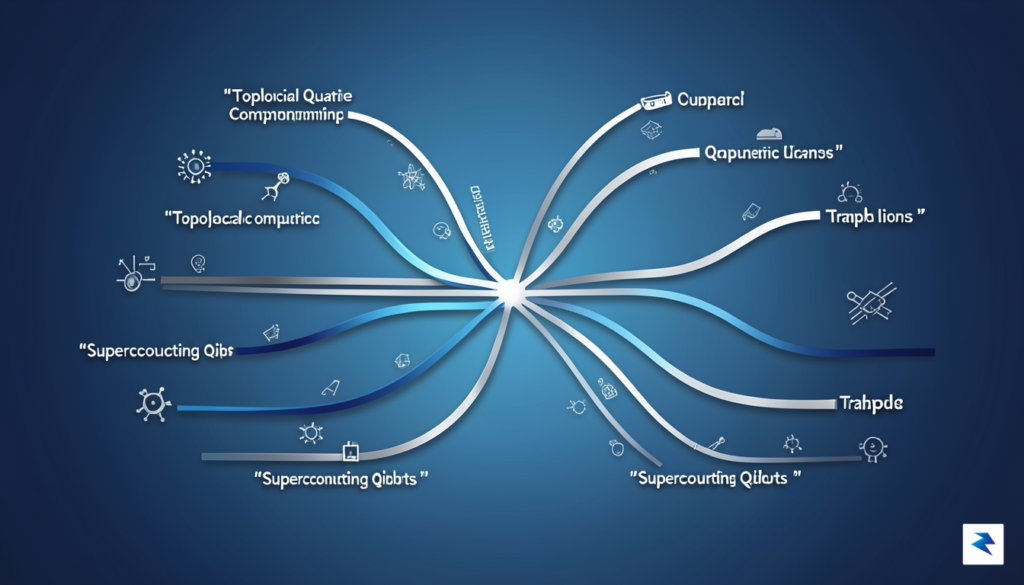
The recent skepticism surrounding Microsoft’s quantum research serves as a pivotal inflection point for the entire sector, signaling a transition from the era of exuberant marketing to one of disciplined empirical scrutiny. While the race for “quantum advantage” has often been framed as a sprint toward commercial utility, this critique highlights the inherent danger of prioritizing rapid milestones over foundational clarity. For the industry at large, the takeaway is clear: stakeholders must now demand a higher standard of evidence before accepting claims of breakthroughs, particularly those involving complex, error-prone topological qubits. By forcing a pause in the narrative, this debate encourages researchers to move away from hypothetical roadmaps and toward the painstaking work of rigorous, peer-reviewed experimental verification.
Microsoft is certainly not alone in navigating the tension between ambitious public goals and the harsh realities of subatomic physics. Companies like IBM and Google have similarly faced intense pressure to demonstrate consistent progress, often leading to a landscape where each new advancement is scrutinized under a global microscope. IBM’s focus on scaling superconducting circuits and Google’s pursuit of error-corrected logic are equally prone to interpretation debates, as the definitions of “quantum success” often shift as the hardware evolves. These players are increasingly learning that transparency is a double-edged sword; while it fosters investor confidence, it also invites the kind of forensic analysis that can temporarily dampen stock valuations or public perception when results do not perfectly align with initial projections.
The maturation of any transformative technology requires a shift from the excitement of the “possible” to the hard evidence of the “proven.”
Ultimately, this situation underscores the necessity of patience in long-term fundamental research. Quantum computing is perhaps the most difficult engineering challenge of the twenty-first century, and the industry would do well to remember that scientific history is rarely a linear progression of triumphs. The community must embrace a culture of radical transparency, where “failures” or inconclusive results are treated as essential learning steps rather than PR liabilities. By tempering the hype cycle with a renewed commitment to open, reproducible data, the quantum industry can build a more resilient foundation that will eventually support the reliable, fault-tolerant machines we are all waiting for. True progress will not be measured by the audacity of a company’s roadmap, but by the undeniable, repeatable success of the hardware beneath it.
You must be logged in to post a comment.