
Why AI Stocks are Winning the Battle for Investor Capital Over Crypto
The Great Capital Migration: Why AI Stocks are Outshining Crypto The recent divergence in market performance highlights a profound shift in…


For years, the artificial intelligence community has navigated a persistent architectural divide: the elegant, developer-friendly syntax of Python versus the raw, high-octane performance of C++ and CUDA. While Python has rightfully earned its throne as the lingua franca of machine learning due to its vast ecosystem and approachable structure, it carries the inherent weight of an interpreted language. As neural networks grow increasingly complex and models shift toward massive scale, developers are hitting a hard performance ceiling where Python’s execution overhead becomes a bottleneck for real-time inference and training. This trade-off between productivity and system-level control has forced engineers to maintain fragmented codebases, writing high-level logic in one language while manually optimizing critical kernels in another.
The emergence of Mojo signals a transformative shift in this paradigm. Designed from the ground up by the team at Modular, Mojo is engineered to be a superset of Python that bridges the gap between high-level ease of use and low-level hardware acceleration. By introducing advanced compiler technology and memory management features typically reserved for systems programming languages, Mojo allows developers to write code that looks and feels like the Python they know, while simultaneously unlocking the full potential of specialized AI hardware. This isn’t merely an incremental update to existing workflows; it is an attempt to unify the development lifecycle into a single, high-performance environment that does not require sacrificing agility for speed.

The decision to transition Mojo to an open-source model is perhaps the most critical turning point in its short history. By inviting the global developer community to audit, contribute to, and build upon the language, Modular is effectively fast-tracking its maturity and adoption. When a language is developed in a vacuum, it risks stagnation, but by opening the source, the project gains access to the collective intelligence of thousands of engineers who can pressure-test its capabilities across diverse AI workloads. This shift ensures that Mojo will not just be a proprietary tool for a specific ecosystem, but a foundational technology that can evolve alongside the rapidly changing hardware landscape.
The true promise of Mojo lies in its ability to bring hardware-level optimization to the fingertips of the average data scientist, turning the entire AI stack into a cohesive, performant, and accessible ecosystem.
As the industry moves toward a future defined by ubiquitous AI integration, the tools we use must be as scalable as the models we build. Mojo represents a necessary evolution in software infrastructure, promising a world where the friction between model experimentation and production deployment is virtually eliminated. With its transition to open source, the language is positioning itself to become the backbone of the next generation of AI development, providing the performance necessary to power everything from edge devices to massive cloud-based clusters without discarding the developer-centric philosophy that made Python the industry standard in the first place.
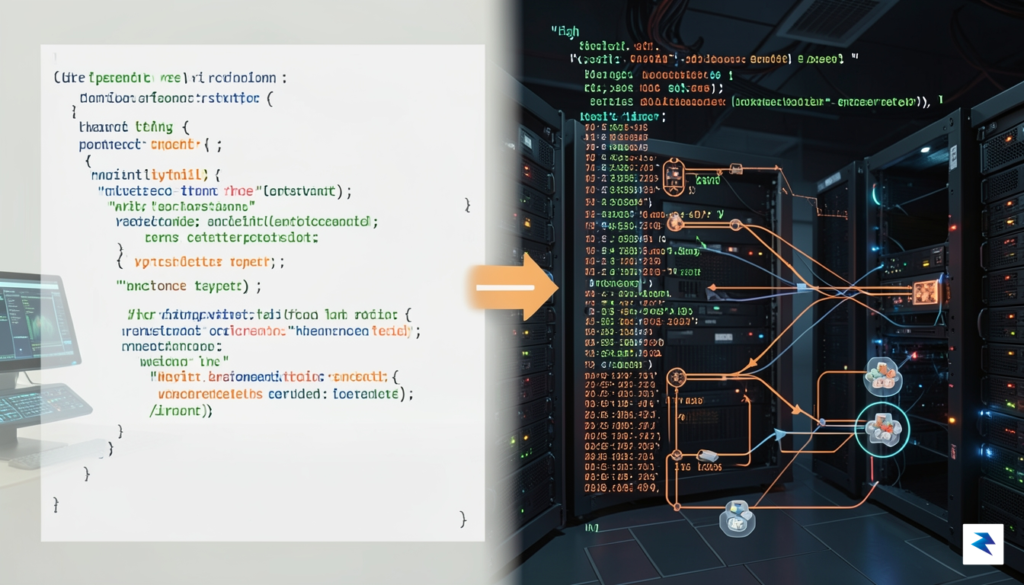
At its core, Mojo represents a radical departure from the traditional trade-offs developers have long accepted when choosing between high-level ease of use and low-level performance. Rather than acting as a mere wrapper or a simple interface for existing libraries, Mojo is designed as a true superset of Python. This means it inherits the clean, readable, and expressive syntax that has made Python the dominant language of the data science and AI communities, while simultaneously unlocking the raw power of metal-level hardware access. By bridging this historic chasm in software engineering, Mojo allows developers to write code that is as intuitive as a script but as performant as a hand-optimized C++ or CUDA implementation.
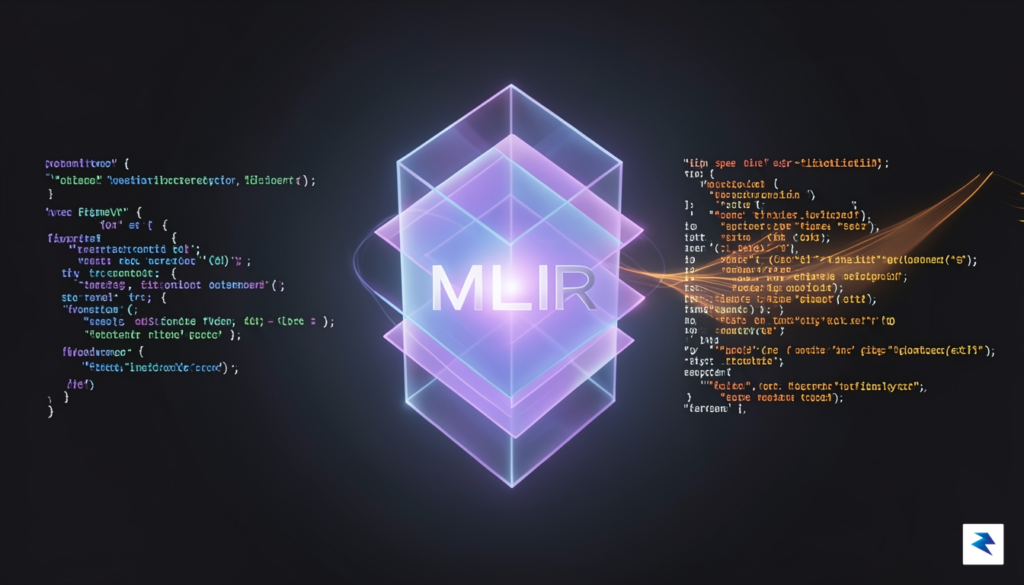
The architectural genius behind this capability lies in Mojo’s deep integration with the Multi-Level Intermediate Representation (MLIR) compiler framework. While many modern languages operate on a singular, rigid representation of code, MLIR allows Mojo to interface with hardware at multiple levels of abstraction. This modularity enables the compiler to perform sophisticated optimizations that are impossible in standard Python, such as aggressive vectorization, multi-threading, and hardware-specific memory management. Because the compiler understands the intent behind the code across these various layers, it can map high-level Python structures directly onto specialized hardware accelerators like GPUs and TPUs with minimal overhead.
Furthermore, Mojo introduces rigorous systems-level features that have historically been absent from the Python ecosystem, most notably ownership, borrowing, and lifetime management. Borrowing from the safety and performance paradigms popularized by languages like Rust, Mojo enforces memory safety at compile-time without sacrificing speed. Developers gain explicit control over how data is stored and retrieved, eliminating the non-deterministic latency often caused by Python’s global interpreter lock (GIL) and garbage collection processes. This shift moves the burden of memory management from the runtime to the compiler, providing a deterministic execution environment that is essential for high-performance AI inference and heavy-duty computational workloads.
Mojo effectively merges the “developer velocity” of Python with the “execution velocity” of hardware-level systems languages, creating a unified ecosystem where performance is no longer an afterthought.
Ultimately, the philosophy driving Mojo is about empowering developers to move beyond the limitations of “glue code.” In the current landscape, developers often find themselves trapped, writing performance-critical kernels in C++ while tethering them to a Python interface. Mojo dismantles this two-language requirement by providing a unified syntax that scales seamlessly from simple prototyping to production-grade deployment. By maintaining full compatibility with the existing Python library ecosystem, it ensures that developers do not have to abandon their favorite tools, all while gaining the ability to write high-speed, hardware-native code directly within the same project architecture.

The impending open-sourcing of the Mojo programming language marks a pivotal moment, transforming it from a promising proprietary tool into a truly community-driven powerhouse. This strategic move is the ultimate catalyst for widespread adoption, inviting a global legion of developers to actively participate in its evolution. By opening the doors to the Mojo compiler, Modular is ensuring that the language doesn’t remain confined within a single vision or proprietary environment. Instead, it will organically adapt and expand to meet the incredibly diverse and rapidly changing demands of the AI ecosystem, leveraging what is often referred to as the ‘network effect’ – where each new contributor and user makes the language exponentially more valuable and robust for everyone.
Transparency, a cornerstone of open-source projects, plays an indispensable role in building crucial trust, particularly among enterprise developers and large organizations. In the world of critical infrastructure and AI development, confidence in the underlying tools is paramount. Open-sourcing Mojo allows any developer or security expert to inspect the compiler’s source code, scrutinize its build processes, understand its security implementations, and verify its performance claims firsthand. This level of insight is rarely, if ever, available with proprietary solutions, where the inner workings remain a black box. For businesses contemplating a significant investment in a new language, this transparency significantly mitigates risk, fostering a deep sense of reliability and accountability that is absolutely essential for long-term commitment and widespread institutional adoption.
Furthermore, the shift to community-led development dramatically accelerates the language’s growth and refinement across multiple fronts. A global, distributed community acts as an incredibly efficient bug-finding and bug-fixing machine, identifying and resolving issues at a pace far beyond what any single internal team could achieve. Beyond mere maintenance, this collaborative environment rapidly spawns a rich ecosystem of libraries, frameworks, and tools. Developers, facing unique challenges in their respective domains, will naturally create specialized extensions and integrations, whether for specific AI models, hardware accelerators, or existing data pipelines. This organic, needs-driven proliferation of resources ensures that Mojo quickly develops a comprehensive and versatile toolkit, addressing a broader spectrum of problems in AI, machine learning, and high-performance computing.
Ultimately, inviting the developer community to contribute ensures robust ecosystem integration and future-proofs the language against obsolescence. Community members will be instrumental in developing essential bindings to other popular languages, seamlessly integrating Mojo with established AI frameworks like PyTorch and TensorFlow, and crafting innovative deployment tools. This collective effort ensures that Mojo doesn’t exist in isolation but becomes a deeply interconnected and interoperable component within the broader software landscape. This continuous cycle of innovation, adaptation to emerging hardware architectures and software paradigms, and responsiveness to real-world developer needs, all driven by collective intelligence rather than a singular corporate roadmap, guarantees Mojo’s long-term relevance and sustained evolution in the fast-paced world of artificial intelligence.
The performance gap between standard Python and Mojo is not merely an incremental improvement; it represents a fundamental shift in how code interacts with underlying hardware. Traditional Python implementations, such as CPython, rely on an interpreter that executes bytecode, introducing significant overhead that prevents the language from reaching its full potential on high-performance silicon. Mojo, by contrast, adopts a modern compiler architecture built on top of MLIR (Multi-Level Intermediate Representation). This allows the language to compile directly into highly optimized machine code that is tailored for the specific CPU, GPU, or TPU architecture currently executing the program.

At the heart of this transformation is the elimination of the infamous “two-language problem.” Historically, developers have been forced to prototype their complex AI models in Python for its ease of use, only to rewrite performance-critical segments in C++ or CUDA to achieve production-grade speed. Mojo effectively bridges this divide by providing a syntax that feels familiar to Python users while offering the granular control of C++. Because Mojo is designed to be a superset of Python, it inherits the productivity developers love, yet it leverages advanced compiler techniques like automatic vectorization and parallelization as default features. Instead of requiring manual optimization, the Mojo compiler identifies opportunities to perform SIMD (Single Instruction, Multiple Data) operations automatically, allowing the hardware to process large data batches in a single clock cycle.
“Mojo bridges the gap between research and production by ensuring that developer-friendly code is not just a prototype, but the final, high-performance product.”
When comparing execution paths, the difference becomes stark. A standard Python script often spends the majority of its time navigating global interpreter locks and performing dynamic type checking, which forces the processor into wait states. Conversely, a Mojo script benefits from static typing and ownership models similar to Rust, which allows the compiler to make aggressive assumptions about memory layout. By reducing the reliance on runtime introspection, Mojo allows the CPU to execute instructions with near-native efficiency. This streamlined execution path means that developers no longer have to sacrifice the flexibility of a dynamic language to harness the raw power of modern AI accelerators, effectively democratizing high-performance computing for a broader range of applications.
Furthermore, the Mojo compiler’s ability to interface directly with hardware-level primitives means that developers can write code that targets specific accelerators without needing to manage the complex boilerplate associated with low-level kernel programming. By automatically handling memory management and hardware-specific optimizations, the language allows the compiler to perform complex transformations that would be impractical for a human to manage manually. As the ecosystem matures and transitions to an open-source model, these architectural advantages will likely set a new standard for how we build the next generation of artificial intelligence software, moving us away from the necessity of fragmented, multi-language stacks.

The decision by Modular to open-source Mojo represents a calculated pivot from a walled-garden proprietary model toward a strategy of ubiquity. By transitioning to an open-source framework, the company is effectively attempting to establish Mojo as the universal infrastructure layer for the artificial intelligence era. In the software industry, the most powerful companies are often those whose tools serve as the foundational bedrock upon which others build; by lowering the barrier to entry, Modular is inviting developers to stress-test, refine, and ultimately rely on their language for mission-critical AI workloads. This shift is designed to transform Mojo from a niche internal tool into an indispensable industry standard, much like how LLVM became the backbone for modern compiler infrastructure.
This strategic maneuver also highlights a sophisticated understanding of the current AI development landscape, which remains fractured and inefficient. As generative AI models grow in complexity, the gap between high-level abstractions like Python and the low-level hardware optimizations required for performance has become a bottleneck for innovation. Modular is betting that by standardizing the development workflow—allowing developers to write high-performance kernels that are as readable as Python—they can capture the massive market of engineers currently struggling with the limitations of existing ecosystems. If they succeed in making Mojo the “lingua franca” of AI hardware acceleration, they position themselves to dictate the future of how models are deployed across heterogeneous computing environments.

There is a delicate tension inherent in this strategy: the risk of vendor lock-in versus the necessity of ecosystem interoperability. While open-sourcing the language mitigates fears that developers are tethered to a single proprietary entity, Modular still maintains a significant advantage by controlling the core compiler technology and the optimized hardware integration layers. Their goal is not to isolate developers, but rather to create a gravitational pull where the most efficient path for any AI project naturally leads to their ecosystem. This is a classic “platform play,” where the strength of the open-source community is leveraged to accelerate the adoption of a commercial backend.
The true success of an open-source initiative is measured not by the number of downloads, but by the depth of the ecosystem that evolves to sustain it. By commoditizing the programming language, Modular is essentially betting that the real value lies in the specialized hardware and deployment infrastructure that only they can provide at scale.
Ultimately, this approach aims to solve the “fragmentation problem” that currently plagues the AI industry. By providing a unified language that bridges the gap between research and production, Modular is attempting to minimize the friction that prevents models from moving from a prototype to a global-scale product. If developers begin to standardize their workflows around Mojo, the resulting network effect will make it increasingly difficult for competing proprietary languages to gain a foothold, effectively cementing Modular’s position as the primary architect of the next generation of generative AI infrastructure.

For the individual developer, the transition of Mojo to an open-source model signals far more than just a change in licensing; it marks the dawn of a new era in software engineering. By lowering the barrier to entry for high-performance computing, this evolution invites you to move beyond the constraints of traditional Python and contribute directly to the infrastructure that will define the next decade of artificial intelligence. Whether you are an experienced systems programmer or a data scientist looking to optimize your models, there is now a tangible space for your input. If you are eager to get involved, the best starting point is to explore the official repository, dive into the documentation, and engage with the community forums. By participating in code reviews, reporting bugs, or drafting documentation, you can play a pivotal role in shaping a language that bridges the gap between ease of use and raw, hardware-level performance.

From a career perspective, early adoption of Mojo offers a distinct competitive advantage in an increasingly AI-centric job market. As companies scramble to integrate high-performance AI models into their products, they will seek engineers who possess the rare ability to write Pythonic code that executes with the efficiency of C++. Mastering this language now positions you at the forefront of a technological shift, effectively future-proofing your skill set against the inevitable limitations of current AI development tools. Long-term, those who invest time in learning the Mojo ecosystem will likely find themselves leading the development of next-generation applications, from decentralized edge computing to massive-scale neural network training.
The true power of open-source development lies not in the code itself, but in the collective intelligence of the community that builds upon it. By democratizing access to high-performance coding tools, we are effectively removing the bottlenecks that have long constrained innovation in the AI space.
Ultimately, the move to open-source is a grand invitation to foster a more inclusive and innovative ecosystem. High-performance programming has historically been an exclusive discipline reserved for a select few, but this shift seeks to redistribute that power to the global developer community. We encourage you to start small—perhaps by porting a personal library or experimenting with Mojo’s unique memory management features—and scale your contributions as the ecosystem matures. By embracing this collaborative spirit, you are not just learning a new syntax; you are actively participating in the democratization of the tools that will build the future of artificial intelligence. The roadmap ahead is defined by your curiosity, your commitment, and your willingness to push the boundaries of what is possible in modern computing.
You must be logged in to post a comment.