The Dune Keypad: Can a Three-Button Controller Solve Your Productivity Woes?
The Evolution of Desktop Productivity Modern professionals operate in a state of perpetual digital fragmentation, frequently jumping between…

The security landscape for Windows users is often complicated by the very utilities designed to improve hardware performance. MSI Center, a comprehensive suite intended to manage motherboard settings, cooling profiles, and RGB lighting, has recently come under intense scrutiny following research conducted by security analyst MrBruh. The core of the issue lies in the application’s implementation of background services, which operate with elevated permissions to interact directly with low-level hardware components. Because these services are designed to perform administrative tasks, they become prime targets for exploitation; specifically, researchers discovered that improper handling of service requests allows a standard, unprivileged user to manipulate these background processes to execute arbitrary code with the highest possible level of authority.
To understand the severity of this flaw, one must appreciate what “SYSTEM privileges” actually represent within the Windows architecture. In the hierarchy of user accounts, the SYSTEM account is a pre-defined local account that holds the most extensive permissions available on the operating system, often surpassing those of a typical local administrator. When an application runs as SYSTEM, it possesses unrestricted access to every file, registry key, and process on the machine. By successfully exploiting this vulnerability, an attacker can bypass traditional security layers, install persistent rootkits, disable antivirus software, or exfiltrate sensitive data without the user ever receiving a prompt or notification. Effectively, the privilege escalation transforms a limited-access user session into a full-control environment for a malicious actor.
The danger of local privilege escalation is not merely theoretical; it is a critical vulnerability because it allows an attacker who has already gained a foothold on the system to seize total control, effectively turning a minor malware infection into a complete system compromise.
This situation serves as a stark reminder of the risks associated with “trusted” third-party software that requires deep system integration. For home users, the threat involves the potential for ransomware or surveillance software to gain deep-rooted persistence that is nearly impossible to detect or remove without a complete system wipe. In enterprise environments, this vulnerability is even more concerning, as a compromised workstation could serve as a beachhead for lateral movement across a corporate network. Since MSI Center is a common utility for gaming and workstation PCs, the sheer number of affected devices makes this a high-severity incident that necessitates immediate attention. Users should not assume that software from reputable hardware manufacturers is inherently secure, as the complexity required to manage modern hardware often introduces unforeseen gaps in the security perimeter.

At the heart of this security vulnerability lies a classic yet critical flaw in how the MSI Center service manages its operational environment. When the software is installed, it registers a service that runs automatically with SYSTEM privileges—the highest level of authority in the Windows operating system. Because this service is responsible for hardware monitoring and system optimization, it requires deep access to kernel-level processes. However, the service fails to implement strict Access Control Lists (ACLs) on its own directory and configuration files. This oversight allows a standard, low-privileged user to modify files or replace legitimate binaries that the service is programmed to execute, effectively turning a legitimate utility into a vector for unauthorized system access.
The exploit chain begins with the realization that the service performs file operations without validating the integrity or the origin of the assets it interacts with. Because the installation folder possesses overly permissive write access, a malicious actor can place a crafted dynamic link library (DLL) or a malicious executable script within the directory where the service expects to find its own resources. When the MSI Center service initiates its routine background tasks, it blindly follows its instructions, inadvertently loading the attacker-provided payload. Since the service process is already operating under the SYSTEM account, the malicious payload inherits those same elevated permissions, granting the attacker total control over the operating system.
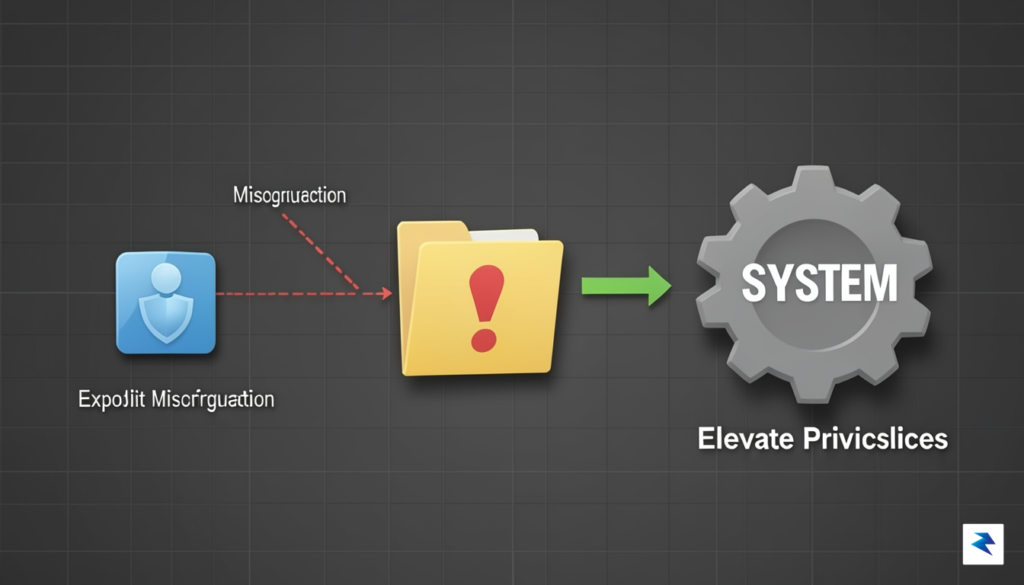
Furthermore, the vulnerability is compounded by a profound lack of input validation within the service’s inter-process communication mechanisms. Even if a user cannot directly replace a binary, they may be able to send specifically crafted commands to the service’s communication pipe. Because the service does not verify that these commands originate from an authorized source or that the data is sanitized, it can be coerced into performing actions it was never intended to support. This effectively bypasses the security boundaries that are supposed to isolate user-space applications from kernel-level system processes.
The core of the issue is not just the elevated status of the service, but the failure to apply the principle of least privilege to the service’s own file system workspace.
Ultimately, this interaction represents a failure in defensive programming. By failing to lock down the folder permissions, the developers essentially left the front door open for any user logged into the machine to exert influence over a high-privilege process. When an application runs as SYSTEM, every dependency it loads and every file it executes must be strictly verified against a known-good baseline or digital signature. Without these technical guardrails, the service essentially trusts any code it encounters in its working directory, leading to a catastrophic breakdown of the system’s security posture.

Gaining SYSTEM privileges is essentially the “holy grail” for any threat actor, as it grants them complete, unrestricted control over the Windows operating system. When an application like MSI Center—which runs with elevated permissions to interact with hardware—is exploited to bridge the gap between a standard user and the kernel, the security boundary effectively evaporates. At this level of authority, the attacker is no longer constrained by standard user account controls or file system permissions, allowing them to manipulate the very foundation of the operating environment without triggering traditional warnings.

The immediate fallout of such an escalation often involves high-stakes credential harvesting. Once an attacker possesses SYSTEM-level access, they can easily interact with the Local Security Authority Subsystem Service (LSASS), the process responsible for enforcing security policies and managing user logins. By dumping the contents of LSASS memory, malicious actors can extract plaintext passwords, Kerberos tickets, and NTLM hashes, effectively granting them the keys to the entire network rather than just a single local machine. This lateral movement capability turns a localized software flaw into a catastrophic enterprise-wide security incident.
Once the kernel-level barrier is breached, the operating system can no longer be trusted to report its own state accurately, as the attacker can manipulate the very logs and services intended to monitor their activity.
Beyond simple data theft, the most insidious threat posed by SYSTEM access is the establishment of long-term persistence. Because the attacker has total control over the system configuration, they can deploy rootkit-style backdoors that survive reboots, disable third-party antivirus and EDR (Endpoint Detection and Response) solutions, and modify core system files to maintain a permanent foothold. These mechanisms often hide in plain sight, masquerading as legitimate Windows services or drivers, which makes detection exceptionally difficult for standard security tools.
Detecting unauthorized actions after a privilege escalation has occurred is notoriously difficult because the attacker effectively becomes the administrator of the security apparatus itself. They can selectively suppress alerts, clear event logs, and blind monitoring agents, creating a “silent” infection that can persist for months or even years. Because the exploit originates from a trusted, signed application like MSI Center, many heuristic-based security measures may fail to flag the initial activity as malicious. Consequently, organizations must rely on proactive patch management and the principle of least privilege to ensure that even if one component is compromised, the damage remains contained.
The most immediate and effective defense against privilege escalation vulnerabilities in MSI Center is ensuring that your installation is running the absolute latest version released by the manufacturer. While software vendors often take time to acknowledge and remediate security flaws, checking the official MSI support website regularly is a critical habit for any user. Do not rely solely on the built-in auto-update feature, as it may occasionally lag behind the files hosted on the primary support portal. By manually downloading and installing the most recent build, you ensure that any disclosed security patches or hardened service configurations are applied to your system immediately, closing the doors that attackers use to gain elevated access.
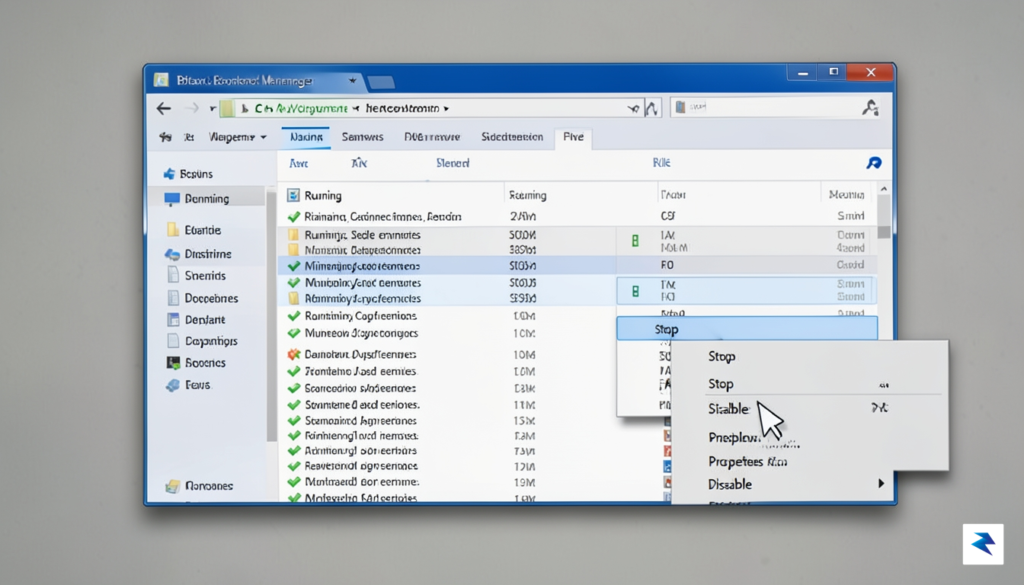
If you find that you do not actively utilize the specific features provided by MSI Center—such as custom fan profiles, overclocking tools, or RGB lighting synchronization—the safest course of action is to disable or uninstall the software entirely. Many users install these utilities for one-time configurations and never open them again, yet the background services remain active and vulnerable. You can manage these services by opening the Windows Services.msc console, locating the relevant MSI-related processes, and setting their Startup Type to “Disabled.” This simple modification prevents the dangerous code from executing upon boot, effectively neutralizing the attack surface until you explicitly need the service to run.
Adopting the principle of least privilege is your best line of defense against modern exploit chains; by limiting the permissions of the user account running these background services, you can prevent a local exploit from escalating into a full system compromise.
Beyond immediate software updates and service management, you should adopt a stance of vigilant monitoring to detect any unauthorized background activity. Utilize the built-in Windows Event Viewer to inspect logs for unusual service crashes or repeated attempts to initialize MSI-related modules, which could indicate an attacker attempting to probe the software’s weaknesses. If you are an advanced user, consider utilizing tools like Sysinternals Process Monitor to observe exactly which files and registry keys the MSI services are interacting with. By establishing a baseline of what “normal” behavior looks like for your system, you will be significantly better equipped to notice anomalies that might suggest a security breach is currently in progress.
Finally, it is essential to remember that security is a continuous process rather than a one-time configuration task. Even when a patch is applied, maintain your defensive posture by ensuring your Windows OS is fully updated and that you are utilizing a reputable endpoint protection solution. Combining these proactive measures with a skeptical approach to background utilities—giving them only the permissions they absolutely require—will keep your hardware performance high while keeping your system’s integrity intact against sophisticated privilege escalation threats.

The incident surrounding privilege escalation within hardware utility software is far from an isolated anomaly; it represents a persistent and systemic blind spot in the modern computing ecosystem. For years, Original Equipment Manufacturers (OEMs) have prioritized the rapid deployment of feature-rich control panels—designed to manage everything from custom RGB lighting arrays and fan curves to complex CPU overclocking parameters—without subjecting these tools to the same rigorous, multi-layered security audits required for core operating system components. Because these utilities often operate with elevated permissions to interact directly with hardware registers and firmware, any vulnerability within their codebase grants an attacker a direct path to the heart of the system, effectively bypassing the security boundaries intended to protect the user.
This recurring pattern of insecurity highlights a fundamental tension between user convenience and robust architectural defense. Manufacturers are under immense pressure to ship software that showcases the unique capabilities of their high-end hardware, often resulting in development cycles where security is treated as an afterthought rather than a foundational requirement. Historically, many of these “bloatware” utilities have relied on insecure driver communication methods, such as unprotected IOCTL (Input/Output Control) interfaces, which can be easily manipulated by unprivileged processes. By failing to implement strict input validation and access controls, developers inadvertently turn essential system-tuning tools into potential vectors for full-system compromise.
To move past this era of frequent vulnerabilities, the industry must fundamentally shift its approach toward hardware-level software development. This change requires the adoption of secure-by-design principles, including the implementation of the principle of least privilege, where only the absolute minimum required functionality is granted administrative access. Furthermore, OEM software should undergo independent, third-party security audits before release, ensuring that common pitfalls—such as insecure file operations or improper memory handling—are identified and remediated long before the software reaches the consumer’s machine.
True security in the OEM space is not achieved by patching vulnerabilities after they are exploited, but by building software architectures that assume the presence of malicious actors from the very first line of code.
Ultimately, the future of hardware-level software security relies on both manufacturer accountability and increased public awareness. As users become more cognizant of the risks posed by pre-installed utilities, the demand for transparency and hardened code will likely force a change in how these companies approach development. By standardizing secure communication protocols between user-space applications and kernel-mode drivers, the industry can finally close these dangerous gaps, ensuring that the pursuit of a customizable, high-performance experience does not come at the expense of the user’s fundamental digital safety.
You must be logged in to post a comment.