
The 2-Year Countdown: Will Tether Survive the GENIUS Act?
The Clock is Ticking: Understanding the GENIUS Act Timeline The legislative landscape of the United States cryptocurrency market has shifted…
The staggering $124.5 million opening weekend for Christopher Nolan’s latest cinematic odyssey serves as more than just a victory for the studio; it acts as a definitive statement on the enduring vitality of the theatrical experience. In an era where the convenience of streaming often threatens to relegate movies to the background of our daily lives, Nolan has managed to command the undivided attention of global audiences. This massive financial performance underscores a growing appetite for spectacle that demands the scale, sound, and communal atmosphere of a traditional cinema. By turning a film into a genuine cultural event, Nolan has proven that when the vision is ambitious enough, audiences are more than willing to leave their homes to participate in a shared narrative journey.
Much of this success is rooted in the unique brand equity that the director has cultivated over the past two decades. For the average moviegoer, the presence of Nolan’s name on a project acts as an ironclad guarantee of uncompromising quality and technical mastery. His reputation for meticulous craftsmanship—favoring practical effects, complex storytelling, and innovative cinematography—has transformed his films into “must-see” cultural touchstones. Audiences do not just go to see a story; they go to witness a director at the height of his powers pushing the medium of film to its absolute limit. This level of trust is rare in the modern film landscape, and it serves as a powerful anchor that draws viewers back to the big screen repeatedly.
“The communal experience of watching a masterwork in a dark room with strangers is not merely an aesthetic choice; it is a vital part of how we process and elevate art into a cultural conversation.”
Furthermore, the immediate buzz surrounding this release highlights a collective yearning for “event cinema” that functions as a common language. Following the opening weekend, social media platforms and dinner table conversations have been dominated by discussions regarding the film’s narrative depth and technical prowess, effectively turning the movie into a necessary cultural requirement. This phenomenon is essential for the industry because it reminds both studios and viewers that films can be more than disposable content; they can be defining moments in our social calendar. By reclaiming the blockbuster as a site of intellectual and sensory engagement, Nolan has not only secured a financial windfall but has also successfully reignited the debate over why the theatrical experience remains irreplaceable in our digital age.
The staggering $124.5 million opening for Christopher Nolan’s latest epic is not merely a testament to the director’s enduring brand, but a clear signal of a seismic shift in audience preferences. While big-name directors certainly draw initial interest, the massive turnout for The Odyssey suggests that modern moviegoers are actively hungering for high-stakes, long-form storytelling that demands the immersive environment of a cinema. In an era dominated by bite-sized digital content and fragmented attention spans, Nolan has managed to turn a multi-hour commitment into a cultural event, proving that audiences are still willing to invest their time in dense, intellectually demanding narratives if the scale of the production matches the ambition of the script.
A significant driver of this success lies in a meticulously calculated marketing strategy that emphasized the film’s “must-see” status without relying on the traditional saturation of franchise marketing. By positioning the production as an essential theatrical experience—one that would lose its gravitas on a home television screen—the studio tapped into a growing desire for communal event cinema. This was bolstered by overwhelming critical acclaim, which framed the movie not just as entertainment, but as a landmark achievement in technical filmmaking. Word-of-mouth played an equally pivotal role, as early attendees took to social media to highlight the film’s visual spectacle, effectively turning the audience into a decentralized promotional machine that emphasized the unique, non-repeatable nature of the viewing experience.
The success of this adaptation proves that when a filmmaker treats the audience as intelligent partners in the storytelling process, they respond by showing up in record numbers.
Beyond the marketing hype, the film’s demographic reach has been remarkably broad, successfully bridging the gap between hardcore cinephiles and general audiences looking for a grand, sweeping adventure. Nolan’s approach to the source material—often viewed as daunting or archaic—was to strip away the dusty tropes of the genre and replace them with the visceral, grounded tension that defines his filmography. Unlike conventional blockbusters that prioritize rapid-fire quips and formulaic plot beats, this adaptation treats its classical roots with a gritty, modern realism that feels urgent rather than academic. By balancing the weight of its Homeric inspiration with the pacing of a high-octane thriller, the film has managed to capture an audience that is clearly tired of the status quo and eager for something that feels both ancient in its wisdom and revolutionary in its execution.
For decades, the standard theatrical runtime hovered comfortably between 90 and 120 minutes, a window designed to maximize the number of daily screenings per auditorium. From a logistical standpoint, three-hour epics present a significant hurdle for cinema owners: longer runtimes inherently reduce the number of potential showtimes per day, which theoretically limits the total capacity for ticket sales. When a theater commits to a 180-minute feature, it must sacrifice at least one, if not two, additional screenings compared to a shorter film. Yet, the massive $124.5 million opening for this latest cinematic event suggests that the industry is undergoing a paradigm shift. Audiences are no longer viewing the length of a movie as a deterrent, but rather as a hallmark of premium, “must-see” prestige entertainment that justifies the rising cost of a theater ticket.
Exhibitors are increasingly embracing this long-form trend because it fundamentally alters the revenue-per-seat metric. While the raw number of showtimes may be lower, the high-quality, event-level status of films like The Odyssey allows theaters to command premium pricing through IMAX, Dolby Cinema, and reserved seating models. By positioning the film as a cultural experience rather than a casual afternoon outing, theaters create a scarcity effect that encourages fans to secure their seats well in advance. This strategy effectively offsets the loss of volume with an increase in value; when a film has the cultural gravity to pack a house on a Tuesday night despite its lengthy duration, the logistical trade-off becomes a lucrative win for both the studio and the exhibitor.
The financial risk profile of a three-hour epic is undeniably steeper than that of a standard-length tentpole. A massive budget combined with a long runtime leaves very little room for error; if the film fails to resonate, the studio is left with an expensive, difficult-to-schedule asset that offers low replayability in theaters. However, this risk is mitigated when the director’s vision carries enough weight to transcend traditional marketing. Nolan’s ability to turn a three-hour runtime into a selling point rather than a barrier reflects a deeper audience desire for immersion. In an age of fragmented attention spans, the sheer commitment required to sit through The Odyssey creates a shared social contract, where the length becomes a badge of honor for the viewer.
The success of the three-hour blockbuster proves that when the craft is undeniable, audiences are not looking for the shortest route to the credits; they are looking for the deepest possible escape.
Ultimately, the triumph of this opening weekend signals to Hollywood that quality remains the primary driver of box office performance, regardless of the clock. While shorter films will always have their place, the appetite for expansive, sweeping narratives has never been higher. By betting on the audience’s willingness to invest their time, studios are discovering that they can revitalize the theatrical experience, proving that a long, immersive journey is often exactly what moviegoers are craving in a world of bite-sized digital content.
In an era increasingly dominated by established intellectual property, sequels, and cinematic universes, Christopher Nolan stands as a rare anomaly: a director whose name acts as a primary brand, drawing audiences into theaters regardless of the subject matter. His latest triumph with The Odyssey is not merely a testament to the film’s own quality, but a continuation of a career-long streak that has redefined what constitutes a “blockbuster.” Since his breakout with Memento and his subsequent transformation of the superhero genre with The Dark Knight trilogy, Nolan has cultivated a level of trust with his audience that is virtually unparalleled. Moviegoers flock to his films not just to see a story, but to witness an event, knowing that his uncompromising vision typically results in an experience that demands to be seen on the largest canvas possible.
Central to this enduring mastery is Nolan’s unwavering philosophy regarding theatrical exclusivity. While many studios have pivoted toward hybrid release models or prioritized streaming platforms to satisfy short-term metrics, Nolan remains a steadfast guardian of the big-screen experience. He treats the cinema as a sacred space, insisting that his films are engineered specifically for the immersive qualities of premium large formats. By utilizing high-resolution IMAX cameras and advocating for traditional film projection, he provides a technical spectacle that cannot be replicated in a living room. This commitment to the medium creates a sense of scarcity and prestige, effectively turning every release into a cultural milestone that feels incomplete if viewed on a home television screen.
“The way a film is projected—the sheer scale, the sound, the collective silence of a room—is as much a part of the storytelling as the script itself.”
This consistency has been the bedrock of his long-term relationship with global audiences. Unlike directors who may oscillate between artistic passion projects and commercial assignments, Nolan has successfully bridged the gap between cerebral, high-concept filmmaking and broad, populist appeal. Whether he is exploring the intricacies of time dilation in Interstellar or the layered architecture of dreams in Inception, he maintains a rigorous standard of quality that ensures viewers rarely feel cheated by their ticket purchase. This reliability builds a unique form of loyalty; audiences know that a Nolan film will be meticulously crafted, technically ambitious, and intellectually challenging. Consequently, the massive $124.5 million opening for his latest project is not just a statistical success, but a confirmation that the industry still craves a visionary filmmaker who treats the audience with the utmost respect, proving that when the craft is elevated, the box office will naturally follow.
The staggering $124.5 million opening weekend for The Odyssey serves as a powerful rebuttal to the narrative that the theatrical window is an archaic relic of the past. For years, industry analysts have debated whether the convenience of home streaming would permanently dismantle the traditional cinema model, yet Nolan’s latest venture proves that audiences are still willing to prioritize the big screen for the right caliber of content. By refusing to compromise on scope and spectacle, the studio has effectively validated the belief that the “theatrical experience” remains a distinct, premium product that cannot be replicated on a living room television, no matter how advanced the home theater setup might be.
This success provides a vital blueprint for other high-budget prestige projects currently stalled in development. As studios grapple with the rising costs of production and the unpredictable nature of global audiences, the performance of this film suggests that “event-level” filmmaking is the most reliable path toward financial sustainability. Rather than spreading resources thin across a high volume of mid-budget content, major players are likely to shift their focus toward fewer, more ambitious projects that demand a communal viewing experience. This shift doesn’t necessarily signal the death of streaming, but rather a more nuanced relationship between platforms and cinemas, where streaming services may eventually serve as a secondary home for films that have already established their cultural footprint in theaters.
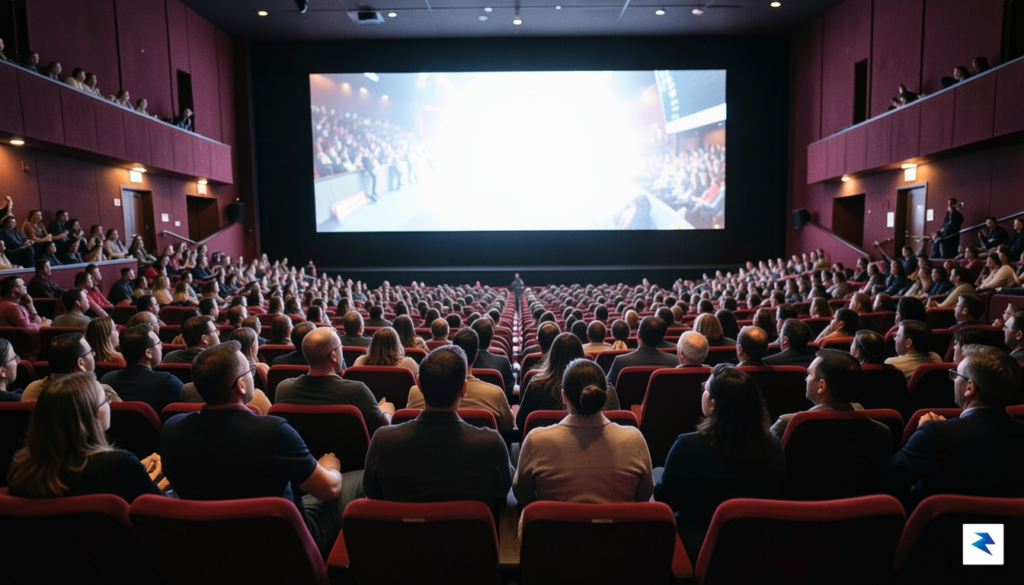
The success of The Odyssey confirms that when filmmaking is treated as an irreplaceable event, the public will show up in record numbers to be part of the moment.
Looking ahead, the industry must recognize that the health of theatrical releases is intrinsically linked to the perceived value of the content itself. If audiences are expected to leave their homes and pay for tickets, they require a sense of scale, technical mastery, and artistic vision that feels urgent and unmissable. The future of cinema depends on this commitment to quality, ensuring that the theater remains a destination for cultural milestones rather than just another content delivery system. By prioritizing cinematic ambition over short-term digital engagement metrics, the film industry can secure its relevance for decades to come, proving that even in a digital-first world, the hunger for shared, larger-than-life storytelling remains an essential part of the human experience.
You must be logged in to post a comment.