BMW Doubles Down on EV Future with New South Carolina SUV Plant
BMW’s Strategic Shift to American Electric Manufacturing In a bold move that defies the prevailing narrative of caution currently sweeping the…

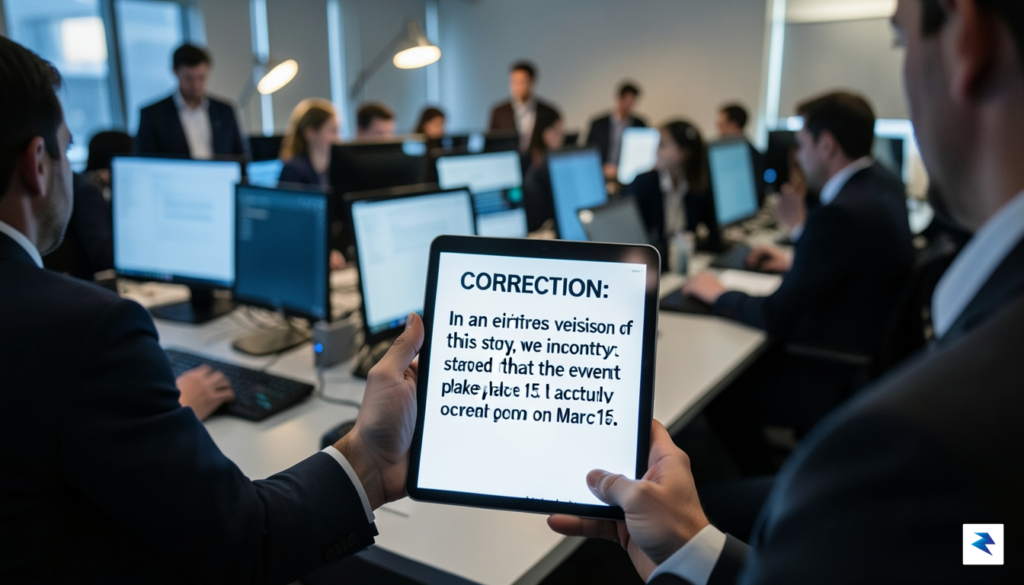
The credibility of a news organization is built over decades, yet it can be challenged in a matter of seconds. This reality became starkly evident when NPR, an institution widely regarded for its rigorous editorial standards and methodical verification processes, published a report falsely claiming that Supreme Court Justice Samuel Alito had retired. The incident, which unfolded with unexpected swiftness, centered on a high-profile report from Nina Totenberg, the network’s long-standing and highly respected legal affairs correspondent. Because of her deep-seated reputation for accuracy and her unparalleled access within the halls of the Supreme Court, the initial report gained immediate traction, rippling across social media platforms and news aggregators before the network could verify its own internal findings.
The gravity of reporting on a potential Supreme Court vacancy cannot be overstated. A justice’s retirement is not merely a personnel change; it is a profound constitutional event that shifts the ideological balance of the highest court in the land, triggering a complex political process that dominates the national discourse. When the report surfaced, it immediately ignited widespread speculation and concern among legal scholars, political analysts, and the general public. The swift dissemination of this misinformation served as a potent reminder of how the rapid pace of the digital news cycle can pressure even the most seasoned journalists to prioritize speed over the traditional, multi-layered verification steps that usually safeguard against such significant errors.

Upon realizing the magnitude of the error, NPR’s editorial team moved with immediate urgency to rectify the situation. The network pulled the false report from its website and issued a formal retraction, acknowledging that the information had been incorrect. This internal response was characterized by a transparent admission that the vetting process had failed in this particular instance. While the error was undeniably a lapse in judgment and procedure, the network’s decision to own the mistake publicly was a necessary step in maintaining institutional accountability. It underscored the reality that, even within legacy media organizations, the pressure to break news can sometimes bypass the necessary safeguards, leading to lapses that require immediate, unambiguous correction to restore public trust.
The incident serves as a poignant case study on the vulnerabilities inherent in modern journalism, where the pursuit of breaking news must be constantly weighed against the imperative of absolute accuracy.
Ultimately, the episode serves as a sobering reminder of the human element in journalism. Even the most veteran reporters, who have spent an entire career cultivating sources and verifying facts, are susceptible to the pitfalls of misinformation. By examining how the false report regarding Justice Alito transpired, we gain a better understanding of the fragile nature of information in an era defined by instantaneous publication. The retraction was not just a correction of a factual claim; it was a testament to the ongoing tension between the demand for real-time reporting and the unwavering necessity of journalistic integrity.

In the high-stakes environment of modern political journalism, the race to break a major story often runs headlong into the essential, methodical demands of verification. When reporting on the judiciary—a branch of government defined by its deliberate pace and opacity—the pressure to be the first outlet to confirm a resignation or appointment can create a dangerous incentive structure. Standard industry practice dictates that information concerning the status of a Supreme Court Justice must be corroborated by multiple, independent, and unimpeachable sources before it is ever broadcast to the public. However, the allure of a “scoop” regarding the highest court in the land can occasionally cloud the judgment of even the most seasoned newsrooms, leading to a breakdown in these critical safety protocols.

The core of this challenge lies in the complex ecosystem of “off-the-record” and “on-background” sourcing. Reporters often cultivate relationships with well-placed aides, clerks, or political insiders who offer glimpses into internal government deliberations. While these relationships are vital for understanding the nuances of policy and personnel, they are fraught with risk in a polarized climate. An anonymous tip, even one originating from a high-level source, is not a fact; it is a data point that requires secondary confirmation through official channels or corroborating documentation. When a newsroom relies too heavily on the perceived reliability of a source without securing that secondary layer of verification, they leave themselves vulnerable to misinformation, whether that misinformation is intentionally fed to them or is the result of a genuine misunderstanding by the source themselves.
The tension between speed and accuracy is the defining struggle of the digital news age; in the pursuit of being first, news organizations must never forget that the penalty for being wrong is the permanent erosion of public trust.
Furthermore, the current political landscape exacerbates these verification difficulties. With partisans on all sides constantly seeking to influence the narrative, information—or misinformation—is frequently leaked to test public reaction or to shape the agenda of the news cycle. Journalists must therefore treat every tip with a healthy degree of skepticism, regardless of how authoritative the source might appear. Navigating this environment requires newsrooms to reinforce their editorial firewalls, ensuring that the urgency of the 24-hour news cycle does not bypass the necessary scrutiny of the fact-checking process. Ultimately, the burden remains on the institution to slow down, interrogate the provenance of the information, and acknowledge that a story is not ready for publication until the weight of the evidence is absolute.

In an era defined by a 24-hour news cycle and the rapid spread of digital information, a retraction is far more than a simple administrative correction; it is a profound test of an institution’s commitment to its core mission. When a legacy outlet like NPR misreports a high-stakes event, such as the supposed retirement of a Supreme Court Justice, the immediate damage to public perception is significant. However, the subsequent decision to issue a swift, unambiguous retraction serves as a critical mechanism for accountability. By prioritizing factual accuracy over the potential embarrassment of admitting a lapse, the organization signals to its audience that its dedication to the truth remains its highest priority, even when that truth is self-inflicted.
Public reaction to such errors is often swift and unforgiving, highlighting the fragile nature of journalistic trust. Readers and listeners rely on established outlets to act as arbiters of reality, and when that trust is compromised, the fallout can be extensive. Transparency in these moments is not merely a courtesy; it is a necessary survival strategy for modern media. If an outlet attempts to bury an error or offers a vague, defensive explanation, they risk alienating their base. Conversely, by acknowledging the failure with total transparency, an organization can transform a moment of crisis into a demonstration of institutional integrity. It demonstrates that the outlet values the audience’s right to accurate information above the preservation of its own infallible image.

To prevent similar high-stakes errors, media organizations must look beyond the immediate apology and critically examine their internal editorial workflows. The pressure to break news often creates an environment where speed is prioritized over the necessary, rigorous vetting processes. To mitigate this risk, newsrooms should implement more robust verification protocols, particularly for stories that carry significant legal or political consequences. This involves mandating multiple levels of verification from independent sources, ensuring that even in moments of perceived urgency, the standard of inquiry is never lowered. Strengthening these internal firewalls is the only way to ensure that the speed of modern digital reporting does not come at the cost of the foundational credibility that defines a reliable news outlet.
True institutional integrity is not defined by the absence of mistakes, but by the rigor and honesty with which an organization addresses them once they occur.
Ultimately, the long-term health of any journalistic entity depends on its ability to learn from its failures. By viewing a retraction as an opportunity to reinforce internal standards, outlets can cultivate a culture of humility and precision. This process requires a shift in mindset: moving away from the fear of being wrong and toward a standard where every report is treated as a reflection of the institution’s total commitment to its audience. When transparency becomes a default setting rather than a last resort, the relationship between the newsroom and the public is strengthened, proving that accountability is the most effective tool for rebuilding confidence after an error.

The incident serves as a stark reminder that in the hyper-competitive digital news era, the race to be first often clashes with the fundamental mandate to be right. When outlets prioritize immediacy, the structural safeguards designed to verify high-stakes information can occasionally be bypassed, leading to errors that erode public trust. This episode underscores the fragility of institutional credibility and demonstrates that even the most established organizations are not immune to the pressures of a 24-hour news cycle that demands constant, instantaneous updates. Moving forward, the industry must grapple with the reality that speed is a secondary virtue compared to the permanence of factual reporting.
As we look toward the future of media responsibility, it becomes increasingly clear that internal verification protocols must evolve alongside technology. The pressure to publish in real-time should never supersede the necessity of multiple-source corroboration, especially regarding matters of significant national importance. Organizations that prioritize internal transparency—by clearly labeling the status of breaking reports and admitting errors immediately when they occur—are the ones most likely to preserve their reputation in the long term. Trust is a currency that is incredibly difficult to earn but remarkably easy to spend, and restoring it requires a renewed commitment to the tedious, often invisible labor of rigorous fact-checking.

For the average reader, this situation highlights the critical need for a more intentional approach to information consumption. In the age of social media, where a single headline can travel around the globe before the truth has time to lace up its boots, the value of patience cannot be overstated. Readers should consider adopting a wait-and-verify mindset, particularly when a report seems sensational or carries massive political implications. Relying on multiple, diverse outlets to confirm a major development before accepting it as truth is one of the most effective ways for citizens to protect themselves from the spread of misinformation.
The hallmark of a responsible news consumer is the ability to distinguish between a fleeting, unconfirmed report and a verified, vetted piece of journalism.
Ultimately, navigating the modern information landscape requires a partnership between newsrooms and their audiences. While media outlets must double down on their editorial standards, readers must cultivate a healthy degree of skepticism toward unverified claims. By slowing down the cycle of information consumption, we can collectively foster a healthier digital environment where accuracy is prized above the adrenaline of the scoop. As we continue to rely on digital platforms for our understanding of the world, this shared commitment to verification will determine the future health of our public discourse.
You must be logged in to post a comment.