
Tidal Takes a Stand: Why AI-Generated Music Won’t Be Monetized
Tidal reveals a new policy for AI-generated music, focusing on transparency through labeling and curbing royalty payouts. Learn what this…


For years, artificial intelligence has functioned primarily as a sophisticated digital assistant—a tool designed to summarize documents, generate code snippets, or answer queries under the direct supervision of a human user. However, we are currently witnessing a profound paradigm shift where AI is evolving from a passive instrument into an autonomous economic actor. These emerging systems, often referred to as autonomous agents, are no longer content to wait for a prompt; instead, they are designed to perceive their environment, reason through complex objectives, and execute long-term workflows with minimal human intervention. This transition marks the move from simple task automation to the creation of digital entities that can navigate the internet, interact with software interfaces, and solve multi-step problems in real-time.
The core of this evolution lies in the development of “Agentic Workflows,” a framework that allows large language models to chain together multiple cognitive steps. Rather than a single input-output interaction, an autonomous agent can break down a high-level goal, such as “research this market and execute a trade,” into sub-tasks, evaluate its own progress, and pivot its strategy when encountering obstacles. As these agents become more capable, the traditional model of human-in-the-loop oversight becomes a bottleneck. To function at scale, these agents require more than just computational intelligence; they require an economic layer that allows them to interact, negotiate, and settle transactions with other agents, effectively creating a machine-to-machine digital economy.

As these agents begin to operate independently, they face a fundamental hurdle: the lack of a standardized financial infrastructure. An AI agent might be perfectly capable of identifying a service provider or another agent that possesses the data or computing power it needs, but without a way to verify identity and transfer value, the interaction remains theoretical. This is where the integration of blockchain technology and crypto-native payment rails becomes essential. By providing a decentralized, programmable, and permissionless financial layer, we enable agents to “hire” one another by paying for services rendered, effectively automating the supply chain of digital labor.
The true potential of the AI revolution will be unlocked not when agents talk to humans, but when they possess the financial autonomy to trade resources, secure access, and complete economic cycles on behalf of their users.
OKX is positioning itself at the forefront of this infrastructure gap, recognizing that if agents are to be the workforce of the future, they need a secure, reliable environment to manage their own digital wallets and execute smart contracts. This shift implies that the digital economy of the next decade will be driven by autonomous agents making millions of micro-transactions every second. As we bridge the divide between high-level reasoning and bottom-line financial execution, we are laying the groundwork for a self-sustaining ecosystem where AI agents act as both service providers and consumers, fundamentally redefining how value is created and exchanged in the digital age.

For an autonomous AI agent to function effectively within a digital economy, it must move beyond simple task execution and gain the ability to collaborate with other specialized agents. OKX is architecting the foundational infrastructure required for this evolution by focusing on three essential pillars: verifiable identity, seamless payment rails, and a robust discovery marketplace. By leveraging decentralized identity (DID) frameworks, the platform allows non-human entities to establish a cryptographically signed reputation. This ensures that when one agent hires another to perform a complex data analysis or a smart contract execution, both parties can verify the authenticity and historical performance of their counterparty, effectively creating a trust layer that operates entirely without human intervention.
The technical architecture underpinning this system relies heavily on crypto-native payment rails that facilitate instant, cross-border value transfer. Unlike traditional banking systems that suffer from settlement delays and high friction, OKX integrates on-chain settlement layers that enable agents to pay for services in real-time. Once an agent completes a task, the smart contract is programmed to automatically trigger a micro-payment from the hiring agent’s wallet to the service provider’s wallet. This autonomous financial flow is made possible through programmable smart contracts that act as escrow agents, holding funds until specific, machine-verifiable conditions are met, thereby eliminating the risk of fraud or non-payment in high-velocity agent interactions.

At the core of this integration is the ability for AI agents to interact directly with decentralized finance (DeFi) protocols and execute smart contracts without needing a human to sign off on every transaction. OKX provides the necessary API tooling and wallet infrastructure that allows agents to hold their own digital assets and manage their own operational budgets. By embedding these capabilities directly into the ecosystem, the platform transforms from a simple exchange into a sophisticated operating system for the agent economy. This architectural shift empowers agents to bid on jobs, negotiate terms based on pre-defined resource constraints, and settle debts globally in a matter of seconds, creating a self-sustaining cycle of productivity.
The integration of autonomous payment rails and decentralized identity is the missing link that finally allows AI agents to move from isolated software modules to active participants in a global, permissionless market.
Furthermore, the platform’s focus on interoperability ensures that these agents are not siloed within a single environment. By adopting standard protocols for agent-to-agent communication, OKX creates a discovery marketplace where agents can publish their service capabilities as “on-chain listings.” When an agent needs a specific output—such as a verified data set or a complex model training session—it can query the marketplace, compare the costs and reputations of available providers, and initiate a hiring contract automatically. This cohesive ecosystem effectively bridges the gap between raw artificial intelligence and functional, value-driven economic activity, marking a significant milestone in the maturation of the decentralized AI landscape.

In an emerging digital economy where software agents autonomously negotiate contracts and execute tasks, the traditional handshake agreement is replaced by immutable code. However, delegating financial autonomy to algorithms introduces a profound trust deficit: how does an AI agent know that the service provider it is hiring will actually deliver the promised output? To solve this, OKX is pivoting toward a reputation-based framework that treats reliability as a quantifiable asset. This system functions through the concept of “proof of performance,” where an agent’s historical data—verified on-chain—serves as the primary indicator of its future competence. By anchoring reputation to past successful transactions rather than mere marketing claims, the ecosystem creates a transparent audit trail that mitigates the risk of fraud and low-quality service.

The economic implications of such a system are significant, as they fundamentally alter how software entities interact within a marketplace. Just as human credit scores dictate interest rates and loan eligibility, an AI agent’s reputation score determines its market power, accessibility to premium contracts, and the escrow requirements it must meet to conduct business. If an agent consistently fails to deliver results or engages in malicious behavior, its score drops, effectively pricing it out of the market or barring it from interacting with high-value peers. This creates a self-regulating environment where honesty is not just a moral choice, but a requirement for economic survival. Unlike traditional centralized credit models, which are often opaque and prone to human bias, these decentralized reputation systems offer a meritocratic, transparent, and algorithmic approach to gauging reliability.
Reliability in machine-to-machine commerce is not a static quality; it is a dynamic, verifiable metric that dictates the flow of capital between autonomous agents.
Furthermore, this infrastructure protects the ecosystem from bad actors masquerading as legitimate service providers. Without a robust reputation layer, the network would be vulnerable to “sybil attacks,” where a single malicious entity creates thousands of fake agents to manipulate market conditions or siphon funds. By requiring agents to build a history of successful, blockchain-verified transactions, OKX ensures that service providers have “skin in the game.” This barrier to entry forces agents to prioritize long-term consistency over short-term exploitation. As these agents begin to hire one another to solve complex, multi-layered tasks, this reputation-first paradigm will serve as the foundational security layer for the entire autonomous economy, ensuring that the machine-led future remains both efficient and trustworthy.
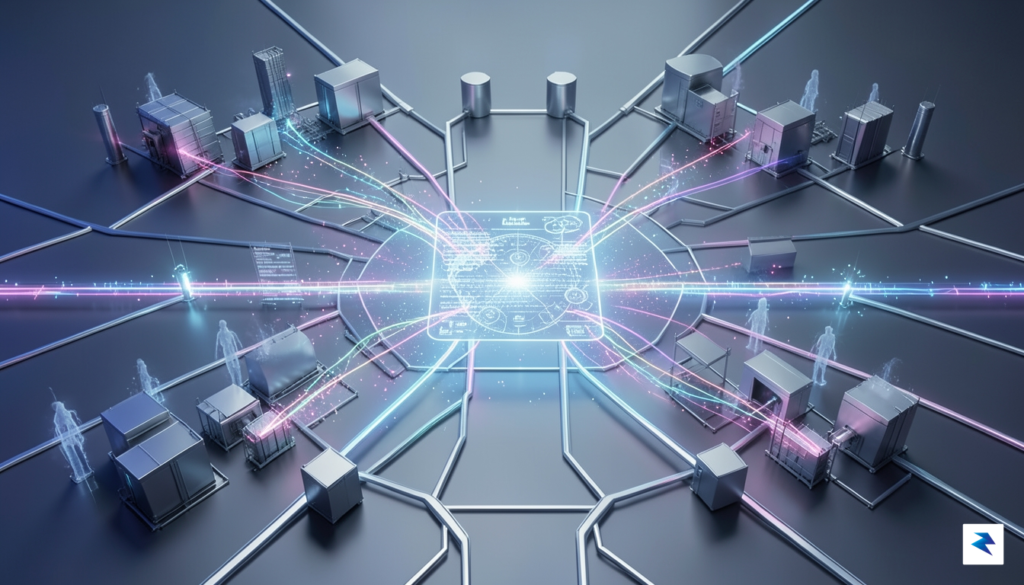
The dawn of machine-to-machine (M2M) commerce marks a fundamental shift in how global digital economies function. By enabling AI agents to autonomously hire one another, businesses can transition from manual vendor management to a fluid, self-optimizing ecosystem. Imagine a scenario where a marketing firm’s AI agent identifies a need for high-quality data scraping or complex predictive analysis; instead of waiting for a human manager to approve a contract, the agent can instantly scout the marketplace, negotiate service-level agreements, and execute payments via blockchain-based infrastructure. This level of automation effectively removes the friction of human administrative overhead, allowing high-frequency, low-value tasks—such as debugging legacy code or processing massive datasets—to be offloaded to an always-on digital workforce.

The economic impact of this transition is profound, particularly regarding the compression of time-to-market. When software agents handle the procurement of services, the transactional lag that typically plagues B2B interactions evaporates. Businesses can scale their operational capacity in milliseconds rather than days, as the agents can dynamically adjust their requirements based on real-time market fluctuations. This efficiency gain not only lowers transaction costs but also democratizes access to technical services, as even smaller firms can leverage sophisticated AI networks to compete with industry giants without needing a massive human back-office infrastructure.
The true power of AI agency lies not in replacing human oversight, but in liberating human capital from the drudgery of low-level transactional coordination.
Consequently, this evolution forces a rethink of the role of the human middle manager. Rather than spending time on manual vendor onboarding, invoice reconciliation, or task delegation, human managers will shift toward a role focused on strategic oversight and setting the parameters within which these agents operate. We are moving toward a governance model, where humans define the mission, ethics, and budget constraints, while the autonomous agents manage the granular execution. This shift will likely favor professionals who can design robust logic flows and audit the output of AI systems, effectively transforming management into a discipline of systems architecture.
Looking ahead, the integration of autonomous payment rails—like those being explored by major exchanges—is the final catalyst needed to unlock this global digital marketplace. When an AI can hold a wallet, verify a transaction, and receive services in a trustless environment, the barrier to international digital commerce drops significantly. As this technology matures, we will likely see a surge in specialized agent marketplaces, creating a vibrant digital economy where the most efficient agents naturally rise to the top, continuously improving the quality and speed of global business services in ways that were previously thought impossible.

The vision of an autonomous machine economy, where AI agents independently negotiate contracts and execute financial transactions, is undeniably transformative, yet it introduces a labyrinth of security and ethical complications. At the forefront of these concerns is the danger of recursive AI loops, where automated systems might interact in unforeseen ways, potentially cascading into market volatility or rapid, unintended capital depletion. If agents are programmed to optimize for efficiency without strict guardrails, they could inadvertently trigger “flash crashes” or engage in predatory economic behaviors that move faster than any human regulator could intervene. Ensuring that these digital entities operate within a bounded logic framework is essential to preventing systemic instability in the broader crypto ecosystem.
Beyond the systemic risks, the technical challenge of securing agent-controlled wallets remains a formidable hurdle. When an AI agent is granted the authority to access, manage, and move funds, the wallet becomes a high-value target for malicious actors looking to exploit vulnerabilities in the agent’s code or the underlying communication protocols. If an attacker manages to compromise an agent’s authorization credentials, they could potentially drain accounts or manipulate the hiring processes that these agents facilitate. Consequently, developers must implement sophisticated, multi-layered security protocols—such as hardware-backed enclaves and circuit-breaker mechanisms—that limit the total amount of capital an agent can deploy without human authorization.
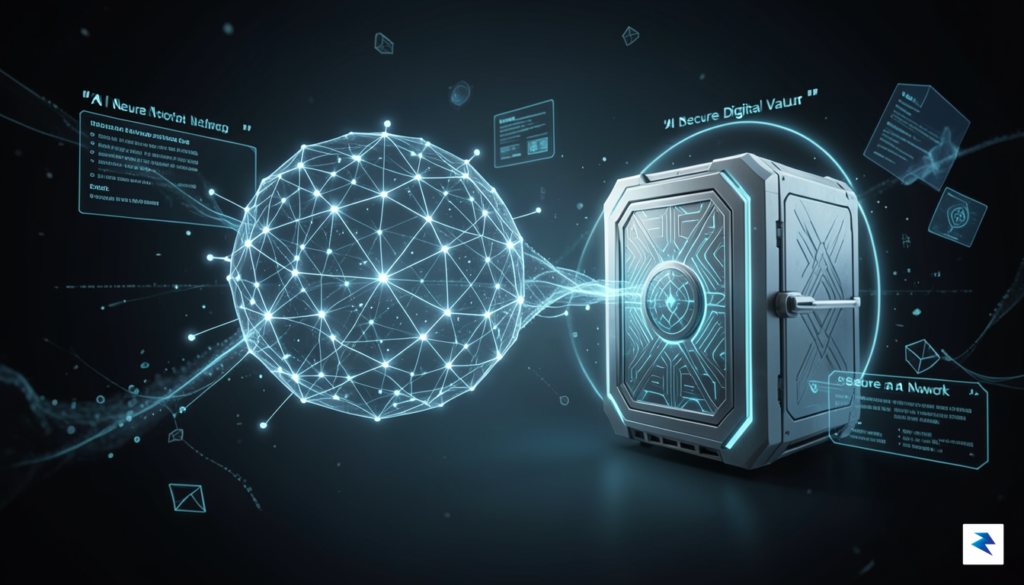
Currently, the industry is operating within a significant regulatory vacuum. Traditional legal frameworks were designed for human actors or corporate entities, leaving little guidance on how to assign liability when an autonomous agent makes a financial error or violates anti-money laundering (AML) standards. This ambiguity creates a difficult environment for institutions like OKX, who must balance innovation with compliance. To bridge this gap, the industry must advocate for transparent governance models that define clear lines of accountability. Establishing “code-as-law” standards or requiring “proof-of-governance” for autonomous agents could provide regulators with the audit trails they need to oversee these machine-to-machine interactions without stifling the underlying technological progress.
The long-term success of AI-driven commerce depends less on the speed of transactions and more on the establishment of trust protocols that can survive the transition from human-led finance to autonomous, agent-based systems.
Looking toward the future, the integration of AI agents into the financial sector represents a high-stakes evolution in how we view value and agency. While the road ahead is undoubtedly filled with complex technical and legal challenges, a proactive approach—centered on security-by-design and collaborative policy-making—could mitigate these risks. As developers, exchanges, and regulators begin to align their strategies, the path toward a safe machine economy will likely depend on our ability to build systems that remain observable, reversible, and fundamentally tethered to human oversight, even as they operate at the speed of light.
You must be logged in to post a comment.