OKX Leads the Charge: How AI Agents Are Starting to Hire Each Other
The Rise of Autonomous AI Agents in the Digital Economy For years, artificial intelligence has functioned primarily as a sophisticated digital…
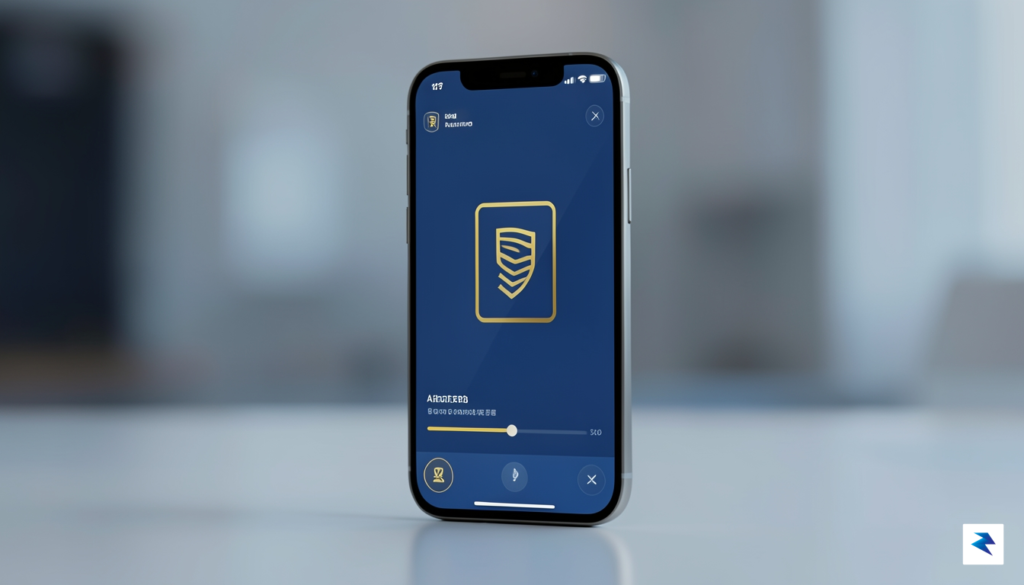
The European Digital Identity (EUDI) Wallet represents one of the most ambitious digital infrastructure projects in modern history, operating under the framework of the updated eIDAS 2.0 regulation. At its core, the initiative seeks to provide every European citizen with a unified, sovereign digital identity that transcends national borders, effectively replacing disparate, fragmented systems with a single, interoperable standard. By enabling individuals to store and present government-issued credentials—such as mobile driver’s licenses, professional certifications, and secure health records—in a single mobile application, the EU aims to streamline access to both public and private services. The ultimate goal is to foster a seamless digital single market where a user can prove their identity or qualifications with the same ease in Rome as they do in Berlin, all while maintaining rigorous standards for data privacy and security.

However, the path to this seamless experience reveals a complex tension between high-level policy goals and the pragmatic reality of software development. While the EUDI Wallet is intended to be a public-interest tool, its technical implementation relies heavily on the existing mobile ecosystems controlled by Silicon Valley giants. Because the vast majority of European citizens utilize smartphones running either Google’s Android or Apple’s iOS, the wallet must integrate with these platforms’ proprietary hardware-backed security services, such as the Secure Enclave or Strongbox. This creates an architectural paradox: in the pursuit of a European-controlled digital identity, the infrastructure is inadvertently tethered to the safety services and gatekeeping mechanisms of the very corporations that control the hardware layer.
“The challenge lies in whether the EUDI Wallet can truly be a public utility when its functionality remains dependent on the proprietary security frameworks of non-European technology platforms.”
This reliance on platform-dependent development raises significant questions regarding long-term autonomy and user control. While developers argue that leveraging native security features is the only way to ensure the level of cryptographic integrity needed to prevent identity fraud, critics point out that this effectively centralizes trust. If the EUDI Wallet requires constant “safety checks” performed by Google or Apple to verify the integrity of the device, then the promise of a sovereign, citizen-controlled identity becomes somewhat compromised. Navigating this landscape requires a delicate balance between achieving the necessary interoperability that makes the wallet useful to millions, and ensuring that the foundational architecture does not become a permanent fixture of Big Tech oversight. Ultimately, the success of the EUDI Wallet hinges on whether the EU can enforce a standard that remains truly independent, even as it operates within the walled gardens of the global smartphone market.
At the heart of the European Digital Identity (EUDI) wallet project lies a fundamental, perhaps uncomfortable, contradiction: the pursuit of digital sovereignty built upon the proprietary foundations of Silicon Valley. While the European Union frames the wallet as a public utility—a digital extension of the citizen—the technical implementation leans heavily on the closed-source ecosystems of Google and Apple. Specifically, the wallet’s integrity relies on “Safety Services,” such as Google’s Play Integrity API and Apple’s App Attest, which serve as the gatekeepers for device security. These services are designed to verify that the software running on a smartphone has not been tampered with and that the operating system remains in a “trusted” state. By delegating this verification to American corporations, the European framework effectively outsources the foundational security of its citizens’ identities to non-European private entities.
This reliance is not merely a matter of technical convenience; it represents a significant philosophical concession. To achieve the high level of security required for official documents—like driving licenses or health records—the EUDI wallet must interact with hardware-level features such as Apple’s Secure Enclave or Google’s Trusted Execution Environment. These hardware components are proprietary, opaque, and entirely controlled by their respective manufacturers. Consequently, even if the EUDI wallet application itself were made fully open-source, it would still operate within a “black box” ecosystem. This creates a binary dependency: the wallet is only as reliable as the attestations provided by Apple and Google, meaning that if these companies decide to restrict access, flag a device as insecure, or alter their API terms, the entire European identity infrastructure could be rendered inaccessible or compromised.
The paradox of the EUDI wallet is that it seeks to establish European digital autonomy while remaining tethered to the proprietary security gates of the very global tech giants it aims to regulate.

From a policy perspective, the argument for using these frameworks is centered on technical necessity and user experience. Building a secure, hardware-backed identity system from scratch for every possible mobile device would be a Herculean, if not impossible, task. By leveraging existing “Safety Services,” developers can ensure that a wallet is not running on a rooted or jailbroken phone, where malicious actors could potentially intercept personal data. However, this is a policy choice that prioritizes immediate functionality over long-term independence. By embedding these proprietary services into the core architecture of the EUDI wallet, the European Union is effectively institutionalizing a reliance on Big Tech. This raises a critical, unanswered question for the future of digital civil rights: can a tool truly be considered a “sovereign” identity solution if its fundamental integrity is subject to the terms of service and technical whims of private, foreign corporations?

By relying on Apple’s App Attest and Google’s Play Integrity API, the European Digital Identity (EUDI) Wallet architecture effectively outsources the foundational security of national identity to private entities. While these frameworks are designed to ensure that a device has not been tampered with or compromised by malware, they introduce a significant dependency on proprietary “black box” systems. When a government delegates device attestation to a smartphone vendor, the definition of a “secure” device is no longer determined by public policy or democratic oversight, but by the opaque algorithms of Silicon Valley. This shift creates a scenario where the gatekeeper of a citizen’s digital identity is a private corporation, rather than the state itself.
The primary concern lies in the nature of remote attestation, a process where the device must check in with the manufacturer’s servers to prove its integrity. This creates a persistent communication loop between the user’s phone and Big Tech infrastructure every time they attempt to verify their identity. From a privacy perspective, this architecture risks unintended metadata tracking; the manufacturer potentially gains granular insight into when, how often, and under what conditions a citizen is accessing their official identity documents. Because these verification processes are closed-source, independent security researchers are unable to audit the underlying logic, leaving the public to trust that these frameworks are not inadvertently creating backdoors or centralized points of failure.
The reliance on third-party attestation means that if a smartphone vendor decides a specific device configuration is “insecure,” they can effectively block a user from accessing their government-issued identity, creating an unprecedented level of private control over public rights.
Furthermore, the technical vulnerability of this “black box” approach is compounded by the lack of transparency regarding how these companies define device health. If Google or Apple updates their attestation logic, they could inadvertently render thousands of older but functional devices “incompatible” with the EUDI wallet, effectively disenfranchising users who cannot afford the latest hardware. This technical gatekeeping turns a government utility into a platform-dependent service, subjecting the sovereignty of the digital wallet to the whims of corporate software lifecycles. When the verification logic is hidden behind proprietary APIs, the state loses the ability to independently verify the security posture of its citizens’ devices, instead choosing to trust a third-party intermediary whose primary loyalty remains with its shareholders rather than the citizens of the European Union.
Ultimately, the marriage of national identity systems with private safety services creates a precarious imbalance of power. By baking these dependencies into the core of the EUDI wallet, policymakers are essentially choosing convenience and existing market infrastructure over the principle of sovereign, auditable digital identity. If the goal is to create a secure, interoperable, and trustworthy system for all Europeans, the current reliance on Big Tech’s attestation frameworks represents a fundamental compromise that may be difficult to reverse once the infrastructure is fully deployed.

At the heart of the European Union’s digital mandate lies a fundamental paradox: the ambition to grant citizens absolute digital sovereignty is currently being built upon the foundation of proprietary, closed-source infrastructure owned by American multinational corporations. While the European Digital Identity (EUDI) Wallet is designed to uphold the rigorous standards of the General Data Protection Regulation (GDPR), the technical architecture necessitates an uneasy reliance on Google and Apple’s safety services. This dependency complicates the principle of data minimization, as these tech giants provide the essential “attestation” and security verification services that the wallet requires to function on mobile operating systems. Consequently, the very tools meant to protect a user’s identity may inadvertently create a pipeline where metadata regarding the frequency, location, and nature of identity verification activities is exposed to private entities, potentially undermining the privacy guarantees that the EU has fought so hard to codify.
The issue of data residency remains perhaps the most significant hurdle in this transition. Under GDPR, European citizens are entitled to strict protections regarding where their personal data is stored and how it is processed. However, when identity verification is mediated through Google’s or Apple’s proprietary frameworks, the lines of jurisdiction become dangerously blurred. Even if the identity credentials themselves remain encrypted and local to the device, the underlying platform providers often require telemetry data to ensure security and prevent fraud. This creates a scenario where an individual’s digital footprint—such as when and where they prove their identity to access government services or open a bank account—could be tracked by platform owners, effectively creating a shadow profile of the citizen’s interactions across borders.
The reliance on Big Tech intermediaries transforms a public service into a platform-dependent utility, shifting the balance of power from the state to private corporations whose primary incentive models are often antithetical to total user privacy.
Furthermore, the user’s agency is significantly diminished when the act of verifying one’s identity is subject to the opaque terms of service imposed by private tech giants. In a truly sovereign digital ecosystem, the relationship should exist exclusively between the citizen and the state. By inserting Google and Apple as necessary gatekeepers, the EU forces users to agree to terms that may allow for behavioral tracking or data harvesting, regardless of the wallet’s own privacy-first design. This effectively means that even if the wallet software itself is open-source and transparent, the environment it inhabits is not. Without clear legal and technical firewalls that prevent these companies from linking identity verification events to broader user advertising profiles, the EUDI wallet risks becoming a mechanism for state-sanctioned surveillance, albeit mediated through the hardware we carry in our pockets.

To preserve the integrity of European data protection, the EUDI wallet framework must move beyond a superficial interpretation of GDPR compliance and address the systemic risk of platform-level tracking. True data sovereignty requires that the underlying security protocols be verifiable, auditable, and entirely independent of the operating system’s commercial interests. Until the EU can guarantee that Google and Apple are effectively “blind” to the identity transactions occurring within the wallet, citizens remain caught in a dilemma: opting into a digital future that promises convenience and security, while simultaneously ceding a measure of their privacy to the very corporations they are intended to be protected from.
The reliance on proprietary safety frameworks provided by Silicon Valley giants is not an inevitability, but rather a choice born from the pressure of rapid deployment. Critics and digital rights advocates argue that Europe possesses the technical prowess and the democratic mandate to construct an independent, open-source infrastructure for digital identity. By shifting the architectural focus away from platform-dependent solutions—which tether a citizen’s legal identity to the proprietary hardware and software ecosystems of Google and Apple—Europe could move toward true digital sovereignty. This would involve prioritizing open-source frameworks for wallet backends and standardized protocols for verifiable credentials, ensuring that the underlying code is transparent, auditable, and free from the hidden telemetry often embedded in commercial operating systems.
Existing initiatives in the decentralized identity space prove that this is not merely a theoretical exercise. Projects like the DIF (Decentralized Identity Foundation) and various implementations of W3C Verifiable Credentials demonstrate that interoperable, secure identity systems can exist without being siloed within a single vendor’s garden. These open-source projects emphasize user-centric models where the individual, rather than a platform provider, maintains control over their identity attributes. Implementing such a model at the European scale would require a significant commitment to modular design, allowing the wallet’s core verification logic to operate independently of the operating system’s background safety services.

True digital sovereignty requires that the infrastructure of our public life remains as open and accountable as the laws that govern us.
Building from scratch, however, presents undeniable trade-offs that policymakers must navigate with care. The primary concern is the “security gap”: commercial providers have invested billions in hardware-backed security modules and real-time threat detection that are difficult to replicate in the open-source world without massive, sustained funding. Furthermore, there is the challenge of user convenience; the average citizen is accustomed to the seamless biometric unlock features integrated into iOS and Android. Replicating this level of friction-free experience while maintaining a “privacy-by-design” architecture is a complex engineering hurdle that could slow down adoption if not handled with professional-grade user experience design.
Ultimately, the path forward likely lies in a modular approach that decouples OS-level security from document verification. By utilizing open-source “trust anchors” and allowing the wallet to function as a standalone entity that interfaces with the phone’s hardware rather than its proprietary cloud services, Europe could achieve a middle ground. This strategy would satisfy the need for high-level security while ensuring that the data flows, credential issuance, and identity verification processes remain under the purview of public institutions. Moving toward this independent architecture is essential for ensuring that the European Digital Identity Wallet serves the citizen first, rather than acting as a guest in someone else’s ecosystem.

The European Digital Identity (EUDI) Wallet represents a watershed moment in the relationship between the state and the individual, promising to streamline everything from tax filings to university enrollment. Yet, as we stand at this digital crossroads, the project faces a fundamental tension: the push for rapid, widespread adoption versus the necessity of long-term digital autonomy. By relying on the safety services and underlying hardware security modules of tech giants like Google and Apple, European policymakers are opting for a “fast-track” to convenience. While this choice significantly lowers the barrier to entry for millions of smartphone users, it simultaneously embeds external dependencies into the very infrastructure meant to grant citizens sovereignty over their own personal data.
To ensure that the EUDI Wallet does not become a mere extension of Big Tech’s walled gardens, the path forward must be defined by radical transparency and rigorous oversight. It is no longer sufficient to treat the operating system as a neutral platform; instead, we must demand comprehensive, independent audits of the wallet’s technical interactions with proprietary services. If the wallet’s integrity is contingent upon the black-box security protocols of a smartphone manufacturer, then the concept of “European sovereignty” remains an aspiration rather than a reality. Policymakers must shift their focus toward building robust, open-source alternatives that can function independently of commercial gatekeepers, ensuring that public interest is never subordinate to the proprietary roadmaps of multinational corporations.

The true test of the EUDI Wallet will not be how easily it integrates with our current devices, but how effectively it protects our digital agency when those companies decide to change the rules of their own ecosystems.
Looking toward the future, the EUDI Wallet must set a global standard for privacy-preserving identification that transcends regional boundaries. We are currently witnessing a shift toward a global digital identity landscape, and Europe has the unique opportunity to lead by example, proving that identity systems can be both user-friendly and privacy-centric. This will require a persistent, multi-year commitment to policy adjustments that favor interoperability over platform-specific convenience. By mandating open standards and strict data minimization, the European Union can create a blueprint for digital citizenship that empowers the individual rather than tethering them to the commercial interests of the platform economy. Ultimately, the success of this initiative will be measured not by the millions of downloads it achieves, but by the extent to which it secures a truly independent digital future for every European citizen.
You must be logged in to post a comment.