
From Poker AI to $500M Hedge Fund: The DeepMind Trio Disrupting Finance
From Poker Tables to Financial Markets The journey of EquiLibre Technologies marks a significant inflection point in the evolution of…

For years, the mobile AI experience has been defined by static interactions—you ask a question, the assistant retrieves an answer, and the conversation ends there. OpenClaw represents a fundamental departure from this reactive model, ushering in the era of agentic AI. While traditional generative models are content to synthesize text or generate images in a vacuum, OpenClaw is designed to be an active participant within your device’s ecosystem. It doesn’t just chat; it executes. By bridging the gap between natural language processing and direct software interaction, this platform can navigate interfaces, manage workflows, and perform multi-step operations that previously required manual user input.
The distinction between generative and agentic AI is the difference between a library and a personal assistant. Generative AI is built to provide information based on training data, whereas agentic AI is built to achieve specific goals. OpenClaw functions as a bridge, possessing the reasoning capabilities to break down complex objectives—such as organizing a calendar, drafting and sending emails, or managing file transfers—into discrete, actionable commands. Because it is built on an open-source framework, this power is not gated behind proprietary corporate walls, allowing for a level of transparency and community-driven development that is rare in the current AI landscape. This accessibility ensures that as the technology evolves, the collective expertise of developers worldwide can contribute to its stability and security.
OpenClaw transforms your smartphone from a passive tool into a proactive partner, moving beyond simple information retrieval to genuine task automation.
Bringing this level of sophistication to mobile devices is a technical milestone that fundamentally changes how we interact with our digital lives. Mobile environments are traditionally restrictive, with “walled garden” operating systems that limit how apps communicate with one another. OpenClaw overcomes these barriers by utilizing intelligent abstraction layers to interact with the screen and system APIs in ways that mimic human touch and navigation. This means you are no longer limited to what a single app can do; instead, you have a cohesive agent that understands your intent across your entire device. For the average user, this signifies a massive reduction in “app fatigue,” as the need to manually toggle between multiple applications to complete a single project is replaced by a single, goal-oriented request directed at a single, capable interface.
Ultimately, the arrival of OpenClaw on iOS and Android is not just about adding another feature to your phone; it is about reclaiming the time spent on repetitive digital chores. By shifting the burden of execution from the user to the agent, we are entering a phase where your phone serves your intentions rather than just waiting for your commands. As this technology matures, the barrier between what you want to achieve and the actual result will continue to shrink, turning our mobile devices into true extensions of our own productivity.

Traditional mobile automation has long been trapped in the rigid confines of if-this-then-that logic. In the past, if you wanted your phone to perform a complex task, you had to manually chain together specific, brittle instructions that would break the moment an app interface updated or a pop-up interrupted the flow. OpenClaw represents a fundamental departure from this mechanical approach by moving away from hard-coded sequences and toward a framework based on dynamic intent. Instead of asking you to define every single swipe, tap, and pause, the platform functions as an autonomous agent capable of interpreting your high-level goals and navigating the unpredictable nature of modern smartphone applications.
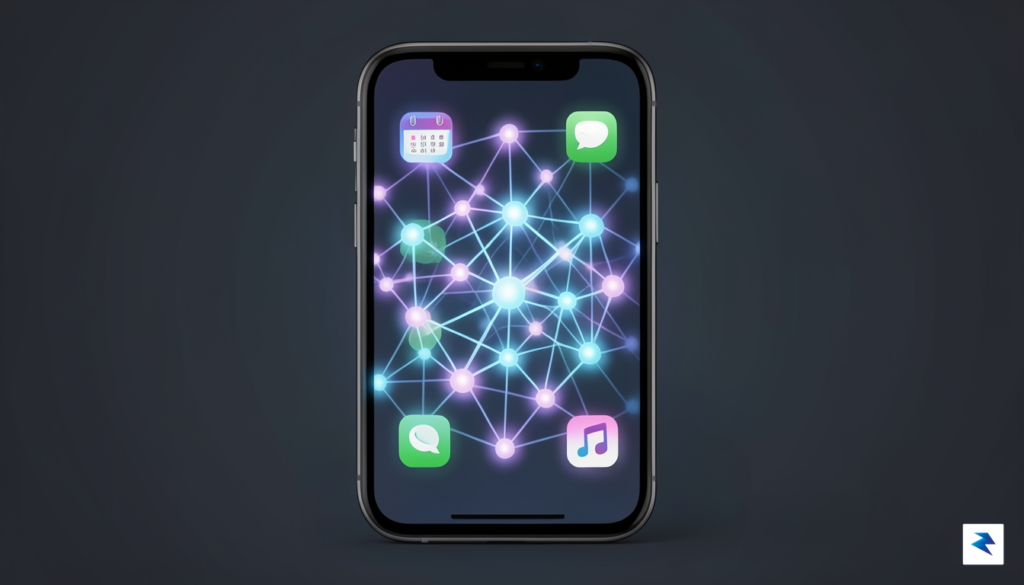
At the heart of this capability is a sophisticated decision-making loop comprised of three distinct phases: perception, reasoning, and action. During the perception phase, OpenClaw scans the current state of your screen, identifying UI elements and context that would be invisible to basic automation scripts. It then moves into reasoning, where it evaluates the best path forward to achieve your stated goal, effectively “thinking” through the logic required to bridge the gap between your request and the desired result. Finally, it executes the necessary action, constantly monitoring the outcome to ensure the task remains on track. This cyclical process allows the system to course-correct in real-time, handling unexpected interruptions or UI changes without needing human intervention.
Unlike standard macros that blindly follow a path, OpenClaw’s agentic framework allows it to navigate an app as if it were a human user, making it resilient to the constant design updates that typically render traditional automation tools useless.
This shift from script-based execution to agentic intelligence means you no longer need to be a technical expert to build complex workflows. Because the software understands the intent behind your request—such as “summarize the last three emails from my boss”—it does not require granular instructions on how to open the mail app, where to scroll, or which specific button to press to filter messages. It synthesizes these requirements into a logical plan of execution, parsing the environment and executing the necessary steps independently. By moving beyond static automation, OpenClaw turns your smartphone into a truly responsive assistant that adapts to your needs, rather than a tool that requires constant maintenance and manual configuration to perform even the most basic of multi-step tasks.
Transitioning a high-performance, agentic framework like OpenClaw from the expansive resources of a desktop environment to the constrained world of mobile hardware was an exercise in extreme technical precision. Unlike PCs, which offer robust cooling and near-unlimited power, mobile devices are defined by strict thermal envelopes and aggressive power management policies. To make OpenClaw responsive, our engineering team had to fundamentally rethink how the AI processes requests. We implemented a multi-tiered execution model that prioritizes local inference for low-latency tasks while offloading intensive computational heavy lifting to an optimized cloud layer, ensuring that the application never drains your battery or causes your device to overheat during prolonged use.
Navigating the strict sandboxing environments of iOS and Android presented a unique set of obstacles regarding background processing. Apple’s stringent memory limits and Google’s background execution restrictions meant that OpenClaw could no longer rely on persistent, always-active processes. We overcame these hurdles by developing a localized event-trigger system that allows the AI to wake up precisely when needed, perform its designated action, and immediately return to a dormant state. This granular approach not only preserves your device’s longevity but also ensures that the application respects system-wide resource allocations without compromising the intelligence and speed that users expect from our platform.
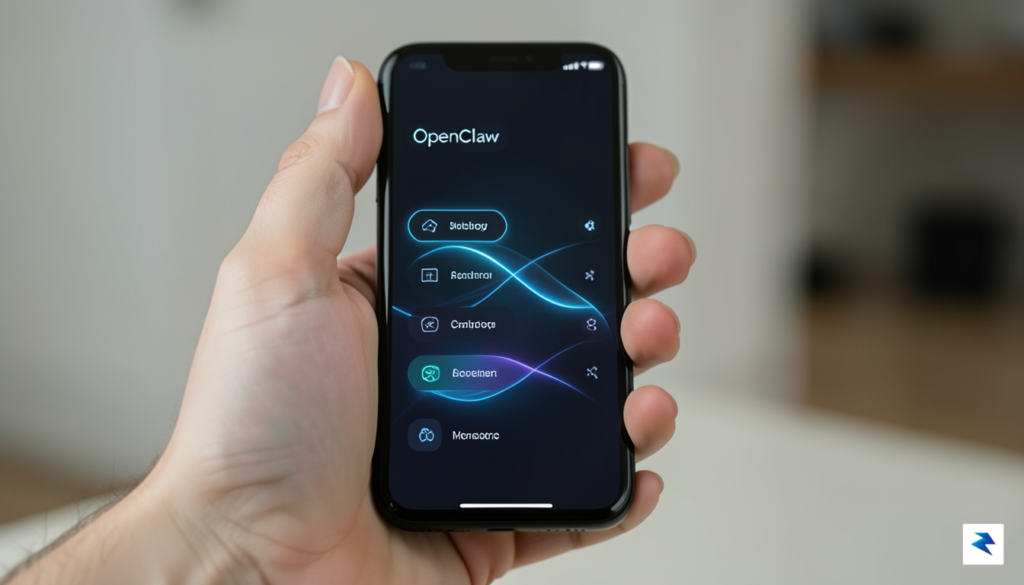
Beyond the technical heavy lifting, we committed to a design philosophy that prioritizes intent over complexity. A mobile interface cannot simply be a shrunken version of a desktop application; it must be tactile, touch-optimized, and visually intuitive. By streamlining the interaction flow, we ensured that OpenClaw feels like a natural extension of your phone’s operating system rather than a foreign tool bolted onto the screen. We focused on haptic feedback and gesture-based navigation to give the agentic responses a sense of weight and physical presence, making the advanced AI feel approachable for everyday tasks.
The true measure of a mobile transition is not how much code you port, but how much friction you remove from the user’s daily workflow.
Consistency across both major mobile operating systems remained our highest priority throughout the development cycle. Despite the deep architectural differences between iOS and Android, we utilized a unified codebase for our core logic to ensure that an agentic command executed on an iPhone produces the exact same result as one on a flagship Android device. This uniformity guarantees that as you switch between devices or upgrade your hardware, your personal AI assistant remains reliable, predictable, and fully synchronized. By bridging these platforms, we have ensured that OpenClaw is not just another utility, but a dependable companion that behaves with identical intelligence and precision regardless of the handset in your pocket.

The advent of sophisticated AI agents interacting directly with our personal devices ushers in an era of unprecedented convenience, yet it simultaneously raises critical questions about privacy and data security. With OpenClaw designed to seamlessly integrate with your apps and assist across your digital life, we understand that trust is paramount. Our commitment to safeguarding your personal information is baked into the very architecture of OpenClaw, ensuring that while you benefit from powerful autonomy, your privacy remains fiercely protected.
A cornerstone of this trust model is OpenClaw’s open-source nature. Unlike proprietary “black box” AI systems where internal workings are hidden, OpenClaw’s code is publicly accessible and auditable. This transparency means that developers, security researchers, and even curious users worldwide can scrutinize its operations, identify potential vulnerabilities, and verify its adherence to privacy protocols. This collective vigilance from a global community of experts provides a robust layer of security that closed-source alternatives simply cannot match, fostering confidence through verifiable integrity rather than mere assurances.
Furthermore, OpenClaw prioritizes on-device processing wherever possible, a fundamental design choice that significantly enhances your data privacy. Rather than sending every piece of personal interaction or app data to remote servers for analysis, OpenClaw performs the vast majority of its intelligent tasks directly on your Android or iOS device. This approach means that sensitive information, such as your usage patterns, personal preferences, or content within your private applications, rarely leaves your device. Consequently, the risk of data breaches or unauthorized access during transit or storage on external servers is dramatically minimized, keeping your digital footprint as localized as possible.
Of course, certain functionalities might necessitate limited, secure interaction with cloud services, such as fetching real-time information from the web or receiving essential model updates. In these instances, OpenClaw employs stringent anonymization and encryption protocols, ensuring that any data exchanged is stripped of personally identifiable information and transmitted through secure, encrypted channels. This hybrid model allows OpenClaw to leverage the power of the cloud when necessary, without compromising the core principle of keeping your personal data firmly under your control and primarily on your device.
Ultimately, your control over OpenClaw’s access to your data is absolute. We empower users with granular permission management, allowing you to dictate precisely which apps and data OpenClaw can interact with. Upon installation, and continuously thereafter, you can review and adjust these permissions through your device’s settings, granting access only to what you deem essential for the agent’s functionality. We strongly encourage users to adopt best practices: start with the most restrictive permissions and gradually broaden them as you understand OpenClaw’s utility and your comfort level grows. Regularly auditing these permissions is also a wise practice, ensuring that your agent’s access always aligns with your current privacy preferences.
Key Takeaway: OpenClaw combines open-source transparency, on-device processing, and robust user controls to place privacy and security at the forefront of its agentic capabilities.
In essence, OpenClaw is designed to be a powerful ally on your device, not an intrusive observer. By leveraging the power of open-source development, prioritizing local data processing, and providing you with comprehensive control over permissions, we strive to build a future where AI agents enhance your life with intelligence and autonomy, without ever compromising your fundamental right to privacy and security.

While the theoretical potential of agentic AI is captivating, its true power lies in its practical application to the everyday challenges we face. OpenClaw on your mobile device isn’t just another intelligent assistant; it’s designed to fundamentally change how you interact with your phone, transforming multi-step processes into seamless, intuitive experiences. Let’s delve into concrete examples of how you can put this powerful tool to work, ensuring your daily routine becomes more efficient and less cluttered.
Consider the common task of booking an appointment – whether it’s with your dentist, a new hairdresser, or securing a table at that popular restaurant. Traditionally, this involves a cumbersome dance between several apps: checking your calendar for availability, opening a web browser to search for options, navigating to a specific booking platform, and then manually inputting the details back into your calendar. This fragmented process is not only time-consuming but also prone to errors, often leading to frustration and delays in accomplishing simple yet essential personal tasks.
With OpenClaw, this multi-app juggling act becomes a relic of the past. You can simply articulate your goal, perhaps by voice command or a quick text prompt, such as, “Find me an appointment for a teeth cleaning next Tuesday afternoon and book it.” OpenClaw then intelligently interacts with your calendar, searches local dental practices, cross-references their availability with your schedule, and presents you with viable options. It acts as your personal digital agent, performing the legwork and gathering the necessary information without you needing to switch between half a dozen different interfaces.
Crucially, OpenClaw operates with a vital “human-in-the-loop” design. While it streamlines the information gathering and initial steps, it doesn’t proceed with any booking or commitment without your explicit confirmation. It will present you with the best few time slots and locations, allowing you to make the final decision with a simple tap. Once approved, OpenClaw then executes the booking and automatically adds the details to your calendar, ensuring you maintain complete control over your personal schedule while significantly reducing the effort involved.
In our increasingly digital lives, information often resides in silos across various apps and platforms, making it challenging to synthesize data for more complex tasks like planning a trip, researching a significant purchase, or compiling notes for a project. Imagine trying to plan a weekend getaway: you’re sifting through flight search results, comparing hotel prices on different sites, checking weather forecasts, and looking up local attractions – all while trying to keep track of details in disparate browser tabs and notes apps. This fragmentation can lead to missed details and less informed decisions.
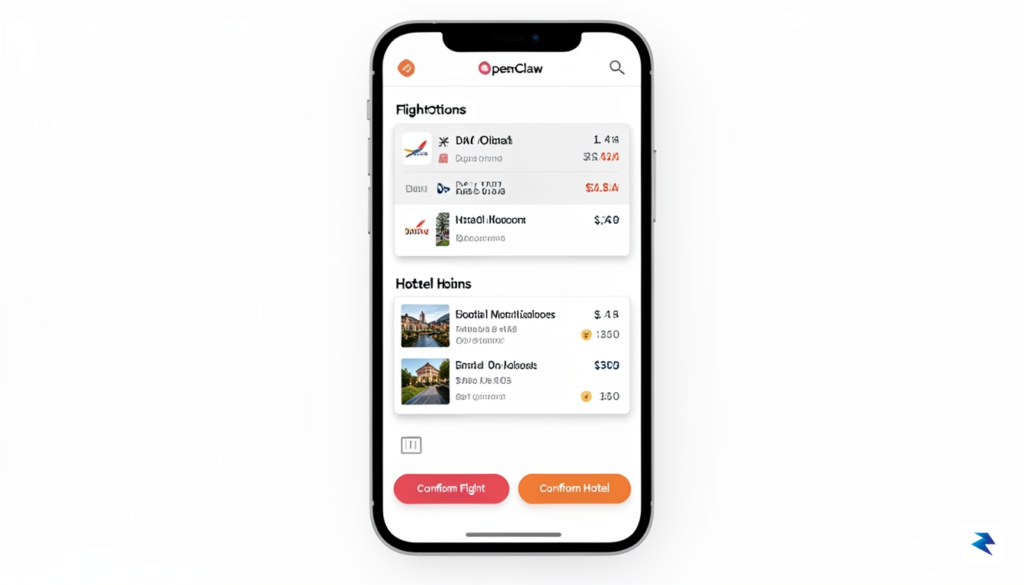
OpenClaw excels at breaking down these digital barriers by acting as an intelligent data synthesizer. You can task it with a comprehensive request, such as, “Plan a weekend trip to Seattle next month: find round-trip flights under $300, a highly-rated hotel near Pike Place Market, and list three must-see attractions.” The platform then intelligently queries various travel apps, weather services, and web sources, gathering all pertinent information and presenting it in a consolidated, easy-to-digest format. It can pull details from your email confirmations, web pages, and even specific travel apps you use.
This capability transforms how you approach research and planning. Instead of manually copying and pasting information, OpenClaw presents a curated summary, perhaps a proposed itinerary, a comparison table of hotel options, or a concise overview of key research points. Again, the ‘human-in-the-loop’ principle is paramount here. OpenClaw doesn’t make the final choices; it empowers you with comprehensive, organized data, allowing you to review, refine, and approve the details, ensuring your plans are both efficient and precisely tailored to your preferences.
Our phones are constant sources of notifications, ranging from critical work emails to fleeting social media updates, leading to digital fatigue and a struggle to maintain focus. The sheer volume can be overwhelming, making it difficult to discern what truly requires immediate attention versus what can be addressed later, or even ignored altogether. This constant barrage interrupts workflows and diminishes overall productivity throughout the day.
OpenClaw offers a sophisticated solution to this modern dilemma by intelligently managing your incoming alerts. Based on your preferences, past interactions, and the context of your current activities, it can prioritize, summarize, and even pre-process notifications. For instance, it can recognize a lengthy email from a known sender, summarize its key points for you, and ask if you’d like to draft a quick acknowledgment, or perhaps categorize a low-priority app update and suggest archiving it without further distraction.
The beauty of OpenClaw’s approach to notifications lies in its proactive yet deferential nature. It doesn’t silence or dismiss important information without your knowledge. Instead, it acts as a smart filter and a helpful assistant, presenting you with the most crucial information first and offering actionable suggestions for less urgent items. You always have the final say; whether it’s sending a pre-drafted reply, scheduling a follow-up, or simply dismissing an irrelevant alert, OpenClaw ensures you remain in control of your attention and your digital environment, fostering a more focused and less interrupted day.</

OpenClaw’s arrival on Android and iOS marks a significant inflection point, not just for end-users but for the entire AI industry. By making sophisticated agentic AI accessible and, crucially, open-source, it directly challenges the established paradigm dominated by proprietary, black-box systems that often guard their inner workings closely. This strategic move is likely to force closed-source competitors to rapidly re-evaluate their own development roadmaps and market strategies, potentially accelerating innovation across the board as they strive to offer comparable functionality, transparency, or differentiate themselves in novel ways. The inherent transparency, auditability, and collaborative nature of an open-source framework like OpenClaw could foster a new era of trust and rapid development within the AI space, ultimately benefiting end-users with more robust, customizable, and ethically aligned AI tools. Furthermore, by democratizing access to powerful agentic capabilities, it levels the playing field for smaller developers, startups, and academic researchers who might otherwise be locked out by prohibitive licensing fees or restrictive proprietary APIs.
A key differentiator and a profound glimpse into OpenClaw’s future potential lies embedded within its open-source foundation, which naturally invites and thrives on community participation. We can confidently anticipate the rapid emergence of a flourishing ecosystem of community-driven plugins, extensions, and specialized modules, allowing users and developers alike to tailor the agent’s capabilities to an almost infinite degree. Imagine a scenario where passionate users create highly specialized plugins for niche productivity tasks, develop bespoke integrations with less common vertical applications, or even pioneer entirely new modalities of interaction that the original development team might not have envisioned. This collaborative, decentralized approach ensures that OpenClaw will not be confined by the vision or resources of a single development team but will evolve organically and dynamically based on real-world needs, diverse creative contributions, and innovative problem-solving from a global community. Such a vibrant and continuously expanding marketplace of extensions would dramatically expand the agent’s utility, transforming it from a powerful tool into an adaptable, ever-improving, and truly personalized digital companion.
Ultimately, the long-term potential of OpenClaw operating directly on our most personal mobile devices extends far beyond mere convenience; it unequivocally heralds a new era of mobile autonomy and intelligent digital partnership. Picture a near future where your smartphone, powered by such an agent, proactively manages complex schedules across multiple platforms, anticipates your needs based on learned patterns and contextual cues, and intelligently executes multi-step tasks across various applications without requiring constant manual intervention or explicit prompting. This vision transcends simple voice commands or basic automations; it speaks to an AI agent that genuinely understands context, continuously learns from your unique habits and preferences, and operates with a level of proactive, predictive intelligence previously confined to the pages of science fiction. The crucial
You must be logged in to post a comment.