
Europe vs. Washington: The Growing Conflict Over Global Chip Policy
The Shifting Landscape of Global Semiconductor Policy The global semiconductor industry has rapidly evolved from a collaborative engine of…


The decision to eliminate 21,000 positions represents more than a simple cost-cutting exercise; it is a fundamental reconfiguration of Oracle’s operational DNA. In an era where tech giants are facing intense macro-economic pressure to demonstrate immediate value from their massive capital expenditures, Oracle is prioritizing AI efficiency over the maintenance of legacy headcount. By dismantling traditional software structures that were built for a slower, human-intensive era of IT, the company is freeing up the massive financial and human resources required to dominate the generative AI and cloud-native infrastructure markets. This is a strategic bet that the future of enterprise software lies not in manual oversight, but in high-velocity, automated systems that can scale infinitely.
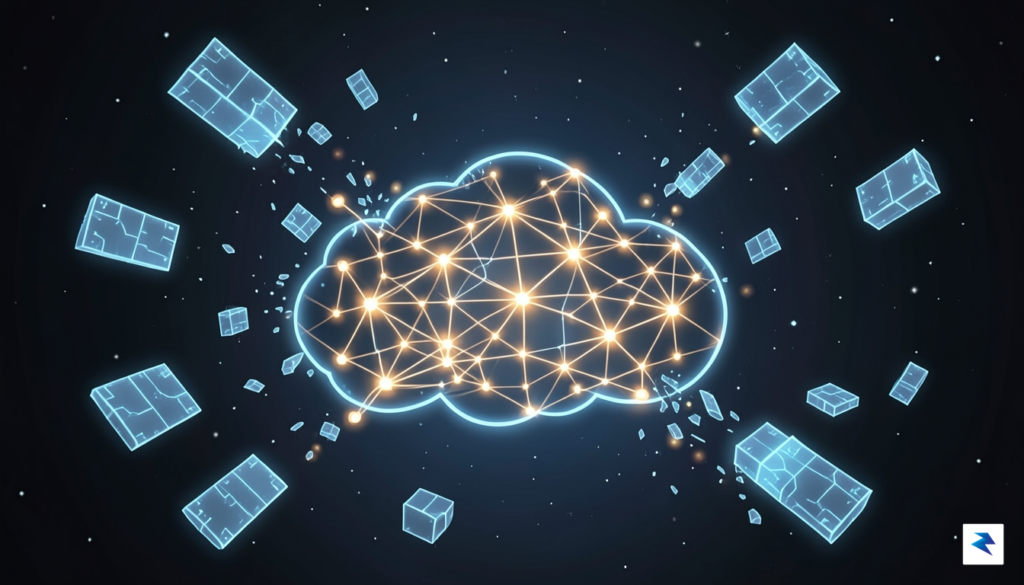
This transition marks a departure from the company’s historical reliance on broad-based software development toward a specialized focus on AI engineering and high-performance cloud maintenance. As the industry shifts, the skill sets once valued in traditional enterprise software—such as localized database management and manual system maintenance—are being superseded by a demand for expertise in large language model (LLM) integration, automated orchestration, and data-center-scale optimization. Consequently, Oracle is pivoting away from the “all-things-to-all-people” software model to become a lean, AI-centric utility provider. This shift ensures that the company can support the massive computational demands of modern businesses that require real-time, AI-driven insights rather than just static record-keeping.
“The modern enterprise landscape is no longer driven by software complexity, but by the speed and intelligence of the infrastructure powering that software.”
To maintain competitiveness, Oracle is effectively dismantling its older, siloed organizational structures to make room for a unified, automated deployment model. By consolidating its workforce into roles that directly support AI-native infrastructure, the company is attempting to eliminate the friction that typically slows down innovation in massive organizations. This move is designed to ensure that every dollar of operational spending is tethered to the company’s core mission: building a cloud environment where machine learning and predictive analytics are not just add-on features, but the primary foundation of every service. For clients, this means a future where Oracle’s cloud becomes a more agile, responsive, and autonomous platform, reflecting the company’s aggressive pursuit of long-term dominance in the AI-saturated market.

The decision to reduce the workforce by 21,000 employees represents a seismic shift for Oracle, reflecting a broader, more turbulent trend that has defined the tech landscape throughout 2026. While enterprise software giants often resort to restructuring to improve agility, the sheer scale of this reduction signals a departure from traditional corporate evolution toward a more aggressive, high-stakes pivot into the artificial intelligence sector. This mass displacement is not merely a line-item adjustment; it is a profound disruption that echoes across the industry, forcing a difficult conversation about the fragility of employment even within the most established, profitable organizations. As companies scramble to reallocate capital toward generative AI and large language model integration, the workforce often bears the weight of these fiscal reorientations, leading to widespread anxiety regarding job security in the age of rapid automation.

Beyond the immediate statistical impact, the loss of 21,000 employees represents a significant depletion of institutional knowledge that is difficult to replicate. When veteran engineers, account managers, and product specialists are let go, the company inevitably experiences a “brain drain” that can stall long-term projects and erode the unique culture that fueled its previous successes. This intellectual capital is the glue that holds legacy systems together; losing it during a radical pivot creates a paradoxical situation where a company is trying to build the future while simultaneously losing the expertise required to maintain its existing, revenue-generating foundation. Competitors often wait in the wings to absorb this displaced talent, meaning that Oracle’s loss could easily become a strategic gain for agile startups and rival firms that are eager to capitalize on the seasoned expertise suddenly flooding the job market.
The true challenge for modern enterprise leaders is not merely the technical implementation of AI, but the preservation of institutional continuity while undergoing radical structural change.
Ultimately, the challenge for Oracle and its peers is to achieve a delicate equilibrium between rapid technological transformation and the stability of their human capital. Frequent, large-scale layoffs can foster a climate of uncertainty, which often leads to decreased morale and productivity among those who remain. When employees perceive that their roles are subject to the whims of shifting market trends rather than their individual contributions, the psychological contract between employer and employee is fundamentally altered. To survive this transition, leadership must do more than simply cut costs; they must find ways to reskill their current workforce, ensuring that the people who built the company’s history are empowered to participate in its future. Without a deliberate focus on talent retention and internal growth, the pursuit of AI dominance risks alienating the very individuals who are needed to execute the long-term vision.

For enterprise organizations, Oracle’s massive workforce reduction serves as a definitive signal of a shift in the company’s structural DNA rather than a mere budgetary adjustment. By streamlining its headcount, the organization is effectively reallocating capital and talent toward an aggressive “AI-first” mandate. This transition suggests that Oracle is moving away from a traditional, human-intensive service model toward a highly automated, software-defined delivery framework. For the end-user, this means that the future of Oracle Cloud Infrastructure (OCI) will be defined by algorithmic efficiency and autonomous maintenance rather than traditional manual support oversight.
The acceleration of AI-integrated product development is expected to fundamentally alter how services are deployed and managed. As Oracle pivots toward a leaner operational model, customers should anticipate a faster cadence of feature releases, particularly those leveraging machine learning to optimize database performance and security. However, this transition toward automated cloud management introduces a complex trade-off between innovation and stability. While the promised efficiencies could drastically lower operational costs, enterprise buyers must critically assess whether these AI-driven systems provide the same level of granular control and bespoke support that legacy environments once offered. If the automation layers are not sufficiently mature, businesses risk inheriting technical debt disguised as “next-generation” AI features.

The impact on service reliability remains a significant concern for large-scale enterprise deployments. When a company reduces its human workforce by such a significant margin, it places an immense burden on the robustness of its AI-driven monitoring and self-healing systems. If these systems fail to perform as advertised, the lack of human intervention could lead to prolonged downtime or support bottlenecks. To mitigate these risks, Oracle is likely moving toward a tiered support model where predictive AI handles routine troubleshooting, while a smaller, specialized engineering cohort focuses on high-level architectural failures.
The true test of Oracle’s restructuring will not be the speed of its AI deployment, but whether its automated infrastructure can maintain the enterprise-grade uptime that its mission-critical customers demand.
Ultimately, the pivot signifies that Oracle intends to compete by out-automating its rivals rather than out-servicing them in the traditional sense. Enterprise buyers should prepare for a future where their cloud environment is increasingly “black-boxed” by AI, requiring a shift in internal IT strategy. Organizations will need to move away from deep customization and toward standardized, AI-optimized configurations if they hope to extract the full value of this new, streamlined Oracle ecosystem. For those capable of adapting to this automated paradigm, the rewards may include lower costs and superior performance, but those who rely on legacy support structures may find the transition period difficult to navigate.

For IT decision-makers, the recent shift at Oracle represents a critical juncture that demands an immediate, rigorous audit of existing technology footprints. When a major vendor undergoes a massive workforce restructuring to pivot toward a singular focus like artificial intelligence, the impact on legacy service delivery and long-term product roadmaps is rarely neutral. You should begin by categorizing your current Oracle dependencies into three distinct tiers: mission-critical infrastructure, auxiliary operational tools, and niche legacy applications. By mapping these dependencies against your own organization’s three-year digital transformation strategy, you can identify whether Oracle’s new AI-centric portfolio is an accelerant for your business or a potential source of technical debt that may no longer receive the engineering attention it once did.

The core tension lies in balancing the potential for cutting-edge AI features against the risk of service degradation during this period of corporate transition. While Oracle is likely pouring resources into generative AI and autonomous database enhancements, there is a legitimate concern that support quality for non-AI-native products may suffer as personnel are reallocated. To mitigate this risk, IT leaders should proactively request updated service-level agreements (SLAs) that include specific provisions for support responsiveness and uptime guarantees for your most critical deployments. If your current contract is nearing renewal, now is the ideal time to leverage these organizational changes to negotiate more favorable terms, such as performance benchmarks that hold the vendor accountable regardless of their internal restructuring initiatives.
To safeguard your operations, treat your Oracle footprint as a strategic asset that requires active management rather than passive maintenance. If an application is not core to your future AI roadmap, consider if it has become a candidate for migration to a more agile or vendor-neutral environment.
To avoid becoming overly tethered to a shifting vendor strategy, organizations should prioritize interoperability and data portability. Dependence on proprietary ecosystems can lead to “vendor lock-in,” which becomes particularly dangerous when the vendor’s primary business model is undergoing a radical, high-stakes transformation. Whenever possible, implement containerization and standardized API layers that allow your applications to remain somewhat abstracted from the underlying infrastructure. By maintaining a modular architecture, you grant your team the flexibility to swap out specific Oracle components should the quality of support or the strategic alignment of their product roadmap drift away from your business requirements. Ultimately, the most resilient IT departments are those that build with an exit strategy in mind, ensuring that they remain the architects of their own success rather than subjects of a vendor’s corporate pivot.

The recent workforce reductions at Oracle serve as a stark bellwether for the broader enterprise technology sector, signaling a definitive shift away from human-intensive operations toward leaner, autonomous, and AI-managed ecosystems. As legacy software providers pivot aggressively toward cloud-native architectures, the traditional roles that once supported massive on-premises infrastructures are becoming increasingly redundant. This transformation is not merely about cost-cutting; it is a fundamental reconfiguration of how enterprise value is generated. Companies are now racing to build “self-healing” systems that require fewer hands to manage, effectively prioritizing algorithmic efficiency over the expansive headcounts that defined the previous decade of corporate growth.
This seismic shift has exacerbated the existing skills gap, creating a paradoxical labor market where thousands of experienced professionals find themselves displaced, even as firms struggle to fill specialized roles in machine learning, data engineering, and AI ethics. The transition from legacy support to the “Amazonification” of the enterprise space—where cloud scalability and automated deployment are the baseline—means that technical proficiency is no longer enough. Competitors are under immense pressure to mimic this streamlined operational model, leading to a race to the bottom in terms of operational staff size. For the modern worker, this environment demands a continuous commitment to upskilling, as the shelf-life of technical expertise shortens with every new iteration of generative AI models.

The true winners in this era of rapid transformation will not be the companies that simply shed the most weight, but those that successfully integrate AI to augment human intelligence rather than replace it entirely.
To survive and thrive in this volatile landscape, businesses must navigate the delicate balance between rapid technological adoption and the risks inherent in large-scale organizational change. While the allure of AI-driven automation promises lower overheads and higher margins, the human cost of these transitions can lead to a loss of institutional knowledge and corporate culture. Successful organizations will be those that invest heavily in workforce retraining programs, ensuring that current employees are equipped to manage the very systems that are reshaping their roles. Ultimately, the future of the enterprise tech industry will be defined by its ability to foster a collaborative environment where humans provide the strategic oversight and ethical guardrails necessary for autonomous systems to function effectively at scale.
You must be logged in to post a comment.