Why Is It So Hard to Launch a New Broadway Musical?
The Economic Shift: Why Investors Are Fleeing Broadway Musicals The financial bedrock upon which Broadway has stood for decades is currently…


For decades, the global IT services landscape has been defined by a singular, rigid economic engine: labor arbitrage. This traditional model, which propelled giants like Infosys and Wipro to international prominence, relied heavily on the ability to source vast pools of talent in lower-cost geographies to manage enterprise software and infrastructure. While this approach effectively helped corporations scale their operations and reduce overhead for years, it created a structural dependency on headcount-based growth. In this environment, revenue was inextricably linked to the number of bodies deployed on a project, rather than the intrinsic value or efficiency of the technical solutions provided. Today, however, that foundation is showing deep cracks as the rapid maturation of generative artificial intelligence renders manual, labor-intensive tasks increasingly obsolete.
The industry is now standing at a critical juncture, ripe for a fundamental disruption that moves beyond mere process automation. Enterprise clients are no longer satisfied with simple cost-cutting; they are demanding agility, hyper-personalization, and the ability to innovate at the speed of the software market. Former Infosys CEO Vishal Sikka, a technologist who has long championed the intersection of human ingenuity and machine intelligence, is positioning his latest venture to capitalize on this shift. His new startup arrives with a clear mandate: to dismantle the antiquated “body shop” mentality and replace it with a model driven by high-impact, AI-native outcomes. By focusing on deep technological integration rather than massive, localized staffing, this venture aims to redefine the very nature of what an IT partner provides.
The future of IT services is not measured by the size of the workforce, but by the intelligence of the platform and the speed at which it delivers competitive advantage.
This transition represents a radical pivot from the traditional consultancy framework. Instead of asking companies to hire thousands of engineers to maintain legacy systems, Sikka’s startup suggests that the architecture itself should be intelligent enough to self-optimize and evolve. This shift toward value-driven engineering suggests that the next generation of IT leaders will not be defined by their ability to manage global payrolls, but by their prowess in deploying sophisticated AI models that solve complex business problems autonomously. By prioritizing software-led solutions over human-intensive labor, the startup is essentially betting that the future of enterprise technology lies in the mastery of intelligence, marking a departure from the volume-based dominance of the previous generation.

The core of this new venture represents a fundamental departure from the traditional “body shopping” model that has defined the IT services industry for decades. For years, major firms have relied on massive armies of developers to manually write, debug, and maintain code for enterprise clients, a process that is inherently labor-intensive and prone to human error. Vishal Sikka’s vision posits that this paradigm is ripe for disruption by shifting toward an “AI-native” services architecture. Instead of scaling through headcount, the goal is to scale through intelligence, embedding Generative AI directly into the fabric of software development and maintenance lifecycles to transform the economics of enterprise IT.
At the center of this technological philosophy is the belief that Generative AI acts as a force multiplier for enterprise operations, rather than a mere efficiency plugin. By leveraging large language models to understand complex, legacy-laden codebases, the platform aims to automate the intricate workflows that previously demanded constant human oversight. This allows for a level of precision and speed that manual teams simply cannot match, as the AI can parse millions of lines of code in seconds to identify vulnerabilities, suggest optimizations, or facilitate seamless migrations. Consequently, the burden of mundane maintenance shifts from human engineers to intelligent systems, freeing up talent to focus on high-level innovation and strategic problem-solving.
“The transition from manual labor to AI-driven automation is not just about cost reduction; it is about fundamentally increasing the cognitive capacity of the enterprise to adapt to rapid technological shifts.”
Furthermore, the approach places a heavy emphasis on the modernization of enterprise data management. Many legacy systems today are siloed, brittle, and difficult to integrate, creating significant technical debt that hampers business agility. By utilizing Generative AI, Sikka’s venture seeks to bridge these gaps, creating a more cohesive data ecosystem where software components can communicate more effectively. This involves moving away from the brittle, manual coding practices of the past toward a more dynamic, intent-based development style. In this new framework, the AI interprets the business objective and generates the necessary code, which is then refined and validated by human experts.
This shift represents a complete reimagining of the IT services relationship. Rather than charging clients based on the number of hours billed or the number of seats occupied, the AI-native model aligns the service provider’s success with the actual output and performance of the technology itself. By automating the technical heavy lifting, the firm can provide clients with faster time-to-market and significantly higher software quality. Ultimately, this approach challenges the long-standing industry reliance on human-centric scaling, offering a path forward where software engineering is treated as an automated, precision-driven discipline capable of keeping pace with the demands of the modern digital economy.

Challenging the entrenched titans of the global IT services industry—firms like Infosys, TCS, and Wipro—is a formidable undertaking that requires more than just capital; it demands a fundamental rethinking of how value is delivered. For decades, these established giants have thrived on a business model built upon massive scale, labor-intensive delivery centers, and long-term, multi-year contracts. While this infrastructure has served them well, it has also created a form of institutional inertia. These organizations are often caught in the classic “innovator’s dilemma,” where their reliance on existing revenue streams and massive headcount makes it difficult to pivot toward the automated, AI-first methodologies that are now defining the next generation of software development.
The new startup emerging from this space is positioning itself to capitalize on these very rigidities. By eschewing the traditional “pyramid” staffing model—which relies on a high volume of junior developers to manage repetitive tasks—the startup is betting on a leaner, technology-first architecture. Instead of throwing more human capital at a problem, they are integrating generative AI and automated workflows directly into the delivery pipeline. This approach promises to drastically reduce the time-to-market for complex digital transformations, allowing clients to bypass the sluggish onboarding and resource-heavy overhead typically associated with legacy vendors.

This disruption strategy focuses on three core pillars: speed, cost-efficiency, and higher quality through precision. Established players often struggle with “technical debt” within their own client engagements, where the complexity of legacy systems requires constant manual intervention. By contrast, a startup unencumbered by decades of technical baggage can design bespoke solutions that are cloud-native and AI-ready from the start. This allows them to offer a value proposition that is not only cheaper but inherently more scalable than the services provided by larger firms. For enterprises looking to modernize, the choice is increasingly becoming one between the slow, steady reliability of a giant and the nimble, high-velocity innovation of a technology-first challenger.
The true competitive advantage in the modern IT landscape is no longer the size of your workforce, but the intelligence of your automation.
Ultimately, the challenge for the incumbents will be whether they can transform their own business models fast enough to compete with this new breed of agility. While the giants possess deep institutional knowledge and entrenched relationships with Fortune 500 companies, they are often hindered by the very processes that once made them successful. If the startup can prove that its AI-centric model delivers superior outcomes with a fraction of the headcount, it will force a market-wide reckoning. The industry is moving toward a future where efficiency is measured in lines of code generated by intelligent systems rather than billable hours, and the race to dominate that shift has only just begun.
In the high-stakes arena of enterprise technology, credibility acts as the ultimate currency, and this new venture has secured a massive head start by aligning itself with industry heavyweights. The strategic backing from Mayfield and Aramco Ventures serves as more than just a financial windfall; it acts as a powerful vote of confidence from the global investment community. By securing capital from these top-tier firms, the company is insulated from the typical pressures of short-term, quarterly profit-chasing that often stifles innovation. Instead, this liquidity provides the necessary runway for long-term research and development, allowing the team to focus on building robust, scalable solutions rather than rushing unfinished products to market to satisfy immediate investor dividends.

The true competitive advantage of this startup, however, lies in its foundational pedigree. The leadership team is composed of seasoned veterans who have spent decades navigating the complexities of the global IT services landscape. By drawing talent from industry titans like SAP, Infosys, and the specialized world of VianAI, the company has effectively synthesized a unique corporate DNA. These leaders do not just bring technical prowess; they bring institutional knowledge regarding how massive, legacy enterprises operate and where their most significant digital bottlenecks lie. This deep-rooted expertise allows them to anticipate client needs before they become pain points, ensuring that their service offerings are tailored for high-impact integration rather than superficial automation.
The combination of deep-pocketed institutional backing and a team that has lived through the evolution of enterprise software creates a rare environment where innovation is both funded and informed by historical expertise.
This fusion of capital and competence is particularly critical as the IT services industry faces a paradigm shift toward AI-driven efficiency. While many startups struggle to bridge the gap between theoretical AI models and practical, enterprise-grade applications, this team’s background at SAP and Infosys offers a blueprint for success. They understand the rigorous security, compliance, and reliability standards that global corporations demand. Consequently, the company is positioned to act as a bridge, helping legacy organizations modernize their infrastructure without the typical friction associated with disruptive technology. With the financial support of Mayfield and Aramco Ventures anchoring their efforts, the startup is not just entering the market—it is preparing to redefine the standards by which IT services are delivered.

The emergence of startups led by industry veterans marks a definitive inflection point for the global IT services landscape, signaling that the traditional “body-shopping” model of labor arbitrage is rapidly approaching its expiration date. As Generative AI becomes the primary engine for software development and operational efficiency, the historical demarcation between product companies and service providers is dissolving. We are witnessing the birth of a new hybrid entity—a firm that builds proprietary, AI-driven intellectual property while simultaneously offering the high-level strategic consulting required to integrate these tools into complex enterprise environments. This evolution suggests that the future of IT services will no longer be measured by headcounts or billable hours, but rather by the tangible business outcomes and autonomous capabilities delivered by sophisticated, AI-native platforms.
For global enterprises, this shift necessitates a fundamental reallocation of digital transformation budgets. Instead of funneling massive capital into sprawling, multi-year legacy maintenance contracts, organizations are increasingly pivoting toward agile engagements with partners who can deploy generative solutions that self-optimize over time. This transition will likely force a consolidation in the market, where incumbent firms must either aggressively innovate their delivery models or risk obsolescence as leaner, product-led service providers capture high-value strategic work. Consequently, we should expect a broader democratization of technology, where even mid-sized companies gain access to the same caliber of AI-driven optimization that was previously the exclusive domain of global conglomerates.
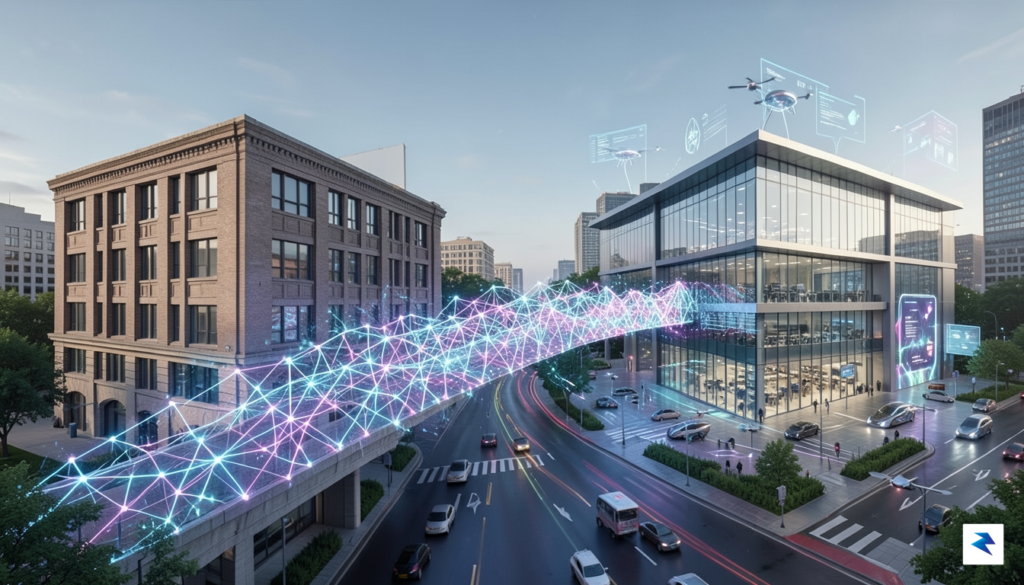
The traditional model of trading human time for technical output is being replaced by a model that trades algorithmic efficiency for market-leading speed and scalability.
Looking toward the next decade, the implications for the workforce and the client experience are profound. Employees within the IT sector will need to transition from roles defined by repetitive coding and maintenance to positions centered on systems architecture, ethical AI oversight, and high-level problem solving. For clients, the benefit is a move toward “outcome-as-a-service,” where the partnership is defined by the partner’s ability to build and maintain autonomous systems that grow smarter with every interaction. Ultimately, this new breed of firm is not just disrupting the IT services industry; it is redefining the very concept of digital value, ensuring that the next generation of enterprise growth is built on a foundation of intelligent, self-evolving technology rather than just human labor.
You must be logged in to post a comment.