
Vishal Sikka’s New Startup Aims to Disrupt the Global IT Services Market
The Genesis of a New IT Paradigm For decades, the global IT services landscape has been defined by a singular, rigid economic engine: labor…


The global semiconductor industry has rapidly evolved from a collaborative engine of technological progress into the primary chessboard for 21st-century geopolitical competition. For decades, the flow of innovation was defined by globalized supply chains and open markets, but Washington’s recent pivot toward aggressive export controls has fundamentally altered this landscape. By leveraging its control over critical intellectual property and manufacturing equipment, the United States is attempting to systematically constrain China’s ability to develop advanced artificial intelligence, high-performance computing, and next-generation military hardware. This “chip war” is not merely a trade dispute; it is a calculated effort to maintain American technological hegemony by strangling the developmental pipeline of a primary strategic rival.
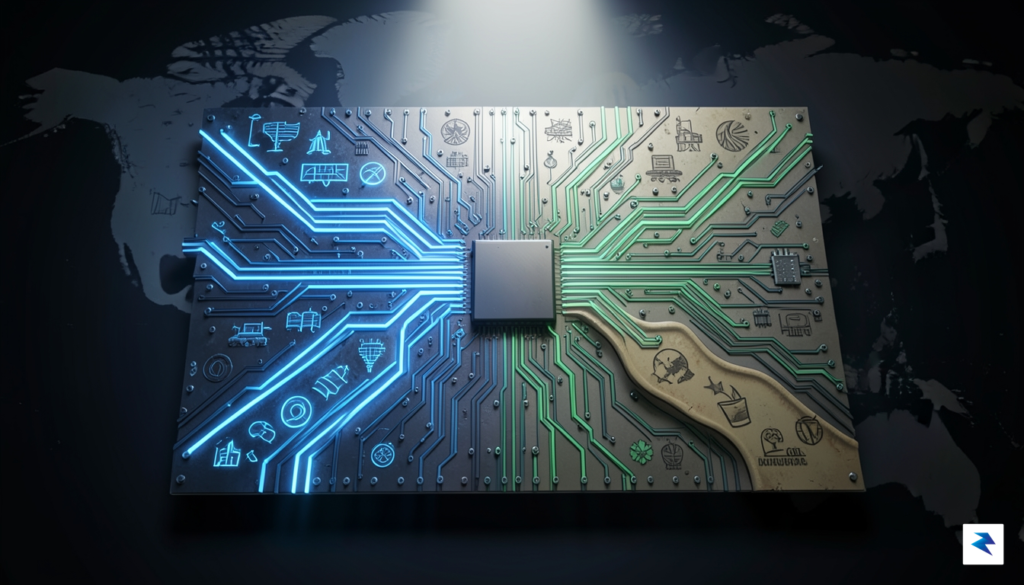
At the center of this geopolitical friction lies the Netherlands, home to ASML, the world’s sole producer of extreme ultraviolet (EUV) lithography machines. These machines are the “holy grail” of semiconductor manufacturing, enabling the creation of the most advanced chips currently in existence. Because ASML utilizes essential American-origin technology, Washington has successfully pressured the Dutch government to restrict the sale of these high-end tools to Chinese firms. However, this alignment is increasingly strained. European stakeholders are beginning to grapple with the reality that these sweeping restrictions do more than just handicap a competitor; they threaten the long-term profitability and market access of Europe’s most valuable technology firms, potentially forcing them to sacrifice their largest growth markets to satisfy Washington’s national security agenda.
The divergence between Washington’s total containment strategy and the European preference for “de-risking” highlights a fundamental disagreement over whether the semiconductor industry should remain a tool for economic integration or be fully subordinated to national security imperatives.
This growing misalignment has created a complex diplomatic dilemma for the European Union. While Brussels shares legitimate concerns regarding fair trade practices and intellectual property protection, there is an underlying apprehension that Washington’s policy is moving toward an unsustainable level of isolationism. European leaders are increasingly wary of becoming collateral damage in a bilateral struggle that they had little hand in crafting. As the pressure to choose sides intensifies, the European tech sector is forced to balance its role as a key ally to the United States against the economic necessity of engaging with a Chinese market that remains essential for scale and innovation. The coming years will likely be defined by a delicate dance, as Europe attempts to define a strategic autonomy that protects its interests without triggering a broader collapse of the globalized semiconductor architecture.

At the heart of Europe’s hesitation to fully align with Washington’s restrictive semiconductor mandates lies a fundamental concern for industrial survival. For giants like ASML, the Netherlands-based linchpin of the global chip supply chain, China represents not just an auxiliary market, but a massive, long-term revenue pillar. By restricting the sale of advanced lithography systems to Chinese firms, US-led policies directly constrain the cash flow necessary to fund the astronomical R&D budgets required to keep European firms at the cutting edge of innovation. If these companies are forced to forfeit significant portions of their market share, they risk losing the very capital that allows them to maintain their technological lead, creating a paradoxical scenario where the drive for security inadvertently fuels a decline in European competitiveness.

This economic anxiety is inextricably linked to the European Union’s broader pursuit of “strategic autonomy.” European policymakers are increasingly wary of a geopolitical landscape where their industrial policy is dictated by mandates originating in Washington rather than Brussels or Berlin. Relying too heavily on US diplomatic directives exposes European firms to the volatility of American domestic politics and shifting trade agendas, which do not always align with the continent’s economic priorities. By asserting a more independent stance, the EU seeks to ensure that its tech sector can navigate the global market without being treated as a secondary instrument of foreign policy, thereby protecting the long-term health of its internal industrial base.
The pursuit of security cannot come at the cost of the economic vitality that sustains it; a hollowed-out European tech sector serves neither the interests of the EU nor the stability of the global supply chain.
Furthermore, the danger of over-reliance on US mandates extends beyond immediate revenue losses. There is a persistent fear that if European firms become mere extensions of American export controls, they will eventually be sidelined or replaced by domestic Chinese competitors—or even by US rivals eager to capture the vacuum left behind. This shift threatens to permanently alter the global market structure, moving away from a collaborative, interconnected ecosystem toward a fractured landscape of silos. For Europe, the goal is to maintain a delicate balance: adhering to legitimate security concerns without sacrificing the trade relationships that keep the European economy vibrant, innovative, and influential on the world stage.

At the heart of the global semiconductor struggle sits ASML, a Dutch powerhouse that occupies a position of near-total technological dominance. As the world’s sole manufacturer of extreme ultraviolet (EUV) lithography machines—the multi-million dollar systems required to print the most advanced circuit patterns on silicon—the company is essentially the gatekeeper of the modern computing era. While EUV technology remains the gold standard for cutting-edge AI chips, the broader debate has shifted toward deep ultraviolet (DUV) machines. These systems, while slightly less precise than their EUV counterparts, remain indispensable for producing the mature-node semiconductors that power everything from household appliances to automotive braking systems. Because ASML holds a virtual monopoly on these essential manufacturing tools, it has involuntarily become the primary chessboard for Washington’s efforts to stifle China’s technological ascent.
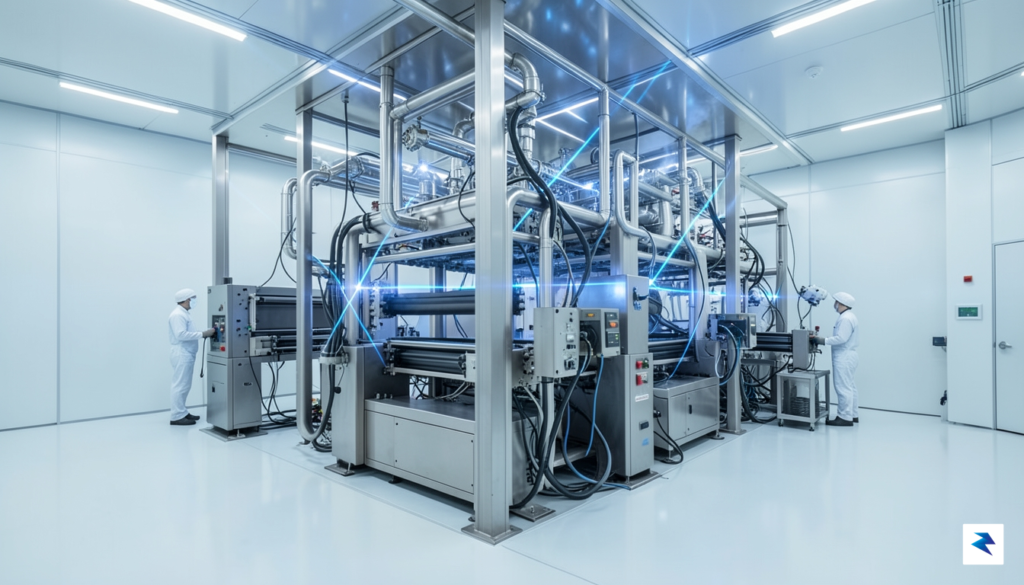
This precarious position forces ASML to navigate a labyrinth of conflicting international mandates. On one side, the company faces mounting pressure from the United States to restrict the sale of its DUV equipment to Chinese firms, citing national security concerns and the risk of military dual-use. On the other side, ASML must grapple with its commercial obligations to global customers and the reality that China represents a significant portion of its revenue stream. CEO Christophe Fouquet has publicly voiced skepticism regarding the efficacy of these sweeping restrictions, noting that while export controls might temporarily slow progress, they also incentivize the very self-sufficiency that Washington is trying to prevent. By forcing China to innovate internally, these regulations may inadvertently erode the long-term market influence of Western suppliers.
“The push for ‘technological sovereignty’ is a double-edged sword; while it addresses immediate security anxieties, it risks fragmenting the global supply chain into isolated silos that are far more expensive and less efficient to maintain.”
The logistical reality of complying with these shifting export laws is equally daunting for the Dutch firm. Every time the U.S. Bureau of Industry and Security expands its criteria for restricted technology, ASML must conduct complex reviews of its entire supply chain, determining which components and software fall under the new, often ambiguous, legal umbrellas. This requires constant communication with government regulators across multiple jurisdictions to ensure that a machine destined for a third-party country does not eventually end up in a restricted facility. For a company that thrives on precision engineering and long-term planning, this geopolitical volatility creates an environment of profound uncertainty. ASML remains a company caught between the necessity of global collaboration and the harsh realities of a new era defined by economic statecraft and territorial digital boundaries.

The strategic drive to curtail China’s access to high-end semiconductor technology is frequently framed as a necessary measure to preserve Western national security and maintain a competitive edge. However, this aggressive pursuit of export controls may inadvertently trigger an “innovation trap,” where the very policies designed to handicap a rival ultimately catalyze its transformation into a self-sufficient powerhouse. By effectively closing off the global market to Chinese firms, Washington has signaled that reliance on Western supply chains is a strategic liability, thereby forcing Beijing to pour unprecedented levels of state funding and human capital into domestic research and development. This forced pivot is rapidly shrinking the technological gap that export bans were intended to widen, as Chinese companies now have a captive domestic market and a clear imperative to solve complex engineering challenges without relying on foreign intellectual property.
Furthermore, the long-term economic fallout of these restrictions threatens to dismantle the collaborative ecosystem that has driven semiconductor innovation for decades. Semiconductors are perhaps the most globally integrated product in human history, relying on supply chains that span continents; when these chains are forcibly severed, the result is often a fragmented, bifurcated global standard. If the world splits into two distinct technological spheres—one led by the West and another dominated by an indigenous Chinese ecosystem—the inevitable outcome will be reduced economies of scale for everyone involved. Western firms, having lost a massive portion of their potential customer base in China, will likely see their R&D budgets dwindle, potentially slowing the pace of global progress. Meanwhile, the global industry faces the risk of redundant development, where resources are wasted reinventing the same technologies twice rather than pushing the boundaries of what is possible through shared research.

The pursuit of absolute technological containment often ignores the reality of market dynamics: when you cut off the supply, you provide the strongest possible incentive for the excluded party to build their own.
Ultimately, the danger lies in the assumption that Western technological hegemony is a static condition that can be preserved through isolation. In reality, innovation thrives on competition and access to global markets, which provide the revenue streams necessary to fund the next generation of breakthroughs. If European and American companies are locked out of the world’s largest market, they may find themselves struggling to maintain the massive capital investments required to stay ahead of the curve. By accelerating China’s shift toward total autonomy, these export controls might succeed in the short term, but they may ultimately sacrifice the long-term dominance of the very firms they were intended to protect, leaving the global tech landscape more expensive, less efficient, and dangerously divided.

To avoid a fractured technological landscape, the United States and the European Union must transition from unilateral directives toward a more collaborative framework for international trade. The current friction stems from Washington’s assertive export controls and industrial subsidies, which often leave European allies grappling with the unintended economic consequences of policies designed primarily for American security. A sustainable path forward requires a shift toward formal, transparent diplomatic channels where both parties can align their strategic goals before mandates are finalized. By establishing a permanent transatlantic consultative body specifically for semiconductor supply chains, both powers could move away from reactive, fragmented policies and toward a unified vision that respects the sovereignty of their respective markets while acknowledging their shared geopolitical interests.
Central to this cooperation is the vital distinction between de-risking and de-coupling. While Washington has at times blurred these lines, the European approach tends to favor a measured reduction of dependencies without severing deep-rooted commercial ties. A balanced strategy should focus on building resilient, redundant supply chains that can withstand regional shocks rather than attempting to isolate the global semiconductor industry into competing, incompatible silos. This means identifying critical vulnerabilities—such as the over-reliance on a single geography for legacy chips—and addressing them through joint investment and shared R&D, rather than through blunt-force trade barriers that punish European firms for their existing global footprints.
True security in the modern semiconductor landscape is not found in isolation, but in the creation of a diversified, interconnected network that is robust enough to resist coercion while remaining efficient enough to foster innovation.
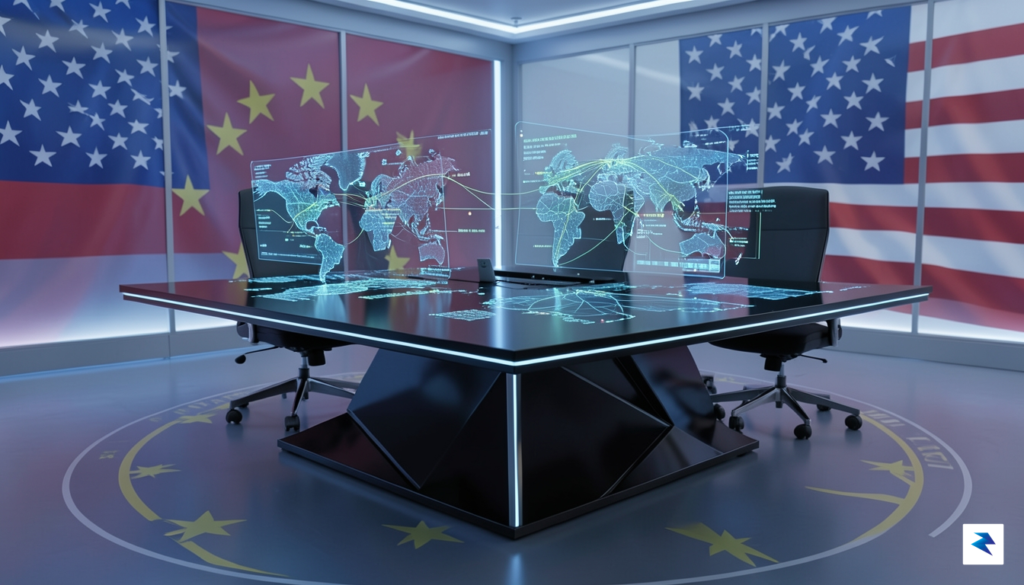
Ultimately, the future of the global chip industry rests on whether Washington and Brussels can move past short-term protectionism. If the U.S. continues to impose extraterritorial sanctions that jeopardize European industrial autonomy, the alliance risks fracturing precisely when it needs to be most cohesive. Conversely, Europe must acknowledge that national security is a legitimate, non-negotiable priority for the United States, and that some level of regulation is unavoidable in a world of heightened geopolitical competition. Mutual understanding is not merely a diplomatic nicety; it is an economic necessity. By aligning their efforts, the U.S. and the EU can ensure that they remain the primary architects of the digital age, rather than becoming victims of a fragmented, inefficient, and mutually destructive global market.
You must be logged in to post a comment.