
Prime Intellect Secures $130M: The Rise of Sovereign Enterprise AI Agents
The Shift Toward Sovereign AI Infrastructure For the past two years, the corporate world has been locked in a "wait and see" pattern, relying…


Since its inception, Paradigm has been synonymous with the maturation of the blockchain industry, positioning itself as a high-conviction investor in decentralized protocols and cryptographic infrastructure. By acting as a bridge between complex academic research and real-world commercial application, the firm helped define the “crypto-native” investment thesis, focusing heavily on smart contract platforms, decentralized finance, and the underlying architecture of Web3. However, this latest $1.2 billion capital raise represents more than just a typical fund replenishment; it signals a deliberate evolution in the firm’s philosophy, suggesting that the most transformative opportunities no longer reside within the silo of blockchain alone.
The strategic pivot toward the “technical frontier” reflects a recognition that the boundaries between high-tech disciplines are becoming increasingly porous. While cryptocurrency remains a central pillar of their vision, the firm is now looking toward the convergence of artificial intelligence, advanced computing, and high-performance engineering as the next great theater of innovation. By broadening their scope, Paradigm is acknowledging that the next generation of “unicorns” will likely be those companies capable of weaving together decentralized security, generative AI, and novel hardware solutions to solve previously intractable problems in digital infrastructure.

Securing a massive $1.2 billion war chest in the current, somewhat cautious economic landscape is a bold statement of confidence in the long-term potential of fundamental technology. In an era where many venture capital firms have tightened their belts and retreated toward safer, late-stage bets, Paradigm is doubling down on the premise that deep-tech breakthroughs are inherently counter-cyclical. This substantial liquidity provides the firm with the necessary runway to support founders who are tackling multi-year, high-risk, and high-reward technical challenges that standard, shorter-term funds might avoid.
The most profound technological breakthroughs of the next decade will not be found in isolation, but at the messy, complex intersection of cryptography, machine learning, and advanced systems architecture.
Ultimately, this expansion is a testament to the firm’s desire to remain at the leading edge of the intellectual curve. By evolving beyond a purely crypto-focused mandate, they are positioning themselves to capture value across the entire spectrum of the digital economy. Whether it is through the development of autonomous agents that interact with smart contracts or the creation of privacy-preserving AI models, the firm is betting that the “technical frontier” is where the future of global infrastructure will be built, secured, and scaled for the coming generation.

The traditional boundaries that once separated artificial intelligence, physical robotics, and decentralized networks are rapidly dissolving. For years, these sectors evolved in relative isolation, but we are now witnessing a profound shift where software autonomy, mechanical execution, and distributed infrastructure are beginning to fuse into a singular, cohesive ecosystem. This convergence is not merely a technological trend; it represents a fundamental restructuring of how we build, deploy, and govern the machines of the future. By investing at this intersection, firms like Paradigm are acknowledging that the next wave of innovation will not come from a single discipline, but from the friction and synergy created when these powerful technologies collide.
At the heart of this transformation is the realization that AI needs a physical form to meaningfully interact with the real world, while robotics requires decentralized networks to overcome the limitations of centralized control. Imagine a swarm of autonomous drones or localized manufacturing bots that do not rely on a single corporate server to function. Instead, these machines could operate on a peer-to-peer infrastructure that facilitates trustless coordination, secure data sharing, and automated micro-payments. In this model, Web3 acts as the connective tissue—the transparent, immutable ledger that allows independent robotic agents to trade resources, verify task completion, and adhere to shared protocols without needing a middleman to oversee every transaction.

The implications of this convergence extend into entirely new market categories that were previously considered science fiction. Consider the following potential use cases for this technological stack:
The true frontier lies in creating systems where autonomous agents can prove their actions, secure their own funding, and cooperate at scale without the vulnerabilities inherent in centralized command structures.
Ultimately, the objective is to move toward a more resilient and efficient automation model. When AI provides the intelligence, robotics provides the utility, and Web3 provides the governance, we create a framework for innovation that is resistant to censorship and single points of failure. As these technologies mature, the startups that succeed will be those that can successfully synthesize these disparate fields into practical, scalable solutions. This is the new technical frontier—a reality where code is not just running on a screen, but actively shaping and maintaining the physical world around us.

For several years, the venture capital landscape was dominated by the rapid-fire deployment of capital into low-overhead software-as-a-service (SaaS) models. This era, fueled by the 2020-2022 crypto boom, prioritized speed-to-market, viral growth metrics, and digital-first utility. However, the market has reached an inflection point where incremental software improvements are no longer sufficient to solve the most pressing challenges in computing and physical infrastructure. Investors are increasingly looking past the low-hanging fruit of consumer applications and toward the “technical frontier”—a domain defined by deep-tech research, breakthroughs in materials science, and the foundational architecture required to support the next generation of artificial intelligence.
The transition from a “move fast and break things” software paradigm to a high-capex, infrastructure-heavy model requires a fundamental shift in investor mindset: long-termism. Unlike traditional software startups that can achieve scale with minimal physical assets, frontier companies often spend years in the laboratory or on the factory floor before generating a single dollar of revenue. This inherent risk profile—characterized by massive upfront capital expenditure and extended development timelines—is a stark contrast to the speculative fervor of previous cycles. Yet, this long-term orientation is exactly what the current market demands, as the maturity of large language models and the convergence of decentralized networks provide a unique opportunity to build the hardware and protocols that will power the next decade of innovation.

There are several critical reasons why this pivot toward hard tech is occurring right now:
The most significant breakthroughs in the next cycle will not come from apps that rearrange existing data, but from companies that fundamentally alter how we process, store, and secure information at the physical layer.
Ultimately, the appetite for frontier investment represents a maturation of the venture ecosystem. While the risks associated with hardware and deep tech are undeniably higher than those of traditional software, the potential for industry-defining impact is exponentially greater. By committing significant capital to foundational technologies, firms are acknowledging that the path to the future is not paved with lines of code alone, but with the rigorous, time-intensive construction of the technical infrastructure that will sustain the global digital economy for years to come.

For entrepreneurs operating at the edge of possibility, attracting capital from a heavyweight firm like Paradigm requires far more than a polished pitch deck or a compelling market narrative. Paradigm has cultivated a reputation for deep technical rigor, often functioning more like a research lab than a traditional venture capital firm. Founders should understand that their investment committee is composed of engineers, researchers, and cryptographers who prioritize first-principles thinking over buzzwords or transient trends. To capture their attention, you must demonstrate that your startup is not merely iterating on existing infrastructure, but is instead solving fundamental bottlenecks in blockchain scalability, security, or decentralized coordination.

To be considered “frontier-ready,” a startup must showcase an uncompromising commitment to technical excellence. Paradigm looks for teams that are willing to grapple with unsolved problems—whether it is advancing zero-knowledge proof applications, refining consensus mechanisms, or pioneering new primitives in decentralized finance. You should be prepared to dive deep into your architecture during initial meetings; if your technical stack relies on abstractions that you cannot explain at a granular level, you will likely struggle to secure their backing. They are looking for founders who possess the intellectual honesty to acknowledge the limitations of current protocols and the technical prowess to engineer the next iteration of the stack.
Success at the frontier is rarely about market timing; it is about building durable, proprietary IP that fundamentally changes what is possible on-chain.
The firm places a massive premium on technical founders who can articulate a vision for how their innovation scales across massive, global networks. An IP-defensible model is no longer a luxury; it is a baseline requirement. This means your project should be anchored in original research or unique technological breakthroughs that provide a distinct competitive advantage over copycat protocols. When presenting your company, emphasize the “why” behind your technical decisions, document your research process, and be ready to defend your roadmap against peers who are equally obsessed with protocol design. Ultimately, Paradigm is betting on the architects of the future, and they expect their portfolio companies to treat their codebase as their most valuable asset.

Paradigm’s strategic shift serves as a definitive bellwether for the venture capital industry, signaling a departure from the speculative frenzy of recent years toward a more rigorous, “technical-first” investment thesis. By earmarking such a substantial sum for the technical frontier, the firm is effectively challenging other crypto-native investors to look beyond digital assets and consider the tangible, physical-world applications of their capital. This trend marks a maturation phase for the broader VC landscape, where the lines between software-defined crypto protocols and hard-tech infrastructure are increasingly blurring. As top-tier firms pivot to match this appetite for deep-tech innovation, we are witnessing a collective realization that the next generation of industrial productivity will not be found in abstract digital tokens, but in the sophisticated synthesis of artificial intelligence, robotics, and decentralized compute.
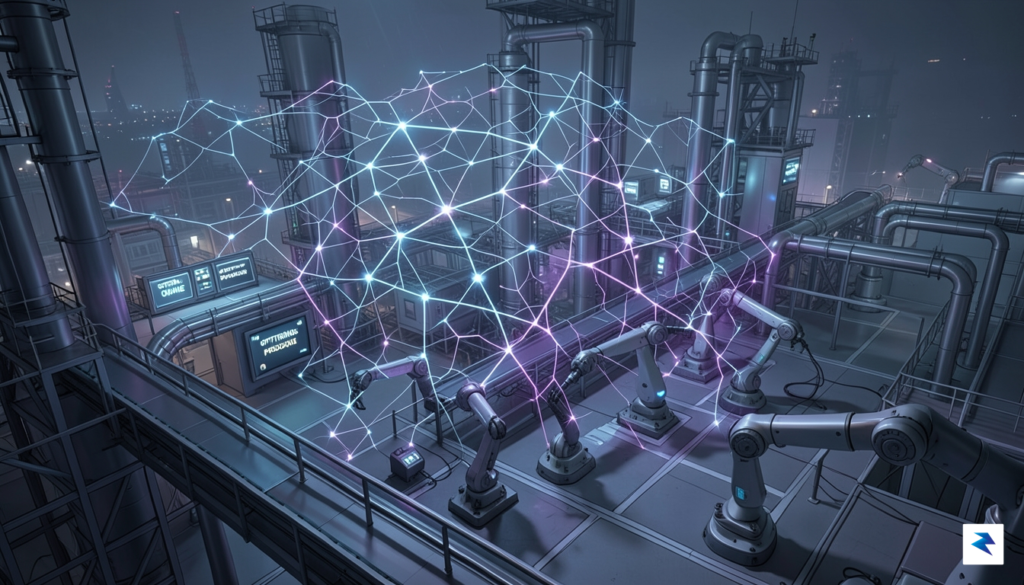
This influx of capital into the technical frontier is poised to fundamentally alter startup valuations across the AI and robotics sectors. Historically, these industries struggled with long R&D cycles and high capital expenditure requirements, which often deterred traditional software-focused venture firms. However, with heavyweights like Paradigm validating these “difficult” bets, we can expect a competitive bidding environment that drives up valuations for startups capable of bridging the gap between theoretical research and scalable utility. This shift rewards founders who prioritize fundamental breakthroughs—such as novel energy storage, autonomous systems, or generative hardware—over quick-to-market software iterations. Consequently, the venture landscape is entering an era where “deep tech” is no longer a niche, risky category but a foundational pillar of portfolio strategy for any institutional firm looking to capture long-term value.
The transition toward the technical frontier represents a transition from financing digital speculation to financing the next industrial revolution.
Looking ahead to the next decade, the impact of this pivot will likely be felt in the widespread integration of automated systems into the global supply chain. Venture capital is effectively moving into a “build-it-yourself” era, where investors are not just providing liquidity but are actively fostering an ecosystem that demands interdisciplinary expertise. We should anticipate a surge in startups that leverage decentralized networks to manage fleets of autonomous robots or to distribute high-performance computing power to research labs. Ultimately, this refocusing of capital suggests a future where venture firms operate more like applied research institutes, prioritizing durability and industrial utility over rapid, ephemeral growth. This evolution ensures that the venture capital model remains the primary engine for progress, steering humanity toward a more automated, efficient, and technologically integrated future.
You must be logged in to post a comment.