Why Tokenization Is the Next Frontier for Personalized Wealth Management
The Evolution of Tokenization in Wealth Management Tokenization, once a buzzword primarily associated with the fractional ownership of…

For decades, the semiconductor industry was locked in an intense arms race, a relentless pursuit of raw computational power. Success was often measured by escalating clock speeds, ever-increasing transistor densities, and the sheer number of operations a chip could perform, almost at any cost. This era saw chip manufacturers pushing the boundaries of physics, striving to build the fastest, most potent processors imaginable, with the underlying assumption that applications would eventually catch up and fully utilize this unbridled power. However, this philosophy, while driving incredible innovation, often led to architectures that were power-hungry and expensive, designed for peak theoretical performance rather than practical, sustained efficiency in real-world deployments.
Today, a profound transformation is redefining the metrics of success in silicon design. The paradigm has decisively shifted from prioritizing unoptimized power to a laser focus on performance-per-dollar. This isn’t merely about making chips cheaper; it’s about maximizing the useful computational output for every dollar invested in hardware and every watt consumed. The driving force behind this fundamental change is the explosive growth and democratization of Artificial Intelligence, particularly the demand for efficient AI inference at scale. While training massive AI models still requires immense, specialized power, the widespread deployment of these models—from data centers to edge devices—necessitates hardware that can execute AI tasks quickly, reliably, and, most critically, affordably.
The transition from AI development labs to everyday applications has highlighted the unsustainable nature of traditional, power-at-any-cost silicon. Imagine countless smart devices, autonomous vehicles, and cloud services all running complex AI algorithms; if each required prohibitively expensive, energy-guzzling processors, the operational costs would quickly become astronomical, hindering adoption. Consequently, the market now demands silicon architectures engineered for high efficiency, capable of delivering substantial AI inference capabilities without breaking the bank or drawing excessive power. This includes specialized accelerators, optimized memory hierarchies, and designs that thoughtfully integrate compute, memory, and communication to minimize bottlenecks and maximize throughput for specific AI workloads. It’s about smart design over brute force.
Moreover, recent global supply chain disruptions have further underscored the imperative for smarter, more efficient silicon. When access to cutting-edge fabrication processes or specific components becomes challenging, the ability to achieve more with less—to wring maximum utility from available resources—becomes paramount. This pressure, combined with the increasing accessibility of AI models to businesses and developers of all sizes, means that silicon manufacturers can no longer afford to design chips exclusively for elite, high-budget applications. The goal is now to enable a broader spectrum of users to leverage AI effectively, fostering innovation by making the underlying hardware accessible and economically viable for widespread deployment across diverse industries and consumer products. This means designing chips that are not just powerful, but inherently practical and cost-effective for mass adoption.
The current hardware market, therefore, is not merely seeking raw processing might; it’s demanding intelligent, cost-efficient power. This new focus on performance-per-dollar is driving innovation towards architectures that are highly specialized, energy-efficient, and optimized for real-world AI applications. It represents a fundamental recalibration of what constitutes “powerful” hardware, moving beyond mere specifications to embrace a holistic view where economic viability and operational sustainability are as crucial as raw computational horsepower. The future of silicon is not just about building faster chips, but about building smarter, more accessible, and ultimately, more impactful computing solutions for everyone.
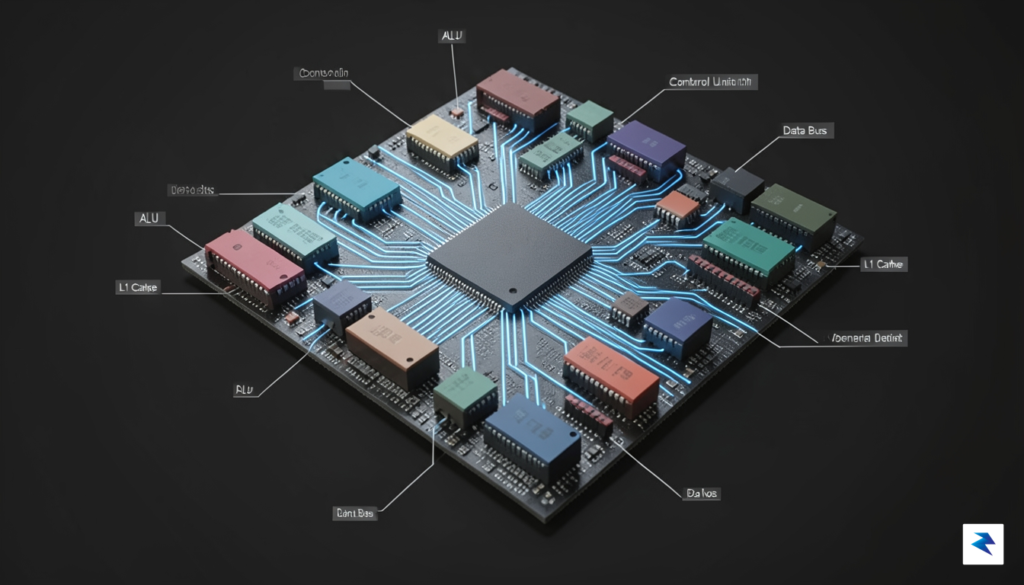
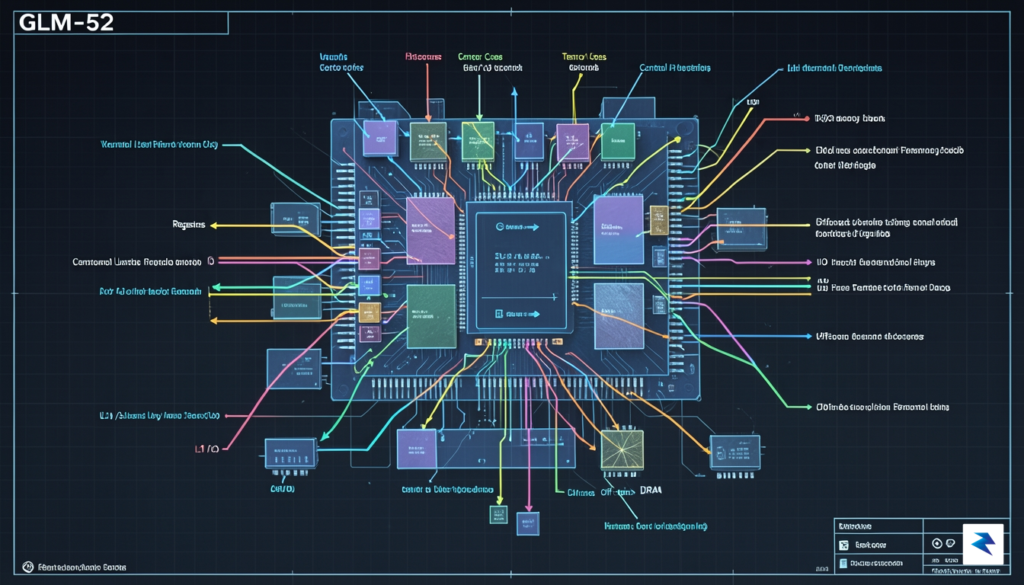
The GLM-52 represents a profound re-evaluation of what’s possible in silicon design, marking a clever departure from traditional architectural constraints that often prioritize raw, unspecialized horsepower. Instead of merely scaling up existing designs, its creators meticulously optimized every facet of the chip specifically for the demanding, repetitive workloads characteristic of modern artificial intelligence and machine learning. This focused approach has allowed the GLM-52 to achieve performance benchmarks that not only rival but often surpass those of significantly more expensive incumbent solutions, fundamentally altering the performance-per-dollar equation for AI inference.
At its core, the GLM-52 leverages an unprecedented compute density, achieved through a novel heterogeneous processing unit (HPU) design. Unlike conventional architectures that might dedicate large swaths of silicon to general-purpose cores, the GLM-52 integrates hundreds of specialized tensor acceleration cores, custom-tuned for efficient matrix multiplication and convolution operations—the backbone of neural network computations. Furthermore, these cores are tightly coupled with a sophisticated on-chip interconnect fabric, dramatically reducing data transfer latencies and allowing for highly parallel execution of complex AI models. This intelligent allocation of silicon resources ensures that almost every transistor contributes directly to accelerating AI tasks, leading to exceptional utilization rates.
Crucially, the GLM-52 tackles the perennial memory bottleneck head-on with an innovative, multi-tier memory hierarchy. Rather than solely relying on external, high-bandwidth memory (HBM), which can be costly and power-intensive, the architecture incorporates a substantial amount of ultra-fast, embedded SRAM strategically placed in close proximity to the processing elements. This intelligent caching and data pre-fetching strategy minimizes costly trips to off-chip DRAM, ensuring that critical data is almost always immediately available for processing. This optimization significantly boosts effective memory bandwidth utilization, a critical factor for the large datasets and model parameters typical of contemporary AI models, ensuring a continuous flow of information to the compute units without stalls.
When it comes to handling specific AI inference tasks, the GLM-52 demonstrates remarkable prowess compared to industry standards. For applications like real-time image recognition, natural language understanding, or recommendation engines, it deploys a unique “sparse activation engine.” This engine intelligently identifies and prunes negligible computations within neural networks, focusing processing power only on the most significant data pathways. Consequently, the GLM-52 achieves significantly higher throughput and lower latency for common neural network architectures, translating directly into faster response times and more efficient operation for a wide array of AI services without sacrificing accuracy. This ability to dynamically adapt and optimize for the true computational needs of a model is a game-changer.
The synergy of these architectural innovations — from its high compute density and specialized processing units to its optimized memory subsystem and intelligent sparse activation engine — positions the GLM-52 as a formidable force in the evolving landscape of AI hardware. It’s not just about raw speed; it’s about achieving that speed with unparalleled efficiency and at a fraction of the cost previously associated with high-performance AI inference. This design philosophy underscores a fundamental shift towards purpose-built silicon that truly understands and accelerates modern AI workloads.
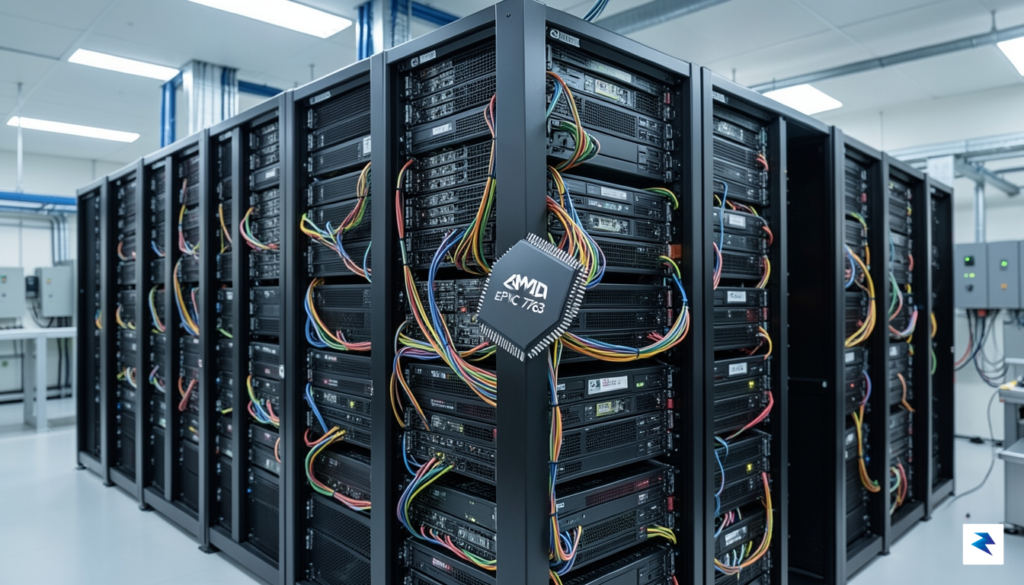
In the rapidly evolving landscape of artificial intelligence, where computational demands are escalating at an unprecedented pace, Advanced Micro Devices (AMD) has emerged as a formidable challenger, strategically repositioning itself to reshape the economics of AI deployment. AMD is not merely aiming to compete on raw processing power; rather, its comprehensive strategy centers on providing robust, high-performance hardware alternatives that actively dismantle the barriers of proprietary ecosystems and exorbitant costs. This proactive stance is designed to offer a compelling value proposition, ensuring that cutting-edge AI capabilities are accessible without necessitating prohibitive investments, thereby democratizing advanced AI development and deployment for a wider array of organizations and researchers.
A cornerstone of AMD’s competitive strategy is its formidable AI hardware roadmap, spearheaded by accelerators like the Instinct MI300X and MI300A. These cutting-edge Graphics Processing Units (GPUs) are specifically engineered to tackle the immense computational requirements of large language models (LLMs) and other complex AI workloads, featuring substantial memory bandwidth and capacity. The MI300X, for instance, boasts an impressive 192GB of HBM3 memory, making it exceptionally well-suited for training and inferencing massive AI models that demand vast amounts of data and parallel processing. By delivering such potent hardware, AMD aims to provide a direct, high-performance alternative to existing solutions, often at a more attractive price point when considering the total cost of ownership and operational efficiency over time.
Crucially, AMD’s hardware prowess is synergistically amplified by its commitment to an open software ecosystem, primarily driven by ROCm (Radeon Open Compute platform). Unlike closed-source, proprietary software stacks that can lock users into a single vendor, ROCm provides an open-source framework that empowers developers with greater flexibility, portability, and control over their AI applications. This open philosophy fosters innovation by allowing researchers and developers to optimize their models without vendor-specific constraints, reducing the friction often associated with migrating between hardware platforms. This commitment to openness significantly lowers the barrier to entry for many organizations, facilitating easier integration and enabling a broader community to contribute to and benefit from AI advancements, directly contributing to a more favorable performance-per-dollar ratio.
Furthermore, AMD’s strategy extends beyond raw silicon to encompass deep optimization for leading-edge AI models and frameworks. The integration of designs optimized for models like GLM-52 (a representative concept for advanced, high-parameter AI models) into their roadmap highlights a clear focus on ensuring that their high-performance hardware doesn’t just run AI applications, but excels at them efficiently and cost-effectively. This involves not only hardware-software co-design but also partnerships and ongoing development to ensure that their Instinct accelerators are finely tuned to extract maximum performance from the most demanding AI tasks. This holistic approach ensures that developers can achieve superior throughput and lower latency, directly translating into tangible cost savings and faster iteration cycles for AI projects.
The synergy between AMD’s advanced compute platforms is also a critical differentiator. By offering integrated solutions that combine their powerful EPYC CPUs with Instinct GPUs, AMD provides a cohesive and highly optimized architecture for data centers and AI factories. This integrated approach simplifies deployment, enhances overall system performance, and improves resource utilization, allowing organizations to build more efficient and scalable AI infrastructure. Such comprehensive platforms inherently offer better value, as the components are designed to work seamlessly together, avoiding potential bottlenecks and compatibility issues that can arise in heterogeneous environments. This thoughtful integration underscores AMD’s commitment to delivering not just individual components, but complete, high-value AI solutions.
Ultimately, AMD’s strategic pivot in AI hardware is a bold challenge to the status quo, championing an ‘open’ philosophy against closed-loop hardware competitors. By offering powerful, cost-effective hardware backed by an open-source software stack and deep optimization for advanced AI models, AMD is actively working to democratize access to high-performance AI. This approach not only provides robust alternatives but also drives down the overall cost of AI innovation, ensuring that groundbreaking advancements are not confined to a select few, but are accessible to a wider global community focused on leveraging AI for transformative impact. This competitive strategy is fundamentally reshaping expectations for performance per dollar in the burgeoning AI market.
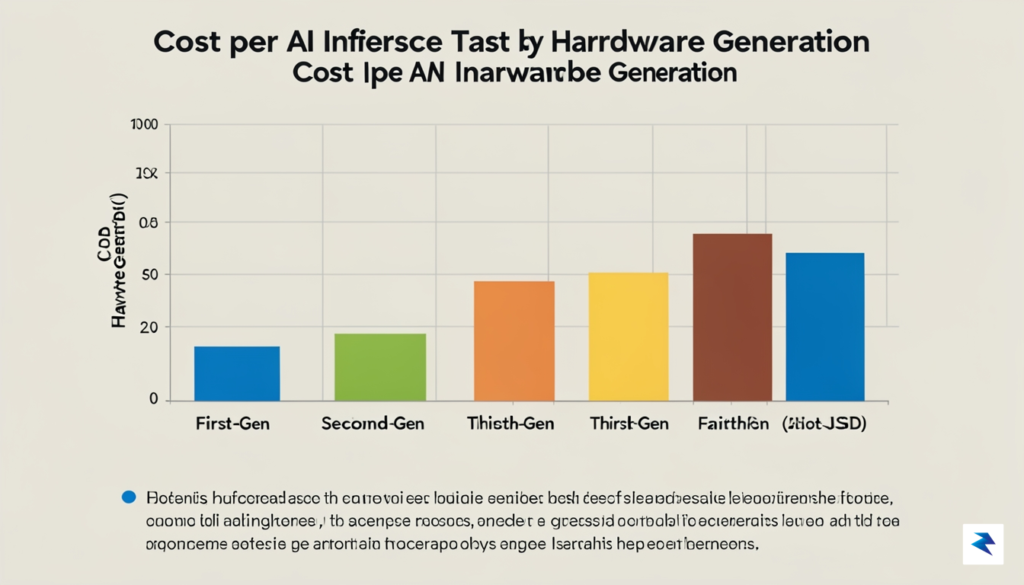
Winning a benchmark test is a vanity metric that rarely pays the bills in a production environment. For data center operators and developers, the true north star is the return on investment (ROI) measured in actionable intelligence per watt and per dollar. When we move beyond peak theoretical performance, we uncover the harsh reality of Total Cost of Ownership (TCO): the compounding expenses of power consumption, cooling infrastructure, physical rack space, and the persistent maintenance required to keep massive GPU clusters operational. Every percentage point gained in performance-per-dollar directly translates into shorter amortization cycles for hardware, effectively lowering the barrier to entry for training increasingly complex neural networks.
The economic shift brought about by newer, more efficient silicon architectures is not just about faster inference; it is about fundamentally changing what is financially viable. Traditionally, running high-parameter LLMs was a privilege reserved for the largest hyperscalers due to the astronomical power draw and the sheer volume of hardware required. However, the introduction of specialized architectures, such as the GLM-52, shifts the mathematical model of deployment. By optimizing for computational throughput relative to electricity expenditure, these chips allow developers to run larger, more sophisticated models on smaller footprints. This transition from “brute force” scaling to “efficiency-first” scaling allows smaller organizations to compete in the AI space without requiring a data center that rivals the size of a city block.
The true measure of a processor’s value is no longer just how many operations it can complete in a second, but how much utility it provides for every cent spent on electricity and depreciation.
When analyzing TCO, developers must account for the “hidden” tax of AI infrastructure: power and cooling. As thermal design power (TDP) reaches new heights in flagship GPUs, the cost to keep those machines from overheating often nears the cost of the electricity used to run the computations themselves. Architectures that prioritize performance-per-dollar mitigate this by requiring less energy to achieve the same benchmark scores, which creates a compounding effect on operational savings. For a data center operator, this means less capital expenditure (CapEx) allocated to cooling infrastructure and lower monthly operating expenses (OpEx) for electricity.
Ultimately, this democratization of compute power is the catalyst for the next wave of AI innovation. When the cost of running a large-scale inference engine drops significantly, it enables developers to iterate faster, experiment with more complex model architectures, and deploy AI services into cost-sensitive industries that were previously priced out of the market. By aligning hardware capability with realistic economic constraints, we aren’t just making AI faster; we are making it sustainable for the long-term future of the digital economy.

As the cost-to-performance ratio of silicon continues its rapid descent, the traditional mandate of relying exclusively on massive, centralized server farms is beginning to erode. We are witnessing a fundamental architectural shift toward “AI at the edge,” where high-efficiency hardware like the GLM-52 series allows sophisticated neural networks to run locally on consumer devices, automobiles, and medical equipment. By decentralizing compute power, we move away from the latency-heavy model of constantly pinging the cloud, enabling real-time decision-making that is both safer and more reliable. This transition is not merely a technical convenience; it is a prerequisite for a world where autonomous vehicles must react in milliseconds and personal health monitors need to analyze biometric data without compromising user privacy.
The broader economic impact of this trend is profound, particularly as high-performance computing becomes accessible to industries that were previously sidelined by prohibitive infrastructure costs. In the healthcare sector, for instance, affordable, high-efficiency chips are enabling portable diagnostic tools that can perform complex imaging analysis directly at the point of care. Similarly, in the automotive industry, the integration of specialized AI hardware directly into vehicle architecture is accelerating the adoption of advanced driver-assistance systems. As these components become cheaper to produce and more energy-efficient to operate, we should expect a surge in specialized AI applications that were once relegated to research labs, now appearing as standard features in everyday consumer electronics.

Furthermore, this shift toward localized compute offers a promising pathway for more sustainable data center practices. As more intensive processing tasks are handled by the end device, the sheer volume of data traffic directed toward massive cloud facilities will stabilize, allowing operators to focus their resources on training larger foundational models rather than serving billions of small, redundant inference requests. This creates a hybrid ecosystem where hardware efficiency directly translates to lower carbon footprints and reduced electricity consumption.
The democratization of high-performance hardware ensures that the next generation of AI innovation will not be limited by the cost of bandwidth or the proximity to a server farm, but rather by the ingenuity of the developers creating solutions for the edge.
Ultimately, the long-term trajectory of this hardware revolution points toward a future where compute is pervasive, invisible, and highly sustainable. By continuing to drive down the cost of performance, we are effectively lowering the barrier to entry for the entire tech ecosystem. As these advancements compound, the gap between what is computationally possible and what is economically viable will close, ushering in a new era of intelligence that is embedded into the very fabric of our physical environment.
You must be logged in to post a comment.