
Beyond Apple: How Vivo’s New Joint Venture Rewrites India’s Smartphone Future
The Evolution of India’s Smartphone Manufacturing Landscape For over a decade, India served primarily as a massive consumption engine for the…
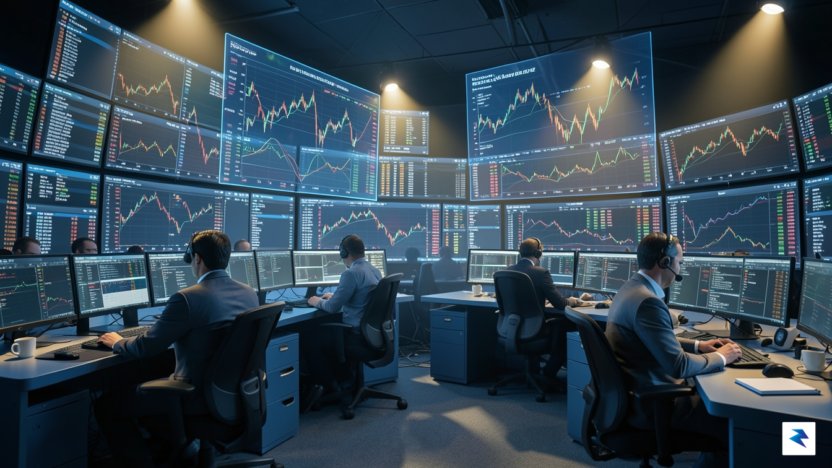

The concept of prediction markets is rooted in the “wisdom of the crowd” theory, which posits that large groups of people can often predict future events more accurately than individual experts or centralized authorities. Historically, these platforms began as niche experiments within the blockchain ecosystem, often dismissed as mere speculative gambling dens for crypto enthusiasts. However, they have quietly matured into sophisticated instruments for geopolitical and economic forecasting. By aggregating the collective knowledge and financial stakes of thousands of global participants, these platforms distill complex variables—ranging from election outcomes to interest rate hikes—into a single, real-time probability percentage that often outperforms traditional polling methods.

As these platforms have evolved, so too has the perception of their utility. What was once considered a fringe activity has gained legitimacy as a serious analytical tool, attracting interest from academics, data scientists, and institutional researchers who seek objective, market-driven insights. Unlike traditional media outlets or political pundits, whose forecasts may be clouded by ideological bias, prediction markets impose a financial cost on being wrong. This incentive structure forces participants to act based on data and probability rather than sentiment, resulting in a unique data set that serves as a pulse for global sentiment on high-stakes events.
The integration of traditional financial mechanics like margin trading represents a pivotal shift, moving prediction markets away from simple betting and toward a more mature, asset-based class of decentralized finance.
The current push to integrate margin trading signifies the next chapter in this maturation process. By allowing users to leverage their positions, these platforms are effectively bridging the gap between decentralized prediction protocols and the standards of traditional capital markets. This evolution does more than just offer traders more flexibility; it signals that the industry is ready to operate under the scrutiny of regulatory frameworks. As these markets transition toward incorporating sophisticated financial tools, they are shedding their reputation as speculative playgrounds and are instead positioning themselves as essential infrastructure for global risk management and hedging, potentially altering how the financial world evaluates uncertainty in the years to come.
At its core, margin trading functions as a mechanism that allows market participants to enter positions that are larger than their current liquid capital by effectively borrowing funds from the platform. In the context of Polymarket, this would signify a departure from the current model, which requires users to fully collateralize every bet they place. By allowing users to trade on margin, the platform would enable traders to amplify their exposure to specific outcomes, effectively magnifying both potential profits and risks. This shift transforms the user experience from a simple binary betting interface into a more robust, sophisticated financial environment that mirrors the mechanics of traditional stock brokerages or crypto derivatives exchanges.
The primary advantage of this proposed transition is a significant increase in capital efficiency. Under the current structure, a user who wants to bet $1,000 on a specific political or economic outcome must have the full $1,000 available in their wallet at the moment of execution. With margin trading, that same user might only need a fraction of that amount as “good faith” collateral to open the same position size. This allows traders to diversify their capital across multiple markets simultaneously, rather than locking up all their liquidity in a single prediction. Consequently, this leads to a more dynamic marketplace where capital can circulate more freely, responding rapidly to new information and shifting odds.
From a strategic business perspective, introducing margin trading is a critical maneuver for Polymarket to achieve deeper market liquidity and attract a more professional class of investors. High-volume traders often avoid platforms that require 1:1 collateralization because it limits their ability to execute complex hedging strategies or maintain large positions. By lowering the barrier to entry for these sophisticated participants, Polymarket can incentivize more robust order books, which in turn reduces slippage and makes the platform more attractive to casual users as well. As the platform looks to capture a larger share of the U.S. market, providing tools that align with global financial standards is essential for long-term growth.
The integration of margin trading represents a pivotal evolution for prediction markets, shifting them from niche hobbyist platforms toward becoming legitimate financial instruments capable of supporting high-frequency, institutional-grade participation.
Ultimately, this regulatory bid is about normalizing prediction markets within the broader financial ecosystem. By pursuing approval to offer these features to U.S. customers, Polymarket is signaling its intent to operate not just as a betting site, but as a serious venue for risk management and speculative trading. While this transition introduces new complexities regarding risk management and user protection, the potential for increased market depth and liquidity suggests that margin trading could be the catalyst that propels Polymarket into the mainstream financial conversation.

The regulatory landscape for prediction markets in the United States underwent a seismic shift in late 2024, fundamentally altering how federal oversight bodies perceive event-based financial products. For years, the Commodity Futures Trading Commission (CFTC) maintained a highly cautious approach toward platforms that allowed users to bet on real-world outcomes, often viewing them as gambling rather than legitimate financial instruments. However, the landmark victory for Kalshi—a rival prediction market that secured regulatory authorization to offer contracts on election outcomes—shattered this long-standing barrier. By successfully navigating the rigorous CFTC compliance process, Kalshi provided a critical blueprint that Polymarket is now leveraging to justify its own expansion into the U.S. market.
This evolving stance from regulators signals that event contracts are increasingly being viewed as distinct, innovative financial tools that provide valuable data on public sentiment and economic forecasting. The CFTC’s willingness to grant Kalshi the green light suggests a growing appetite for a regulated framework that can oversee prediction markets rather than merely banning them outright. This shift is essential for Polymarket, as it moves the conversation away from whether these platforms should exist to how they can be safely integrated into the broader American financial ecosystem. By aligning itself with the precedents established by Kalshi’s successful registration, Polymarket is effectively arguing that the oversight mechanisms now exist to protect retail investors while permitting the growth of this nascent asset class.

There remains, however, a notable distinction between the regulatory hurdles faced by traditional exchanges like Kalshi and crypto-native platforms such as Polymarket. While Kalshi operates within a more conventional financial architecture, Polymarket’s reliance on blockchain technology and decentralized infrastructure introduces additional layers of scrutiny regarding transparency, liquidity, and the prevention of market manipulation. Regulators are particularly focused on how Polymarket manages the risks associated with rapid, high-frequency trading—especially when combined with the potential for margin trading. Despite these differences, the path carved by recent breakthroughs suggests that the CFTC is moving toward a technology-neutral approach, prioritizing the stability and fairness of the market over the underlying technical stack.
The successful authorization of event-based contracts by federal regulators serves as a watershed moment, transforming speculative betting into a recognized form of financial data and risk management.
Ultimately, the “Kalshi Effect” serves as a powerful catalyst for Polymarket’s current ambitions. By demonstrating that a prediction market can satisfy federal requirements for election-related contracts, Kalshi has effectively lowered the threshold of skepticism for Polymarket’s proposed entry into the U.S. margin trading space. If Polymarket can mirror this compliance-first strategy, the industry may soon witness a competitive landscape where legal, regulated prediction markets become a standard fixture for both traders looking to hedge real-world risks and institutional observers seeking to leverage the predictive power of the crowd.

The allure of margin trading lies in its capacity to amplify potential gains, but this financial tool acts as a double-edged sword that can just as easily magnify losses. For the average retail investor, moving from standard spot trading to leveraged positions introduces a layer of complexity that can be unforgiving. When a trader uses borrowed capital to increase their position size, even a minor market fluctuation against their prediction can lead to a significant drawdown of their initial principal. Unlike traditional stock markets where assets may simply lose value, prediction markets often operate with binary outcomes, meaning that a leveraged position can reach a total loss scenario much faster than anticipated.
One of the most immediate dangers for inexperienced users is the mechanic of liquidation. When a trader’s collateral falls below a specific maintenance margin, the platform may be forced to automatically close the position to prevent further losses that the user cannot cover. This liquidation process happens rapidly, often without warning, effectively locking in a total loss of the invested capital during periods of high volatility. Because prediction markets are inherently tied to news cycles and real-time events, the “swing” in sentiment can be violent, leaving retail participants vulnerable to being wiped out before they have a chance to adjust their strategy or add more collateral.
Leverage does not just multiply profits; it multiplies the speed at which a portfolio can be depleted, turning manageable market corrections into total account liquidations.
Regulatory bodies, such as the CFTC, are rightfully cautious about bringing these high-stakes mechanics to a broader audience. As part of the approval process, Polymarket will likely be required to implement rigorous risk management disclosures that go far beyond standard terms of service. This could include mandatory educational modules, clear warnings regarding the probability of total capital loss, and perhaps strict “suitability” tests to ensure that users understand the specific nature of event-based volatility. Regulators are particularly focused on preventing scenarios where retail investors are misled by the promise of high returns without a full appreciation of the underlying mechanics of margin debt.
Ultimately, the transition toward regulated margin trading will likely necessitate a framework that prioritizes consumer protection above ease of access. This might involve:
By balancing the innovative potential of decentralized prediction markets with these protective guardrails, Polymarket hopes to prove that margin trading can be a responsible addition to the U.S. financial landscape. However, the onus remains on the individual to approach these tools with extreme caution, recognizing that leverage is not merely an investment strategy, but a significant commitment of financial risk that requires constant vigilance and a deep understanding of market mechanics.

Should Polymarket secure the regulatory approval required to offer margin trading, the platform would effectively bridge the historical divide between high-risk crypto speculation and the established world of institutional-grade financial derivatives. By allowing traders to utilize leverage, the platform moves beyond simple binary betting and begins to mirror the mechanics of traditional hedge funds and professional trading desks. This transition is pivotal; it signals a shift where prediction markets are no longer viewed merely as fringe experiments in decentralized finance (DeFi), but as sophisticated tools for capital allocation. If institutional players are granted the ability to hedge their real-world economic risks through these markets, we could see a massive influx of liquidity that stabilizes price discovery and narrows the spreads on major political and economic event contracts.
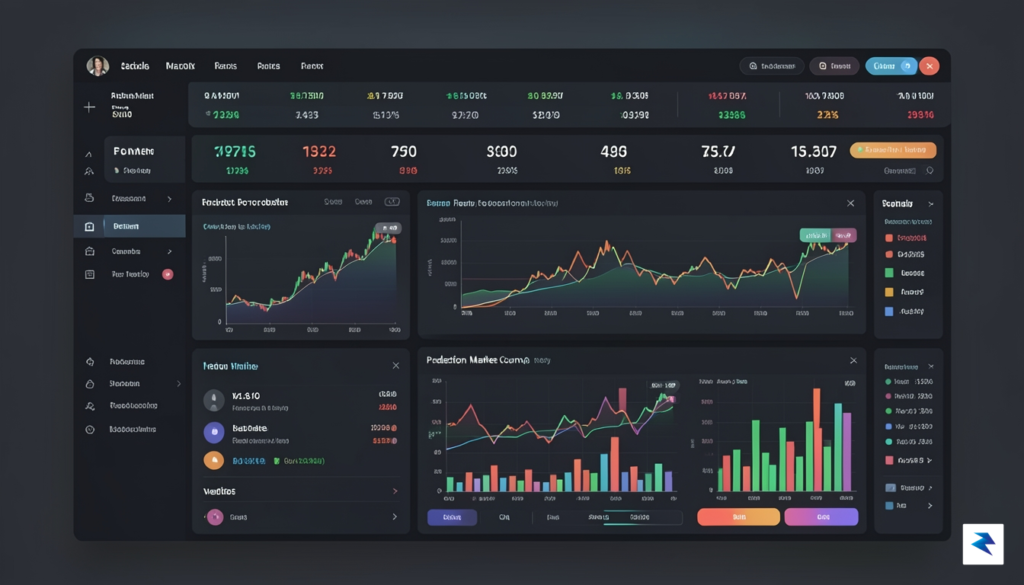
Beyond the immediate appeal of leverage, the integration of margin trading sets the stage for prediction markets to become a foundational component of modern economic forecasting. Currently, economic data is often lagging, relying on government reports or quarterly surveys that can be weeks or months out of date. In contrast, a robust, margin-backed prediction market functions as a real-time, high-frequency sentiment engine. Once these markets gain mainstream legitimacy, analysts and policymakers may begin to treat the “wisdom of the crowd” reflected in these contracts as a primary indicator for market volatility, inflation trends, and geopolitical stability. This data could eventually be embedded into algorithmic trading models and corporate risk management strategies, transforming prediction markets from a spectator sport into a vital infrastructure for the global economy.
The successful evolution of prediction markets hinges on the delicate equilibrium between permissionless innovation and the guardrails of federal oversight.
However, the journey toward this future is inherently tied to the regulatory landscape. While margin trading serves as a catalyst for professional participation, it also invites intense scrutiny regarding consumer protection and market integrity. Achieving a balance is essential: regulators must allow enough flexibility for innovation to flourish without stifling the decentralized nature that gives Polymarket its unique utility. If the platform can demonstrate that its margin systems are transparent, fair, and compliant with U.S. financial standards, it could pave the way for a new asset class. Ultimately, the long-term success of this venture will be defined by whether it can prove that decentralized prediction markets are not just a venue for gambling, but a legitimate, efficient, and necessary evolution of the broader financial ecosystem.
You must be logged in to post a comment.