Bolivia Eyes Tether Integration: A New Era for National Payments?
The Shift Toward Digital Assets in Bolivia For years, Bolivia maintained a stringent stance against the digital asset market, characterized by…

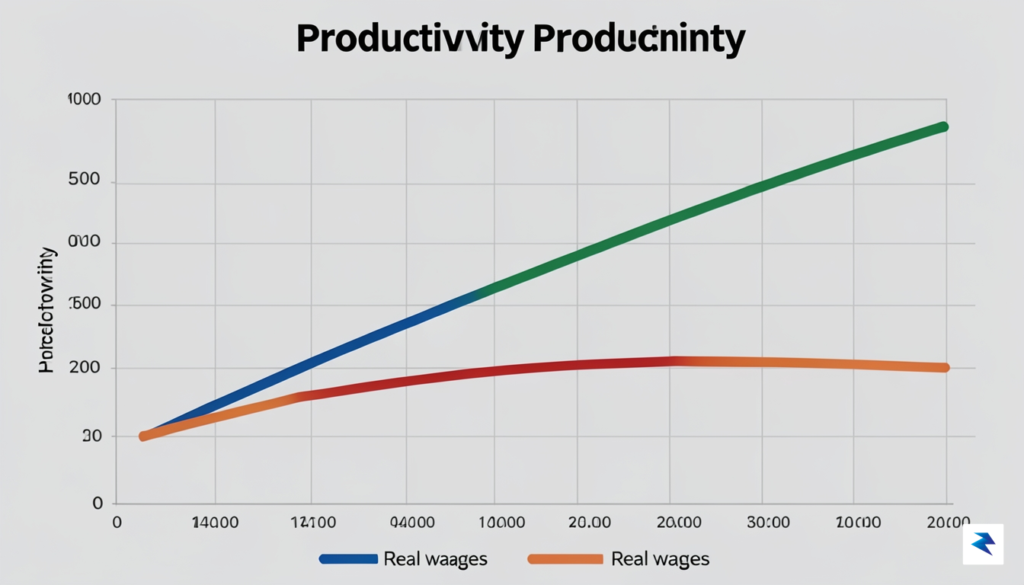
For nearly three decades following the end of the Second World War, the American economic engine operated on a seemingly ironclad social contract. During this era of robust growth, the relationship between labor output and worker compensation was remarkably synchronized; as businesses integrated new technologies and employees refined their skills, productivity soared, and wages rose in almost perfect lockstep. It was a period where the fruits of innovation were broadly shared, fostering the rapid expansion of the middle class and creating a sense of shared prosperity that defined the mid-century experience. This alignment suggested that the economy was a rising tide, one that would naturally lift all boats as workers became more efficient and valuable to their employers.
However, this predictable trajectory fractured in 1973, marking the beginning of what economists now call the “Great Decoupling.” While productivity continued its upward climb, fueled by the accelerating pace of the digital revolution and advancements in automation, wage growth for the typical worker began to stagnate and eventually flatline. This divergence is not merely a statistical anomaly buried in dense government reports; it represents the most significant economic shift of the modern era. For millions of households, this gap between what they produce for the economy and what they receive in their paychecks has become the defining challenge of their working lives, fundamentally reshaping the landscape of financial security.
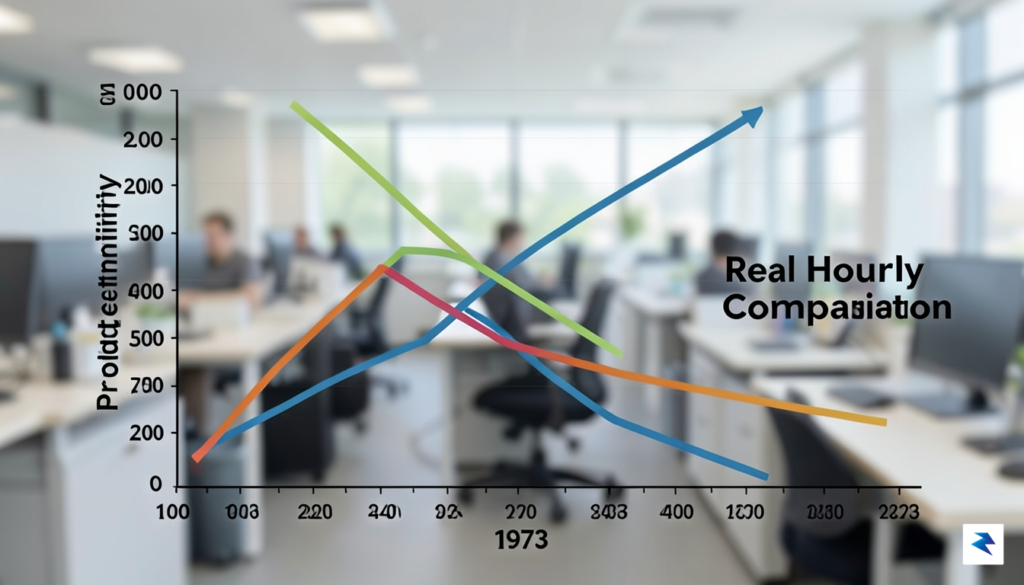
The Great Decoupling represents a fundamental breakdown in the mechanism that once ensured that technological progress translated into a higher standard of living for the average worker.
The ramifications of this disconnect are profound and touch upon nearly every aspect of contemporary life, from the skyrocketing costs of housing and education to the gradual erosion of the middle class. When productivity gains are captured almost exclusively by capital owners and top-tier earners, the resulting wealth inequality creates a ripple effect that destabilizes society. Families find themselves working longer hours and achieving higher levels of output, yet they face increasing difficulty in maintaining the same standard of living their parents enjoyed. This systemic failure to reward increased labor output with proportional pay is not just an economic technicality; it is the silent engine behind the growing sense of anxiety and disillusionment that characterizes the modern workforce. By understanding this historical shift, we can finally begin to address the structural imbalances that have prevented the modern economy from fulfilling its original promise of shared prosperity.

The undeniable truth is that workers today are vastly more productive than they were fifty years ago. Innovations in technology, automation, and global supply chains have dramatically increased output per hour, creating immense new wealth. However, for the vast majority of the workforce, this surge in productivity has not translated into a commensurate increase in real wages or improved living standards. This glaring discrepancy poses a fundamental question: if we are all producing significantly more value, where exactly is that extra value going?
A substantial portion of these newfound gains has been systematically redirected from labor to capital. We’ve witnessed a pronounced shift where the returns on investment for shareholders and capital owners have soared, while the share of national income going to wages and salaries has steadily declined. This phenomenon is not accidental; it’s the result of several intertwined economic shifts, including weakened labor unions, increased global competition, and policies that have historically favored capital accumulation over wage growth. Consequently, while corporate profits and stock market valuations reach record highs, the purchasing power of an average paycheck often struggles to keep pace with inflation.
Further exacerbating this trend is the explosive growth in executive compensation. Top executives now earn multiples of what their predecessors did, with much of their pay tied directly to stock performance metrics. This incentivizes a focus on short-term shareholder value, often at the expense of long-term investments in employees, research and development, or sustainable growth. This philosophy, known as “shareholder primacy,” became the dominant paradigm in corporate governance, pushing companies to prioritize maximizing returns for their owners above all other stakeholders, including the very workers who generate the value.
This shift has been a hallmark of the increasingly “financialized” economy. Instead of reinvesting profits primarily into higher wages, expanded operations, or even reducing consumer prices, corporations have increasingly engaged in activities like stock buybacks. Stock buybacks, while legally boosting share prices and enriching shareholders and executives holding stock options, divert capital that could otherwise be used for employee raises, benefits, or direct job creation. This preference for financial engineering over tangible investment in human capital represents a significant departure from historical corporate practices, contributing directly to the stagnation of real wages for many.
Understanding these mechanics is crucial for grasping the roots of modern economic inequality. The cumulative effect of these shifts – the redirection of productivity gains towards capital, the rise of exorbitant executive pay linked to shareholder value, and the financialization of corporate priorities – has created an economy where hard work does not necessarily equate to a fair share of the prosperity created. It’s a complex redistribution, not of existing wealth, but of newly generated value, fundamentally altering the economic landscape for millions.
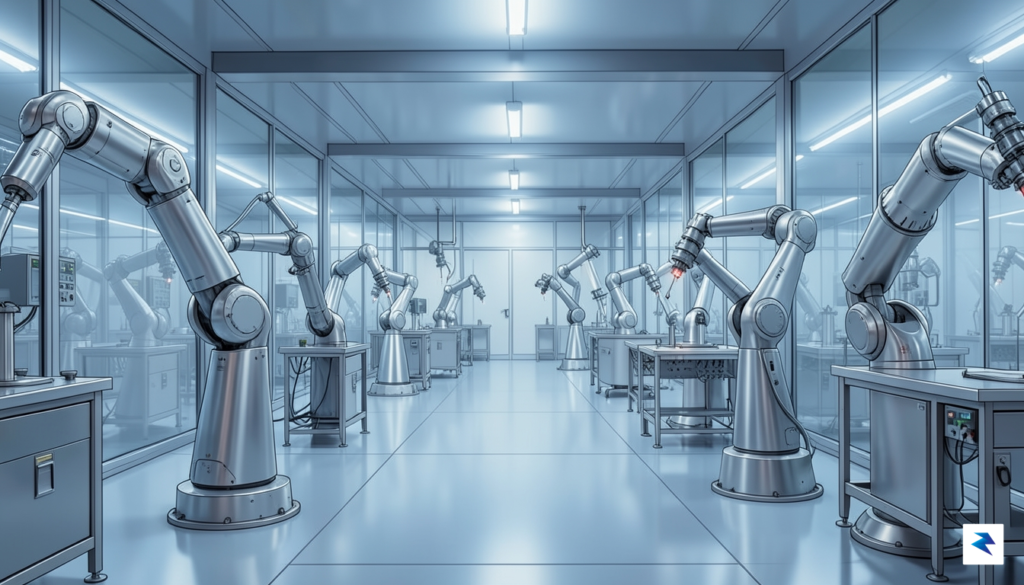
For decades, the prevailing narrative suggested that technological advancement would act as the great equalizer, a rising tide that would lift all boats by liberating workers from the shackles of repetitive drudgery. The promise was simple: as machines took over the mundane tasks, human labor would shift toward higher-value creative and strategic work, naturally driving up wages and increasing overall prosperity. Yet, as we examine the economic landscape of the last forty years, a different, more somber reality has emerged. Instead of acting as a catalyst for widespread wage growth, technology has frequently functioned as a mechanism for labor substitution, actively devaluing traditional skill sets and eroding the bargaining power that workers once held in the marketplace.
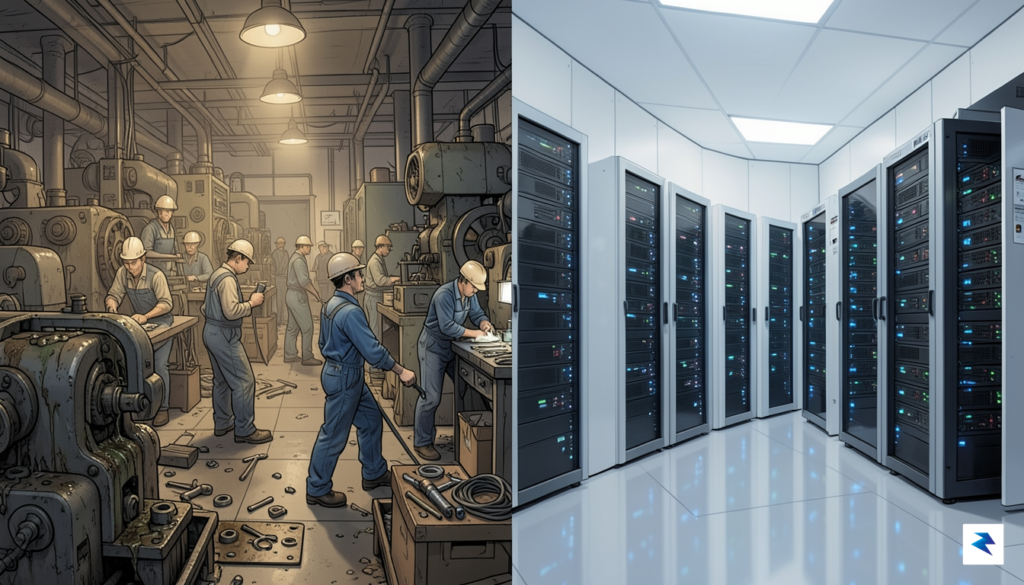
The core of this issue lies in what economists call “skill-biased technological change.” Rather than benefiting the workforce as a whole, modern digital tools have disproportionately rewarded a narrow sliver of highly specialized roles—software engineers, data architects, and algorithmic designers—while simultaneously hollowing out the middle class. By automating routine cognitive and manual tasks, technology has commodified the contributions of millions of middle-income workers, making their roles easier to outsource, streamline, or eliminate entirely. Consequently, the premium on specialized digital literacy has skyrocketed, while the market value of many traditional professional and administrative skills has stagnated or declined, creating a deepening divide in economic outcomes.
The tragedy of our current era is that we have optimized for efficiency at the expense of equity, building systems that prize the output of the machine over the lived experience of the worker.
This structural shift explains the persistent, puzzling paradox of our time: the coexistence of historically low unemployment figures with stagnant real wages. Even when the economy is technically at “full employment,” the labor market is no longer functioning as a ladder for upward mobility for the average worker. Because technology provides firms with the leverage to replace labor with software, companies are less incentivized to raise wages to retain or attract talent. When a worker can be effectively augmented or replaced by an automated process, their ability to demand a larger share of corporate profits vanishes. We find ourselves in a cycle where technological productivity gains are captured almost exclusively by capital owners and elite technical classes, leaving the broader workforce to chase the declining crumbs of a system that no longer requires their full potential to function.

The widening chasm between rising productivity and stagnant wages is far from a natural byproduct of market efficiency; rather, it is the cumulative result of deliberate policy decisions and institutional erosion that began in the late 1970s. For decades, the link between a worker’s output and their paycheck was anchored by robust labor protections and high union density. As collective bargaining power withered, the mechanisms that once ensured workers received a fair share of corporate success were systematically dismantled. This shift effectively transformed the labor market from a partnership into a contest where the structural advantages have been heavily tilted toward capital owners and executive management, leaving the average employee with little leverage to demand a larger slice of the economic pie.
Beyond the weakening of labor organizations, the landscape of taxation and financial regulation underwent a radical transformation that further exacerbated this divide. Tax policies that prioritized the accumulation of wealth at the top—through significant reductions in corporate tax rates and preferential treatment for capital gains—diverted resources that might have otherwise been reinvested in wage growth. Simultaneously, the deregulation of financial markets encouraged a short-term focus on quarterly earnings and shareholder dividends. This “shareholder primacy” model incentivized corporations to prioritize stock buybacks and executive bonuses over long-term investment in human capital, essentially funnelling productivity gains directly into the pockets of investors rather than the workforce.
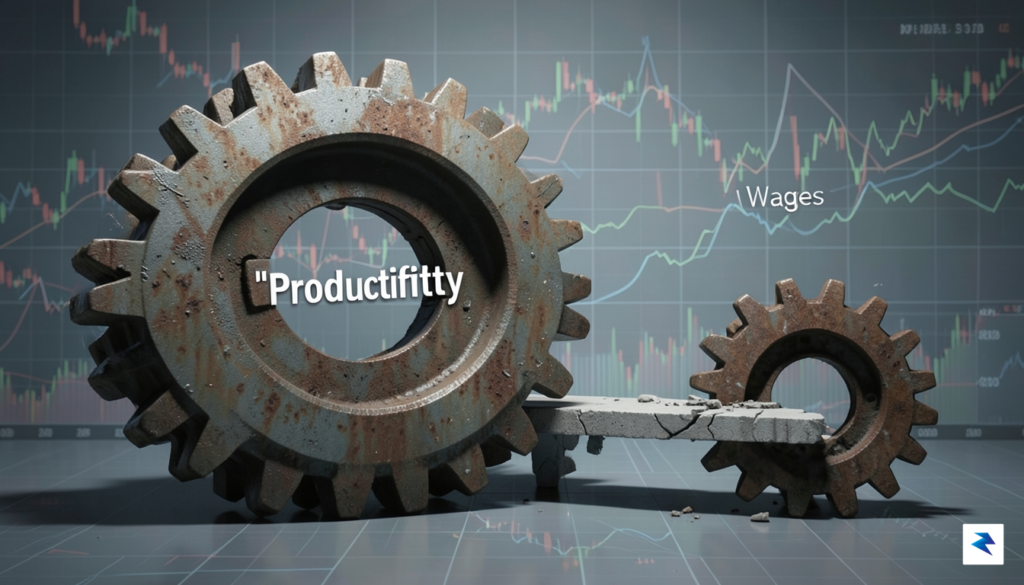
Globalization strategies also played a pivotal role in this decoupling, as companies shifted their focus toward labor arbitrage to minimize costs. By aggressively offshoring manufacturing and service roles to regions with lower wages and fewer regulatory hurdles, corporations were able to suppress domestic wage growth while maintaining high levels of output. This strategy, while beneficial for corporate balance sheets, eroded the bargaining power of the domestic workforce and forced a race to the bottom in terms of compensation. When combined with a political environment that increasingly favored corporate interests over labor stability, these structural factors created a “perfect storm” that locked in low wage growth despite record-breaking increases in national productivity.
The decoupling of pay from productivity is not an inevitable outcome of technology or global trade; it is a policy choice that can be traced back to the specific institutional changes that prioritized corporate profit over shared prosperity.
Ultimately, reversing this trend requires more than just economic growth; it necessitates a fundamental rethink of the rules governing our economy. Without addressing the decline in collective bargaining, the skewed incentives of financialized corporate governance, and tax systems that favor capital over labor, the gap will only continue to widen. The disconnect we observe today is the outcome of a decades-long experiment in economic policy, and correcting it will require an equally deliberate effort to rebalance the relationship between those who do the work and those who hold the capital.

The persistent gap between rising productivity and stagnant wages is not an inevitable law of nature, but rather a structural failure that demands a fundamental redesign of our economic architecture. To move beyond the current period of divergence, we must shift our focus from aggregate growth metrics—which often mask deep-seated inequalities—toward a framework that prioritizes equitable distribution. This requires more than just minor policy tweaks; it necessitates a comprehensive realignment of corporate incentives, labor market protections, and the mechanisms by which we define and measure national success.
One of the most immediate pathways forward involves revitalizing labor market institutions that have been weakened over the past several decades. By strengthening collective bargaining rights and updating labor standards for the modern digital age, we can empower workers to negotiate for a fairer share of the value they generate. When labor is viewed as a foundational partner in innovation rather than a mere expense to be minimized, corporations are incentivized to invest in their employees through skill development and career progression. This virtuous cycle of investment not only boosts individual earnings but also fosters a more resilient and adaptable workforce capable of driving long-term economic stability.

Beyond labor policy, we must reconsider the governance structures that dictate corporate priorities. Currently, short-term shareholder primacy often forces firms to prioritize immediate stock buybacks and dividends over the long-term well-being of their workforce. By transitioning toward stakeholder governance models, companies can be encouraged to consider the needs of employees, local communities, and the environment alongside those of investors. Implementing policies such as worker representation on corporate boards or profit-sharing mandates could serve as powerful tools to ensure that the wealth created by technological advancement is distributed across the entire economic ecosystem, rather than pooling exclusively at the top.
True economic prosperity is not merely the sum of our output; it is the degree to which that output sustains and elevates the standard of living for every participant in the economy.
Finally, a sustainable economy requires a radical commitment to human capital development that keeps pace with rapid technological shifts. This means moving beyond traditional education models to embrace lifelong learning ecosystems that are accessible and affordable for everyone. When society treats health, education, and social security as essential infrastructure—much like roads or power grids—it creates the necessary foundation for individuals to thrive in a volatile market. Ultimately, if we want to bridge the divide, we must establish an ironclad link between the value workers create and the compensation they receive, ensuring that the fruits of innovation are recognized as a collective achievement rather than a private windfall.
You must be logged in to post a comment.